गीत विंग · गीत-पट्टिका · Song Plate
न जाने किधर आज मेरी नाव चली रे
Na Jaane Kidhar Aaj Meri Nao Chali Re
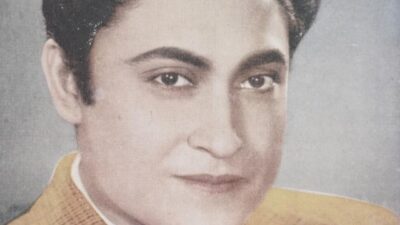
अशोक कुमार का कोमल बैरीटोन कवि प्रदीप के रूपक पर बहता है — और 1941 अपनी उदासी पहचान लेता है।
भावमीठा-कड़वा · पुरानी यादें · दार्शनिक · रोमांटिक
भाषाhindi गतिधीमी स्वरूपएकल पुरुष
श्रेय
The Creditsबोल · The Lyrics
पूरे बोल · Full Lyrics
किनारा न पाऊँ, कहाँ जाऊँ मैं भला रे।
kinaara na paoon, kahaan jaoon main bhala re.
सूत्र-वाक्य · The Hook
सूत्र-वाक्य
अशोक कुमार का कोमल बैरीटोन कवि प्रदीप के रूपक पर बहता है — और 1941 अपनी उदासी पहचान लेता है।
In EnglishAshok Kumar's gentle baritone drifts on Kavi Pradeep's metaphor — and 1941 recognises its own drift.
पट्टिका-लेख
The Monographपरिचय Overview
बॉम्बे टॉकीज़ की 'झूला' (1941) का सबसे प्रसिद्ध गाना और अशोक कुमार के सबसे याद किए जाने वाले गायन प्रदर्शनों में से एक। कवि प्रदीप ने नाव को अपना केंद्रीय रूपक चुना — किनारे के बिना बहती नाव — हिंदी काव्य के सबसे पुराने और सबसे गूँजदार अस्तित्वगत अनिश्चितता के बिम्बों में से एक। सरस्वती देवी ने बोल को एक लघु-स्वर-रंगित धीमी धुन में सजाया, वायलिन अशोक कुमार की आवाज़ के नीचे एक लंबे समय तक बनाए रखी सुर-रेखा प्रदान करते हुए। गाना अपने समय में हिट था और कभी प्रचलन से नहीं हटा — यह बॉम्बे टॉकीज़ युग की पूर्वव्यापी समीक्षाओं और अशोक कुमार के महानतम गीतों की सूचियों में प्रकट होता रहा है। 1941 ने रूपक को एक अतिरिक्त तड़प दी: भारत द्वितीय विश्वयुद्ध के उपमहाद्वीप पर प्रभावों के बीच था, अपने राजनीतिक भविष्य के बारे में अनिश्चित।
अंग्रेज़ी में पढ़ें · Read in English
The most celebrated song from Bombay Talkies' Jhoola (1941) and one of Ashok Kumar's best-remembered singing performances. Kavi Pradeep chose the boat (naav) as his central metaphor — the drifting boat with no shore in sight — one of Hindi poetry's oldest and most resonant images of existential uncertainty. Saraswati Devi set the lyric in a minor-inflected slow melody, the violin providing a long-held melodic line under Ashok Kumar's voice. The song was a hit in its time and has never left circulation — it continues to appear in retrospectives of the Bombay Talkies era and in lists of Ashok Kumar's greatest songs. The year 1941 gave the metaphor an additional charge: India was in the middle of World War II's effects on the Subcontinent, uncertain of its political future.
संगीत The Music
सरस्वती देवी की धुन वायलिन की निरंतर सुर-रेखा के आसपास बनाई गई है — वह वाद्य जो बॉम्बे टॉकीज़ की घरानी शैली में भावनात्मक भार बिना भावुक अतिरेक के वहन करता है। हारमोनियम लयात्मक आधार प्रदान करता है जबकि सारंगी वाद्य अंतरालों में रंग जोड़ती है। रचना मुखड़े के लिए एक अवरोही सुर-गति का उपयोग करती है — नाव जैसे किनारे से दूर बहती है, नीचे जाता हुआ।
अंग्रेज़ी में पढ़ें · Read in English
Saraswati Devi's setting is built around the violin's sustained melodic line — the instrument that, in Bombay Talkies' house style, carries emotional weight without sentimental excess. The harmonium provides rhythmic grounding while the sarangi adds colour in the instrumental breaks. The composition uses a descending melodic movement for the mukhda — going down as the boat drifts away from shore.
काव्य The Poetry
कवि प्रदीप का नाव रूपक उनके प्रारंभिक काव्य-शिखरों में से एक है — देशभक्ति मुहावरे ने उन्हें प्रसिद्ध बनाने से पहले, यह अंतरंग दार्शनिक पद्य की उनकी क्षमता दर्शाता है। किनारे के बिना नाव एक साथ एक प्रेम गीत (प्रेम में खोया दिल) और एक अस्तित्वगत वक्तव्य (आत्मा अपनी दिशा के बारे में अनिश्चित) है।
अंग्रेज़ी में पढ़ें · Read in English
Kavi Pradeep's boat metaphor is one of his early lyrical peaks — before the patriotic mode made him famous, this shows his capacity for intimate philosophical verse. The naav (boat) without a kinara (shore) is at once a love song (the heart lost in romance) and an existential statement (the soul uncertain of its direction).
कहानी The Story
1941 तक, अशोक कुमार अपने सभी परदे के गाने स्वयं गा रहे थे — लेकिन रिकॉर्डिंग तकनीक इतनी उन्नत हो गई थी कि आवाज़ की अंतरंगता को अधिक सटीकता से कैद किया जा सके। यह गाना उस तकनीकी सुधार से लाभान्वित होता है; माइक्रोफ़ोन की स्थिति श्रोता को गायक के साथ कमरे में होने का एहसास देती है।
अंग्रेज़ी में पढ़ें · Read in English
By 1941, Ashok Kumar was singing all his screen songs himself — but the recording technology had improved enough that the intimacy of the voice could be captured more precisely. This song benefits from that technical improvement; the microphone placement gives the listener the feeling of being in the room with the singer.
विरासत The Legacy
न जाने किधर हिंदी फ़िल्म 'नाव गीत' का टेम्पलेट है — एक शैली जो 'जाग दिल-ए-दीवाना' (1968) से 'यह दिल न होता बेचारा' (1972) तक दर्जनों उत्तराधिकारी उत्पन्न करेगी। भटकती-नाव का रूपक हिंदी फ़िल्म रोमांटिकता की एक रूढ़िगत छवि बन गई, और यह गाना उसका उद्गम-बिंदु है।
अंग्रेज़ी में पढ़ें · Read in English
Na Jaane Kidhar is the template for the Hindi film 'boat song' — a genre that would produce dozens of descendants from Jaag Dil-e-Diwana (1968) through Yeh Dil Na Hota Bechara (1972). The drifting-boat metaphor became a stock image of Hindi film romanticism, and this song is its origin point.
वर्गीकरण
Classification- Tempo
- Slow
Genre
अन्य विवरण
More Details- Wikipedia: Jhoola (1941 film) — https://en.wikipedia.org/wiki/Jhoola_(1941_film)
- indianbaja.wordpress.com: Jhoola (1941) — https://indianbaja.wordpress.com/2010/12/03/jhoola-1941/
- atulsongaday.me: coverage of Jhoola songs
References
रोचक तथ्य
Margin Notesझूला (1941) का निर्देशन ज्ञान मुखर्जी ने बॉम्बे टॉकीज़ के लिए किया; यह अशोक कुमार की वह पहली फ़िल्म थी जिसमें वे सहायक कलाकार नहीं, बल्कि निर्विवाद मुख्य नायक के रूप में नज़र आए।
अंग्रेज़ी में पढ़ें · Read in English
Jhoola (1941) was directed by Gyan Mukherjee for Bombay Talkies; it was Ashok Kumar's first film as the undisputed male lead rather than a supporting actor.
अशोक कुमार ने इस फ़िल्म में अपने गीत स्वयं गाए — 1940 के दशक के मध्य में पार्श्वगायन प्रणाली के पूरी तरह स्थापित हो जाने के बाद अधिकांश अभिनेताओं के लिए यह प्रथा समाप्त हो गई।
अंग्रेज़ी में पढ़ें · Read in English
Ashok Kumar sang his own songs in this film — a practice that ended for most actors after the full consolidation of the playback system in the mid-1940s.
कवि प्रदीप (1915–1998) ने इसके बोल लिखे। हालांकि उनके इन बोलों की तारीख़ 1941 है, फिर भी यहां इस्तेमाल किया गया नाव भटकने का रूपक हिंदी, अवधी और ब्रज काव्य में कबीर और मीराबाई तक जड़ें रखता है।
अंग्रेज़ी में पढ़ें · Read in English
Kavi Pradeep (1915–1998) wrote the lyrics. Despite his lyric's date of 1941, the boat metaphor (naav bhatakna) he deployed here has roots in Hindi, Avadhi and Braj verse going back to Kabir and Mirabai.
अशोक कुमार के 2001 में निधन के बाद भी यह गीत रेडियो पर लगातार बजता रहा; श्रद्धांजलियों में इसे उनकी गायन-क्षमता के सर्वश्रेष्ठ उदाहरण के रूप में उद्धृत किया गया, जिसे उनके समकालीन प्रायः उनके भाई किशोर कुमार से की जाने वाली तुलनाओं पर तरजीह देते थे।
अंग्रेज़ी में पढ़ें · Read in English
The song remained in continuous radio circulation after Ashok Kumar's death in 2001, cited in tributes as the finest example of his singing ability, which his contemporaries often preferred to his brother Kishore Kumar's comparisons.
सरस्वती देवी की मुखड़े के लिए बनाई गई अवरोही स्वर-पंक्ति — जो नाव के किनारे से दूर बहने का प्रतिबिंब रचती है — को समकालीन समीक्षाओं में संगीत रूप और काव्यात्मक रूपक के असाधारण रूप से सटीक मेल के रूप में रेखांकित किया गया था।
अंग्रेज़ी में पढ़ें · Read in English
Saraswati Devi's descending melodic phrase for the mukhda — mirroring the boat's drift away from shore — was noted in contemporary reviews as an unusually precise marriage of musical form and poetic metaphor.
नमूना-पट्टी
The Specimen Table| शीर्षक | न जाने किधर आज मेरी नाव चली रे · Na Jaane Kidhar Aaj Meri Nao Chali Re |
|---|---|
| फ़िल्म | झूला · 1941 |
| वर्ष · युग | 1941 |
| गायक | Ashok Kumar |
| गीतकार | Kavi Pradeep |
| संगीतकार | Saraswati Devi |
| स्वरूप | एकल पुरुष |
| गति | धीमी |
| भाषा | hindi |
| भाव | मीठा-कड़वा · पुरानी यादें · दार्शनिक · रोमांटिक |
| लोकप्रियता | Popular |
| बोल-स्थिति | सार्वजनिक |
जुड़े हुए पन्ने
Connected Plates · The Graph Made Visibleअटलस में कोई पन्ना अकेला नहीं — इस गीत से जुड़े गीत, कलाकार, फ़िल्म, राग-ताल-विधा, सब यहाँ से खुलते हैं।
मिलते-जुलते गीत · Related Songs
कलाकार · The Artists
फ़िल्म · The Film
साझा कीजिए · Share this Plate