गीत विंग · गीत-पट्टिका · Song Plate
खेलेंगे हम आँख मिचौली
Khelenge Hum Aankh Micholi
'खेलेंगे हम आँख मिचौली' — नूर जहाँ की कामयाब फ़िल्म से एक युवा-खेल का गीत।
भावउत्सव · चुलबुला
भाषाhindi-urdu गतिमध्यम स्वरूपएकल महिला
श्रेय
The Creditsसूत्र-वाक्य · The Hook
सूत्र-वाक्य
'खेलेंगे हम आँख मिचौली' — नूर जहाँ की कामयाब फ़िल्म से एक युवा-खेल का गीत।
In English'We will play hide-and-seek' — a song of youthful play from Noor Jehan's breakout film.
पट्टिका-लेख
The Monographपरिचय Overview
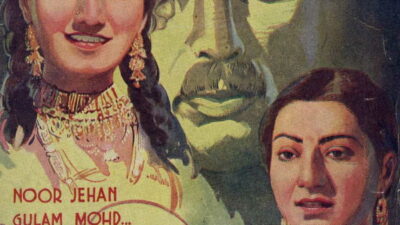
'ख़ानदान' (1942) से नूर जहाँ का एक नटखट एकल गीत जो आँख-मिचौली के बाल-खेल पर आधारित है। फ़िल्म की प्रमुख संगीत-सूचियों में दर्ज (कभी-कभी 'शोख़ सितारों से' रूपांतर में), यह उस हल्के, खेल-जैसे मुहावरे को पकड़ता है जिसने फ़िल्म के रोमांटिक गीतों को संतुलित किया।
अंग्रेज़ी में पढ़ें · Read in English
A playful Noor Jehan solo from Khandaan (1942) themed on the children's game of aankh-micholi (hide-and-seek). Listed across the film's principal soundtrack indexes (sometimes under the variant 'Shokh Sitaron Se'), it captures the lighter, game-like register that balanced the film's romantic ballads.
संगीत The Music
ग़ुलाम हैदर गीत को उसके खेल-विषय के अनुकूल एक उछलती, हल्की धड़कन देते हैं, अपने पंचोली काल की लोक-व्युत्पन्न लय को हल्का और फुदकता रखते हुए। नूर जहाँ की उज्ज्वल ऊँची लय और तेज़ पदबंध उस पकड़म-पकड़ाई और चकित कर देने वाले भाव को ढोते हैं जिसे बोल बयान करते हैं।
अंग्रेज़ी में पढ़ें · Read in English
Ghulam Haider gives the song a buoyant, bouncing pulse suited to its play theme, with the folk-derived rhythm characteristic of his Pancholi period kept light and skipping. Noor Jehan's bright upper register and quick phrasing carry the sense of chase and surprise that the lyric describes.
काव्य The Poetry
'आँख मिचौली' (लुका-छिपी, शाब्दिक रूप से 'आँख ढकना' — एक खिलाड़ी आँखें बंद करता है जबकि दूसरे छिपते हैं) ख़ानदान के गीतकारों के लिए प्रेम-प्रणय की लुका-छिपी का रूपक है। लुका-छिपी प्रेम-रूपक के रूप में भारतीय काव्य में प्राचीन है: कृष्ण-राधा लोककथा में (कृष्ण कदंब के कुंजों में छिपते हैं, राधा ढूँढती है), नायिका-भेद परंपरा में, और होली के लोकगीतों में। ख़ानदान का पंजाबी-उर्दू गीत-रजिस्टर (इसके लेखकों में एम.डी. तासीर और नज़ीम पानीपती थे) ग्रामीण खेल और उत्सव से ली गई सुलभ, सांप्रदायिक, हल्की छवियों को पसंद करता था। 'खेलेंगे' शुरुआत के रूप में एक हल्के-फुल्के खोज का वचन है, जो गंभीर आवेश की बजाय खेल-भाव का मूड घोषित करता है।
अंग्रेज़ी में पढ़ें · Read in English
The game of aankh-micholi (hide-and-seek, literally 'eye-covering' — one player covers their eyes while others hide) serves Khandaan's lyricists as a metaphor for the evasions and disclosures of courtship. Hide-and-seek as romantic metaphor is ancient in Indian poetry: it appears in Krishna-Radha lore (Krishna hiding in the kadamba groves, Radha seeking him), in the Naayika-bhed tradition's catalogue of women's love-states, and in the folk songs of the Holi season. The Punjabi-Urdu lyric register of Khandaan (its writers included M.D. Taseer and Nazim Panipati) favoured imagery drawn from rural play and festival — accessible, communal, light. 'Khelenge' (we will play) as an opening is a vow of lighthearted pursuit, announcing a mood of game-play rather than serious passion, which allowed Noor Jehan to inhabit a distinctly younger, more playful persona.
कहानी The Story
ख़ानदान (1942) का निर्देशन शौकत हुसैन रिज़वी ने पंचोली पिक्चर्स, लाहौर के लिए किया, और नूर जहाँ ने प्रान के सामने मुख्य भूमिका निभाई। फ़िल्म की संगीत-पट्टी में व्यापक रजिस्टर था — रोमांटिक गीत, हल्के चंचल गीत, और भक्ति-शैली की संख्याएँ — सभी नूर जहाँ की लचीली आवाज़ और ग़ुलाम हैदर की विभिन्न शैलियों में सुगमता के आसपास निर्मित। 'खेलेंगे हम आँख मिचौली' हल्के गीतों में था, शायद फ़िल्म के शुरुआती चरणों में एक उत्सव या घरेलू दृश्य में रखा गया जहाँ नायिका को कथानक की जटिलताओं से पहले एक बेफ़िक्र अवस्था में दिखाया गया था। ग़ुलाम हैदर ने इस संख्या को लाहौर लोकप्रिय संगीत परंपरा की विशेषता वाली उछलती, तेज़-क़दम लय दी।
अंग्रेज़ी में पढ़ें · Read in English
Khandaan (1942) was directed by Shaukat Hussain Rizvi for Pancholi Pictures, Lahore, and Noor Jehan played the lead opposite Pran. The film's soundtrack covered a wide register — romantic ballads, lighter playful songs, and devotional-style numbers — all built around Noor Jehan's flexible voice and Ghulam Haider's facility across genres. 'Khelenge Hum Aankh Micholi' was one of the lighter songs, placed probably at a festive or domestic scene in the film's early acts where the heroine is shown in a carefree state before the plot's complications. Ghulam Haider gave this number a bouncing, quick-footed rhythm characteristic of the Lahore popular music tradition, with the dholak pulse providing the primary rhythmic drive.
वर्गीकरण
Classification- Tempo
- Medium
Genre
अन्य विवरण
More Details- Wikipedia: Khandaan (1942 film) — https://en.wikipedia.org/wiki/Khandaan_(1942_film)
- Wikipedia: Noor Jehan — https://en.wikipedia.org/wiki/Noor_jehan
- Wikipedia: Ghulam Haider
References
रोचक तथ्य
Margin Notesख़ानदान (1942) नूरजहाँ की पहली वयस्क मुख्य भूमिका थी, जिसका निर्माण डी.एम. पांचोली ने लाहौर में किया था; इसने उन्हें एक प्रमुख गायिका-अभिनेत्री के रूप में स्थापित किया और संगीतकार ग़ुलाम हैदर के साथ उनकी साझेदारी की शुरुआत की।
अंग्रेज़ी में पढ़ें · Read in English
Khandaan (1942) was Noor Jehan's first adult lead role, produced by D.M. Pancholi in Lahore; it established her as a major singing actress and inaugurated her partnership with composer Ghulam Haider.
ग़ुलाम हैदर (1908–1953) को अक्सर उस संगीतकार का श्रेय दिया जाता है जिसने नूरजहाँ को 'खोजा' या आगे बढ़ाया, और ख़ानदान उनकी साझेदारी की चंचल, रोमांटिक और गंभीर स्वरों में फैली क्षमता का शुरुआती सबसे संपूर्ण प्रदर्शन था।
अंग्रेज़ी में पढ़ें · Read in English
Ghulam Haider (1908–1953) is often credited as the composer who 'discovered' or promoted Noor Jehan, and Khandaan was the fullest early showcase of their collaboration's range across playful, romantic, and serious registers.
इस विशेष गीत के गीतकार की व्यक्तिगत-गीत स्तर पर पुष्टि नहीं है; फ़िल्म के तीन गीतकार एम.डी. तासीर, नाज़िम पानीपती और डी.एन. मधोक थे — यह त्रयी 1940 के दशक की शुरुआत के लाहौर साहित्यिक परिवेश को दर्शाती है।
अंग्रेज़ी में पढ़ें · Read in English
The lyricist for this specific song is not confirmed at individual-song level; the film's three lyricists were M.D. Taseer, Nazim Panipati, and D.N. Madhok — a trio reflecting the Lahore literary milieu of the early 1940s.
'आँख मिचौली' शब्द कृष्ण-लीला परंपरा में प्रकट होता है, जहाँ यह कृष्ण के गोपियों से छिपने या उनके साथ खेलने का वर्णन करता है; एक रोमांटिक फ़िल्मी गीत में इसका प्रयोग सतही चंचलता के नीचे एक भक्ति-उपधारा को जागृत करता है।
अंग्रेज़ी में पढ़ें · Read in English
The term 'aankh micholi' (hide-and-seek) appears in Krishna-lila tradition where it describes Krishna hiding from or playing with the gopis; its use in a romantic film song invokes a bhakti subcurrent beneath the surface playfulness.
नमूना-पट्टी
The Specimen Table| शीर्षक | खेलेंगे हम आँख मिचौली · Khelenge Hum Aankh Micholi |
|---|---|
| फ़िल्म | ख़ानदान · 1942 |
| वर्ष · युग | 1942 |
| गायक | Noor Jehan |
| संगीतकार | Ghulam Haider |
| स्वरूप | एकल महिला |
| गति | मध्यम |
| भाषा | hindi-urdu |
| भाव | उत्सव · चुलबुला |
| लोकप्रियता | Popular |
| बोल-स्थिति | केवल झलक |
जुड़े हुए पन्ने
Connected Plates · The Graph Made Visibleअटलस में कोई पन्ना अकेला नहीं — इस गीत से जुड़े गीत, कलाकार, फ़िल्म, राग-ताल-विधा, सब यहाँ से खुलते हैं।
मिलते-जुलते गीत · Related Songs
कलाकार · The Artists
फ़िल्म · The Film
साझा कीजिए · Share this Plate