गीत विंग · गीत-पट्टिका · Song Plate
जाता है कहाँ तू ख़ुद ही न जाने
Jata Hai Kaha Tu Khud Hi Na Jaane
कांतिलाल का एक प्रश्न करता एकल — 'जाता है कहाँ तू, ख़ुद ही न जाने' — परदेसी से।
भावतीव्र · दार्शनिक
भाषाhindi गतिमध्यम स्वरूपएकल पुरुष
श्रेय
The Creditsसूत्र-वाक्य · The Hook
सूत्र-वाक्य
कांतिलाल का एक प्रश्न करता एकल — 'जाता है कहाँ तू, ख़ुद ही न जाने' — परदेसी से।
In EnglishA questioning Kantilal solo — 'where are you going, you yourself do not know' — from Pardesi.
पट्टिका-लेख
The Monographपरिचय Overview
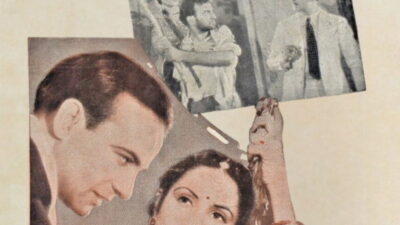
परदेसी (1941) में कांतिलाल का एक एकल, संगीत खेमचंद प्रकाश का। एक ऐसे पथिक को संबोधन, जो अपनी मंज़िल स्वयं नहीं जानता, फ़िल्म के शीर्षक — परदेसी, यानी अजनबी या परदेस जाने वाला — और उस दौर के जीवन-यात्रा रूपक के प्रति लगाव से प्रतिध्वनित होता है।
अंग्रेज़ी में पढ़ें · Read in English
A Kantilal solo from Pardesi (1941), composed by Khemchand Prakash. The address to a wanderer who does not know his own destination resonates with the film's title — pardesi, the stranger or one who goes abroad — and the era's fondness for the journey-of-life metaphor.
काव्य The Poetry
'जाता है कहाँ तू ख़ुद ही न जाने' एक पथिक को संबोधित एक दार्शनिक प्रश्न है: 'कहाँ जा रहे हो? ख़ुद भी नहीं जानते।' 'तू' का प्रयोग — अंतरंग द्वितीय पुरुष एकवचन — इसे भर्त्सना की बजाय चिंतित निकटता का संबोधन बनाता है: कोई क़रीबी मित्र, कोई प्रेमी, या शायद वक्ता अपने ही अशांत अस्तित्व से पूछ रहा हो। यह स्वीकृति कि पथिक अपनी मंज़िल ख़ुद नहीं जानता — 'ख़ुद ही न जाने' — जीवन में आत्मा के उद्देश्यहीन भटकने के पारंपरिक रूपक से बिल्कुल मेल खाती है, एक ऐसे घर की तलाश में जिसे वह सचेत रूप से नहीं पहचान सकती। परदेसी (अजनबी, बाहरी, परदेस जाने वाला) का दार्शनिक रूपक एक एकल खोजभरे प्रश्न में ढल गया है: फ़िल्म का शीर्षक ही गीत के दृष्टिकोण में अंतर्निहित है। कांतिलाल का एकल स्वर इसे व्यक्तिगत स्वीकारोक्ति की तात्कालिकता और दार्शनिक अवलोकन की दूरी दोनों देता।
अंग्रेज़ी में पढ़ें · Read in English
'Jata Hai Kaha Tu Khud Hi Na Jaane' is a philosophical question addressed to a wanderer: 'Where are you going? You yourself do not know.' The use of 'tu' (intimate second person singular) rather than the formal 'aap' makes this an address of concerned closeness rather than reproach — a close friend, a lover, or perhaps the speaker interrogating his own restless self. The admission that the wanderer cannot name his own destination — 'khud hi na jaane' — maps precisely onto the traditional metaphor of the soul's aimless passage through life, seeking a home it cannot consciously name. This is the philosophical topos of the pardesi (stranger, outsider, one who has gone abroad) crystallised into a single searching question: the film's title is embedded in the lyric's worldview. Kantilal's solo delivery of this text would have lent it both the urgency of a personal confession and the distance of a philosophical observation.
कहानी The Story
परदेसी (1941) रणजीत मूवीटोन के लिए एक महत्वपूर्ण व्यावसायिक सफलता थी। खेमचंद प्रकाश 1939 में सुप्रीम पिक्चर्स में अपनी पहली असाइनमेंट के बाद रणजीत में आए थे, और परदेसी उनकी स्टूडियो में आरंभिक हिट फ़िल्मों में थी। संगीत-इतिहासकारों का कहना है कि यह फ़िल्म खेमचंद प्रकाश और गायिका ख़ुर्शीद के बीच प्रसिद्ध सृजनात्मक साझेदारी की शुरुआत थी: परदेसी का गीत 'पहले जो मुहब्बत से इनकार किया होता' उनके सहयोग के आरंभ-बिंदु के रूप में दर्ज है, और फ़िल्म की बॉक्स-ऑफ़िस सफलता ने ख़ुर्शीद को प्रथम श्रेणी के हिंदी फ़िल्म सितारे के रूप में स्थापित करने में महत्वपूर्ण भूमिका निभाई। 'जाता है कहाँ तू ख़ुद ही न जाने' गाने वाले कांतिलाल एक गायक-अभिनेता थे जो उस दौर की कई रणजीत मूवीटोन फ़िल्मों में नियमित रूप से दिखे — वे शादी (1941) के कलाकारों में भी दर्ज हैं, जो उसी स्टूडियो का एक और खेमचंद प्रकाश स्कोर था।
अंग्रेज़ी में पढ़ें · Read in English
Pardesi (1941) was a significant commercial success for Ranjit Movietone. Khemchand Prakash had joined Ranjit after his debut assignments at Supreme Pictures in 1939, and Pardesi was among his earliest hits at the studio. Music historians note that this film initiated the celebrated creative partnership between Khemchand Prakash and singer Khursheed: the song 'Pehle Jo Mohabbat Se Inkar Kiya Hota' from Pardesi is documented as the starting point of their collaboration, and the film's box-office success played a key role in establishing Khursheed as a Hindi film star of the first rank. Kantilal, who sings 'Jata Hai Kaha Tu Khud Hi Na Jaane', was a singer-actor who appeared regularly in Ranjit Movietone productions of the period — he is also documented in the cast of Shaadi (1941), another Khemchand Prakash score at the same studio. The lyricist credit for this specific song is not individually recorded in surviving sources.
वर्गीकरण
Classification- Tempo
- Medium
Genre
अन्य विवरण
More Details- https://en.wikipedia.org/wiki/Khemchand_Prakash
- https://www.cinemaazi.com/people/khemchand-prakash
- https://mehfilmeinmeri.wordpress.com/2022/08/10/aayega-aanewala-remembering-khemchand-prakash/
- https://www.songsofyore.com/best-songs-of-khemchand-prakash/
References
रोचक तथ्य
Margin Notesपरदेसी (1941) रणजीत मूवीटोन के लिए एक बड़ी व्यावसायिक सफलता थी, और इसे उस फ़िल्म के रूप में दर्ज किया गया है जिसने संगीतकार खेमचंद प्रकाश और गायिका ख़ुर्शीद के बीच रचनात्मक साझेदारी शुरू की — यह 1940 के दशक की शुरुआत की हिंदी सिनेमा के सबसे उत्पादक संगीत-सहयोगों में से एक थी।
अंग्रेज़ी में पढ़ें · Read in English
Pardesi (1941) was a major commercial hit for Ranjit Movietone and is documented as the film that initiated the creative partnership between composer Khemchand Prakash and singer Khursheed — one of the most productive musical collaborations of early 1940s Hindi cinema.
खेमचंद प्रकाश (1907-1950) संगीत-इतिहास में बाद में लता मंगेशकर और किशोर कुमार को हिंदी फ़िल्म रिकॉर्डिंग से परिचित कराने के लिए प्रशंसित हैं; रणजीत मूवीटोन में 1940 के दशक की शुरुआत का उनका काम, जिसमें परदेसी भी शामिल है, उसी विरासत की नींव बना।
अंग्रेज़ी में पढ़ें · Read in English
Khemchand Prakash (1907–1950) is celebrated in music history for later introducing Lata Mangeshkar and Kishore Kumar to Hindi film recording; his early 1940s work at Ranjit Movietone, including Pardesi, laid the foundation for that legacy.
इस गीत के गायक कांतिलाल, उसी स्टूडियो की खेमचंद प्रकाश-संगीतबद्ध शादी (1941) में भी नज़र आए, जो दर्शाता है कि इस दौर में रणजीत मूवीटोन के उत्पादन-क्रम में वे नियमित रूप से नियुक्त किए जाने वाले गायक-अभिनेता थे।
अंग्रेज़ी में पढ़ें · Read in English
Kantilal, the singer of this song, also appeared in the Khemchand Prakash-scored Shaadi (1941) at the same studio, suggesting he was a regularly deployed singer-actor in Ranjit Movietone's production pipeline during this period.
नमूना-पट्टी
The Specimen Table| शीर्षक | जाता है कहाँ तू ख़ुद ही न जाने · Jata Hai Kaha Tu Khud Hi Na Jaane |
|---|---|
| फ़िल्म | परदेसी · 1941 |
| वर्ष · युग | 1941 |
| गायक | Kantilal |
| संगीतकार | Khemchand Prakash |
| स्वरूप | एकल पुरुष |
| गति | मध्यम |
| भाषा | hindi |
| भाव | तीव्र · दार्शनिक |
| लोकप्रियता | Known |
| बोल-स्थिति | केवल झलक |
जुड़े हुए पन्ने
Connected Plates · The Graph Made Visibleअटलस में कोई पन्ना अकेला नहीं — इस गीत से जुड़े गीत, कलाकार, फ़िल्म, राग-ताल-विधा, सब यहाँ से खुलते हैं।
मिलते-जुलते गीत · Related Songs
कलाकार · The Artists
फ़िल्म · The Film
साझा कीजिए · Share this Plate