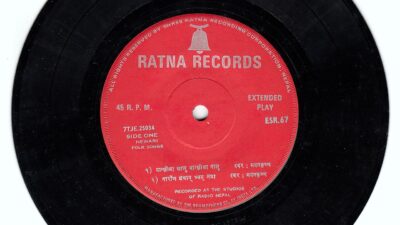
गीत विंग · गीत-पट्टिका · Song Plate
हम पंछी हैं आज़ाद
Hum Panchhi Hain Aazad
'हम पंछी हैं, और हम आज़ाद हैं' — हमीदा बानू और ख़ान मस्ताना उस आज़ादी के रूपक को गाते हुए, उसके सचमुच का अर्थ बन जाने से ठीक दो साल पहले।
भावआनंदित · प्रेरणादायक · चुलबुला
भाषाhindi गतिमध्यम स्वरूपयुगल
श्रेय
The Creditsसूत्र-वाक्य · The Hook
सूत्र-वाक्य
'हम पंछी हैं, और हम आज़ाद हैं' — हमीदा बानू और ख़ान मस्ताना उस आज़ादी के रूपक को गाते हुए, उसके सचमुच का अर्थ बन जाने से ठीक दो साल पहले।
In English'We are birds, and we are free' — Hamida Banu and Khan Mastana singing the freedom metaphor two years before it stopped being a metaphor.
पट्टिका-लेख
The Monographपरिचय Overview
'नसीब' (1945) में हमीदा बानू और ख़ान मस्ताना के गाए दो कथात्मक युगल गीतों में से एक, और फ़िल्म के उन तीन गीतों में से एक जो आज भी व्यावसायिक रूप से उपलब्ध हैं — सारेगामा के पास यह अब भी है, अवधि तीन मिनट से कुछ ऊपर। जिस पंछी-और-पिंजरे की छवि को यह बरतता है, वह 1940 के दशक की हिंदी फ़िल्मी कविता की सबसे अधिक इस्तेमाल हुई छवि थी — ठीक इसीलिए, क्योंकि सुनने वाले के हिसाब से उसे प्रेम-गीत, ग़रीबी का गीत या उपनिवेश-विरोधी गीत — तीनों की तरह गाया जा सकता था; बंबई के सेंसर ने इन तीनों पाठों में उसे पास होने दिया। अज़ीज़ कश्मीरी के बोल और गोबिंद राम की संगत उदास विकल्प के बजाय उल्लास वाला विकल्प चुनते हैं।
अंग्रेज़ी में पढ़ें · Read in English
One of the two narrative duets Hamida Banu and Khan Mastana sing in Nasib (1945), and one of only three songs from the film that survive commercially — Saregama still carries it, timed at just over three minutes. The bird-and-cage figure it uses was the most heavily worked image in 1940s Hindi film verse, precisely because it could be sung as a love song, a poverty song or an anti-colonial song depending on who was listening; the Bombay censors let it through in every one of those readings. Aziz Kashmiri's lyric and Gobind Ram's setting take the buoyant option rather than the mournful one.
संगीत The Music
गोबिंद राम इसे मुक़ाबले की तरह नहीं, साझा पंक्ति की तरह बनाते हैं: दोनों आवाज़ें एक ही धुन-विचार के आधे-आधे हिस्से बारी-बारी उठाती हैं और फिर साथ आकर बंद करती हैं — यही वह चीज़ है जिसके कारण संदर्भ-साहित्य इसे रोमांटिक नहीं, कथात्मक युगल की श्रेणी में रखता है; बात यह है कि दो लोग सहमत हैं, यह नहीं कि वे एक-दूसरे को रिझा रहे हैं। ख़ान मस्ताना की आवाज़ खुरदरी और दूर तक जाने वाली थी — स्टूडियो का नहीं, लोक-मंच का वाद्य — और हमीदा बानू की हल्की और आगे की। संगीतकार दोनों के लिए स्वर-क्षेत्र आरामदेह रखते हैं और भार ताल-वाद्यों पर डाल देते हैं। तीन मिनट की अवधि 78-आरपीएम के एक पहलू की मानक लंबाई है, इसलिए बनावट कसी हुई है: कथन, उत्तर, एक मोड़, समापन।
अंग्रेज़ी में पढ़ें · Read in English
Gobind Ram builds it as a shared line rather than a contest: the two voices take alternating halves of the same melodic idea and then close together, which is what makes it a narrative duet in the reference literature's classification rather than a romantic one — the point is that two people agree, not that they are courting. Khan Mastana's voice was rough-grained and carrying, a folk-stage instrument rather than a studio one, and Hamida Banu's was light and forward; the composer keeps the tessitura comfortable for both and lets the rhythm section do the lifting. The three-minute running time is the standard single-side 78-rpm length, so the structure is tight: statement, answer, one turn, close.
काव्य The Poetry
अज़ीज़ कश्मीरी उर्दू-हिंदी फ़िल्मी कविता की सबसे पुरानी उक्ति — पिंजरे के पंछी — के भीतर से लिखते हैं, पर उसका सामान्य ध्रुव उलट देते हैं। मानक रूप शोकगीत का होता है: पंछी उस आसमान को याद करता है जो उससे छिन गया। यहाँ दावा वर्तमानकालिक और घोषणात्मक है — पंछी जो आज़ाद हैं, न कि वे जो कभी आज़ाद थे। 1945 की एक सामाजिक फ़िल्म में यह दावा एक ख़ास काम करता है: इसे गाने वाले पात्रों के पास न पैसा है, न हैसियत, इसलिए आज़ादी अकेली चीज़ है जिसे वे अपनी कह सकते हैं, और यह गीत वह क्षण है जहाँ ग़रीबी को दायित्व-हीनता के रूप में फिर से गढ़ दिया जाता है। कश्मीरी शब्दावली सादी और मुख्यतः हिंदी रखते हैं, फ़ारसीनुमा नहीं — यही चीज़ इस पंक्ति को आत्मालाप के बजाय सामूहिक टेक बनने देती है, और यही कारण भी है कि औपनिवेशिक शासन के आख़िरी वर्षों में यह गीत अपने शाब्दिक अर्थ से अधिक कहता सुनाई दे सकता था।
अंग्रेज़ी में पढ़ें · Read in English
Aziz Kashmiri writes from inside the oldest conceit in Urdu-Hindi film verse — the caged bird — but reverses its usual polarity. The standard version is elegiac: the bird remembers the sky it has lost. Here the claim is present-tense and declarative, birds who are free rather than birds who were. In a 1945 social film that assertion does a specific job: the characters singing it have no money and no standing, so freedom is the one possession they can name, and the song is the moment where poverty is reframed as absence of obligation. Kashmiri keeps the diction simple and largely Hindi rather than Persianate, which is what allows the line to work as a chorus rather than a soliloquy — and it is also why the song could be heard, in the last years of colonial rule, as saying more than it literally said.
कहानी The Story
'नसीब' सिल्वर फ़िल्म्स का निर्माण था — अभिनेत्री प्रमिला और उनके पति कुमार का बैनर — निर्देशन बी. डी. वेदी का, और रिलीज़ 1945 में, जो गोबिंद राम के करियर का सबसे व्यस्त वर्ष था और जिसमें उनकी छह हिंदी फ़िल्में सिनेमाघरों तक पहुँचीं। ख़ान मस्ताना, जो यहाँ पुरुष हिस्सा गाते हैं, उसी वर्ष गोबिंद राम के दो और गीत गा चुके थे — 'चालीस करोड़' का जागरण-गीत 'जागो जागो सावधान हो' और 'लैला मजनूँ' का कथात्मक युगल 'जा रहा है कारवाँ'; जब भी किसी गीत को बैठकख़ाने के बाहर से आया हुआ सुनाई देना होता, संगीतकार की पहली पसंद उनकी ही आवाज़ थी। 1928 में जन्मीं हमीदा बानू इस रिकॉर्डिंग के समय लगभग सत्रह की रही होंगी। 'नसीब' का कोई प्रिंट बचा हुआ ज्ञात नहीं, पर यह रिकॉर्ड बचा है — सारेगामा के कैटलॉग में और उससे जारी हुए स्ट्रीमिंग एल्बम में।
अंग्रेज़ी में पढ़ें · Read in English
Nasib was a Silver Films production — the banner of the actress Pramila and her husband Kumar — directed by B. D. Vedi and released in 1945, the busiest year of Gobind Ram's career, in which six of his Hindi scores reached cinemas. Khan Mastana, who sings the male half here, had also sung two of the year's other Gobind Ram numbers, the uprising song 'Jaago Jaago Savdhan Ho' in Chalis Karod and the narrative duet 'Ja Raha Hai Karwan' in Laila Majnu; his voice was the composer's default choice whenever a song needed to sound like it came from outside the drawing room. Hamida Banu, born in 1928, was around seventeen when this was recorded. No print of Nasib is known to survive, but this side does — it remains in the Saregama catalogue and on the streaming album issued from it.
विरासत The Legacy
इस गीत का बाद का जीवन पूरी तरह रिकॉर्ड का जीवन है: फ़िल्म खो जाने के बाद 'हम पंछी हैं आज़ाद' 'नसीब' के उन तीन रिकॉर्डों में से एक है जो अस्सी साल बाद भी लाइसेंस-प्राप्त और स्ट्रीम करने योग्य हैं — जो 1945 की अधिकांश साधारण फ़िल्मों के हिस्से नहीं आया। इसका शीर्षक हिंदी गीत-लेखन के जमे-जमाए वाक्यांशों में भी शामिल हो गया — आज़ाद पंछी की यह घोषणा दशकों के फ़िल्म-संगीत में और बाद में स्कूली पाठ्यपुस्तकों की कविता में बार-बार लौटती है, यहाँ तक कि जिस वाक्यांश को लोकप्रिय बनाने में इसका हाथ था, अब उसी के नीचे 1945 का यह रिकॉर्ड ढूँढ़ना कठिन है। हमीदा बानू के लिए यह उनके बचे हुए सबसे शुरुआती युगल गीतों में है, जो विभाजन के बाद बंबई के पार्श्वगायन-क्षेत्र के फेरबदल से पहले बना।
अंग्रेज़ी में पढ़ें · Read in English
The song's afterlife is entirely the record's: with the film lost, 'Hum Panchhi Hain Aazad' is one of three Nasib sides that eighty years later are still licensed and streamable, which is a better survival rate than most 1945 programmers can claim. Its title also became one of the stock phrases of Hindi songwriting — the free-bird declaration recurs across decades of film music and, later, of school-textbook verse, to the point where the 1945 recording is now hard to find under the phrase it helped popularise. For Hamida Banu it is among the earliest of her surviving duets, made before the post-Partition reshuffle of the Bombay playback field.
वर्गीकरण
Classification- Tempo
- Medium
Genre
अन्य विवरण
More Details- https://www.hindigeetmala.net/movie/naseeb_1945.htm
- https://myswar.co/album/naseeb-1945
- https://apnaarchive.wordpress.com/2012/07/02/pandit-gobindram/
- https://www.jiosaavn.com/album/naseeb/XRQVUpoQfIw_
- https://en.wikipedia.org/wiki/Hamida_Banu_(singer)
- https://en.wikipedia.org/wiki/List_of_Hindi_films_of_1945
References
रोचक तथ्य
Margin Notesसारेगामा के कैटलॉग और स्ट्रीमिंग पर 'नसीब' के केवल तीन रिकॉर्ड बचे हैं और यह उनमें से एक है — बाक़ी दो राजकुमारी की ग़ज़लें हैं, 'हाल-ए-दिल तुमको सुनाया जाएगा' और 'उन्हें याद आए गुज़रा ज़माना'।
अंग्रेज़ी में पढ़ें · Read in English
This is one of only three Nasib recordings that survive in the Saregama catalogue and on streaming — the others being Rajkumari's two ghazals, 'Haal-E-Dil Tumko Sunaya Jayega' and 'Unhen Yaad Aaye Guzra Zamana'.
स्ट्रीमिंग पर पुरुष गायक का नाम 'एच. ख़ान मस्ताना' लिखा है, जो उनके नाम का पुराना रूप है; गीतकोश-आधारित स्रोत उन्हें केवल ख़ान मस्ताना लिखते हैं।
अंग्रेज़ी में पढ़ें · Read in English
The streaming credit lists the male singer as 'H. Khan Mastana', an older form of his billing; the Geet Kosh-based sources give him simply as Khan Mastana.
गोबिंद राम ने 1945 की तीन अलग-अलग फ़िल्मों — 'चालीस करोड़', 'लैला मजनूँ' और 'नसीब' — में ख़ान मस्ताना से गवाया, और हर बार ऐसे गीतों के लिए जिन्हें कथानक के प्रतिष्ठित मध्यवर्गीय केंद्र से बाहर के पात्र गाते हैं।
अंग्रेज़ी में पढ़ें · Read in English
Gobind Ram used Khan Mastana in three separate 1945 films — Chalis Karod, Laila Majnu and Nasib — always for songs sung by characters outside the respectable middle-class centre of the plot.
नमूना-पट्टी
The Specimen Table| शीर्षक | हम पंछी हैं आज़ाद · Hum Panchhi Hain Aazad |
|---|---|
| फ़िल्म | नसीब · 1945 |
| वर्ष · युग | 1945 |
| गायक | Hamida Banu, Khan Mastana |
| गीतकार | Aziz Kashmiri |
| संगीतकार | Gobind Ram |
| स्वरूप | युगल |
| गति | मध्यम |
| भाषा | hindi |
| भाव | आनंदित · प्रेरणादायक · चुलबुला |
| लोकप्रियता | Known |
| बोल-स्थिति | केवल झलक |
जुड़े हुए पन्ने
Connected Plates · The Graph Made Visibleअटलस में कोई पन्ना अकेला नहीं — इस गीत से जुड़े गीत, कलाकार, फ़िल्म, राग-ताल-विधा, सब यहाँ से खुलते हैं।
मिलते-जुलते गीत · Related Songs
कलाकार · The Artists
फ़िल्म · The Film
साझा कीजिए · Share this Plate