गीत विंग · गीत-पट्टिका · Song Plate
घूँघट के पट खोल
Ghunghat Ke Pat Khol
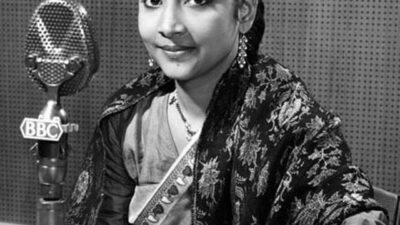
गीता दत्त भजन परंपरा में क़दम रखती हैं और अपनी आवाज़ की पूर्ण भक्ति-गहराई उजागर करती हैं — आत्मा और ईश्वर के बीच का घूँघट।
भावशांत · दार्शनिक · आध्यात्मिक
भाषाhindi गतिधीमी स्वरूपएकल महिला
श्रेय
The Creditsबोल · The Lyrics
बोल — झलक · Lyrics Preview
घूँघट के पट खोल।
Ghunghat ke pat khol.
कॉपीराइट के कारण केवल झलक — पूरे बोल आधिकारिक मंचों पर।
सूत्र-वाक्य · The Hook
सूत्र-वाक्य
गीता दत्त भजन परंपरा में क़दम रखती हैं और अपनी आवाज़ की पूर्ण भक्ति-गहराई उजागर करती हैं — आत्मा और ईश्वर के बीच का घूँघट।
In EnglishGeeta Dutt steps into the bhajan tradition and reveals the full devotional depth of her voice — the veil between the soul and God.
पट्टिका-लेख
The Monographपरिचय Overview
हिंदी फ़िल्म संगीत में भजन परंपरा का प्रतिनिधित्व मुख्यतः पुरुष आवाज़ों ने किया था — के.एल. सहगल, के.सी. डे — एक गंभीर, वक्तव्य-जैसी गुणवत्ता के साथ। 'जोगन' (1950) का गीता दत्त का 'घूँघट के पट खोल' इस पैटर्न को तोड़ा। उनकी आवाज़ — गर्म, थोड़ी भारी, वर्तमान में जड़ी — ने शास्त्रीय मीराबाई-अनुरणित भक्ति-पाठ (गीत में कबीर-मीरा परंपरा का: घूँघट खोलो, भगवान मिलेंगे) को एक ऐसी तात्कालिकता दी जो भव्य को दरकिनार करके सीधे अंतरंग तक पहुँचती है।
अंग्रेज़ी में पढ़ें · Read in English
The bhajan tradition in Hindi film music had been represented primarily by male voices — K.L. Saigal, K.C. Dey — with a solemn, oratorio-like quality. Geeta Dutt's 'Ghunghat Ke Pat Khol' from Jogan (1950) broke this pattern. Her voice — warm, slightly husky, rooted in the here and now — gave the classical Mirabai-inflected devotional text (attributed in the song to the Kabir-Mira tradition: open the veil, you will find the Lord) an immediacy that bypassed the grand and went straight to the intimate. Bulo C. Rani's setting draws on Bhairavi, the raga of farewells and devotion, and lets Geeta's voice move freely within its characteristic emotional palette of tender longing. The film gave her the context of a jogan — a woman who has renounced the world for God — and her performance inhabits this fully, making the devotional absolute credible even to secular ears.
संगीत The Music
बुलो सी. रानी की भैरवी में बंदिश — भोर, विदाई और भक्ति का राग — गीत को उसकी विशिष्ट कड़वी-मीठी शांति देती है। विरल संगत (सारंगी, तबला) गीता की आवाज़ की सेवा में रहती है, उससे कभी प्रतिस्पर्धा नहीं करती।
अंग्रेज़ी में पढ़ें · Read in English
Bulo C. Rani's setting in Bhairavi — the raga of dawn, farewell and devotion — gives the song its characteristic bittersweet serenity. The sparse accompaniment (sarangi, tabla) is kept in service of Geeta's voice, never competing with it.
काव्य The Poetry
घूँघट आत्मा और ईश्वर के बीच आध्यात्मिक अवरोध के रूप में — इसे उठाओ, और प्रभु भीतर मिलते हैं। छवि मीराबाई-कबीर संत कविता के अपने सबसे संकेंद्रित रूप में है: दिव्य अंतरंग है, दूर नहीं; बाधा स्व-निर्मित है।
अंग्रेज़ी में पढ़ें · Read in English
The veil (ghunghat) as spiritual barrier between the soul and God — lift it, and the Lord is found within. The image is Mirabai-Kabir sant poetry in its most concentrated form: the divine is intimate, not distant; the obstacle is self-created.
कहानी The Story
'जोगन' (1950) ने गीता दत्त को नरगिस (जोगन स्वयं) के साथ एक दुर्लभ महिला-केंद्रित आध्यात्मिक फ़िल्म में रखा। किदार शर्मा की पटकथा ने नरगिस को उनकी सबसे चुनौतीपूर्ण भूमिकाओं में से एक दी और गीता दत्त को — पार्श्वगायन आवाज़ के रूप में — एक आध्यात्मिक कैनवास जो उनके रोमांटिक असाइनमेंट ने नहीं दिया था।
अंग्रेज़ी में पढ़ें · Read in English
Jogan (1950) set Geeta Dutt against Nargis (the jogan herself) in a rare female-centred spiritual film. Kidar Sharma's script gave Nargis one of her most challenging roles and gave Geeta Dutt — as the playback voice — a spiritual canvas that her romantic assignments had not offered.
विरासत The Legacy
हिंदी फ़िल्म परंपरा के सबसे प्रिय भजनों में से एक — धार्मिक और सांस्कृतिक समारोहों में नियमित रूप से प्रस्तुत। 'जोगन' में गीता दत्त के भक्ति-मोड़ ने उनकी आवाज़ की कथित विस्तार-क्षमता को बढ़ाया और उनके उत्पाद का सबसे अप्रत्याशित और सबसे सुंदर पहलू बना हुआ है।
अंग्रेज़ी में पढ़ें · Read in English
One of the most beloved bhajans in Hindi film tradition — regularly performed at religious and cultural gatherings. Geeta Dutt's devotional turn in Jogan expanded the perceived range of her voice and remains the most unexpected and most beautiful facet of her output.
वर्गीकरण
Classification- Tempo
- Slow
Genre
अन्य विवरण
More DetailsReferences
रोचक तथ्य
Margin Notesजोगन (1950) की पटकथा और निर्देशन किदार शर्मा ने किया, जिन्होंने फ़िल्म के गीत भी स्वयं लिखे — यह एक दुर्लभ त्रिस्तरीय रचनात्मक भूमिका थी जिसने फ़िल्म को एक एकीकृत दार्शनिक स्वर प्रदान किया; शर्मा ने गीत की केंद्रीय बिंब-रचना के लिए कबीर और मीराबाई की भक्ति परंपरा से प्रेरणा ली।
अंग्रेज़ी में पढ़ें · Read in English
Jogan (1950) was written and directed by Kidar Sharma, who also authored the film's screenplay and lyrics — a rare triple creative role that gave the film a unified philosophical tone; Sharma drew on Kabir and Mirabai's bhakti tradition for the song's central image.
इस फ़िल्म में गीता दत्त का भक्ति-रस में ढलना समीक्षकों द्वारा व्यापक रूप से उनके करियर की सबसे अप्रत्याशित कलात्मक खोज के रूप में उद्धृत किया गया — मुख्यतः रोमांटिक और चुलबुले गीतों के लिए जानी जाने वाली गीता ने जोगन में एक आध्यात्मिक गहराई दिखाई, जिसने दर्शकों और संगीतकारों की उनकी क्षमता के प्रति धारणा को बदल दिया।
अंग्रेज़ी में पढ़ें · Read in English
Geeta Dutt's devotional turn in this film was widely cited by critics as the most unexpected artistic revelation of her career — primarily known for romantic and coquettish numbers, she revealed a spiritual depth in Jogan that changed how audiences and composers perceived her range.
बुलो सी. रानी (1920–2003) ने जोगन का संगीत भैरवी राग में रचा — यह राग परंपरागत रूप से विदाई, प्रभात और शास्त्रीय संगीत सभा के अंतिम गीत से जुड़ा है — जिसने भक्ति-पाठ में वैराग्य की एक सुंदरता जोड़ दी।
अंग्रेज़ी में पढ़ें · Read in English
Bulo C. Rani (1920–2003) composed the score for Jogan in Bhairavi — the raga traditionally associated with farewell, dawn, and the final number in a classical concert — adding a layer of renunciatory beauty to the devotional text.
जोगन में दिलीप कुमार और नरगिस दोनों मुख्य भूमिका में थे, जिसने इसे एक प्रतिष्ठित प्रोडक्शन बनाया; इस सितारा-शक्ति के बावजूद, आज यह फ़िल्म अपने नाटकीय अभिनय के बजाय मुख्यतः गीता दत्त के भक्ति साउंडट्रैक के लिए याद की जाती है।
अंग्रेज़ी में पढ़ें · Read in English
Jogan starred both Dilip Kumar and Nargis, making it a prestige production; despite the star power, the film is remembered today primarily for Geeta Dutt's devotional soundtrack rather than for its dramatic performances.
पंक्ति 'घूंघट के पट खोल रे, तोहे पिया मिलेंगे' को भक्ति साहित्य में व्यापक रूप से कबीर से जोड़ा जाता है — जहाँ घूंघट स्वयं की ईश्वर के प्रति प्रतिरोध की प्रतीक है, और पिया दिव्यता का प्रतीक है। किदार शर्मा द्वारा इस बिंब के प्रयोग ने फ़िल्म की जोगन नायिका को सीधे उत्तर भारत की संत-कवि परंपरा से जोड़ दिया।
अंग्रेज़ी में पढ़ें · Read in English
The line 'ghunghat ke pat khol re, tohe piya milenge' is widely attributed in devotional literature to Kabir — the veil (ghunghat) as the self's resistance to God, and the beloved (piya) as the divine. Kidar Sharma's use of this image connected the film's jogan heroine directly to the sant-poet tradition of North India.
नमूना-पट्टी
The Specimen Table| शीर्षक | घूँघट के पट खोल · Ghunghat Ke Pat Khol |
|---|---|
| फ़िल्म | जोगन · 1950 |
| वर्ष · युग | 1950 — golden era |
| गायक | Geeta Dutt |
| गीतकार | Kidar Sharma |
| संगीतकार | Bulo C. Rani |
| स्वरूप | एकल महिला |
| गति | धीमी |
| भाषा | hindi |
| भाव | शांत · दार्शनिक · आध्यात्मिक |
| लोकप्रियता | Very_popular |
| बोल-स्थिति | केवल झलक |
जुड़े हुए पन्ने
Connected Plates · The Graph Made Visibleअटलस में कोई पन्ना अकेला नहीं — इस गीत से जुड़े गीत, कलाकार, फ़िल्म, राग-ताल-विधा, सब यहाँ से खुलते हैं।
मिलते-जुलते गीत · Related Songs
कलाकार · The Artists
फ़िल्म · The Film
युग · The Era
साझा कीजिए · Share this Plate