गीत विंग · गीत-पट्टिका · Song Plate
ग़रीबों की दुनिया जहाँ से निराली
Garibon Ki Duniya Jahan Se Nirali
फ़िल्म की पूरी बात एक पंक्ति में — कि ग़रीबों की दुनिया इस जहान से अलग है — अमीरबाई कर्नाटकी के स्वर में, रफ़ीक़ ग़ज़नवी की धुन पर।
भावमीठा-कड़वा · दार्शनिक
भाषाhindi गतिमध्यम स्वरूपएकल महिला
श्रेय
The Creditsसूत्र-वाक्य · The Hook
सूत्र-वाक्य
फ़िल्म की पूरी बात एक पंक्ति में — कि ग़रीबों की दुनिया इस जहान से अलग है — अमीरबाई कर्नाटकी के स्वर में, रफ़ीक़ ग़ज़नवी की धुन पर।
In EnglishThe film's argument in a single line — that the world of the poor is a world apart — sung by Amirbai Karnataki, composed by Rafiq Ghaznavi.
पट्टिका-लेख
The Monographपरिचय Overview
'एक दिन का सुल्तान' (1945) के लिए रफ़ीक़ ग़ज़नवी की तीन रचनाओं में दूसरी और उसमें अमीरबाई कर्नाटकी के तीन गीतों में दूसरा। फ़िल्म के नौ शीर्षकों में यही उसके विषय से सबसे सीधे बात करता है: जिस कहानी में एक भिश्ती को एक दिन के लिए बादशाह के तख़्त पर बिठाया जाता है, उसमें कहीं न कहीं यह कहने वाला गीत चाहिए ही कि ग़रीब एक अलग दुनिया में रहते हैं। बोल वली साहब के।
अंग्रेज़ी में पढ़ें · Read in English
The second of Rafiq Ghaznavi's three compositions for Ek Din Ka Sultan (1945) and the second of Amirbai Karnataki's three songs in it. Of the film's nine titles this is the one that speaks most directly to its subject: a story in which a water-carrier is lifted onto an emperor's throne for a day needs, somewhere in it, a song that says the poor live in a separate world. Words by Wali Saheb.
संगीत The Music
इस फ़िल्म में ग़ज़नवी का हिस्सा एक पुरुष-स्वर की उर्दू ग़ज़ल से लेकर एक कोरस गीत तक जाता है, और यह उनके बीच बैठता है: मध्य सप्तक में एक चिंतनशील एकल, वैसा गीत जो 1945 में सादी स्वर-रेखा पर चलाया जाता था ताकि बोल सुनाई देते रहें। ग़ज़नवी संगीत-रचना में गायक की तरह आए थे — 'हीर रांझा' (1932), पहली पंजाबी फ़िल्म, में उन्होंने नायक की भूमिका की, संगीत दिया और गाया भी — और उनकी रचनाएँ ऑर्केस्ट्रा से ज़्यादा आवाज़ पर भरोसा करती हैं। अमीरबाई कर्नाटकी, जो हिंदी के साथ कन्नड़ और गुजराती में भी सहज थीं, 'कन्नड़ कोकिला' कहलाती थीं और उनकी साफ़, आगे बढ़कर आती गायकी ऐसे बोल-प्रधान गीत के लिए ठीक थी। रिकॉर्डिंग की कोई प्रति नहीं मिली।
अंग्रेज़ी में पढ़ें · Read in English
Ghaznavi's block in this film runs from an Urdu ghazal for a male voice to a chorus number, and this sits between them: a reflective solo in the middle register, the kind of song that in 1945 was carried on a plain melodic line so the words stay audible. Ghaznavi came to composition as a singer — he had played the lead, composed and sung in Heer Ranjha (1932), the first Punjabi film — and his settings tend to trust the voice rather than the orchestra. Amirbai Karnataki, fluent in Kannada and Gujarati as well as Hindi, was known as Kannada Kokila and had the kind of clear, forward delivery that a text-led song needs. No copy of the recording has been traced.
काव्य The Poetry
'निराली' दिखने से ज़्यादा नरम शब्द है। इसका अर्थ है अनोखी, अलग, किसी और कोटि की — और ग़रीबों की दुनिया पर लगाकर इसे एक साथ दो तरह पढ़ा जा सकता है: दया के रूप में, और श्रेष्ठता के दावे के रूप में। 1940 के दशक का हिंदी-उर्दू फ़िल्मी गीत इस दुविधा का लगातार इस्तेमाल करता था, क्योंकि इससे गीतकार समाज-व्यवस्था के बारे में कुछ कह सकता था और सेंसर के हाथ कुछ नहीं आता था। बंबई उद्योग की युद्धकालीन परिस्थितियों में लिखते हुए वली साहब दोनों में से सुरक्षित और पुराने पाठ को चुनते हैं — ग़रीब केवल वंचित नहीं, वे कहीं और हैं, और उस 'कहीं और' का अपना गणित है। जिस फ़िल्म की बुनियाद यह है कि बादशाह का तख़्त एक दिन के लिए भिश्ती को सौंपा और फिर वापस लिया जा सकता है, उसमें यह पंक्ति पहली नज़र से ज़्यादा काम करती है।
अंग्रेज़ी में पढ़ें · Read in English
'Nirali' is a gentler word than it looks. It means singular, other, of a different order — and applied to the world of the poor it can be read two ways at once: as pity, and as a claim of superiority. The Hindi-Urdu film song of the 1940s used that ambiguity constantly, because it let a lyricist say something about the social order without saying anything a censor could act on. Wali Saheb, writing under the Bombay industry's wartime conditions, takes the safer and older of the two readings — the poor are not merely deprived, they are elsewhere, and the elsewhere has its own arithmetic. In a film whose premise is that an emperor's throne can be handed to a water-carrier for a day and then taken back, the line does more work than it first appears to.
कहानी The Story
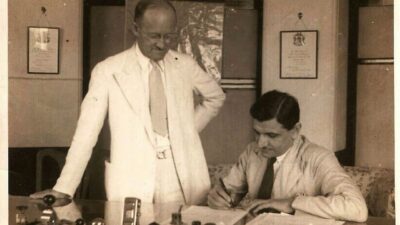
सोहराब मोदी ने आग़ा जानी कश्मीरी की कहानी पर मिनर्वा मूवीटोन के लिए यह फ़िल्म बनाई और निर्देशित की, और फ़िल्म इतिहासकार अमृत गंगार इसे 'लघु ऐतिहासिक' दर्ज करते हैं जिसे फिर भी निर्देशन और प्रोडक्शन वैल्यूज़ के लिए सराहा गया। रफ़ीक़ ग़ज़नवी 'सिकंदर' (1941) के बाद मोदी के पास लौट रहे थे। इस गीत का शीर्षक स्रोतों में तीन अलग-अलग लिप्यंतरणों में मिलता है — 'गरीबो की दुनिया', 'गरीबों की दुनिया', 'ग़रीबों की दुनिया' — जो किसी शीर्षक के 78-आरपीएम लेबल से कई हाथों तक पहुँचने की सामान्य पहचान है; यहाँ विकिपीडिया की गीत-तालिका का रूप लिया गया है।
अंग्रेज़ी में पढ़ें · Read in English
Sohrab Modi produced and directed the film for Minerva Movietone from Agha Jani Kashmiri's story, and the film historian Amrit Gangar records it as a 'minor historical' that was nonetheless well received for its direction and production values. Rafiq Ghaznavi was returning to Modi after Sikandar (1941). The song title appears in three different transliterations across the sources — Garibo Kee Duniya, Garibo Ki Duniya, Garibon Ki Duniya — which is the usual signature of a title travelling from a 78-rpm label through several hands; the form used here follows Wikipedia's song table.
विरासत The Legacy
यह गीत पुनः जारी नहीं हुआ और इसकी कोई रिकॉर्डिंग नहीं मिली। इसे रिकॉर्ड में रखने लायक़ मुख्यतः इसलिए है कि यह 1940 के दशक की हिंदी फ़िल्म की उस आदत को दिखाता है जिसमें वह अपनी मूल बात भाषण में नहीं, गीत में रखती थी — और इसलिए भी कि यह इस फ़िल्म के साउंडट्रैक और उसके विषय के बीच सबसे साफ़ पुल है। अमीरबाई कर्नाटकी का मध्य-1940 का भंडार आम तौर पर बहुत कम पुनर्प्रकाशित हुआ है; 'किस्मत' और 'रत्तन' के गिने-चुने गीत आज उनका नाम ढोते हैं, और दर्जनों दूसरे, यह भी उनमें, केवल गीत-सूचियों की प्रविष्टियों के रूप में मौजूद हैं।
अंग्रेज़ी में पढ़ें · Read in English
The song has not been reissued and no recording has been traced. It is worth keeping in the record chiefly for what it shows about the 1940s Hindi film's habit of putting its thesis into a song rather than a speech — and because it is the clearest thematic bridge between this film's soundtrack and its subject. Amirbai Karnataki's mid-1940s catalogue is very thinly reissued in general; a handful of Kismet and Rattan titles carry her name today, and dozens of others, this among them, exist only as entries in film song listings.
वर्गीकरण
Classification- Tempo
- Medium
Genre
अन्य विवरण
More Details- https://en.wikipedia.org/wiki/Ek_Din_Ka_Sultan
- https://www.hindigeetmala.net/movie/ek_din_ka_sultan.htm
- https://en.wikipedia.org/wiki/List_of_Hindi_films_of_1945
- https://en.wikipedia.org/wiki/Sohrab_Modi
- https://en.wikipedia.org/wiki/Amirbai_Karnataki
- https://en.wikipedia.org/wiki/Rafiq_Ghaznavi
References
रोचक तथ्य
Margin Notesयह शीर्षक स्रोतों में कम से कम तीन लिप्यंतरणों में बचा है — 'गरीबो की दुनिया', 'गरीबो की', 'ग़रीबों की दुनिया' — जो हाथ से नक़ल होते किसी 78-आरपीएम लेबल की सामान्य निशानी है।
अंग्रेज़ी में पढ़ें · Read in English
The title survives in at least three transliterations across sources — Garibo Kee Duniya, Garibo Ki Duniya and Garibon Ki Duniya — a typical trace of a 78-rpm label being copied by hand.
रफ़ीक़ ग़ज़नवी ने पहली पंजाबी फ़ीचर फ़िल्म 'हीर रांझा' (1932) में नायक की भूमिका निभाई, संगीत दिया और गीत भी गाए।
अंग्रेज़ी में पढ़ें · Read in English
Rafiq Ghaznavi played the lead, composed the music and sang the songs in Heer Ranjha (1932), the first Punjabi feature film.
अमीरबाई कर्नाटकी 'कन्नड़ कोकिला' कहलाती थीं; महात्मा गांधी उनके गाए भजन 'वैष्णव जन तो' के प्रशंसक थे।
अंग्रेज़ी में पढ़ें · Read in English
Amirbai Karnataki was known as Kannada Kokila; Mahatma Gandhi was an admirer of her rendering of the bhajan 'Vaishnav Jan To'.
नमूना-पट्टी
The Specimen Table| शीर्षक | ग़रीबों की दुनिया जहाँ से निराली · Garibon Ki Duniya Jahan Se Nirali |
|---|---|
| फ़िल्म | एक दिन का सुल्तान · 1945 |
| वर्ष · युग | 1945 |
| गायक | Amirbai Karnataki |
| गीतकार | Wali Saheb |
| संगीतकार | Rafiq Ghaznavi |
| स्वरूप | एकल महिला |
| गति | मध्यम |
| भाषा | hindi |
| भाव | मीठा-कड़वा · दार्शनिक |
| लोकप्रियता | Obscure |
| बोल-स्थिति | केवल झलक |
जुड़े हुए पन्ने
Connected Plates · The Graph Made Visibleअटलस में कोई पन्ना अकेला नहीं — इस गीत से जुड़े गीत, कलाकार, फ़िल्म, राग-ताल-विधा, सब यहाँ से खुलते हैं।
मिलते-जुलते गीत · Related Songs
कलाकार · The Artists
फ़िल्म · The Film
साझा कीजिए · Share this Plate