गीत विंग · गीत-पट्टिका · Song Plate
फ़रियाद ना कर आँसू ना बहा
Fariyad Na Kar Aansu Na Baha
एक सांत्वना-भरा स्वर एक युवा विधवा से कहता है कि फ़रियाद करने और आँसू बहाने से कुछ नहीं बदलेगा — 'घर' (1945) का सबसे अँधेरा और सबसे सुरक्षित बचा हुआ गीत।
भावमीठा-कड़वा · उदास · दार्शनिक
भाषाhindi गतिधीमी स्वरूपएकल महिला
श्रेय
The Creditsसूत्र-वाक्य · The Hook
सूत्र-वाक्य
एक सांत्वना-भरा स्वर एक युवा विधवा से कहता है कि फ़रियाद करने और आँसू बहाने से कुछ नहीं बदलेगा — 'घर' (1945) का सबसे अँधेरा और सबसे सुरक्षित बचा हुआ गीत।
In EnglishA consoling voice tells a young widow that pleading and weeping will change nothing — the darkest and best-preserved song of Ghar (1945).
पट्टिका-लेख
The Monographपरिचय Overview
'घर' (1945) का सबसे वज़नदार गीत और वही, जिसके सहारे यह फ़िल्म आज भी याद की जाती है। ज़ोहराबाई अम्बालेवाली यहाँ दुख भोगने वाली नहीं, बल्कि उससे कहने वाली आवाज़ हैं: संबोधित वह स्त्री है जिसे विवाह ने वधू बनाया और मृत्यु ने कुछ ही दिनों में वह पहचान छीन ली, और गीत का पूरा तर्क यही है कि इतनी बड़ी दुनिया में उसकी फ़रियाद सुनने वाला कोई नहीं। रूपबानी का यह गीत फ़िल्म के आठ गीतों में से उन चार में है जिनका पाठ गीत-संग्रहों में बचा रह गया, और यही सबसे स्पष्ट प्रमाण है कि 'घर' असल में किस विषय पर बनी थी।
अंग्रेज़ी में पढ़ें · Read in English
The most substantial number in Ghar (1945) and the one by which the film is still remembered. Zohrabai Ambalewali sings not as the sufferer but to her: the addressee is a woman whom marriage made a bride and death unmade within days, and the song's whole argument is that her pleading will find no listener in a world this size. Roopbani's lyric is one of only four from the film's eight songs whose text survives in the song archives, and it is the clearest surviving evidence of what Ghar was actually about.
संगीत The Music
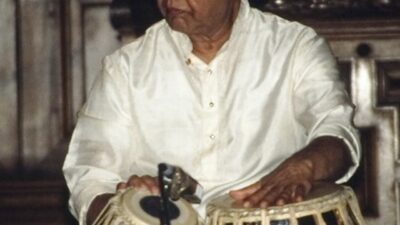
1940 के दशक के मध्य की बंबइया शैली में रचा गया एक धीमा विलाप — नीची चाल की, लगभग अलंकार-रहित धुन, जिसे ज़ोहराबाई की खुली, छाती से निकलती आवाज़ उस दौर की सामान्य हारमोनियम-सारंगी की बुनियाद पर उठाए रखती है, और ताल को एक कोमल, अनुत्तेजित धड़कन भर रहने दिया गया है। दिलचस्प बात यह है कि इसे रचा किसने: अल्ला रक्खा प्रशिक्षण और पेशे से पंजाब घराने के तबला वादक थे, और यहाँ वे जान-बूझकर लय को अग्रभूमि से हटा देते हैं, गीत का सारा भार स्वर-रेखा और उसके लंबे ठहरे हुए पद-अंतों पर छोड़कर।
अंग्रेज़ी में पढ़ें · Read in English
A slow lament in the standard mid-1940s Bombay idiom — a low-lying, largely unornamented melody carried by Zohrabai's open, chest-forward voice over the period's usual harmonium-and-sarangi bed, with the percussion kept to a soft, unhurried pulse. The interesting thing is who wrote it: Alla Rakha was a Punjab gharana tabla player by training and vocation, and here he deliberately keeps rhythm out of the foreground, leaving the weight of the song entirely on the vocal line and its long held phrase-ends.
काव्य The Poetry
रूपबानी यहाँ ऐसी सांत्वना लिखते हैं जो सांत्वना देने से इनकार कर देती है। टेक उस स्त्री से कहती है कि वह फ़रियाद करना और रोना छोड़ दे — इसलिए नहीं कि उसका शोक बड़ा है, बल्कि इसलिए कि दुनिया इतनी बड़ी और इतनी बहरी है कि दोनों में से कोई भी उस तक नहीं पहुँचेगा। अंतरे उसकी क्षति को हिंदी की विधवा-कविता की जमी-जमाई शब्दावली में रखते हैं: माँग से पुँछा हुआ सिंदूर, उजड़ा हुआ घर, और 'विधवा' शब्द जो मुश्किल से दो दिन की सुहागन से चिपका दिया गया। 1945 के किसी फ़िल्मी गीत के लिए असामान्य बात यह है कि इसमें प्रतिकार का कोई वादा नहीं है — न कोई ईश्वर हस्तक्षेप करता है, न कोई सुधारक आता है, न कोई दूसरा जीवन प्रस्तावित होता है। कविता की एकमात्र सलाह है बिना दिखावे के सह जाना, जो एक साथ करुणा भी है और उस समाज पर फ़ैसला भी जो यह माँगता है।
अंग्रेज़ी में पढ़ें · Read in English
Roopbani writes a consolation that refuses to console. The refrain instructs the woman to stop pleading and stop weeping — not because her grief is disproportionate, but because the world is too large and too deaf for either to register. The verses set out her loss in the settled vocabulary of Hindi widow-poetry: the vermilion wiped from the parting, the household undone, the word 'widow' fastened to someone who had been a bride for barely two days. What is unusual for a 1945 film lyric is the absence of any promise of redress — no God intervenes, no reformer arrives, no second life is offered. The poem's only counsel is endurance without display, which is both a compassion and a verdict on the society that requires it.
कहानी The Story
'घर' सनराइज़ पिक्चर्स, बंबई में बनी एक पारिवारिक नाट्य-फ़िल्म थी, जिसका निर्देशन स्टूडियो के घरेलू निर्देशक वी. एम. व्यास ने किया, संगीत अल्ला रक्खा का था — फ़िल्मों में जिनका श्रेय ए. आर. क़ुरैशी के नाम से जाता है — और गीत रूपबानी के, जो 'मां बाप' (1944) के बाद उस संगीतकार-गीतकार जोड़ी की लगातार दूसरी व्यास-फ़िल्म थी। 'घर' का कोई प्रिंट, प्रचार-पुस्तिका या समकालीन कथा-सार बचा हुआ ज्ञात नहीं है, इसलिए यह गीत दोहरा काम करता है: यह रिकॉर्ड भी है और साक्ष्य भी। चूँकि इसका पाठ बच गया और फ़िल्म नहीं, इसलिए इसके केंद्र में खड़ी विधवा व्यावहारिक रूप से 'घर' की वही एकमात्र पात्र है जिसकी स्थिति विश्वास के साथ बताई जा सकती है। फ़िल्म के आठों गीत आज भी सारेगामा बेचता है; यह उन पाँच में से एक है जो संग्रह-ब्लॉग 'अतुल्स सॉन्ग अ डे' पर ध्वनि के रूप में भी सामने आए।
अंग्रेज़ी में पढ़ें · Read in English
Ghar was a family drama made at Sunrise Pictures, Bombay, directed by the studio's house director V. M. Vyas, with music by Alla Rakha — credited in films as A. R. Qureshi — and lyrics by Roopbani, the second consecutive Vyas film for that composer-lyricist pair after Maa Baap (1944). No print, press book or contemporary synopsis of Ghar is known to survive, so this song does double duty: it is a record and it is evidence. Because its text was preserved while the film was not, the widow at its centre is effectively the only character of Ghar whose situation can be described with confidence. All eight of the film's songs are still sold by Saregama; this is one of the five that have also surfaced as audio on the archival blog Atul's Song A Day.
विरासत The Legacy
फ़िल्म के रूप में 'घर' का कोई बाद का जीवन नहीं है, इसलिए उसका जो बचा है वह यही रिकॉर्डिंग है। यह ज़ोहराबाई अम्बालेवाली को उस वर्चस्व के शिखर पर पकड़ती है जिसके पास बस दो-तीन साल बचे थे — नौशाद की 'रत्तन' (1944) के उनके चार चर्चित एकलों के अगले ही बरस, और लता मंगेशकर के आगमन से कुछ ही पहले, जिसने पूरे महिला पार्श्वगायन-क्षेत्र को नए सिरे से गढ़ दिया। यह अल्ला रक्खा के उस समांतर जीवन का दस्तावेज़ भी है जो उन्होंने फ़िल्म-संगीतकार के रूप में ए. आर. क़ुरैशी नाम से 1940 और 1950 के दशकों में जिया और जिसे रवि शंकर के साथ अपने शास्त्रीय काम के मॉन्टेरे और वुडस्टॉक तक पहुँचने पर काफ़ी हद तक छोड़ दिया। यह गीत 1940 के दशक के हिंदी फ़िल्म संगीत के संग्राहकों के बीच चुपचाप चलता रहा है, जहाँ इसे 'घर' का वही एक टुकड़ा माना जाता है जिसे जानना ज़रूरी है।
अंग्रेज़ी में पढ़ें · Read in English
Ghar has no afterlife as a film, so what remains of it is this recording. It catches Zohrabai Ambalewali at the top of a primacy with only two or three years left in it — the year after her four celebrated solos in Naushad's Rattan (1944), and shortly before Lata Mangeshkar's arrival reset the whole female playback field. It is also part of the record of Alla Rakha's parallel life as a film composer, the career he ran under the name A. R. Qureshi through the 1940s and 1950s and largely set aside when his classical work with Ravi Shankar took him to Monterey and Woodstock. The song has kept a quiet circulation among collectors of 1940s Hindi film music, where it is treated as the one piece of Ghar worth knowing.
वर्गीकरण
Classification- Tempo
- Slow
Genre
अन्य विवरण
More Details- https://www.hindigeetmala.net/movie/ghar_1945.htm
- https://en.wikipedia.org/wiki/List_of_Hindi_films_of_1945
- https://www.saregama.com/album/ghar_107503
- https://www.cinemaazi.com/people/alla-rakha-qureshi
- https://atulsongaday.me/2013/06/20/fariyaad-na-kar-aansoo-na-bahaa/
- https://en.wikipedia.org/wiki/Zohrabai_Ambalewali
- https://en.wikipedia.org/wiki/Alla_Rakha
- https://atulsongaday.me/tag/ghar+1945/
References
रोचक तथ्य
Margin Notes'घर' (1945) का यह पहला गीत था जिसे संग्रह-ब्लॉग 'अतुल्स सॉन्ग अ डे' पर जून 2013 में प्रस्तुत किया गया; अगले दशक में चार और आए, जिनमें आख़िरी जून 2023 में।
अंग्रेज़ी में पढ़ें · Read in English
This was the first song from Ghar (1945) to be featured on the archival blog Atul's Song A Day, in June 2013; four more followed over the next decade, the last in June 2023.
ज़ोहराबाई अम्बालेवाली इसे अकेले गाती हैं; फ़िल्म में उनका कोई दूसरा गीत नहीं है। 'घर' के आठ गीतों में से एक उनके हिस्से है, तीन राजकुमारी के और दो अमीरबाई कर्नाटकी के।
अंग्रेज़ी में पढ़ें · Read in English
Zohrabai Ambalewali sings this alone; she has no other song in the film. Of Ghar's eight numbers she takes one, Rajkumari three and Amirbai Karnataki two.
यहाँ अल्ला रक्खा के नाम से श्रेयांकित संगीतकार पंजाब घराने के उस्ताद अल्ला रक्खा क़ुरैशी (1919-2000) हैं, ज़ाकिर हुसैन के पिता, जिन्होंने फ़िल्मी नाम ए. आर. क़ुरैशी से 1943 से 1964 के बीच 23 हिंदी और पंजाबी फ़िल्मों का संगीत दिया।
अंग्रेज़ी में पढ़ें · Read in English
The composer credited here as Alla Rakha is Ustad Alla Rakha Qureshi (1919-2000) of the Punjab gharana, father of Zakir Hussain, who scored 23 Hindi and Punjabi films between 1943 and 1964 under the film name A. R. Qureshi.
नमूना-पट्टी
The Specimen Table| शीर्षक | फ़रियाद ना कर आँसू ना बहा · Fariyad Na Kar Aansu Na Baha |
|---|---|
| फ़िल्म | घर · 1945 |
| वर्ष · युग | 1945 |
| गायक | Zohrabai Ambalewali |
| गीतकार | Roopbani |
| संगीतकार | Allah Rakha |
| स्वरूप | एकल महिला |
| गति | धीमी |
| भाषा | hindi |
| भाव | मीठा-कड़वा · उदास · दार्शनिक |
| लोकप्रियता | Known |
| बोल-स्थिति | केवल झलक |
जुड़े हुए पन्ने
Connected Plates · The Graph Made Visibleअटलस में कोई पन्ना अकेला नहीं — इस गीत से जुड़े गीत, कलाकार, फ़िल्म, राग-ताल-विधा, सब यहाँ से खुलते हैं।
मिलते-जुलते गीत · Related Songs
कलाकार · The Artists
फ़िल्म · The Film
साझा कीजिए · Share this Plate