गीत विंग · गीत-पट्टिका · Song Plate
दिल दिये चले हम दिये चले ऐसे
Dil Diye Chale Hum Diye Chale Aise
मोहम्मद रफ़ी की सबसे शुरुआती हिंदी फ़िल्मी रिकॉर्डिंगों में से एक — 1945 का यह युगल गीत मोहनतारा के साथ, एक ऐसे संगीतकार, गीतकार और बैनर के लिए जिनके साथ इनमें से कोई दोबारा काम नहीं करेगा।
भावमीठा-कड़वा · रोमांटिक
भाषाhindi गतिमध्यम स्वरूपयुगल
श्रेय
The Creditsसूत्र-वाक्य · The Hook
सूत्र-वाक्य
मोहम्मद रफ़ी की सबसे शुरुआती हिंदी फ़िल्मी रिकॉर्डिंगों में से एक — 1945 का यह युगल गीत मोहनतारा के साथ, एक ऐसे संगीतकार, गीतकार और बैनर के लिए जिनके साथ इनमें से कोई दोबारा काम नहीं करेगा।
In EnglishOne of Mohammed Rafi's earliest Hindi film recordings — a 1945 duet with Mohantara for a composer, a lyricist and a banner none of them would work with again.
पट्टिका-लेख
The Monographपरिचय Overview
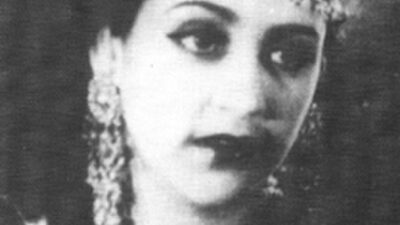
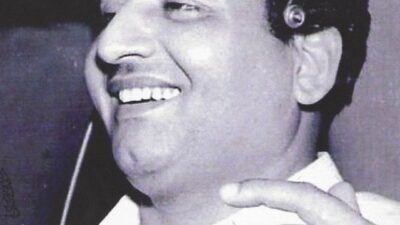
'दिल दिये चले हम दिये चले ऐसे' बेगम (1945) के नौ गीतों वाले संगीत का एकमात्र युगल गीत है और फ़िल्म का एकमात्र ऐसा गीत जिसे कलाकारों से बाहर की आवाज़ों ने गाया। मोहम्मद रफ़ी, जो 1944 में ही बंबई आए थे और जिनका पहला हिंदी फ़िल्मी गीत 'गाँव की गोरी' में आया था, यहाँ मोहनतारा के साथ जोड़ी में हैं — एक ऐसी गायिका जिनकी छोटी-सी बची हुई डिस्कोग्राफ़ी 1940 के दशक के अंत तक चलती है। संगीत हरि प्रसन्न दास का है और बोल गोपाल सिंह नेपाली के, जो उनके दस्तावेज़ी फ़िल्म-सफ़र का पहला वर्ष था।
अंग्रेज़ी में पढ़ें · Read in English
'Dil Diye Chale Hum Diye Chale Aise' is the only duet in the nine-song score of Begum (1945) and the only number in the film sung by voices from outside the cast. Mohammed Rafi, who had moved to Bombay only in 1944 and whose first Hindi film song had appeared in Gaon Ki Gori, is paired here with Mohantara, a singer whose small surviving discography runs through the late 1940s. Music is by Hari Prasanna Das and the words are by Gopal Singh Nepali, in what his documented filmography records as his first year of film work.
संगीत The Music
इस युगल गीत का कोई पुनःप्रकाशित रिकॉर्ड आमतौर पर उपलब्ध नहीं है, इसलिए इसकी संगीत-सज्जा को सुनकर वर्णित नहीं किया जा सकता; क्रेडिट जो तय करते हैं वह इसका ढाँचा है — एक स्टूडियो संगीतकार द्वारा 1945 के मानक बंबइया मुहावरे में रचा दो-आवाज़ों वाला गीत, जहाँ हारमोनियम-प्रधान धुन, तबले या ढोलक की ताल और एक छोटा तार-वाद्य समूह ही मध्यम बजट की फ़िल्म माइक्रोफ़ोन के सामने रख सकती थी। दिलचस्पी आवाज़ों में है: अपने कैरियर की बिलकुल शुरुआत में रफ़ी — नौशाद के उस साथ से पहले जो उन्हें परिभाषित करने वाला था — और उनके सामने मोहनतारा की सादी, बिना अलंकरण वाली गायकी।
अंग्रेज़ी में पढ़ें · Read in English
No reissued pressing of this duet is in general circulation, so the arrangement cannot be described from listening; what the credits fix is its shape — a two-voice number scored by a working studio composer in the standard 1945 Bombay idiom, where a harmonium-led melody over tabla or dholak with a small string group was what a mid-budget production could put in front of the microphone. The interest lies in the voices: Rafi at the very start of his career, before the Naushad association that would define him, set against Mohantara's plainer, unornamented delivery.
काव्य The Poetry
शीर्षक क्रिया के दोहराव पर टिका है: दिल दिया गया, और फिर देना बस चलता रहा — 'दिल दिये चले, हम दिये चले, ऐसे'। यह वह रचना-युक्ति है जिससे हिंदी-उर्दू फ़िल्मी काव्य प्रेम को आदान-प्रदान नहीं, बल्कि एक व्यय की तरह वर्णित करता है — बिना हिसाब और बिना प्रतिफल की आशा के ख़र्च की गई कोई चीज़। गोपाल सिंह नेपाली फ़िल्मों में छायावादोत्तर हिंदी कविता से आए थे — उनका संग्रह 'उमंग' 1933 में छप चुका था — और वह पृष्ठभूमि यहाँ की सादी भाषा में दिखती है, जो उस दौर के फ़िल्मी गीत पर हावी फ़ारसीनिष्ठ उर्दू से अधिक बोलचाल की हिंदी के क़रीब है।
अंग्रेज़ी में पढ़ें · Read in English
The title turns on a doubling of the verb: the heart was given, and then the giving simply went on — 'we gave the heart, and kept on giving, like this'. It is a construction Hindi-Urdu film verse uses to describe love as an expenditure rather than an exchange, something spent without an accounting and without an expectation of return. Gopal Singh Nepali came to films from the post-Chhayavaad Hindi poetry movement — his collection Umang had appeared in 1933 — and that background shows in the plainness of the diction here, closer to spoken Hindi than to the Persianised Urdu that dominated the film lyric of the period.
कहानी The Story
बेगम का निर्माण ताजमहल पिक्चर्स ने किया — वह बैनर जिसे अभिनेत्री नसीम बानो अपने पति मियाँ एहसान-उल-हक़ के साथ चलाती थीं — और निर्देशन सुशील मजूमदार का था; MySwar पटकथा का श्रेय सआदत हसन मंटो को देता है। नौ में से छह गीत नसीम बानो ने स्वयं गाए और एक अशोक कुमार ने, जिससे यह रफ़ी–मोहनतारा युगल फ़िल्म की इकलौती बाहरी कास्टिंग बन जाता है — जिस गीत को मुख्य कलाकार स्वयं नहीं गाने वाले थे, उसके लिए निर्माता पेशेवर पार्श्वगायकों के पास गए।
अंग्रेज़ी में पढ़ें · Read in English
Begum was produced by Taj Mahal Pictures, the banner the actress Naseem Banu ran with her husband Mian Ehsan-ul-Haq, and directed by Sushil Majumdar; MySwar credits the screenplay to Saadat Hasan Manto. Naseem Banu sings six of the nine songs herself and Ashok Kumar sings one, which makes this Rafi–Mohantara duet the film's one piece of outside casting — the producers went to professional playback voices for the number the leads were not going to sing themselves.
विरासत The Legacy
आज इस गीत की पहचान लगभग पूरी तरह रफ़ी के नाम पर टिकी है। बेगम स्वयं प्रचलन में नहीं है और यह रिकॉर्डिंग उन रफ़ी-गीतों में नहीं है जो एलपी या सीडी पर पुनःप्रकाशित हुए, इसलिए यह सुनने की वस्तु के बजाय फ़िल्मी-गीत डेटाबेस में एक कैटलॉग-पंक्ति के रूप में बची है — 1945 की उन गिनी-चुनी रिकॉर्डिंगों में से एक जो रफ़ी को 'रफ़ी' बनने से पहले दर्ज करती हैं। रफ़ी और मोहनतारा फिर मिले सी. रामचंद्र के खिड़की (1948) और पतंगा (1949) के समूह-गीतों में, तब तक दोनों कहीं अधिक प्रमुख फ़िल्मों पर थे।
अंग्रेज़ी में पढ़ें · Read in English
The song's standing today rests almost entirely on the Rafi credit. Begum itself is not in circulation and the recording is not among the Rafi numbers that were reissued on LP or CD, so it survives as a catalogue line in the film-song databases rather than as a piece of listening — an entry in the small set of 1945 recordings that document Rafi before he was Rafi. Rafi and Mohantara would meet again in C. Ramchandra's ensemble numbers for Khidki (1948) and Patanga (1949), by which time both were on far more prominent projects.
वर्गीकरण
Classification- Tempo
- Medium
Genre
अन्य विवरण
More Details- https://www.hindigeetmala.net/movie/begum.htm
- https://myswar.co/album/begum-1945
- https://indiancine.ma/EDF/info
- https://en.wikipedia.org/wiki/List_of_Hindi_films_of_1945
- https://en.wikipedia.org/wiki/Gopal_Singh_Nepali
- https://en.wikipedia.org/wiki/Naseem_Banu
- https://en.wikipedia.org/wiki/Mohammed_Rafi
References
रोचक तथ्य
Margin Notesमोहम्मद रफ़ी 1944 में बंबई आए; हिंदी फ़िल्म में उनका पहला रिकॉर्ड किया गीत शाम सुंदर के संगीत में जी. एम. दुर्रानी के साथ 'गाँव की गोरी' का युगल 'अजी दिल हो क़ाबू में' था। बेगम उन गिनी-चुनी फ़िल्मों में है जिनके लिए उन्होंने ठीक अगले वर्ष रिकॉर्ड किया — नौशाद के उस साथ से पहले जिसने उन्हें अग्रणी आवाज़ बनाया।
अंग्रेज़ी में पढ़ें · Read in English
Mohammed Rafi moved to Bombay in 1944; his first recorded song in a Hindi film was the duet 'Aji dil ho kaabu mein' with G. M. Durrani for Gaon Ki Gori, under Shyam Sunder. Begum belongs to the handful of films he recorded for in the very next year, before the Naushad partnership that made him a leading voice.
मोहनतारा की दस्तावेज़ी हिंदी फ़िल्म डिस्कोग्राफ़ी बहुत छोटी है — गीत-डेटाबेस लगभग पाँच शीर्षक दर्ज करते हैं, जो बेगम (1945), खिड़की (1948), फूल और काँटे (1948), पतंगा (1949) और इनाम (1955) तक फैले हैं।
अंग्रेज़ी में पढ़ें · Read in English
Mohantara's documented Hindi film discography is very small — song databases list around five titles, spanning Begum (1945), Khidki (1948), Phool Aur Kante (1948), Patanga (1949) and Inaam (1955).
बेगम के सभी नौ गीत गोपाल सिंह नेपाली ने लिखे और हरि प्रसन्न दास ने रचे; नेपाली की दस्तावेज़ी फ़िल्मोग्राफ़ी 1945 में इसी फ़िल्म और मज़दूर से शुरू होती है — दोनों उसी संगीतकार के लिए और दोनों में पूरा संगीत उन्हीं का लिखा।
अंग्रेज़ी में पढ़ें · Read in English
All nine songs of Begum were written by Gopal Singh Nepali and composed by Hari Prasanna Das; Nepali's documented filmography begins in 1945 with this film and Mazdoor, both for the same composer and both with him writing the entire score.
नमूना-पट्टी
The Specimen Table| शीर्षक | दिल दिये चले हम दिये चले ऐसे · Dil Diye Chale Hum Diye Chale Aise |
|---|---|
| फ़िल्म | बेगम · 1945 |
| वर्ष · युग | 1945 |
| गायक | Mohammed Rafi, मोहनतारा |
| गीतकार | गोपाल सिंह नेपाली |
| संगीतकार | Hari Prasanna Das |
| स्वरूप | युगल |
| गति | मध्यम |
| भाषा | hindi |
| भाव | मीठा-कड़वा · रोमांटिक |
| लोकप्रियता | Known |
| बोल-स्थिति | केवल झलक |
जुड़े हुए पन्ने
Connected Plates · The Graph Made Visibleअटलस में कोई पन्ना अकेला नहीं — इस गीत से जुड़े गीत, कलाकार, फ़िल्म, राग-ताल-विधा, सब यहाँ से खुलते हैं।
मिलते-जुलते गीत · Related Songs
कलाकार · The Artists
फ़िल्म · The Film
साझा कीजिए · Share this Plate