गीत विंग · गीत-पट्टिका · Song Plate
भूला भूला मन फिरता है
Bhula Bhula Man Phirta Hai
परदेसी में कांतिलाल का एक एकल, भटकते, खोए हुए मन पर ('भूला भूला मन फिरता है')।
भावउदास · दार्शनिक
भाषाhindi गतिधीमी स्वरूपएकल पुरुष
श्रेय
The Creditsसूत्र-वाक्य · The Hook
सूत्र-वाक्य
परदेसी में कांतिलाल का एक एकल, भटकते, खोए हुए मन पर ('भूला भूला मन फिरता है')।
In EnglishA Kantilal solo on the wandering, distracted heart ('bhula bhula man phirta hai') from Pardesi.
पट्टिका-लेख
The Monographपरिचय Overview
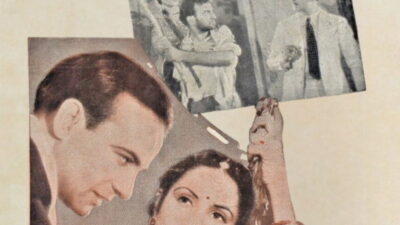
परदेसी (1941) में कांतिलाल का एक एकल, संगीत खेमचंद प्रकाश का। भटकते, भुलक्कड़ मन का भाव इसे फ़िल्म के अंतर्मुखी पुरुष गीतों में से एक बनाता है, जो अन्यथा मुख्यतः ख़ुर्शीद-प्रधान संगीत-पट्टी में है।
अंग्रेज़ी में पढ़ें · Read in English
A Kantilal solo from Pardesi (1941), composed by Khemchand Prakash. The motif of the wandering, forgetful heart marks it as one of the film's introspective male numbers within an otherwise predominantly Khursheed-led score.
काव्य The Poetry
'भूला भूला मन फिरता है' हिंदी-उर्दू गीत की विरह-कीर्तन परंपरा से संबंधित है: प्रिय से बिछड़ा पुरुष प्रेमी एक विशेष प्रकार की विचलित अवस्था में है जिसमें दुनिया के सामान्य कार्यों पर भी ध्यान देना असंभव हो जाता है, मन अपनी सामाजिक पहचान को 'भूल' जाता है और लालसा के आंतरिक परिदृश्य में भटकता रहता है। 'भूला भूला' में पुनरावृत्ति (द्विरुक्ति) है — हिंदी की एक विशिष्ट व्याकरणिक विशेषता जिसका गीतकार भावनात्मक तीव्रता के लिए नियमित उपयोग करते थे: केवल 'भूल जाना' नहीं बल्कि 'बार-बार भूलना,' अधूरेपन की एक अखंड स्थिति में। यह तकनीक एक स्थैतिक वर्णन को गतिशील, चलमान अनुभव में बदल देती है। इस द्विरुक्ति का भटकने की छवि ('फिरता है') के साथ संयोजन गीत को बेचैनी की एक विशेष लय देता है — एक मन जो कोई स्थिर बिंदु नहीं ढूंढ पाता, बिना गंतव्य के चक्कर लगाता रहता है।
अंग्रेज़ी में पढ़ें · Read in English
'Bhula Bhula Man Phirta Hai' — 'The mind wanders, forgetful, lost' — belongs to the viraha-keertana tradition of Hindi-Urdu lyric: the male lover separated from his beloved suffers a specific kind of distraction in which even the ordinary activities of the world become impossible to attend to, the mind 'forgetting' its social self and drifting in an inner landscape of longing. The compound 'bhula bhula' employs reduplication — a characteristic grammatical feature of Hindi that lyricists regularly exploited for emotional intensification: not merely 'having forgotten' but 'forgetting again and again,' in a continuous state of distracted incompleteness. This technique transforms what might be a static description into a dynamic, ongoing experience. The combination of this reduplication with the image of wandering ('phirta hai') gives the lyric a particular rhythm of restlessness — a mind that cannot find a fixed point, circling without destination. Khemchand Prakash's Slow tempo would have shaped Kantilal's baritone into a measured, meditative delivery appropriate to a man too deep in grief to dramatize it.
कहानी The Story
परदेसी (1941) — रंजित मूवीटोन की चतुर्भुज दोशी निर्देशित, खेमचंद प्रकाश संगीत-रचित बड़े आकार की सामाजिक ड्रामा — में विविध गायक-मंडल था। ख़ुर्शीद एल्बम के रोमांटिक धारे पर हावी थीं, जबकि कांतिलाल फ़िल्म की प्रमुख पुरुष आवाज़ थे। 'भूला भूला मन फिरता है' कांतिलाल का एकल है जो फ़िल्म के आत्मनिरीक्षी पुरुष स्वर का प्रतिनिधित्व करता है — भटकते, खोए मन के बारे में एक चिंतनशील गीत जो नायिका के अधिक मधुर आत्मविश्वासपूर्ण गीतों के साथ विपरीत खड़ा होता है। रंजित मूवीटोन के इस दौर के निर्माण में पुरुष गायकों को नियमित रूप से संतुलन देने वाली चिंतनशील भूमिकाओं में रखा जाता था, और कांतिलाल — एक विश्वसनीय स्टूडियो आवाज़ जो अपने नियंत्रित गहरे स्वर के लिए जाने जाते थे — ऐसे गीतों के लिए उनकी नियमित पसंद थे। परदेसी के पंद्रह गीतों में से इस विशिष्ट गीत का गीतकार व्यक्तिगत रूप से दर्ज नहीं है।
अंग्रेज़ी में पढ़ें · Read in English
Pardesi (1941), Ranjit Movietone's large-scale social drama directed by Chaturbhuj Doshi with music by Khemchand Prakash, featured a diverse vocal cast. While Khursheed dominated the album's romantic strand, Kantilal provided the film's principal male voice. 'Bhula Bhula Man Phirta Hai' is a Kantilal solo that represents the film's introspective male register — a contemplative number about the wandering, distracted heart that stands in contrast to the heroine's more melodically assertive songs. Ranjit Movietone's productions of this period regularly cast male singers in counterbalancing reflective roles, and Kantilal — a reliable studio voice known for his controlled baritone — was their regular choice for such numbers. The lyricist for this specific song within Pardesi's fifteen-song soundtrack is not individually documented; the film's lyrics were shared between D.N. Madhok and P.L. Santoshi.
वर्गीकरण
Classification- Tempo
- Slow
Genre
अन्य विवरण
More Details- https://www.imdb.com/title/tt0213979/
- https://www.bollywoodmdb.com/movies/cast-crew/pardesi/11642
- https://en.wikipedia.org/wiki/Khemchand_Prakash
- https://myswar.co/album/pardesi-1941
References
रोचक तथ्य
Margin Notesकांतिलाल 1940 के दशक की शुरुआत में रणजीत मूवीटोन के एक नियमित पुरुष गायक-स्वर थे, जिन्हें आमतौर पर चिंतनशील या मननशील गीतों में लिया जाता था, जो उन्हीं फिल्मों में खुर्शीद द्वारा गाए गए अधिक प्रमुख रोमांटिक और ऊर्जावान एकल गीतों के पूरक होते थे।
अंग्रेज़ी में पढ़ें · Read in English
Kantilal was a regular male singing voice at Ranjit Movietone during the early 1940s, typically cast in reflective or contemplative numbers that complemented the more prominent romantic and energetic solos sung by Khursheed in the same films.
पुनरावृत्ति (द्विरुक्ति) की अलंकार-युक्ति — जैसे 'भुला भुला' — 1940 के दशक के हिंदी फिल्मी गीतों में एक मानक तकनीक थी, जो मौखिक काव्य-परंपरा से ली गई थी, जिसमें दोहराए गए शब्दांश भावनात्मक निरंतरता या तीव्रता व्यक्त करते हैं।
अंग्रेज़ी में पढ़ें · Read in English
The rhetorical device of reduplication — 'bhula bhula' (forgetting and forgetting) — was a standard technique in 1940s Hindi film lyrics, borrowed from the oral poetry tradition where repeated syllables express emotional continuity or intensity.
'परदेसी' (1941) का निर्देशन चतुर्भुज दोशी ने किया था, जो रणजीत मूवीटोन के भरोसेमंद हाउस-निर्देशकों में से एक थे; उन्होंने 1940 के दशक में स्टूडियो के लिए सामाजिक-नाटक विधा की कई फिल्मों का निर्देशन किया।
अंग्रेज़ी में पढ़ें · Read in English
Pardesi (1941) was directed by Chaturbhuj Doshi, one of Ranjit Movietone's reliable house directors; he directed multiple productions for the studio during the 1940s within the social-drama genre.
खेमचंद प्रकाश ने 1941 में 'परदेसी', 'शादी' और रणजीत मूवीटोन की अन्य फिल्मों के लिए एक साथ संगीत रचा — कई परियोजनाओं पर समानांतर काम करने की यह रफ़्तार स्टूडियो-प्रणाली के दौर में सामान्य बात थी, जब संगीतकार असेंबली-लाइन जैसी समय-सारणी पर काम करते थे।
अंग्रेज़ी में पढ़ें · Read in English
Khemchand Prakash simultaneously composed for Pardesi, Shaadi, and other Ranjit Movietone productions in 1941 — a pace of multiple simultaneous commissions that was standard in the studio-system era, when composers worked on assembly-line schedules.
नमूना-पट्टी
The Specimen Table| शीर्षक | भूला भूला मन फिरता है · Bhula Bhula Man Phirta Hai |
|---|---|
| फ़िल्म | परदेसी · 1941 |
| वर्ष · युग | 1941 |
| गायक | Kantilal |
| संगीतकार | Khemchand Prakash |
| स्वरूप | एकल पुरुष |
| गति | धीमी |
| भाषा | hindi |
| भाव | उदास · दार्शनिक |
| लोकप्रियता | Known |
| बोल-स्थिति | केवल झलक |
जुड़े हुए पन्ने
Connected Plates · The Graph Made Visibleअटलस में कोई पन्ना अकेला नहीं — इस गीत से जुड़े गीत, कलाकार, फ़िल्म, राग-ताल-विधा, सब यहाँ से खुलते हैं।
मिलते-जुलते गीत · Related Songs
कलाकार · The Artists
फ़िल्म · The Film
साझा कीजिए · Share this Plate