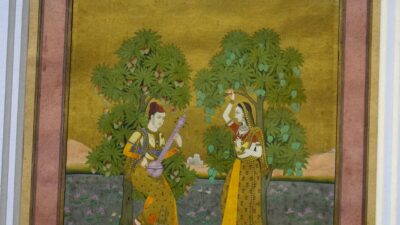
शास्त्र विंग · राग-पट्टिका · Raag Plate
शहन
Shahana
भावशांतिपूर्ण · ध्यानपूर्ण · प्रशांत · शांत
ऊर्जाधीमी
स्वर-चित्र · The Swara Panel
आरोह — अवरोह · The Ascent and the Descent
पकड़ · पहचान वाक्यांश
रे ग॒ म प ध प | म ग॒ रे स | नि॒ स रे ग॒ म
Re Ga♭ Ma Pa Dha Pa | Ma Ga♭ Re Sa | Ni♭ Sa Re Ga♭ Ma
Shahana's signature lies in the shuddha dhaivata (natural Dha) which distinguishes it from the Kafi family's typical treatment. The characteristic phrase lands emphatically on Pa, moves to shuddha Dha and returns, then descends through komal Ga to Sa. The lower komal nishada approach from below Sa reinforces the late-night devotional atmosphere.
वादी–संवादी टिप्पणी · Vadi–Samvadi note
Vadi — The vadi (primary) note provides the tonal center of Raag Shahana.
Samvadi — Ni (Nishad) is the samvadi, complementing the vadi note.
समय और भाव
Time Theory & Moodसमय-सिद्धांत · Time Theory
संध्या काल
परंपरागत रूप से संध्या काल (4:00 PM - 7:00 PM) में गाया जाता है।
Traditionally performed during evening/twilight hours (4:00 PM - 7:00 PM), when day transitions to night.
भाव और गति · Mood & Tempo
शांत · Peace/Tranquility
आंतरिक शांति, सुकून और आध्यात्मिक वैराग्य का रस। शांति, ध्यान और अध्यात्म को जगाता है।
ऊर्जा · Energyधीमी
स्तर · Leveladvanced — राग Shahana के लिए इसके मूल ठाट की समझ और मींड, गमक, आंदोलन के माध्यम से इसके अद्वितीय चरित्र को उभारने की क्ष…
पट्टिका-लेख
The Monographपरिचय Introduction
राग Shahana हिंदुस्तानी शास्त्रीय संगीत का एक राग है। इसका प्रमुख रस शांत (Peace/Tranquility) है। यह परंपरागत रूप से संध्या काल (4:00 PM - 7:00 PM) में गाया जाता है। गाया जाता है।
अंग्रेज़ी में पढ़ें · Read in English
Raag Shahana is a complete scale with all 7 notes in both ascent and descent raga in Hindustani classical music. This raag embodies the Peace/Tranquility (शांत) rasa, creating an atmosphere of peaceful, meditative emotion. It is traditionally performed during evening hours. The raag offers rich melodic possibilities through its characteristic phrases and ornamentations, making it a rewarding subject for both khayal and instrumental performance.
सांस्कृतिक महत्व Cultural Significance
भारतीय शास्त्रीय संगीत की समृद्ध परंपरा के अंग के रूप में, राग Shahana Hindustani परंपरा को परिभाषित करने वाले स्वर संरचना और भावनात्मक अभिव्यक्ति के बीच गहरे संबंध का प्रतिनिधित्व करता है।
अंग्रेज़ी में पढ़ें · Read in English
As part of the rich tapestry of Indian classical music, Raag Shahana represents the deep connection between melodic structure and emotional expression that defines the Hindustani tradition.
ऐतिहासिक महत्व Historical Significance
राग शहाना हिन्दुस्तानी शास्त्रीय संगीत का एक राग है जो कफ़ी ठाट से सम्बद्ध है। इसमें कोमल ग, शुद्ध ध और कोमल नि का प्रयोग होता है। यह रात के दूसरे प्रहर का राग है और इसका भाव कोमल विरह और भक्ति से ओतप्रोत है। कुछ विद्वान इसके नाम की उत्पत्ति फ़ारसी 'शाहाना' (राजसी) से जोड़ते हैं, जो मुग़ल-काल में भारतीय संगीत में समाहित हुई फ़ारसी परम्परा की ओर संकेत करता है। 20वीं शती में किराना और जयपुर-अतरौली घरानों के गायकों ने इस राग को सँजोया। बागेश्री (कोमल ध) और कफ़ी से शहाना को शुद्ध ध पृथक् करता है।
अंग्रेज़ी में पढ़ें · Read in English
Raag Shahana is a Hindustani classical raag belonging to the Kafi thaat, characterised by komal gandhara (G2), shuddha dhaivata (D2), and komal nishada (N2). It is performed in the second quarter of the night and carries a mood of tender longing and piety. Shahana is believed to derive from the Persian musical tradition that entered North Indian court music through the Mughal period, and some scholars trace its name to the Persian sháháná (royal, regal). In the 20th century, Shahana was cultivated by vocalists of the Kirana and Jaipur-Atrauli gharanas. It is distinguished from the superficially similar Bageshri by using shuddha Dha (Bageshri uses komal Dha) and from Kafi itself by the different emotional weight and timing. Bandish-es in Shahana often carry devotional and sringara rasa content.
शिक्षा
Teaching & LearningStart with aaroha-avaroha practice with tanpura
Focus on the pakad (catch phrase) to establish the raag's identity
Practice alap in vilambit (slow) laya to internalize the mood
Gradually build speed through jod and jhala patterns
Confusing this raag with similar-sounding raags
Not giving enough weight to the vadi and samvadi swaras
Using inappropriate meend or gamak patterns
तुलना
A Specimen Comparisonदोनों काफ़ी थाट के हैं और कोमल ग तथा कोमल नि का प्रयोग करते हैं। सबसे महत्वपूर्ण अंतर धैवत में है: बागेश्री में कोमल ध आता है जो उसे एक उष्ण, आत्मीय और रोमांटिक रंग देता है — इसीलिए बागेश्री विरह और प्रेम के गीतों का प्रिय राग है। शहना में शुद्ध ध आता है जिससे राग में अधिक मापा हुआ, गरिमापूर्ण और संयमित भाव आता है। 'शहना' का अर्थ ही 'शाही ठाठ-बाट' है — यह गरिमा ही उसे बागेश्री की उष्मा से अलग करती है।
| तुलनाSpecimen | शहन | बागेश्री |
|---|---|---|
| स्वर-अंतर | Both use komal Ga and komal Ni (Kafi thaat); Bageshri: komal Dha (flat sixth); Shahana: shuddha Dha (natural sixth). | |
| भाव-अंतर | Bageshri: warmer, more intimate, romantic; Shahana: measured, dignified, restrained ('of royal bearing'). | |
काफ़ी अधिक खुला, लोक-सुलभ और भावनात्मक रूप से पहुँच-योग्य है, जबकि शहना का चरित्र अधिक संकुचित और सौम्यगंभीर है।
| तुलनाSpecimen | शहन | काफ़ी |
|---|---|---|
| भाव-अंतर | Kafi: open, folk-friendly, emotionally accessible; Shahana: confined, stately character. | |
| तुलनाSpecimen | शहन | पीलू |
|---|
प्रस्तुति
Performance- Description
- परंपरागत रूप से संध्या काल (4:00 PM - 7:00 PM) में गाया जाता है। Traditionally performed during evening/twilight hours (4:00 PM - 7:00 PM), when day transitions to night.
- Prahar Number
- 5
- Prahar Name
- संध्या काल Sandhya Kaal
- Time Start
- 16:00
- Time End
- 19:00
- Time Flexibility
- flexible
Time
और जानें
More to Know- raag-bageshri — Bageshri — बागेश्री — Bageshri and Shahana both belong to Kafi thaat and use komal Ga and komal Ni. The single most important distinction is in the treatment of Dha: Bageshri uses komal Dha (flat sixth), giving it a warmer, more intimate, romantic quality — making Bageshri one of the most beloved raags for songs of longing and love. Shahana uses shuddha Dha (natural sixth) and makes it a melodic endpoint, creating a more measured, dignified, and restrained character. The name Shahana literally means 'of royal bearing,' and this dignity is exactly what distinguishes it from Bageshri's warmer intimacy. — दोनों काफ़ी थाट के हैं और कोमल ग तथा कोमल नि का प्रयोग करते हैं। सबसे महत्वपूर्ण अंतर धैवत में है: बागेश्री में कोमल ध आता है जो उसे एक उष्ण, आत्मीय और रोमांटिक रंग देता है — इसीलिए बागेश्री विरह और प्रेम के गीतों का प्रिय राग है। शहना में शुद्ध ध आता है जिससे राग में अधिक मापा हुआ, गरिमापूर्ण और संयमित भाव आता है। 'शहना' का अर्थ ही 'शाही ठाठ-बाट' है — यह गरिमा ही उसे बागेश्री की उष्मा से अलग करती है। — Both use komal Ga and komal Ni (Kafi thaat); Bageshri: komal Dha (flat sixth); Shahana: shuddha Dha (natural sixth). — Bageshri: warmer, more intimate, romantic; Shahana: measured, dignified, restrained ('of royal bearing').
- raag-kafi — Kafi — काफ़ी — Kafi is more open, folk-friendly, and emotionally accessible, while Shahana has a more confined and stately character. — काफ़ी अधिक खुला, लोक-सुलभ और भावनात्मक रूप से पहुँच-योग्य है, जबकि शहना का चरित्र अधिक संकुचित और सौम्यगंभीर है। — Kafi: open, folk-friendly, emotionally accessible; Shahana: confined, stately character.
- raag-pilu — Pilu — पीलू — Pilu is a Kafi-derived raag but is more hybrid and emotionally diverse than Shahana's more singular character.
In Film Music
Raag Shahana has essentially no established presence in mainstream Hindi film music. This is a late-night raag of the Kafi thaat — related to the more famous Bageshri and Kafi — but its measured, restrained character and relatively obscure identity have kept it away from the film music world. Film composers need raags with strong, immediately recognizable emotional hooks that can be adapted without specialist musical knowledge; Shahana's subtle distinctions from Bageshri (primarily in its treatment of Dha) are too refined for this purpose. In the classical concert world, Shahana is performed occasionally as a late-night khayal raag, prized by connoisseurs for its dignified, 'royal' character — its name itself derives from the Persian-Urdu concept of 'shahan' (royalty). Listeners who wish to encounter Shahana should seek out specialized Hindustani vocal recordings, particularly in the khayal tradition.
Comparisons
सीखने के लिए
For Learners- Difficulty Level
- advanced
अन्य विवरण
More Details- Indian_Music_Raga_Encyclopedia_v2.xlsx
- ragajunglism.org — Shahana: SRgmPDnS Hindustani Raga Index
- sarod.com.au — The majesty of Shahana
References
नमूना-पट्टी
The Specimen Table| नाम | शहन · Shahana |
|---|---|
| थाट | Kafi |
| पकड़ | रे ग॒ म प ध प | म ग॒ रे स | नि॒ स रे ग॒ म |
| जाति | संपूर्ण-संपूर्ण · Sampurna-Sampurna |
| समय | संध्या काल |
| ऊर्जा | धीमी |
| परिवार | Shahana |
| स्तर | advanced |
| लोकप्रियता | Obscure |
जुड़े हुए पन्ने
Connected Plates · The Graph Made Visibleअटलस में कोई पन्ना अकेला नहीं — इस राग से गीत, प्रस्तुतियाँ, कलाकार, ताल, घराने और मिलते-जुलते राग, सब यहाँ से खुलते हैं।
ताल-साथी · Taal Pairings
शास्त्र-सूत्र · Shastra Threads
श्रवण-कक्ष · The Listening Room
सुनिए — शहन · Hear the Raag
Raag Shahana — Classical Performance
प्रश्नोत्तर
Questions & Answersराग Shahana क्या है?
राग Shahana Hindustani शास्त्रीय संगीत का एक राग है।
अंग्रेज़ी में पढ़ें · Read in English
What is Raag Shahana? — Raag Shahana is a raag in Hindustani classical music.
साझा कीजिए · Share this Plate