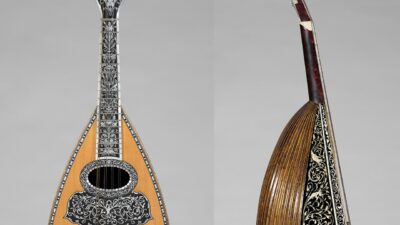
शास्त्र विंग · वाद्य-पट्टिका · Instrument Plate
मैंडोलिन
Mandolin
अन्य नाममैंडोलीन · मैण्डोलिन (regional variants) · Mandolino (Italian) · Neapolitan Mandolin
परिचय
Overviewमैंडोलिन इटली के नेपल्स में जन्मा एक छोटा, नाशपाती-नुमा फ्रेट-वाद्य है, जिसमें चार जोड़ों में आठ धातु-तार होते हैं और जो वायलिन की ही तरह G–D–A–E पर मिलाया जाता है। इसे प्लेक्ट्रम से बजाया जाता है और लम्बी ध्वनि के लिए ट्रेमोलो साधी जाती है। हिंदी फ़िल्म-संगीत के आरकेस्ट्रा में इसने रोमानी झनकार भरी, पर इसकी असली किंवदंती दक्षिण में रची गई — जब बाल-विलक्षण यू. श्रीनिवास ने एक संशोधित विद्युत मैंडोलिन पर पूरी कर्नाटक रागदारी गा दी और वाद्य को शास्त्रीय मंच का प्रमुख स्वर बना दिया।
अंग्रेज़ी में पढ़ें · Read in English
The mandolin is a small, pear-shaped fretted instrument born in Naples, Italy, with eight metal strings in four double courses and tuned — like the violin — to G–D–A–E. It is played with a plectrum, with tremolo used to sustain tones. In Hindi film orchestras it added a romantic shimmer, but its true legend was written in the South — when the child prodigy U. Srinivas sang the full Carnatic repertoire on a modified electric mandolin and made the instrument a leading voice of the classical stage.
वर्गीकरण
ClassificationNatya Shastra Category
तत (Tata - plucked stringed instruments)
नाट्यशास्त्र के वाद्य-वर्गीकरण के अनुसार मैंडोलिन 'तत' (तार-वाद्य) वर्ग में आता है — यह एक तंत्री (प्लक्ड) वाद्य है जिसकी ध्वनि प्लेक्ट्रम से धातु-तारों को छेड़ने से उत्पन्न होती है, न कि धनुष के घर्षण से।
In the Natya Shastra classification of instruments, the mandolin belongs to the 'Tata' (stringed) category — specifically a plucked (tantri) chordophone whose sound is produced by striking paired metal strings with a plectrum, not by bowing.
Western Category
Plucked string instrument (chordophone)
Western Family
Lute family — mandolin/mandola group; a soprano member sharing the violin's G–D–A–E tuning
Sub Classification
बनावट
PhysicalDescription Hindi
मैंडोलिन एक छोटा, नाशपाती के आकार का तार-वाद्य है जिसमें फ्रेट-युक्त गर्दन और आठ धातु-तार होते हैं जो चार जोड़ों (courses) में सजे रहते हैं। इसे प्लेक्ट्रम (मिज़राब जैसी पत्ती) से बजाया जाता है, और लम्बी ध्वनि के लिए 'ट्रेमोलो' — यानी तेज़ बार-बार की झनकार — का प्रयोग किया जाता है।
Description English
The mandolin is a small, pear-shaped string instrument with a fretted neck and eight metal strings arranged in four double courses. It is played with a plectrum (pick), and sustained tones are produced through 'tremolo' — rapid, repeated picking of a course.
Body
Pear / teardrop-shaped resonating body
नाशपाती या अश्रु-बूँद के आकार का अनुनाद-पात्र
Spruce soundboard over a bowl of rosewood/maple staves (Neapolitan) or a flat/arched wooden back (American arch-top)
स्प्रूस की ध्वनि-पटल (soundboard) और गुलाब-लकड़ी/मेपल की पट्टियों से बना गोल पिछला भाग (नेपोलिटन), या सपाट/उभरी लकड़ी की पीठ (अमेरिकी आर्च-टॉप)
60-70 (total length)
Hollow wooden body with a round or oval soundhole (Neapolitan) or twin f-holes (arch-top) for acoustic projection
Strings
Four courses of paired steel strings, each pair tuned in unison; struck together as one voice
The standard mandolin has no sympathetic strings; its shimmer comes from the paired unison courses vibrating together and from tremolo, not from resonating strings
No dedicated drone strings; the lowest G course can serve as a lower melodic/anchor voice
Bow
प्लेक्ट्रम (मिज़राब/पत्ती)
Plectrum (pick)
Tortoiseshell, celluloid or plastic pick — the mandolin is plucked, not bowed
N/A (small hand-held pick)
Held between thumb and forefinger; single down-up strokes for melody and rapid alternating strokes (tremolo) for sustain
Tuning Pegs
ट्यूनिंग खूँटियाँ / मशीन-हेड
Tuning machines (geared pegs)
Geared metal tuning machines on the headstock adjust each string's pitch precisely — essential because eight strings must sit in exact unison pairs
Bridge
ब्रिज (पुल)
Floating bridge
A movable wooden bridge held in place by string tension, transmitting vibration to the soundboard; its position sets the intonation
Hardwood (often ebony-topped)
Frets
सारंगी या वायलिन के विपरीत मैंडोलिन में धातु के फ्रेट होते हैं — इससे स्वर सुनिश्चित और चमकीले बनते हैं। भारतीय संगीत के लिए यही फ्रेट-युक्त बनावट एक चुनौती है, क्योंकि गमक और मींड फ्रेटों पर तार खींचकर या सरकाकर निकालनी पड़ती है, जो यू. श्रीनिवास की महान उपलब्धि थी।
Unlike the sarangi or violin, the mandolin is fretted — giving it precise, bright, well-defined pitches. This fretted design is a challenge for Indian music, since gamaka and meend must be coaxed by bending or sliding strings across the frets — a feat mastered by U. Srinivas.
ध्वनि-चरित्र
SoundTonal Character Hindi
मैंडोलिन की ध्वनि उजली, स्फटिक-सी और झनझनाती हुई है। एकल छेड़ पर यह तीखी और स्पष्ट लगती है, जबकि ट्रेमोलो में यह लगातार बहती एक कोमल, थरथराती चादर बन जाती है — जिसे यू. श्रीनिवास ने मानव-कंठ की गायकी के इतना निकट पहुँचाया कि वह कर्नाटक संगीत का प्रमुख वाद्य बन गया।
Tonal Character English
The mandolin's tone is bright, crystalline and ringing. A single stroke is crisp and articulate, while tremolo turns it into a shimmering, continuous sheet of sound — which U. Srinivas brought so close to the vocal line that it became a lead Carnatic instrument.
Timbre
Bright, metallic, silvery ring with a fast decay; sustain achieved through tremolo
Range
Approximately G3 to E6 — a little over three octaves on a standard mandolin
Dynamic Range
Moderate acoustically; wide and powerful in the amplified electric mandolin used in Carnatic concerts
Techniques
सुनने का मार्गदर्शन
The Listening Guideमैंडोलिन का रस लेना हो तो पहले यू. श्रीनिवास का कोई कर्नाटक कृति-वादन सुनिए और ध्यान दीजिए कि फ्रेट-वाद्य होते हुए भी वे कैसे गमक और मींड से स्वरों को 'गाते' हैं। ट्रेमोलो की थरथराती चादर को पहचानिए — वहीं गाए हुए सुर का भ्रम बनता है। फिर पुराने हिंदी फ़िल्म-गीतों के प्रील्यूड में इसकी उजली, चंचल झनकार खोजिए। दोनों रूपों की तुलना कीजिए — एक ही वाद्य, दो आत्माएँ।
अंग्रेज़ी में पढ़ें · Read in English
To appreciate the mandolin, first hear U. Srinivas play a Carnatic krithi and notice how — on a fretted instrument — he makes the notes 'sing' through gamaka and meend. Recognise the shimmering sheet of tremolo, where the illusion of a sustained sung note is born. Then hunt for its bright, playful shimmer in the preludes of old Hindi film songs. Compare the two guises — one instrument, two souls.
परिचय
Identity- Year Of Origin
- 1744
अन्य विवरण
More DetailsTimbre
Bright, metallic, silvery ring with a fast decay; sustain achieved through tremolo
रोचक तथ्य
Margin Notesछोटी मैंडोला — 'मैंडोलिन' नाम इतालवी शब्द 'mandolino' से आया है, जो 'mandola' का लघुरूप है — यानी 'छोटी मैंडोला'। यह लूट-वंश (lute family) का एक सोप्रानो सदस्य है।
The name 'mandolin' comes from the Italian 'mandolino', a diminutive of 'mandola' — meaning 'little mandola'. It is a soprano member of the lute family.
बालक जिसने वाद्य की सीमा तोड़ी — यू. श्रीनिवास आंध्र प्रदेश के पालकोल्लू में 1969 में जन्मे। संगीतज्ञ मानते थे कि फ्रेट-युक्त मैंडोलिन पर कर्नाटक गमक असंभव है — पर श्रीनिवास ने बाल्यकाल में ही इसे झुठला दिया और वाद्य को शास्त्रीय मंच पर स्थापित कर दिया।
U. Srinivas was born in Palakollu, Andhra Pradesh, in 1969. Musicians believed Carnatic gamaka was impossible on the fretted mandolin — but Srinivas disproved this as a child and established the instrument on the classical stage.
पाँच तार बनाम आठ — पारंपरिक मैंडोलिन में चार जोड़ों में आठ तार होते हैं। कर्नाटक वादन के लिए श्रीनिवास ने प्रायः एकल तारों वाला संशोधित विद्युत मैंडोलिन अपनाया, जिससे गमक और तेज़ स्वर-कल्पना अधिक सहज हुई।
A traditional mandolin has eight strings in four courses. For Carnatic playing, Srinivas adopted a modified electric mandolin often strung with single strings, making gamaka and rapid swara-kalpana more fluid.
वायलिन का जुड़वाँ स्वर-विन्यास — मैंडोलिन और वायलिन एक ही स्वर-विन्यास (G–D–A–E) साझा करते हैं। अंतर केवल इतना कि वायलिन धनुष से बजता और फ्रेट-रहित है, जबकि मैंडोलिन प्लेक्ट्रम से छेड़ा जाता और फ्रेट-युक्त है।
The mandolin and violin share the very same tuning (G–D–A–E). The only difference is that the violin is bowed and fretless, while the mandolin is plucked and fretted.
सवाल-जवाब
Questions & Answersमैंडोलिन क्या है?
मैंडोलिन इटली के नेपल्स में जन्मा एक छोटा, नाशपाती-नुमा फ्रेट-युक्त तार-वाद्य है जिसमें चार जोड़ों में आठ धातु-तार होते हैं। इसे प्लेक्ट्रम से बजाया जाता है और लम्बी ध्वनि के लिए ट्रेमोलो तकनीक प्रयुक्त होती है।
मैंडोलिन के कितने तार होते हैं और यह कैसे मिलाया जाता है?
मानक मैंडोलिन में चार जोड़ों में आठ तार होते हैं, और यह वायलिन की तरह G–D–A–E पर (पंचम अंतराल पर) मिलाया जाता है। कर्नाटक वादन के लिए यू. श्रीनिवास ने प्रायः एकल तारों वाला संशोधित विद्युत मैंडोलिन प्रयोग किया।
मैंडोलिन कर्नाटक संगीत में कैसे आया?
बाल-विलक्षण यू. श्रीनिवास (1969–2014) ने 1978 में मंच-प्रवेश करके एक संशोधित विद्युत मैंडोलिन पर पूरी कर्नाटक रागदारी, गमक और मींड साध ली। वे 'मैंडोलिन श्रीनिवास' कहलाए और उन्होंने इस पश्चिमी वाद्य को कर्नाटक मंच का प्रमुख एकल स्वर बना दिया।
क्या मैंडोलिन का उपयोग हिंदी फ़िल्म संगीत में हुआ?
हाँ। हिंदी फ़िल्म संगीत के स्वर्ण-युग (1950–1970) की भरी-पूरी आरकेस्ट्रा में मैंडोलिन की उजली, रोमानी झनकार गीतों के प्रील्यूड और अंतरों के बीच सजावट भरती थी।
मैंडोलिन और वायलिन में क्या अंतर है?
दोनों एक ही स्वर-विन्यास (G–D–A–E) पर मिलाए जाते हैं, पर वायलिन धनुष से बजता और फ्रेट-रहित है जबकि मैंडोलिन प्लेक्ट्रम से छेड़ा जाता और फ्रेट-युक्त है। इसी कारण मैंडोलिन पर गमक तार खींचकर निकालनी पड़ती है।
नमूना-पट्टी
The Specimen Table| नाम | मैंडोलिन · Mandolin |
|---|---|
| अन्य नाम | मैंडोलीन · मैण्डोलिन (regional variants) · Mandolino (Italian) · Neapolitan Mandolin · Electric Mandolin (Carnatic adaptation) |
| उद्गम | 1744 |
| प्रकार | वाद्य · Instruments |
जुड़े हुए पन्ने
Connected Plates · The Graph Made Visibleअटलस में कोई पन्ना अकेला नहीं — इस वाद्य से जुड़े गीत, कलाकार, शास्त्र और कहानियाँ, सब यहाँ से खुलते हैं।
इस वाद्य के गीत
Songs of this Instruments






दिल के अंदर (हमको भी बसा लेना तेरे दिल के अंदर)
Dil Ke Andar (Humko Bhi Basa Lena Tere Dil Ke Andar)
ऋतु पाठक, अमन त्रिखा





साझा कीजिए · Share this Plate