शास्त्र विंग · वाद्य-पट्टिका · Instrument Plate
मर्दल
Mardala
अन्य नाममर्दल · मादल (Madala) · मर्दला (Mardala / Mardaḷa) · Odissi Mardala
परिचय
Overviewमर्दल ओडिशा का दो-मुँहा बैरल-ढोल है — खैर की लकड़ी के खोखले पीपे पर मढ़े दो असमान चमड़े के मुख, दाहिने की धात्विक झंकार और बाएँ की कोमल बास। यह ओडिशी शास्त्रीय संगीत और नृत्य का प्रमुख ताल-वाद्य है, जिसकी परंपरा कोणार्क–मुक्तेश्वर की मंदिर-मूर्तियों और पुरी जगन्नाथ मंदिर की मादेली सेबा से होती हुई सहस्राब्दी पीछे तक जाती है; आज यह मंच पर एकल कलाकार के रूप में भी गूँजता है।
अंग्रेज़ी में पढ़ें · Read in English
The mardala is Odisha's two-headed barrel drum — two unequal leather faces stretched over a hollow khaira-wood barrel, the metallic ring of the right and the mellow bass of the left. It is the principal percussion of Odissi classical music and dance, a tradition running back a millennium through the temple sculptures of Konark and Mukteswara and the Madeli Seba of the Puri Jagannath Temple; today it also sounds on stage as a solo voice.
वर्गीकरण
ClassificationNatya Shastra Category
अवनद्ध (Avanaddha - membranophones / covered percussion)
नाट्यशास्त्र के चार वाद्य-वर्गों में मर्दल 'अवनद्ध' (चमड़े से मढ़े हुए ताल-वाद्य) वर्ग में आता है — जहाँ ध्वनि खिंची हुई चमड़े की झिल्ली पर आघात से उत्पन्न होती है। यह पखावज-मृदंग परिवार का ही ओडिशी रूप है।
Among the four instrument classes of the Natya Shastra, the Mardala belongs to the 'Avanaddha' (covered/skin-headed percussion) family, where sound is produced by striking a stretched leather membrane. It is the distinctly Odishan cousin of the pakhawaj-mridang barrel-drum lineage.
Western Category
Barrel drum (double-headed, hand-struck membranophone)
Western Family
Barrel-drum family — structurally akin to the mridangam, pakhawaj and khol, but with its own asymmetrical head design and Odissi tuning system
Hornbostel Sachs
211.222.1 — individual barrel-shaped drum with two usable membranes, struck directly by the hands
Sub Classification
बनावट
PhysicalDescription Hindi
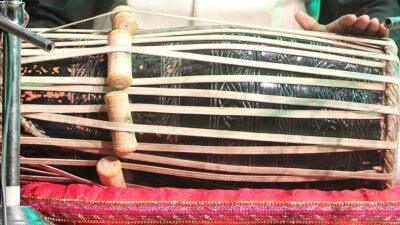
मर्दल एक लकड़ी के खोखले पीपे (बैरल) से बना दो-मुँहा ताल-वाद्य है, जिसकी दोनों झिल्लियाँ असमान होती हैं — दाहिनी ओर छोटा, तीखा 'दहिना' मुख और बाईं ओर बड़ा, गहरा 'बायाँ' मुख। इसे आड़ा रखकर, गोद या कमर पर टिकाकर दोनों हाथों से बजाया जाता है। ऊपरी तौर पर यह मृदंग-पखावज जैसा दिखता है, किंतु इसका आकार, मढ़ाई और स्याही की बनावट विशुद्ध ओडिशी है।
Description English
The Mardala is a two-headed percussion instrument built on a hollow wooden barrel, with two unequal heads — a smaller, sharper 'Dahina' face on the right and a larger, deeper 'Bayan' face on the left. It is held horizontally, rested on the lap or tied at the waist, and played with both hands. Superficially it resembles the mridang-pakhawaj, but its proportions, lacing and paste-loading are distinctly Odishan.
Body
Elongated barrel, bulging slightly at the centre and tapering toward each head
लंबवत पीपे (बैरल) के आकार का — मध्य में हल्का उभरा हुआ, दोनों सिरों की ओर पतला
Solid hardwood — ideally khadira/khaira (Acacia catechu); also raktachandana, nimba, mahalimba and gambhari. Jackfruit wood is considered inferior.
ठोस कठोर लकड़ी — आदर्श रूप से खदिर/खैर (Acacia catechu); रक्तचंदन, निम्ब, महालिम्ब और गम्भारी भी प्रयुक्त। कटहल की लकड़ी निम्न कोटि की मानी जाती है।
55-70 (परंपरागत माप ~डेढ़ हाथ / one and a half cubits)
Single hollowed-out wooden barrel; the internal cavity, combined with the loaded right head, gives the mardala its rounded, mellow resonance without any tuning paste on the bass side
लकड़ी को पहले धूप में सुखाया जाता है ताकि वह टिकाऊ रहे और समय के साथ टेढ़ी न हो।
The wood is sun-dried first so that it stays durable and does not warp over time.
Heads
Composite treated animal hide, layered and stretched over each rim
Tuning Paste
Playing Position
वादक भूमि पर बैठकर मर्दल को आड़ा गोद में या कमर से बाँधकर रखता है; दाहिना हाथ दहिना मुख पर तीखे बोल निकालता है और बायाँ हाथ बायाँ मुख पर गहरी थाप देता है।
The player sits and holds the mardala horizontally across the lap or waist-tied; the right hand draws sharp strokes on the Dahina head while the left hand delivers deep beats on the Bayan head.
ध्वनि-चरित्र
SoundTonal Character Hindi
मर्दल की ध्वनि गोल, मधुर और गहरी है — दाहिने मुख की धात्विक झंकार और बाएँ मुख की कोमल बास एक साथ मिलकर एक 'गाती हुई' थाप बनाती हैं। तबले की तरह तीखी नहीं, बल्कि मंदिर-प्रांगण जैसी अनुगूँज लिए हुए।
Tonal Character English
The mardala's tone is round, sweet and deep — the metallic ring of the right head and the soft bass of the left blend into a 'singing' beat. Not as sharp as the tabla, but carrying a temple-courtyard resonance.
Timbre
Warm, mellow, faintly ringing (from the iron-loaded right head); harmonic and full-bodied rather than percussive-dry
Range
No fixed melodic pitch in the traditional temple variant; a two-octave tonal spectrum from the deep bayan bass to the high, chiming dahina — the bass head can be seated near the tonic (Sa) for accompaniment
Dynamic Range
Medium — designed to support voice and dance in a hall or temple mandapa without overpowering, yet capable of crisp, driving climaxes
Techniques
सुनने का मार्गदर्शन
The Listening Guideमर्दल का रस लेना हो तो पहले किसी ओडिशी नृत्य को देखिए — ध्यान दीजिए कि मर्दल नर्तक के हर पद-संचालन के साथ कैसे बोलता है। फिर एकल मर्दल सुनिए, जहाँ वादक पहले मुँह से बोल (उकुट) कहता है और फिर वही बोल मर्दल पर उतारता है। दाहिने मुख की तीखी धात्विक झंकार और बाएँ मुख की गहरी बास के बीच का संवाद ही इस वाद्य की आत्मा है।
अंग्रेज़ी में पढ़ें · Read in English
To understand the mardala, first hear an Odissi dance presentation and watch how the mardala 'speaks' with every 'ta-thei' of the dancer's feet. Then hear a Dhaneswar Swain solo — the ukuta (spoken syllables) followed by the same phrases on the drum; the marriage of the two is its soul. Catch the dialogue between the sharp ring of the right head and the deep beat of the left.
परिचय
Identity- Year Of Origin
- 950
वर्गीकरण
ClassificationHornbostel Sachs
211.222.1 — individual barrel-shaped drum with two usable membranes, struck directly by the hands
अन्य विवरण
More DetailsTimbre
Warm, mellow, faintly ringing (from the iron-loaded right head); harmonic and full-bodied rather than percussive-dry
रोचक तथ्य
Margin Notesमादेली सेबा — मंदिर की मर्दल-सेवा — पुरी के जगन्नाथ मंदिर की छत्तीस नियोगों में एक 'मादेली सेबा' है, जिसमें मर्दल वादक अनुष्ठानिक रूप से सेवा करता था और गजपति राजा द्वारा दीक्षित होता था। इससे मर्दल भारत के उन विरल वाद्यों में आता है जिनकी अपनी संस्थागत मंदिर-सेवा परंपरा रही है।
Among the many ritual services (niyoga) of the Puri Jagannath Temple is the 'Madeli Seba', in which the mardala player served ritually and was initiated by the Gajapati king. This places the mardala among the rare Indian instruments with their own institutionalised temple-service tradition.
खैर की लकड़ी और लोहे की स्याही — शास्त्रों के अनुसार आदर्श मर्दल खदिर (खैर / Acacia catechu) की लकड़ी का बनता है, और इसके दाहिने मुख की खरली स्याही में लोहे का बुरादा मिलाया जाता है। धातु और अन्नज तत्वों का यह मेल ही मर्दल को उसकी विशिष्ट गूँजती-धात्विक ध्वनि देता है।
According to the treatises, the ideal mardala is made of khadira (khaira / Acacia catechu) wood, and iron filings are mixed into the kharali paste of its right head. This blend of metal and grain gives the mardala its distinctive ringing, metallic tone.
पड़ि — ओडिशी की अपनी ताल-भाषा — 'पड़ि' मर्दल की एक विशिष्ट तकनीक है जिसमें एक निश्चित छंद-प्रबंध भिन्न-भिन्न तालों और लयों में दोहराया जाता है। यह ओडिशी ताल-पद्धति को हिंदुस्तानी और कर्नाटक प्रणालियों से अलग एक स्वतंत्र क्षेत्रीय ताल-प्रणाली के रूप में स्थापित करती है।
'Padi' is a distinctive mardala technique in which a fixed rhythmic prosody is repeated across different talas and layas. It establishes the Odissi tala-paddhati as an independent regional rhythmic system, separate from the Hindustani and Carnatic systems.
मंदिर से मंच तक — एकल मर्दल — सदियों तक मर्दल मुख्यतः संगत-वाद्य रहा। बीसवीं सदी के उत्तरार्ध में बनमाली महाराणा और धनेश्वर स्वाईं ने इसे एकल मंचीय वाद्य के रूप में प्रस्तुत किया — भुवनेश्वर के रवीन्द्र मंडप में हुई पहली एकल मर्दल प्रस्तुति इस परंपरा का आरंभ मानी जाती है।
For centuries the mardala was chiefly an accompanying instrument. In the later 20th century Banamali Maharana and Dhaneswar Swain presented it as a solo concert instrument — the first solo mardala performance, held at Rabindra Mandap in Bhubaneswar, is regarded as the start of this tradition.
सवाल-जवाब
Questions & Answersमर्दल क्या है?
मर्दल (मर्दला) ओडिशा का एक दो-मुँहा बैरल-आकार का ताल-वाद्य है जो लकड़ी के खोखले पीपे पर मढ़े दो असमान चमड़े के मुखों से बनता है। यह ओडिशी शास्त्रीय संगीत और नृत्य का प्रमुख ताल-वाद्य है।
मर्दल और तबले/पखावज में क्या अंतर है?
मर्दल एक अकेला बैरल-ढोल है (तबले जैसा जोड़ा नहीं) और यह ओडिशा की अपनी 'ताल-पद्धति' पर बजता है। पखावज उत्तर भारत का है और ध्रुपद में बजता है, जबकि मर्दल ओडिशी परंपरा का है और इसकी मढ़ाई, खरली स्याही तथा बोल-प्रणाली भिन्न है।
मर्दल किस लकड़ी से बनता है और उस पर लोहा क्यों लगाया जाता है?
आदर्श मर्दल खदिर (खैर, Acacia catechu) की लकड़ी से बनता है। इसके दाहिने मुख पर 'खरली' नामक स्याही लगाई जाती है जिसमें उबले चावल के साथ लोहे का बुरादा मिला होता है — यही धातु-मिश्रण इसे तीखी, धात्विक झंकार देता है।
जगन्नाथ मंदिर से मर्दल का क्या संबंध है?
पुरी के जगन्नाथ मंदिर में सदियों से 'मादेली सेबा' नामक मर्दल-सेवा रही है, जिसमें वादक गजपति राजा द्वारा दीक्षित होकर मंदिर-अनुष्ठान में मर्दल बजाता था। इससे मर्दल एक पवित्र सेवा-परंपरा से जुड़ा है।
क्या मर्दल एकल वाद्य के रूप में भी बजता है?
हाँ। परंपरागत रूप से यह संगत-वाद्य था, किंतु बीसवीं सदी के उत्तरार्ध में बनमाली महाराणा और गुरु धनेश्वर स्वाईं ने इसे एकल मंचीय वाद्य के रूप में स्थापित किया। स्वाईं को इसके लिए 2013 में संगीत नाटक अकादमी पुरस्कार मिला।
नमूना-पट्टी
The Specimen Table| नाम | मर्दल · Mardala |
|---|---|
| अन्य नाम | मर्दल · मादल (Madala) · मर्दला (Mardala / Mardaḷa) · Odissi Mardala · Mardaḷā |
| उद्गम | 950 |
| प्रकार | वाद्य · Instruments |
साझा कीजिए · Share this Plate