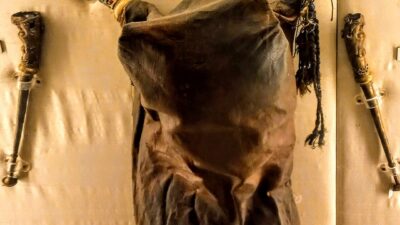
शास्त्र विंग · वाद्य-पट्टिका · Instrument Plate
मशक
Mashak
अन्य नाममशक बाजा · मशक बीन (मसक बीन) · मसकबाजा / मसकबीन (उत्तराखंड) · बिन बाजा
परिचय
Overviewमशक भारत की अपनी बैगपाइप है — बकरी की उसी खाल की थैली से बनी जिसमें कभी गाँवों में पानी ढोया जाता था। फूँक-नली से भरी हवा को बाँह से दबाकर एकल-रीड नलियों से निकाला जाता है, जिससे धुन कभी नहीं रुकती। राजस्थान के भोपा-जोगी वादकों से लेकर उत्तराखंड की मसकबीन तक, इसकी तीखी और न थमने वाली आवाज़ मेलों, मंदिरों और सबसे बढ़कर विवाह-जुलूस की पहचान है — एक ऐसा लोक-वाद्य जो आज स्कॉटिश बैगपाइप के सामने धीरे-धीरे लुप्त होता जा रहा है।
अंग्रेज़ी में पढ़ें · Read in English
The mashak is India's own bagpipe — made from the very goatskin bag once used to carry village water. Air blown in through the blowpipe is pressed out under the arm through single-reed pipes, so the melody never stops. From the Bhopa and Jogi players of Rajasthan to the masakbeen of Uttarakhand, its shrill, unceasing voice is the signature of fairs, temples and above all the wedding procession — a folk instrument now slowly vanishing before the Scottish bagpipe.
वर्गीकरण
ClassificationNatya Shastra Category
सुषिर (Sushira - wind instruments)
सुषिर वर्ग में मशक एक वायु-आधारित वाद्य है, किंतु यह साधारण फूँक-वाद्य नहीं — यह एक थैली-वाद्य (बैगपाइप) है जिसमें चमड़े की मशक में भरी हवा को दबाकर एकल-रीड नलियों से निरंतर स्वर उत्पन्न किया जाता है।
In the Sushira (wind) category of the Natya Shastra, the mashak is an air-blown instrument, but not a simple mouth-blown pipe — it is a bag-pipe in which air stored in a leather bag is squeezed through single-reed pipes to produce a continuous, uninterrupted tone.
Western Category
Bagpipe (aerophone with air reservoir)
Western Family
Bagpipe family (a reed-driven aerophone kin to the Scottish Highland pipes, the Iranian ney-anban and the Kashmiri/Sindhi bagpipes, but Indian in melodic idiom)
Sub Classification
बनावट
PhysicalDescription Hindi
मशक एक थैली-वाद्य (बैगपाइप) है। इसका हृदय बकरी की खाल से बनी वायुरोधी थैली है — वही 'मशक' जिससे कभी गाँवों में पानी ढोया जाता था — जिसमें कलाकार लगातार हवा भरता रहता है और बाँह से दबाकर उस हवा को नलियों की ओर धकेलता है। थैली में तीन प्रकार की नलियाँ जुड़ी होती हैं: फूँक-नली (जिससे हवा भरी जाती है), स्वर-नली या चैंटर (जिस पर छिद्रों को दबाकर धुन बजाई जाती है), और एक या अधिक ड्रोन-नलियाँ (जो एक ही आधार-स्वर को निरंतर गुंजाती रहती हैं)। स्वर एकल-रीड (single reed) से उत्पन्न होता है।
Description English
The mashak is a bag-pipe. Its heart is an airtight bag of goatskin — the very 'mashak' once used in Indian villages to carry water — into which the player blows a continuous supply of air and then presses it out under the arm toward the pipes. Three kinds of pipe are fitted to the bag: a blowpipe (through which air is fed), a melody pipe or chanter (whose finger-holes are covered to play the tune), and one or more drone pipes (which sound a single unbroken base note). The tone is generated by single reeds.
Body
Inflated leather sack (bag) with protruding wooden/reed pipes
फूली हुई चमड़े की थैली, जिसमें से लकड़ी/नरकट की नलियाँ निकली रहती हैं
Goatskin bag (traditionally a whole tanned goat hide sealed at the limbs); wooden or cane pipes; single reeds of cane
बकरी की खाल की थैली (परंपरागत रूप से पूरी खाल को अंगों पर बाँधकर वायुरोधी बनाया जाता है); लकड़ी या नरकट की नलियाँ; नरकट की एकल रीड
Bag roughly 40-60 (varies with the hide); pipes 20-40
The air-filled skin bag itself acts as a pressurised reservoir feeding the reed pipes
Strings
The mashak has no strings; sound is produced by cane single-reeds vibrating in the pipes. The melody is played on the chanter's finger-holes.
Not applicable — the mashak is a wind instrument. Its 'sympathetic' continuity comes not from strings but from the ever-sounding drone pipe.
One or more drone pipes sound a fixed low tonic continuously, over which the chanter weaves the tune — giving the mashak its characteristic wailing, never-stopping voice.
Bow
फूँक-नली (श्वास नली)
Blowpipe
Wood or cane with a non-return valve so the bag does not deflate between breaths
10-20
The player blows through it to fill the bag, then keeps the bag inflated while squeezing air out to the reeds — allowing an unbroken sound even while the player breathes in
Tuning Pegs
मोम/धागा बंधन
Reed and joint adjustment
There are no tuning pegs; pitch is set by the length of the pipes, the size of the finger-holes and by adjusting the cane reeds (often with wax or thread)
Bridge
स्वर-नली (चैंटर)
Chanter (melody pipe)
The finger-hole pipe on which the tune is played; covering and uncovering the holes selects the notes
Wood or cane
Frets
मशक में फ्रेट नहीं होते — स्वर चैंटर के छिद्रों को उँगलियों से ढककर चुने जाते हैं, ठीक शहनाई या अलगोज़ा की तरह। रीड से बना स्वर सतत रहता है, इसलिए धुन में विराम नहीं आता।
The mashak has no frets — notes are chosen by covering the chanter's finger-holes, much like a shehnai or algoza. Because the reed sound is continuous, the melody flows without pauses or breaths.
ध्वनि-चरित्र
SoundTonal Character Hindi
मशक की आवाज़ तीखी, नासिकी और भेदक होती है — रेगिस्तान की हवा में या पहाड़ की घाटियों में दूर तक गूँजने वाली। ड्रोन की सतत भिनभिनाहट के ऊपर चैंटर की धुन एक रुदन-सा, उत्सव-सा, कभी न रुकने वाला प्रवाह रचती है। यही निरंतरता इसे बारात और जुलूस का आदर्श वाद्य बनाती है।
Tonal Character English
The mashak's voice is piercing, nasal and far-carrying — built to ring across desert wind or Himalayan valleys. Over the constant hum of the drone, the chanter's melody weaves an unbroken, keening yet celebratory stream. It is precisely this continuity that makes it the ideal instrument of the wedding procession.
Timbre
Reedy, buzzing, penetrating — with a continuous drone underlay
Range
Limited melodic range of the folk chanter (roughly one octave), pitched high and bright
Dynamic Range
Loud and steady — an outdoor, processional dynamic rather than an intimate one; sustains the same volume without breath breaks
Techniques
सुनने का मार्गदर्शन
The Listening Guideमशक का रस लेना हो तो किसी लोक-मेले या बारात का दृश्य मन में लाइए। पहले ड्रोन की सतत गूँज पकड़िए — वह आधार-स्वर जो कभी नहीं रुकता। फिर उसके ऊपर चैंटर की तीखी, लहराती धुन सुनिए। गौर कीजिए कि वादक जब साँस लेता है तब भी धुन नहीं टूटती — यही थैली का जादू है। राजस्थानी मशक बाजा की मरुस्थली धुन और उत्तराखंडी मसकबीन की पहाड़ी बारात-धुन में एक ही वाद्य के दो रूप सुनिए।
अंग्रेज़ी में पढ़ें · Read in English
To appreciate the mashak, picture a folk fair or a wedding baraat. First find the constant hum of the drone — the base note that never stops. Then hear, above it, the chanter's shrill, curling, weaving melody. Notice that the music does not pause even as the player breathes in — that is the magic of the bag. Listen to the desert tune of the Rajasthani 'mashak baja' and the hill-baraat tune of the Uttarakhandi 'masakbeen' — two shades of one instrument.
परिचय
Identity- Year Of Origin
- 1800
अन्य विवरण
More DetailsTimbre
Reedy, buzzing, penetrating — with a continuous drone underlay
रोचक तथ्य
Margin Notesपानी की थैली से बना वाद्य — मशक भारत में पानी ढोने वाली उसी चमड़े की थैली का नाम है जिसे भिश्ती कंधे पर उठाते थे। जब इसी वायुरोधी थैली में रीड-नलियाँ जोड़ी गईं, तो पानी की मशक संगीत की मशक बन गई — और वाद्य को उसकी थैली का ही नाम मिला।
Mashak is the name of the leather water-bag that bhishtis once carried on their shoulders in India. When reed pipes were fitted to that same airtight bag, the water-mashak became a music-mashak — and the instrument took the name of its bag.
बारात का ध्वनि-संदेश — उत्तराखंड में मसकबीन केवल संगीत नहीं, बल्कि 'ध्वनि-सूचना' है। दूल्हे की बारात के आगे इसकी न रुकने वाली आवाज़ पूरे श्रव्य-क्षेत्र को बता देती है कि विवाह हो रहा है — मानो पूरा गाँव आमंत्रित हो।
In Uttarakhand the masakbeen is not merely music but a 'sonic notice.' Its unbroken voice at the head of the groom's procession tells the entire audible area that a wedding is taking place — as if the whole village were invited.
स्कॉटिश पाइप बनाम पारंपरिक मशक — शोधकर्ता एंड्रयू ऑल्टर का तर्क है कि आज कुमाऊँ में बजने वाली अधिकांश पाइपें (एक बास और दो टेनर ड्रोन वाली) असल में स्कॉटिश हाइलैंड बैगपाइप हैं, जो 1814 के बाद ब्रिटिश शासन के साथ आईं। वहीं वाद्य-शास्त्री एंथनी बेन्स एक बीच की अवस्था बताते हैं, जहाँ भारतीय वादकों ने हाइलैंड पाइप में अतिरिक्त ड्रोन जोड़ लिए।
Researcher Andrew Burton Alter argues that most pipes played in Kumaon today (with one bass and two tenor drones) are in fact Scottish Highland bagpipes that arrived after British rule in 1814. Organologist Anthony Baines, meanwhile, describes an intermediate stage in which Indian players added extra drones to the Highland pipe.
छोलिया नृत्य की धुन — कुमाऊँ का प्रसिद्ध 'छोलिया' तलवार-नृत्य मसकबीन की धुनों पर थिरकता है। तलवार-ढाल के साथ योद्धा-नर्तक जब घूमते हैं, तो मसकबीन का सतत, तीखा स्वर उस वीर-रस को और तीव्र कर देता है।
Kumaon's famous 'Choliya' sword-dance moves to the tunes of the masakbeen. As the warrior-dancers whirl with sword and shield, the masakbeen's continuous, piercing tone heightens the martial (vira) mood.
सवाल-जवाब
Questions & Answersमशक क्या है?
मशक एक भारतीय बैगपाइप (थैली-वाद्य) है, जो बकरी की खाल की वायुरोधी थैली से बना होता है। इसमें फूँक-नली से हवा भरकर बाँह से दबाई जाती है और एकल-रीड की नलियों (चैंटर व ड्रोन) से सतत स्वर निकलता है। यह मुख्यतः राजस्थान और उत्तराखंड का लोक-वाद्य है।
मशक नाम कहाँ से आया?
'मशक' का अर्थ ही चमड़े की वह थैली है जिसमें भारत में सदियों से पानी ढोया जाता रहा है। इसी वायुरोधी थैली से बैगपाइप बना, इसलिए वाद्य को उसकी थैली का ही नाम — मशक — मिल गया।
मशक कहाँ और कब बजाई जाती है?
मशक मुख्यतः राजस्थान (भोपा-जोगी वादक) और उत्तराखंड (मसकबीन) में मेलों, मंदिरों और विशेषकर विवाह की बारात में बजाई जाती है। कुमाऊँ में इसे दूल्हे की बारात के आगे और छोलिया तलवार-नृत्य के साथ बजाया जाता है।
मशक और स्कॉटिश बैगपाइप में क्या संबंध है?
दोनों बैगपाइप वर्ग के वाद्य हैं। विद्वानों के अनुसार ब्रिटिश काल में आई स्कॉटिश हाइलैंड बैगपाइप ने आधुनिक कुमाऊँ में पारंपरिक मशक को काफी हद तक विस्थापित कर दिया है, और New Grove शब्दकोश तक मानता है कि मूल मशक अब दुर्लभ होती जा रही है।
क्या मशक शास्त्रीय राग बजाती है?
नहीं। मशक एक लोक-वाद्य है जो लोक-धुनें और बारात/छोलिया की धुनें बजाती है। इसका सीमित सुर-विस्तार और सतत ड्रोन इसे शास्त्रीय राग-विस्तार के लिए अनुपयुक्त बनाते हैं।
नमूना-पट्टी
The Specimen Table| नाम | मशक · Mashak |
|---|---|
| अन्य नाम | मशक बाजा · मशक बीन (मसक बीन) · मसकबाजा / मसकबीन (उत्तराखंड) · बिन बाजा · Masak Been / Masak Baja · Mashak Bin / Bin Baja |
| उद्गम | 1800 |
| प्रकार | वाद्य · Instruments |
साझा कीजिए · Share this Plate