शास्त्र विंग · वाद्य-पट्टिका · Instrument Plate
मिष़ावु
Mizhavu
अन्य नाममिष़ावु · मिझावु · मिळावु · Mizhav
परिचय
Overviewमिष़ावु केरल का बड़ा ताम्र घट-वाद्य है, जिसका एकमात्र मुख चमड़े से मढ़ा जाता है और जिसे केवल हाथों से बजाया जाता है। यह विश्व के प्राचीनतम जीवित संस्कृत रंगमंच 'कूडियाट्टम' तथा चाक्यार-कूत्तु और नंग्यार-कूत्तु का प्रमुख अनुष्ठानिक वाद्य है। मंदिर के कूत्तम्बलम् में प्रतिष्ठित, 'ब्रह्मचारी' का पवित्र दर्जा पाया हुआ यह वाद्य 2001 से यूनेस्को-मान्य धरोहर का धड़कता हृदय है।
अंग्रेज़ी में पढ़ें · Read in English
The mizhavu is Kerala's large copper pot-drum, its single mouth covered with hide and struck only with the bare hands. It is the principal ritual instrument of Koodiyattam — the world's oldest living Sanskrit theatre — as well as of Chakyar Koothu and Nangiar Koothu. Installed in the temple koothambalam and accorded the sacred status of a 'Brahmachari', it is the beating heart of a UNESCO heritage recognised since 2001.
वर्गीकरण
ClassificationNatya Shastra Category
अवनद्ध (Avanaddha - चमड़े से मढ़े ताल वाद्य / membranophones)
नाट्यशास्त्र के चार वाद्य-वर्गों (तत, सुषिर, अवनद्ध, घन) में मिष़ावु 'अवनद्ध' वर्ग का है — अर्थात चमड़े से मढ़ा हुआ ताल वाद्य। यह एकमुख (एक-मुँह वाला) अवनद्ध वाद्य है जिसका एकमात्र मुख चमड़े से कसकर मढ़ा जाता है और केवल हाथों से बजाया जाता है।
In the Natya Shastra's four instrumental categories (tata, sushira, avanaddha, ghana), the mizhavu belongs to 'avanaddha' — the class of skin-covered percussion. It is an ekamukha (single-faced) avanaddha drum whose one mouth is tightly stretched with hide and is struck only with the bare hands. Its type as a one-headed skin drum is traced back to Bharata's Natya Shastra.
Western Category
Membranophone (single-headed struck kettledrum / pot-drum)
Western Family
Kettle-drum family — a large copper vessel with a single hide head, closest in shape to a fixed-pitch pot drum (comparable in principle to the ghatam's resonating body but membrane-headed and hand-struck)
Sub Classification
बनावट
PhysicalDescription Hindi
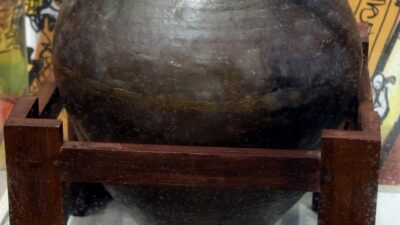
मिष़ावु एक बड़ा घड़े के आकार का ताम्र (ताँबा/कांसा) ड्रम है जिसका ऊपरी संकरा मुख कसकर चमड़े (गोहालचर्म) से मढ़ा जाता है। इसका गोलाकार, पेट-सा फूला हुआ शरीर गहरी गूँज उत्पन्न करता है। यह इतना भारी और पवित्र माना जाता है कि इसे मंदिर के कूत्तम्बलम् में लकड़ी के एक विशेष पीठ/पेटिका ('मिष़ावना') में रखा जाता है और वादक उसके पीछे खड़े होकर बजाता है।
Description English
The mizhavu is a large pot-shaped copper (or bronze) drum whose narrow upper mouth is tightly covered with hide. Its rounded, belly-like body produces a deep, sustained resonance. It is so heavy and so sacred that it is kept in a special wooden stand or box ('mizhavana') inside the temple theatre (koothambalam), with the player standing behind it to play. Older instruments were made of clay; copper and bronze later replaced it because the metal gives far greater resonance.
Body
Large rounded pot / cauldron with a narrow covered mouth (kudam-shaped)
बड़ा गोलाकार घड़ा/कड़ाही जैसा, ऊपर संकरा मुख
Beaten copper (traditional) or bronze; earliest forms were fired clay
पीटा हुआ ताँबा (परंपरागत) या कांसा; आरम्भिक रूप मिट्टी के होते थे
60-90 (varies by shrine and maker)
The entire hollow metal pot acts as a single enclosed resonating chamber; the narrow neck focuses the deep bass tone
Strings
None — the mizhavu is a membranophone with no strings; sound comes from the struck hide head over the copper body
None
None
Bow
लागू नहीं
N/A
No bow — played only with bare hands (palms and fingers)
N/A
Both hands strike the single hide head directly; the Sanskrit term for the player, 'Panivada', literally means 'one who plays with the hands' (pani = hand)
Tuning Pegs
लागू नहीं (चमड़े की लेस/डोरी से कसाव)
N/A (head tensioned by lacing/rope, not pegs)
The hide head is stretched and lashed onto the copper mouth; tension is adjusted by the lacing rather than by pegs. There are no melodic tuning devices.
Bridge
लागू नहीं
N/A
No bridge — a single-headed drum with no string mechanism
N/A
Frets
मिष़ावु स्वर-वाद्य नहीं, अपितु ताल-वाद्य है — इसमें फ्रेट, तार या स्वर-रचना नहीं होती। इसका काम गहरी, गूँजती ताल-लय देकर कूडियाट्टम की गति निर्धारित करना है।
The mizhavu is not a melodic instrument but a rhythmic one — it has no frets, strings, or pitch structure. Its role is to lay down a deep, resonant rhythmic pulse that sets the tempo of the Koodiyattam performance.
ध्वनि-चरित्र
SoundTonal Character Hindi
मिष़ावु की ध्वनि गहन, गंभीर और मंदिर-गर्भ जैसी प्रतिध्वनित होती है — एक भारी, धड़कती हुई बास-गूँज जो कूत्तम्बलम् की पूरी वायु भर देती है। ताम्र-शरीर इसे एक धातवीय, स्थायी अनुनाद देता है जो साधारण चर्म-वाद्यों से अलग है।
Tonal Character English
The mizhavu's sound is deep, grave and cavernous — a heavy, throbbing bass resonance that fills the entire koothambalam. The copper body lends it a metallic, sustained ring quite unlike ordinary skin drums, making it the sonic anchor of the whole performance.
Timbre
Dark, booming, metallic-bass resonance with a long decay
Range
Low, fixed bass register — a non-melodic percussion voice; expression comes from stroke pattern, dynamics and tempo rather than pitch
Dynamic Range
Wide within the bass register — from a soft ritual pulse to a thunderous crescendo without any amplification
Techniques
सुनने का मार्गदर्शन
The Listening Guideमिष़ावु को अकेले नहीं, कूडियाट्टम के अभिनय के साथ सुनिए। मंद दीप-ज्योति में देखिए कि कैसे ड्रम की गहरी धड़कन अभिनेता की उँगलियों और आँखों के साथ चलती है — धीमे में स्थिर, चरम पर तीव्र। फिर मिष़ावु तायम्बक का एकल सुनिए, जहाँ यह वाद्य ही मुख्य कलाकार बन जाता है।
अंग्रेज़ी में पढ़ें · Read in English
Do not listen to the mizhavu alone but alongside Koodiyattam enactment. Notice how the drum's pulse moves with the actor's mudras and eye-acting — deep and steady in slow passages, rapid and powerful at the climaxes. Then hear a solo 'Mizhavu Thayambaka', where the instrument itself becomes the lead performer. Feel its resonance in the body — it is an instrument heard less by the ears than by the heart.
परिचय
Identity- Year Of Origin
- 1000
अन्य विवरण
More Details- Timbre
- Dark, booming, metallic-bass resonance with a long decay
रोचक तथ्य
Margin Notesपानिवाद — हाथों से बोलने वाला — मिष़ावु केवल हाथों से बजाया जाता है, किसी छड़ी या डंडे से नहीं। इसीलिए संस्कृत में इसके वादक को 'पानिवाद' कहा जाता है — 'पाणि' अर्थात हाथ और 'वादन' अर्थात बजाना।
The mizhavu is played with the bare hands alone, never with a stick. That is why in Sanskrit its player is called 'Panivada' — from 'pani' (hand) and 'vadanam' (playing).
मिष़ावना — वाद्य का सिंहासन — इतना भारी और पवित्र वाद्य होने के कारण मिष़ावु को कूत्तम्बलम् में लकड़ी की एक विशेष पेटिका/पीठ 'मिष़ावना' में प्रतिष्ठित किया जाता है, और वादक उसके पीछे खड़े होकर बजाता है।
Being so heavy and so sacred, the mizhavu is installed in a special wooden stand or casket called the 'mizhavana' within the koothambalam, and the player stands behind it to play.
यूनेस्को की पहली भारतीय धरोहर — 2001 में कूडियाट्टम को यूनेस्को ने 'मानवता की मौखिक एवं अमूर्त धरोहर की उत्कृष्ट कृति' घोषित किया — यह ऐसी मान्यता पाने वाली पहली भारतीय कला थी, और मिष़ावु उसका प्रमुख वाद्य है।
In 2001 UNESCO proclaimed Koodiyattam a 'Masterpiece of the Oral and Intangible Heritage of Humanity' — the first Indian art to receive the honour, and the mizhavu is its principal instrument.
मिष़ावु तायम्बक का जन्म — पारंपरिक रूप से मिष़ावु केवल संगत-वाद्य था। पद्मश्री पी. के. नारायणन नम्बियार ने अपने शिष्य कलामण्डलम ईश्वरुण्णि के साथ मिलकर 'मिष़ावु तायम्बक' नामक एकल वादन शैली आरम्भ की, जिसमें यह वाद्य स्वयं केंद्र में आ गया।
Traditionally the mizhavu was purely an accompanying instrument. Padma Shri P. K. Narayanan Nambiar, together with his disciple Kalamandalam Eswaranunni, originated the solo form called 'Mizhavu Thayambaka', in which the drum itself takes centre stage.
सवाल-जवाब
Questions & Answersमिष़ावु क्या है?
मिष़ावु केरल का एक बड़ा ताम्र (ताँबा/कांसा) घट-वाद्य है जिसका एकमात्र मुख चमड़े से मढ़ा होता है और जिसे केवल हाथों से बजाया जाता है। यह कूडियाट्टम संस्कृत रंगमंच, चाक्यार कूत्तु और नंग्यार कूत्तु का प्रमुख अनुष्ठानिक ताल वाद्य है।
मिष़ावु किस चीज़ का बना होता है?
आरम्भ में मिष़ावु मिट्टी का बनता था, किंतु अब इसे पीटे हुए ताँबे या कांसे से बनाया जाता है क्योंकि धातु अधिक गहरी गूँज देती है। इसका मुख चमड़े से कसकर मढ़ा जाता है। इसका मुख्य निर्माण-केंद्र त्रिश्शूर ज़िले का इरिञ्जालक्कुडा है।
मिष़ावु को पवित्र क्यों माना जाता है?
मिष़ावु को 'ब्रह्मचारी' का दर्जा दिया जाता है और यह मंदिर के कूत्तम्बलम् में प्रतिष्ठित एक पवित्र वाद्य होता है। 1965 तक इसे मंदिर के भीतर केवल अम्बलवासी नम्बियार समुदाय के लोग ही बजा सकते थे।
मिष़ावु का यूनेस्को से क्या संबंध है?
मिष़ावु कूडियाट्टम का प्रमुख वाद्य है, और कूडियाट्टम को 2001 में यूनेस्को ने 'मानवता की मौखिक एवं अमूर्त धरोहर की उत्कृष्ट कृति' घोषित किया — यह ऐसी मान्यता पाने वाली पहली भारतीय कला थी।
मिष़ावु तायम्बक क्या है?
मिष़ावु तायम्बक मिष़ावु पर विकसित एक एकल (सोलो) वादन शैली है जिसमें यह संगत-वाद्य स्वयं मुख्य कलाकार बन जाता है। इसे पद्मश्री पी. के. नारायणन नम्बियार ने अपने शिष्य कलामण्डलम ईश्वरुण्णि के साथ प्रवर्तित किया।
नमूना-पट्टी
The Specimen Table| नाम | मिष़ावु · Mizhavu |
|---|---|
| अन्य नाम | मिष़ावु · मिझावु · मिळावु · Mizhav · Mizhavu (Malayalam: മിഴാവ്) · Kudam (pot-drum form) |
| उद्गम | 1000 |
| प्रकार | वाद्य · Instruments |
साझा कीजिए · Share this Plate