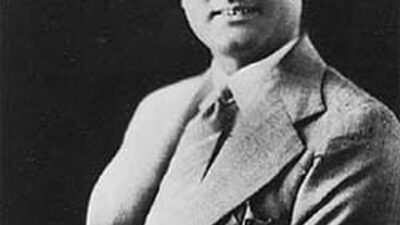
गीत विंग · गीत-पट्टिका · Song Plate
ऐ क़ातिब-ए-तक़दीर मुझे इतना बता दे
Ae Qatib-e-Taqdeer Mujhe Itna Bata De
'क़ातिब-ए-तक़दीर' से एक सवाल — सहगल नियति को ही प्रतिद्वंद्वी बना देते हैं।
भावतीव्र · उदास · दार्शनिक
भाषाhindi-urdu गतिधीमी स्वरूपएकल पुरुष
श्रेय
The Creditsसूत्र-वाक्य · The Hook
सूत्र-वाक्य
'क़ातिब-ए-तक़दीर' से एक सवाल — सहगल नियति को ही प्रतिद्वंद्वी बना देते हैं।
In EnglishA question hurled at the 'scribe of destiny' — Saigal turns fate itself into the antagonist.
पट्टिका-लेख
The Monographपरिचय Overview
मेरी बहन से एक दार्शनिक सहगल एकल, 'क़ातिब-ए-तक़दीर' — नियति लिखने वाले लेखक — को संबोधित, जिससे गायक अपनी क़िस्मत समझाने को कहता है। पंकज मलिक द्वारा पंडित भूषण के बोलों पर रचित, यह उस मनन-भरी, नियति-से-प्रश्न करती धारा का है जिसे सहगल ने अपने न्यू थिएटर्स वर्षों में इतने यादगार ढंग से गाया।
अंग्रेज़ी में पढ़ें · Read in English
A philosophical Saigal solo from Meri Bahen addressed to the 'qatib-e-taqdeer', the scribe who writes destiny, asking him to explain the singer's fate. Composed by Pankaj Mullick to Pandit Bhushan's words, it belongs to the brooding, fate-questioning vein that Saigal voiced so memorably across his New Theatres years.
संगीत The Music
पंकज मलिक गीत को एक गंभीर, धीमी गति की मधुर रूपरेखा देते हैं जो इसके आध्यात्मिक बोल के अनुकूल है, और संयमित संगत शब्दों पर ध्यान बनाए रखती है। यह रचना ताल-गति से अधिक भावनात्मक गुरुत्व को तरजीह देने की न्यू थिएटर्स रुचि का उदाहरण है।
अंग्रेज़ी में पढ़ें · Read in English
Pankaj Mullick gives the song a grave, slow-moving melodic contour suited to its metaphysical lyric, with restrained accompaniment that keeps attention on the words. The composition exemplifies the New Theatres preference for emotional gravity over rhythmic momentum.
काव्य The Poetry
आरंभिक वाक्यांश 'ऐ क़ातिब-ए-तक़दीर' एक उर्दू-फ़ारसी काव्य-परंपरा को आमंत्रित करता है जिसमें क़ातिब — दैवीय लेखक या रिकॉर्डिंग देवदूत — जन्म के समय व्यक्ति की नियति लिखता है। यह कल्पना शास्त्रीय उर्दू ग़ज़ल में गहराई से गुँथी है: भाग्य की कल्पना एक सुलेखक के रूप में जो मानव ललाट पर दुःख लिखता है। प्रार्थना-रूप 'मुझे इतना बता दे' (बस इतना बता दो) गीत को एक दार्शनिक याचना के रूप में प्रस्तुत करता है: ईश्वर के विरुद्ध विद्रोह नहीं बल्कि स्पष्टीकरण की माँग, जो साधारण विरोध से कहीं अधिक सूक्ष्म है। पंडित भूषण का बोल उर्दू साहित्य और हिंदी सुगमता के बीच काम करता है: 'क़ातिब' शब्द अरबीकृत उर्दू है जबकि आसपास की व्याकरण सुलभ हिंदी में है — विभाजन-पूर्व फ़िल्मी गीत की भाषायी संकरता जो हिंदी-उर्दू की साझी सांस्कृतिक भाषा के इतिहास में एक सटीक क्षण को दर्शाती है। के.एल. सहगल की उर्दू-अनुरागी अदायगी ने उन्हें ऐसे बोल के लिए स्वाभाविक माध्यम बनाया।
अंग्रेज़ी में पढ़ें · Read in English
The opening phrase 'Ae Qatib-e-Taqdeer' (O Scribe of Destiny) invokes an Urdu-Persian poetic convention in which the qatib — the divine scribe or recording angel — writes a person's fate at birth. The conceit is deeply embedded in classical Urdu ghazal: Fate imagined as a calligrapher who inscribes suffering on the human forehead. The prayer-form 'mujhe itna bata de' (tell me just this much) frames the song as a theological petition: not a railing against God but a request for explanation, which is philosophically more nuanced than simple protest. Pandit Bhushan's lyric operates at the intersection of Urdu literary culture and Hindi-language accessibility: the key word 'qatib' is Arabized Urdu, intelligible to educated audiences, while the surrounding grammar is accessible Hindi. This linguistic hybridity — Urdu register sustained in Hindi syntax — was characteristic of the pre-Partition film lyric and marks a precise moment in the history of Hindi-Urdu as a shared cultural language. K.L. Saigal's command of Urdu-inflected delivery made him the natural vehicle for such a lyric; his phrasing made the abstract metaphysical conceit feel personally lived. Full lyrics withheld (Pandit Bhushan death year unconfirmed).
कहानी The Story
मेरी बहन (1944) न्यू थिएटर्स कलकत्ता को के.एल. सहगल की विदाई थी, जिसे हेमचंद्र चंदर ने निर्देशित किया। फ़िल्म द्वितीय विश्वयुद्ध के कलकत्ता की पृष्ठभूमि पर बनी — एक ऐसा शहर जो जापानी हवाई हमले की आशंका और युद्धकालीन दबाव में था। यह युद्धकालीन संदर्भ फ़िल्म के दार्शनिक गीतों को अतिरिक्त भार देता था: 'नियति ने मेरे लिए क्या तय किया है?' प्रश्न केवल रोमांटिक परंपरा नहीं बल्कि एक वास्तविक समकालीन चिंता थी। मेरी बहन के सहगल-गीत पंकज मलिक द्वारा पंडित भूषण के बोलों पर रचित, 'पंछी काहे होता उदास' की ग्राम्य सांत्वना से लेकर 'ऐ क़ातिब-ए-तक़दीर' के आध्यात्मिक प्रश्न तक फैले हैं — एक जानबूझकर स्वर-विविधता जो संगीतकार और गीतकार दोनों को न्यू थिएटर्स की विधा पर पूर्ण नियंत्रण में दिखाती है।
अंग्रेज़ी में पढ़ें · Read in English
Meri Bahen (1944) was K.L. Saigal's farewell to New Theatres Calcutta, directed by Hemchandra Chunder. The film was set against the backdrop of World War II Calcutta — a city under Japanese air-raid threat and wartime logistical strain. This wartime context gave the film's philosophical songs an added weight: the question 'what has destiny decreed for me?' was not merely a romantic convention but a genuine contemporary anxiety. The Saigal songs in Meri Bahen, composed by Pankaj Mullick to Pandit Bhushan's lyrics, range from the pastoral consolation of 'Panchhi Kahe Hota Udas' to the metaphysical questioning of 'Ae Qatib-e-Taqdeer' — a deliberate tonal range that shows both composer and lyricist working in full command of the New Theatres idiom. The fate-questioning vein had been a distinctive element of Saigal's New Theatres repertoire since the early 1930s: it suited a voice and a persona whose emotional intelligence had always seemed slightly older than its years.
विरासत The Legacy
सहगल के न्यू थिएटर्स गीतों में नियति-प्रश्न करने की धारा — जिसमें 'ऐ क़ातिब-ए-तक़दीर' अंतिम उदाहरणों में से एक है — स्वातंत्र्य-पूर्व हिंदी फ़िल्म संगीत की बौद्धिक महत्त्वाकांक्षा की परिभाषात्मक रेखा थी। यह परंपरा, जिसमें फ़िल्मी गीत मात्र मनोरंजन के बजाय दार्शनिक प्रश्न का माध्यम था, 1950 के दशक में साहिर लुधियानवी और शैलेंद्र के काम में आगे बढ़ी। मेरी बहन (1944) को तकनीकी रूप से सहगल की श्रेष्ठ न्यू थिएटर्स फ़िल्म कहा जाता है। सहगल के लिए यह दार्शनिक स्वर कलकत्ता विधा में उनके अंतिम वक्तव्यों में था: जनवरी 1947 में उनका निधन हुआ — इस रिकॉर्डिंग के मात्र तीन वर्ष से भी कम बाद।
अंग्रेज़ी में पढ़ें · Read in English
The fate-questioning vein in Saigal's New Theatres songs — of which 'Ae Qatib-e-Taqdeer' is among the last examples — was a defining strand of pre-independence Hindi film music's intellectual ambition. This tradition, in which the film song served as a vehicle for philosophical questioning rather than mere entertainment, would carry forward into the work of Sahir Ludhianvi and Shailendra in the 1950s, where similar metaphysical protests found a new voice and wider audience. Meri Bahen (1944) is cited as Saigal's best New Theatres film technically, and its songs are among the most accomplished of Pankaj Mullick's film career. For Saigal, this philosophical register was among his last statements in the Calcutta idiom: he died in January 1947, less than three years after this recording.
वर्गीकरण
Classification- Tempo
- Slow
Genre
अन्य विवरण
More Details- https://en.wikipedia.org/wiki/Meri_Bahen
- https://www.cinemaazi.com/people/k-l-saigal
- https://myswar.co/album/meri-bahen-1944
- https://www.hindigeetmala.net/movie/meri_bahen.htm
References
रोचक तथ्य
Margin Notesमेरी बहन (1944) के.एल. सहगल की अंतिम न्यू थिएटर्स फ़िल्म थी; उनका निधन जनवरी 1947 में हुआ, जिससे इस फ़िल्म के दार्शनिक गीत उनके कलकत्ता काल के अंतिम दस्तावेज़ों में गिने जाते हैं।
अंग्रेज़ी में पढ़ें · Read in English
Meri Bahen (1944) was K.L. Saigal's last New Theatres film; he died in January 1947, making the film's philosophical songs among the final documents of his Calcutta period.
'कातिब-ए-तक़दीर' (नियति का लेखक) की कल्पना उर्दू-फ़ारसी काव्य परंपरा के 'किरामन कातिबीन' — मानव कर्मों और नियति को दर्ज करने वाले दिव्य फ़रिश्तों — से ली गई है, जिससे यह गीत मेरी बहन के उन कई गीतों में से एक बन जाता है जो शास्त्रीय उर्दू-इस्लामी साहित्यिक कल्पना का सहारा लेते हैं।
अंग्रेज़ी में पढ़ें · Read in English
The 'qatib-e-taqdeer' (scribe of destiny) conceit is drawn from the Urdu-Persian poetic tradition of the kiraman katibin — the divine angels who record human deeds and fates — making the song one of several Meri Bahen numbers that draw on classical Urdu-Islamic literary imagery.
पंकज मलिक ने मेरी बहन के संपूर्ण साउंडट्रैक की, इस गीत सहित, न्यू थिएटर्स कलकत्ता की मितव्ययी, स्वर-केंद्रित शैली में रचना की — जो उस समय बॉम्बे की फ़िल्मों में सहगल को मिल रही भारी वाद्यवृंद शैली के मुक़ाबले एक सुनियोजित वैषम्य था।
अंग्रेज़ी में पढ़ें · Read in English
Pankaj Mullick composed the entire Meri Bahen soundtrack, including this song, in the spare, voice-centred style of New Theatres Calcutta — a deliberate contrast to the heavier orchestral style Saigal was encountering in Bombay productions at the time.
मेरी बहन 1944 के भारतीय बॉक्स ऑफ़िस पर चौथे स्थान पर रही और इसे स्टूडियो के पतन से पहले न्यू थिएटर्स की सबसे तकनीकी रूप से उत्कृष्ट अंतिम प्रस्तुतियों में से एक माना जाता है।
अंग्रेज़ी में पढ़ें · Read in English
Meri Bahen ranked fourth at the Indian box office in 1944 and is regarded as one of the most technically accomplished late productions of New Theatres before the studio's decline.
नमूना-पट्टी
The Specimen Table| शीर्षक | ऐ क़ातिब-ए-तक़दीर मुझे इतना बता दे · Ae Qatib-e-Taqdeer Mujhe Itna Bata De |
|---|---|
| फ़िल्म | मेरी बहन · 1944 |
| वर्ष · युग | 1944 |
| गायक | K.L. Saigal |
| गीतकार | Pandit Bhushan |
| संगीतकार | Pankaj Mullick |
| स्वरूप | एकल पुरुष |
| गति | धीमी |
| भाषा | hindi-urdu |
| भाव | तीव्र · उदास · दार्शनिक |
| लोकप्रियता | Popular |
| बोल-स्थिति | केवल झलक |
जुड़े हुए पन्ने
Connected Plates · The Graph Made Visibleअटलस में कोई पन्ना अकेला नहीं — इस गीत से जुड़े गीत, कलाकार, फ़िल्म, राग-ताल-विधा, सब यहाँ से खुलते हैं।
मिलते-जुलते गीत · Related Songs
कलाकार · The Artists
फ़िल्म · The Film
साझा कीजिए · Share this Plate