गीत विंग · गीत-पट्टिका · Song Plate
तरसी हुई है मुद्दत से
Tarasi Hui Hai Muddat Se
वे आँखें जो युगों से एक झलक को तरस रही हैं — अशोक कुमार फ़िल्म को विरह के स्वर पर खोलते हैं।
भावउदास · रोमांटिक · Yearning
भाषाhindi-urdu गतिधीमी स्वरूपएकल पुरुष
श्रेय
The Creditsसूत्र-वाक्य · The Hook
सूत्र-वाक्य
वे आँखें जो युगों से एक झलक को तरस रही हैं — अशोक कुमार फ़िल्म को विरह के स्वर पर खोलते हैं।
In EnglishEyes that have ached for a glimpse for ages — Ashok Kumar opens the film on a note of longing.
पट्टिका-लेख
The Monographपरिचय Overview
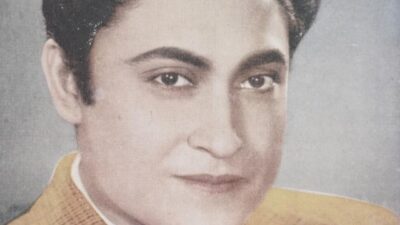
अक्सर नजमा (1943) का आरंभिक गीत बताया जाने वाला यह पुरुष-एकल अशोक कुमार ने अपनी ही आवाज़ में गाया है। पूरा शीर्षक — मुद्दत से तरसती आँखें, प्रिय से नज़ारों की दुनिया आबाद करने की प्रार्थना — फ़िल्म के प्रेम-विरह और त्याग के सुर को शुरुआत से ही बाँध देता है। यह इस महबूब प्रोडक्शंस की पहली फ़िल्म के सर्वाधिक स्मरणीय गीतों में से एक है।
अंग्रेज़ी में पढ़ें · Read in English
Often cited as the opening song of Najma (1943), this male solo is sung by Ashok Kumar in his own voice. The full title — eyes long thirsting, asking the beloved to make the world of sight flourish — sets the film's pitch of romantic yearning and renunciation from the very start. It is among the most-remembered numbers of this Mehboob Productions debut.
संगीत The Music
रफ़ीक़ ग़ज़नवी इस एकल को एक धीमी, ग़ज़ल-आकार वाली चिंतन-रचना के रूप में गढ़ते हैं — सारंगी धुन-रेखा के पीछे चलती है, हारमोनियम भाव को बनाए रखता है, और एक विरल तबला अशोक कुमार की सहज आवाज़ को पंक्ति की पीड़ा वहन करने देता है।
अंग्रेज़ी में पढ़ें · Read in English
Rafiq Ghaznavi builds the solo as a slow, ghazal-shaped meditation — sarangi shadowing the melodic line, harmonium sustaining the mood, and a sparse tabla that lets Ashok Kumar's unforced voice carry the ache of the verse.
काव्य The Poetry
अंजुम पीलीभीती पीलीभीत, उत्तर प्रदेश के कवि थे जिनकी काव्य-संवेदना उर्दू ग़ज़ल की परम्परा में जड़ी थी — एक ऐसी विधा जहाँ कालिक भाषा (कितना लम्बा, कितने वर्ष, कितना समय बीता) प्राथमिक भावनात्मक भार वहन करती है। 'तरसी हुई है मुद्दत से' में यह कालिक आयाम केंद्र में है: 'मुद्दत' (एक दीर्घकाल) ग़ज़ल में प्रिय शब्द है जो विरह से खिंचकर भूगर्भकालीन बन जाता है। 'तरसी हुई' (तरसते-तरसते) एक भूतकालिक कृदंत है जो लालसा को गीत के आरम्भ से पहले रखता है — इच्छा गीत से पहले मौजूद है, जैसे यह केवल एक सदा-से-चले-आ-रहे भाव की अभिव्यक्ति हो। राफ़ीक़ ग़ज़नवी ने इसे धीमी, ग़ज़ल-आकार की संगीत-संरचना से मेल दिया: सारंगी धुन की छाया करती है, हारमोनियम वातावरण को थामता है, विरल तबला समय चिह्नित करता है बिना उसे जल्दी किए। अशोक कुमार की बातचीती, थोड़ी कर्कश आवाज़ ने गीत को वह अंतरंगता दी जो इसकी मौन निराशा के लिए उपयुक्त थी।
अंग्रेज़ी में पढ़ें · Read in English
Anjum Pilibhiti was a poet from Pilibhit, Uttar Pradesh, whose lyric sensibility was rooted in the Urdu ghazal tradition — a form where temporal language (how long, how many years, how much time has passed) carries the primary emotional weight. 'Tarasi Hui Hai Muddat Se' (Longing for so long) centers this temporal dimension in its title: 'muddat' (a long period of time) is a classically ghazal-favored word, connoting duration stretched by longing into something that feels geological. The construction 'tarasi hui' (having longed, having thirsted) is a past participial that places the longing before the song even begins — the desire precedes the lyric, as if the song is merely the expression of a state that has existed forever. Rafiq Ghaznavi matched this with a slow, ghazal-shaped musical architecture: sarangi shadowing the melodic line, harmonium sustaining the atmosphere, a sparse tabla that marks time without rushing it. Ashok Kumar's conversational, slightly roughened vocal delivery — very different from Saigal's operatic sweep — gave the lyric an intimacy suited to its quiet desperation.
कहानी The Story
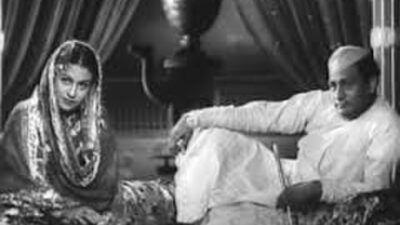
मेहबूब ख़ान निर्देशित 'नजमा' (1943) उनके मेहबूब प्रोडक्शंस बैनर का पहला निर्माण था। कहानी — लखनऊ के मुस्लिम समाज में एक चिकित्सा-छात्र (युसुफ, अशोक कुमार) की अपने धनी पड़ोसी की बेटी नजमा से प्रेम की त्रासदी — प्रबंधित विवाह और प्रेम के बीच परिचित टकराव को, एक सूक्ष्म नैतिक मोड़ के साथ, दिखाती है: नजमा स्वयं युसुफ को अपने परिवार की प्रतिबद्धता का सम्मान करने के लिए प्रेरित करती है। मेहबूब ख़ान ने अशोक कुमार को तत्कालीन रिकॉर्ड एक लाख रुपये की फ़ीस दी। अशोक कुमार ने यह गीत अपनी आवाज़ में गाया — एक प्रयोग जो उन्होंने कई प्रारम्भिक फ़िल्मों में किया। यह गीत कथा में युसुफ की लालसा के उद्घाटन भाव के रूप में प्रारम्भ में आता है। राफ़ीक़ ग़ज़नवी की मुस्लिम-सामाजिक रजिस्टर की रचना — धीमी ग़ज़लें, उर्दू काव्य, संयमित वाद्य-संगत — लखनवी परिवेश के अनुरूप थी।
अंग्रेज़ी में पढ़ें · Read in English
Najma (1943), directed by Mehboob Khan, was the inaugural production of his Mehboob Productions banner. The story — a Lucknow Muslim social about a medical student (Yusuf, played by Ashok Kumar) in love with his wealthy neighbor's daughter Najma — navigated the familiar tragedy of arranged marriage overriding love, but with a more nuanced moral: Najma herself convinces Yusuf to honor his family's commitment. Mehboob Khan paid Ashok Kumar the then-record fee of Rs. 1 lakh, signaling the film's commercial ambitions. Ashok Kumar sang 'Tarasi Hui Hai Muddat Se' in his own voice — a practice he maintained in several early films. The song appears early in the narrative as the opening expression of Yusuf's longing, before circumstances turn the story toward its complex resolution. Rafiq Ghaznavi's composition for the Muslim-social register — slow ghazals, Urdu poetry, restrained instrumentation — suited the Lucknow setting and became one of the defining sonic signatures of the film.
विरासत The Legacy
'नजमा' (1943) हिंदी सिनेमा में 'मुस्लिम सामाजिक' शैली की आधारशिला फ़िल्म के रूप में दर्ज है — वह शैली जो आगे चलकर 'मिर्ज़ा ग़ालिब' (1954), 'चौदहवीं का चाँद' (1960) और 'मेरे महबूब' (1963) जैसी कृतियाँ उत्पन्न करती है। अशोक कुमार का इस फ़िल्म में स्वयं-गाया प्रदर्शन पुरुष पार्श्वगान परम्परा के अध्ययनों में एक प्रारम्भिक उदाहरण के रूप में उद्धृत होता है। अंजुम पीलीभीती का 'तरसी हुई है मुद्दत से' उर्दू ग़ज़ल-काव्य के मुख्यधारा हिंदी फ़िल्म गीत में प्रवेश के दस्तावेज़ी अभिलेख में है — एक प्रक्रिया जो 1940 के दशक की मुस्लिम सामाजिक फ़िल्मों में विशेष रूप से दृश्यमान थी।
अंग्रेज़ी में पढ़ें · Read in English
Najma (1943) is documented as the foundational film of the 'Muslim social' genre in Hindi cinema — a genre that went on to produce classics including Mirza Ghalib (1954), Chaudhvin Ka Chand (1960), and Mere Mehboob (1963). Ashok Kumar's self-sung performance in this film is cited in studies of the male playback tradition as an early example of an actor investing directly in the vocal character of his role. Anjum Pilibhiti's lyric for 'Tarasi Hui Hai Muddat Se' belongs to the documentary record of Urdu ghazal-poetry entering mainstream Hindi film song — a process that was especially visible in Muslim social films of the 1940s. The song circulates on archival platforms and is discussed in contexts of both Mehboob Khan's early directorial career and Ashok Kumar's singing appearances.
वर्गीकरण
Classification- Tempo
- Slow
Genre
अन्य विवरण
More Details- https://en.wikipedia.org/wiki/Najma_(1943_film)
- https://roughinhere.wordpress.com/2013/10/29/najma-1943/
- https://www.hindigeetmala.net/movie/najma.htm
- https://www.imdb.com/title/tt0232155/
References
रोचक तथ्य
Margin Notesनजमा (1943) मेहबूब ख़ान के अपने बैनर मेहबूब प्रोडक्शंस तले निर्मित पहली फ़िल्म थी — यह वही स्टूडियो था जिसने बाद में मदर इंडिया (1957) का निर्माण किया, जो भारत की पहली ऑस्कर-नामांकित फ़िल्म थी।
अंग्रेज़ी में पढ़ें · Read in English
Najma (1943) was the first film produced under Mehboob Khan's own Mehboob Productions banner — the studio that later produced Mother India (1957), India's first Oscar-nominated film.
अशोक कुमार को नजमा (1943) में उनकी भूमिका के लिए 1 लाख रुपये का भुगतान किया गया था — उस समय किसी भारतीय फ़िल्म अभिनेता के लिए यह एक रिकॉर्ड फ़ीस थी।
अंग्रेज़ी में पढ़ें · Read in English
Ashok Kumar was paid Rs. 1 lakh for his role in Najma (1943) — a record fee for an Indian film actor at that time.
नजमा (1943) को हिंदी सिनेमा की 'मुस्लिम सोशल' विधा की आधारभूत फ़िल्म के रूप में दर्ज किया गया है, जिसने मुस्लिम सामाजिक परिवेश पर आधारित फ़िल्मों के लिए एक ऐसा खाका स्थापित किया जो दशकों तक चलता रहा।
अंग्रेज़ी में पढ़ें · Read in English
Najma (1943) is documented as a foundational film of the 'Muslim social' genre in Hindi cinema, establishing a template for films set in Muslim social milieux that continued for decades.
अशोक कुमार ने यह गीत अपनी ही आवाज़ में गाया था — उनके क़द के पुरुष सितारे के लिए यह एक असामान्य प्रथा थी, उस दौर में जब अधिकांश प्रमुख अभिनेता समर्पित पार्श्वगायकों का प्रयोग करते थे।
अंग्रेज़ी में पढ़ें · Read in English
Ashok Kumar sang this song in his own voice — an unusual practice for a male star of his stature in an era when most leading actors used dedicated playback singers.
नमूना-पट्टी
The Specimen Table| शीर्षक | तरसी हुई है मुद्दत से · Tarasi Hui Hai Muddat Se |
|---|---|
| फ़िल्म | नजमा · 1943 |
| वर्ष · युग | 1943 |
| गायक | Ashok Kumar |
| गीतकार | Anjum Pilibhiti |
| संगीतकार | Rafiq Ghaznavi |
| स्वरूप | एकल पुरुष |
| गति | धीमी |
| भाषा | hindi-urdu |
| भाव | उदास · रोमांटिक · Yearning |
| लोकप्रियता | Popular |
| बोल-स्थिति | केवल झलक |
जुड़े हुए पन्ने
Connected Plates · The Graph Made Visibleअटलस में कोई पन्ना अकेला नहीं — इस गीत से जुड़े गीत, कलाकार, फ़िल्म, राग-ताल-विधा, सब यहाँ से खुलते हैं।
मिलते-जुलते गीत · Related Songs
कलाकार · The Artists
फ़िल्म · The Film
साझा कीजिए · Share this Plate