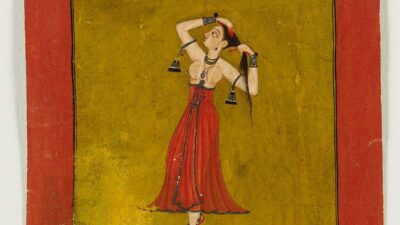
शास्त्र विंग · राग-पट्टिका · Raag Plate
गान मयुरि
Gaana Mayuri
एक शांत Carnatic राग · A Peace Carnatic Raag
भावशांतिपूर्ण · ध्यानपूर्ण · प्रशांत · शांत
ऊर्जाधीमी
समय और भाव
Time Theory & Moodसमय-सिद्धांत · Time Theory
संध्या काल
परंपरागत रूप से संध्या काल (4:00 PM - 7:00 PM) में गाया जाता है।
Traditionally performed during evening/twilight hours (4:00 PM - 7:00 PM), when day transitions to night.
भाव और गति · Mood & Tempo
शांत · Peace/Tranquility
आंतरिक शांति, सुकून और आध्यात्मिक वैराग्य का रस। शांति, ध्यान और अध्यात्म को जगाता है।
ऊर्जा · Energyधीमी
स्तर · Leveladvanced — राग Gaana Mayuri के लिए कर्नाटक संगीत सिद्धांत की मजबूत नींव आवश्यक है।
पट्टिका-लेख
The Monographपरिचय Introduction
राग Gaana Mayuri कर्नाटक शास्त्रीय संगीत परंपरा का एक राग है। इसका प्रमुख रस शांत (Peace/Tranquility) है। यह परंपरागत रूप से संध्या काल (4:00 PM - 7:00 PM) में गाया जाता है। गाया जाता है।
अंग्रेज़ी में पढ़ें · Read in English
Raag Gaana Mayuri is a complete scale with all 7 notes in both ascent and descent raga in the Carnatic classical music tradition.. With its Sampurna-Sampurna jati structure, this raag creates a distinctive tonal landscape. The predominant rasa is Peace/Tranquility (शांत), making it suitable for compositions that evoke peaceful, meditative emotions. It is traditionally performed during evening hours, and its melodic contour offers rich possibilities for alapana, kalpanaswaram, and creative improvisation.
सांस्कृतिक महत्व Cultural Significance
भारतीय शास्त्रीय संगीत की समृद्ध परंपरा के अंग के रूप में, राग Gaana Mayuri Carnatic परंपरा को परिभाषित करने वाले स्वर संरचना और भावनात्मक अभिव्यक्ति के बीच गहरे संबंध का प्रतिनिधित्व करता है।
अंग्रेज़ी में पढ़ें · Read in English
As part of the rich tapestry of Indian classical music, Raag Gaana Mayuri represents the deep connection between melodic structure and emotional expression that defines the Carnatic tradition.
ऐतिहासिक महत्व Historical Significance
राग गाना मयूरि कर्नाटक संगीत का एक जन्य राग है जिसका अर्थ है 'संगीत की मोरनी' (गाना = संगीत; मयूरि = मोरनी)। भारतीय संगीत और प्रतीकशास्त्र में मोर सौंदर्य, नृत्य और वर्षा ऋतु का प्रतीक है। 'मयूरि' या 'मयूर' नाम वाले राग प्रायः कर्नाटक संगीत के हल्के-सुंदर प्रकारों से संबंधित होते हैं। इस राग की सटीक स्वर-संरचना और मूल मेलकर्ता इस फ़ाइल में नहीं मिले हैं, और आधुनिक शास्त्रीय मंच पर यह बहुत कम सुना जाता है।
अंग्रेज़ी में पढ़ें · Read in English
Raag Gaana Mayuri is a Carnatic janya raag whose name means 'the peacock of music' (gaana = music/song; mayuri = female peacock). The peacock imagery in Indian music and iconography represents beauty, grace, and the arrival of the monsoon — linking such raags to themes of renewal, dance, and aesthetic delight. Raags with 'Mayuri' or 'Mayura' in their name often belong to the lighter, more decorative end of the Carnatic spectrum. Gaana Mayuri's exact note structure and parent melakarta are not confirmed in the current file, and it remains a relatively obscure raag in modern concert practice. Its shanta (peaceful) rasa and Carnatic kriti forms suggest it is suited to light concert music rather than heavy classical exposition.
शिक्षा
Teaching & LearningBegin with slow aalapana to internalize the raag's swaroopa (melodic form)
Practice the arohana and avarohana patterns with a tanpura drone
Listen to recordings by master performers to understand the raag's gamakas (ornamentations)
Work on kalpanaswaram (improvisation) within the raag's framework
Using incorrect gamakas that belong to a different raag
Not maintaining proper swar sthana (note placement)
Rushing through phrases without allowing the raag bhava to develop
प्रस्तुति
Performance- Description
- परंपरागत रूप से संध्या काल (4:00 PM - 7:00 PM) में गाया जाता है। Traditionally performed during evening/twilight hours (4:00 PM - 7:00 PM), when day transitions to night.
- Prahar Number
- 5
- Prahar Name
- संध्या काल Sandhya Kaal
- Time Start
- 16:00
- Time End
- 19:00
- Time Flexibility
- flexible
Time
और जानें
More to KnowIn Film Music
Raag Gaana Mayuri has not been documented in Hindi film music. Its obscure status in even specialised Carnatic circles makes a Hindi film presence highly unlikely.
सीखने के लिए
For Learners- Difficulty Level
- advanced
अन्य विवरण
More Details- Indian_Music_Raga_Encyclopedia_v2.xlsx
References
नमूना-पट्टी
The Specimen Table| नाम | गान मयुरि · Gaana Mayuri |
|---|---|
| जाति | संपूर्ण-संपूर्ण · Sampurna-Sampurna |
| समय | संध्या काल |
| ऊर्जा | धीमी |
| परिवार | Gaana Mayuri |
| स्तर | advanced |
| लोकप्रियता | Obscure |
जुड़े हुए पन्ने
Connected Plates · The Graph Made Visibleअटलस में कोई पन्ना अकेला नहीं — इस राग से गीत, प्रस्तुतियाँ, कलाकार, ताल, घराने और मिलते-जुलते राग, सब यहाँ से खुलते हैं।
ताल-साथी · Taal Pairings
श्रवण-कक्ष · The Listening Room
सुनिए — गान मयुरि · Hear the Raag
'Saanware' पर Mayuri के सुरों को सुनकर Shreya ने उसे कहा 'Sargam Queen' |Indian Idol S15|Performance
प्रश्नोत्तर
Questions & Answersराग Gaana Mayuri किस संगीत पद्धति का राग है?
राग Gaana Mayuri कर्नाटक (दक्षिण भारतीय) शास्त्रीय संगीत पद्धति का राग है।
अंग्रेज़ी में पढ़ें · Read in English
Which music system does Raga Gaana Mayuri belong to? — Raga Gaana Mayuri belongs to the Carnatic (South Indian) classical music system.
साझा कीजिए · Share this Plate