गीत विंग · गीत-पट्टिका · Song Plate
डोले हृदय की नैया
Doley Hriday Ki Naiya
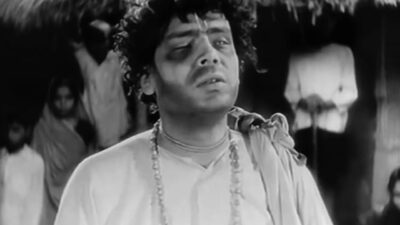
हृदय की नैया डोलती है — के.सी. डे विद्यापति के रूप में, अंधे कवि की आवाज़ मध्यकालीन भक्ति का भार लिए हुए।
भावउदास · शांत · आध्यात्मिक
भाषाmaithili-hindi गतिधीमी स्वरूपएकल पुरुष
श्रेय
The Creditsबोल · The Lyrics
पूरे बोल · Full Lyrics
कैसे पार उतरूँ, मोरे मैया।
Kaise paar utaroon, more maiya.
सूत्र-वाक्य · The Hook
सूत्र-वाक्य
हृदय की नैया डोलती है — के.सी. डे विद्यापति के रूप में, अंधे कवि की आवाज़ मध्यकालीन भक्ति का भार लिए हुए।
In EnglishThe heart's boat sways — K.C. Dey as Vidyapati, the blind poet's voice carrying the weight of medieval devotion.
पट्टिका-लेख
The Monographपरिचय Overview
न्यू थिएटर्स की 'विद्यापति' (1937) में, के.सी. डे — स्वयं अंधे — ने अंधे मध्यकालीन कवि विद्यापति के रूप में गाया, और कलाकार और पात्र के इस अभिसरण ने आरंभिक हिंदी सिनेमा की सबसे प्रभावशाली स्वर-प्रस्तुतियों में से एक रची। पंकज मलिक ने 15वीं सदी की मैथिली पदावली को भैरवी में — भक्ति और विदाई के राग में — सजाया, और डे की भेदती, कीर्तन-जड़ आवाज़ ने उसे एक ऐसे दुख से भर दिया जो किसी बिल्कुल दूसरे युग से आता लगता था।
अंग्रेज़ी में पढ़ें · Read in English
In New Theatres' Vidyapati (1937), K.C. Dey — himself blind — sang as the blind medieval poet Vidyapati, and the convergence of performer and character produced one of early Hindi cinema's most affecting vocal performances. Pankaj Mullick set the 15th-century Maithili padavali in Bhairavi, the raga of devotion and parting, and Dey's piercing, keertan-rooted voice filled it with a grief that seemed to come from another era entirely.
संगीत The Music
पंकज मलिक की बंदिश तपस्वी है — पदावली की गायकी-परंपरा के क़रीब, न्यूनतम ऑर्केस्ट्रल हस्तक्षेप के साथ। भैरवी के कोमल स्वर फ़िल्म की विशिष्ट भावनात्मक वातावरण — कोमल विषाद — बनाते हैं।
अंग्रेज़ी में पढ़ें · Read in English
Pankaj Mullick's setting is austere — close to the padavali's vocal tradition, with minimal orchestral interference. The Bhairavi's komal swaras (soft notes) create the film's characteristic emotional atmosphere of tender grief.
काव्य The Poetry
विद्यापति की पदावलियाँ नाव (नैया) को अस्तित्व के सागर में आत्मा के पात्र के रूप में प्रयोग करती हैं — यहाँ विशेष रूप से दुख के समुद्र में डोलती हृदय की नैया। यह प्रतीक-व्यवस्था मैथिली भक्ति-काव्य और बंगाली वैष्णव पद दोनों में केंद्रीय है।
अंग्रेज़ी में पढ़ें · Read in English
Vidyapati's padavalis use the nauka (boat) as the soul's vessel in the ocean of existence — here specifically the heart's boat rocking in the sea of sorrow. The imagery is central to both Maithili devotional poetry and Bengali Vaishnava verse.
कहानी The Story
आध्यात्मिक संकट के क्षण में अंधे कवि-संत द्वारा गाया — उनकी कविता बहती है जबकि उनका व्यक्तिगत भाग्य ख़तरे में है। गीत एक साथ विद्यापति की प्रार्थना और के.सी. डे की अपनी आवाज़ है।
अंग्रेज़ी में पढ़ें · Read in English
Sung by the blind poet-saint in a moment of spiritual crisis — his poetry flowing while his personal fortunes are in danger. The song is simultaneously Vidyapati's prayer and K.C. Dey's own voice.
विरासत The Legacy
के.सी. डे की निश्चित रिकॉर्डिंग और पंकज मलिक की सर्वश्रेष्ठ फ़िल्म-रचनाओं में से एक के रूप में मान्य। गीत ने दिखाया कि मध्यकालीन भक्ति-काव्य को जन-सिनेमा के दर्शकों तक बिना पतले किए लाया जा सकता है।
अंग्रेज़ी में पढ़ें · Read in English
Recognised as one of K.C. Dey's definitive recordings and one of Pankaj Mullick's finest film compositions. The song demonstrated that medieval devotional poetry could be brought to the mass cinema audience without dilution.
वर्गीकरण
Classification- Tempo
- Slow
Genre
अन्य विवरण
More Details- K.C. Dey — Wikipedia EN (singer, actor, 1893–1962)
- Vidyapati (1937 film) — New Theatres; Wikipedia EN
- Vidyapati Thakur — Wikipedia EN; Maithili padavali tradition
- Pankaj Mullick — Wikipedia EN
- Nauka (boat) imagery in Indian devotional poetry — academic references
References
रोचक तथ्य
Margin Notesके.सी. डे (कृष्णचंद्र डे, 1893-1962) बचपन से ही दृष्टिहीन थे, फिर भी वे प्रारंभिक हिंदी सिनेमा के सर्वाधिक प्रशंसित गायकों में से एक बने; उनकी इस स्थिति को न केवल दर्ज किया गया बल्कि विद्यापति (1937) में इसे विषयगत केंद्र भी बनाया गया, जिसमें उन्होंने अंधे कवि की भूमिका निभाई।
अंग्रेज़ी में पढ़ें · Read in English
K.C. Dey (Krishnachandra Dey, 1893–1962) was blind from childhood but became one of the most celebrated singers in early Hindi cinema; his condition was both documented and made thematically central in Vidyapati (1937), where he played the blind poet.
आत्मा के वाहन के रूप में नाव (नौका/नैया) का बिंब भारतीय भक्ति-काव्य के सबसे प्राचीन बिंबों में से एक है — यह तुकाराम के अभंगों, कबीर के दोहों, मीराबाई के पदों और विद्यापति की पदावली में मिलता है; 1937 तक यह एक अखिल-भारतीय भक्ति-बिंब बन चुका था, जिसे किसी भी सिनेमा-दर्शक द्वारा तुरंत पहचाना जा सकता था।
अंग्रेज़ी में पढ़ें · Read in English
The boat (nauka/naiya) as the soul's vessel is one of the oldest images in Indian devotional poetry — found in Tukaram's abhangas, Kabir's dohas, Mirabai's padas, and Vidyapati's padavalis; by 1937 it was a pan-Indian devotional image instantly recognisable to any cinema audience.
पंकज मलिक ने 1930 के दशक में अखिल भारतीय संगीत सम्मेलन का पुरस्कार जीता था, और वे ग्रामोफ़ोन रिकॉर्डिंग तकनीक तथा लाइव फ़िल्म ध्वनि — दोनों के साथ व्यापक रूप से काम करने वाले शुरुआती भारतीय संगीतकारों में से एक थे — स्टूडियो परिस्थितियों में ध्वनि-निष्ठा से जुड़ा उनका यह अनुभव न्यू थिएटर्स की रिकॉर्डिंग्स की स्पष्टता में झलकता है।
अंग्रेज़ी में पढ़ें · Read in English
Pankaj Mullick won the All India Music Conference award in the 1930s and was one of the first Indian musicians to work extensively with both gramophone recording technology and live film sound — his experience with audio fidelity in studio conditions is reflected in the clarity of New Theatres recordings.
विद्यापति (ऐतिहासिक कवि) मिथिला के राजा शिवसिंह के दरबारी कवि थे; उनकी पदावली को बंगाल और बिहार की वैष्णव भक्ति-परंपरा में अपनाया गया, भले ही उसकी रचना राजदरबारी संदर्भ में हुई थी — यह मध्यकालीन ग्रंथों के अभिजात्य और भक्ति-वर्ग दर्शकों के बीच सहज आवाजाही को दर्शाता है।
अंग्रेज़ी में पढ़ें · Read in English
Vidyapati (the historical poet) was court poet to King Shiva Simha of Mithila; his padavalis were adopted into the Vaishnava devotional tradition of Bengal and Bihar despite being composed in a royal court context, illustrating the fluid movement of medieval texts between elite and devotional audiences.
न्यू थिएटर्स ने बोराल और मलिक की रचनाओं को स्वरलिपिबद्ध करने के लिए एक पूर्णकालिक स्वरलिपि-लेखक नियुक्त किया हुआ था — यह एक असामान्य संस्थागत व्यवस्था थी, जिसके कारण उनका फ़िल्म संगीत शुरुआत से ही लिखित रूप में दर्ज होता रहा, जबकि उस दौर की कई अन्य भारतीय फ़िल्म रचनाओं के साथ ऐसा नहीं था।
अंग्रेज़ी में पढ़ें · Read in English
New Theatres employed a full-time notation writer to transcribe Boral's and Mullick's compositions — an unusual institutional arrangement that meant their film scores were documented in written form from the beginning, unlike many contemporaneous Indian film compositions.
नमूना-पट्टी
The Specimen Table| शीर्षक | डोले हृदय की नैया · Doley Hriday Ki Naiya |
|---|---|
| फ़िल्म | विद्यापति · 1937 |
| वर्ष · युग | 1937 — talkie dawn |
| गायक | K.C. Dey |
| गीतकार | विद्यापति ठाकुर (15वीं सदी — सार्वजनिक क्षेत्र) |
| संगीतकार | Pankaj Mullick |
| स्वरूप | एकल पुरुष |
| गति | धीमी |
| भाषा | maithili-hindi |
| भाव | उदास · शांत · आध्यात्मिक |
| लोकप्रियता | Very_popular |
| बोल-स्थिति | सार्वजनिक |
जुड़े हुए पन्ने
Connected Plates · The Graph Made Visibleअटलस में कोई पन्ना अकेला नहीं — इस गीत से जुड़े गीत, कलाकार, फ़िल्म, राग-ताल-विधा, सब यहाँ से खुलते हैं।
मिलते-जुलते गीत · Related Songs
कलाकार · The Artists
फ़िल्म · The Film
साझा कीजिए · Share this Plate