शास्त्र विंग · राग-पट्टिका · Raag Plate
बागेश्री
Bageshri
रात के अंत का रोमांटिक और विषादपूर्ण राग · The Raag of Late Night Romance and Melancholic Longing
भावविषादपूर्ण · रोमांटिक · कोमल · आत्मचिंतक · मीठा-कड़वा
गतिvilambit ऊर्जाधीमी से मध्यम
अन्य नामBageshwari · Bageswari · बागेश्वरी · Bageshri Raga
स्वर-चित्र · The Swara Panel
आरोह — अवरोह · The Ascent and the Descent
कोमल स्वर — Ga♭, Ni♭ — तीव्रित हरे रंग में।
आरोह · Aroha चढ़ती हुई सीढ़ी
अवरोह · Avaroha उतरती हुई सीढ़ी
कोमल स्वर — नीचे की ओर झुका चिह्न (◌॒)सˊ = तार सप्तक का षड्ज
बागेश्री का विशेष लक्षण इसका सरल आरोहण और जटिल, वक्र अवरोहण है।
अंग्रेज़ी में पढ़ें · Read in English
Bageshri uses two komal notes (Ga♭, Ni♭). The arohana is simple and pentatonic (5 notes), but the avarohana is complex with vakra (curved) movements, particularly the oscillation between Dha and Ma. This asymmetry between the simple ascending and complex descending paths creates Bageshri's characteristic melancholic quality. Re and Pa are omitted in arohana but appear only in the descent.
पकड़ · पहचान वाक्यांश
ग॒ म ध, नि॒ सˊ (नि॒ ध म)
Ga♭ Ma Dha, Ni♭ Sa' (Ni♭ Dha Ma)
बागेश्री की पकड़ — धीरे-धीरे उठती हुई, प्रकृति में रहस्यमय।
अंग्रेज़ी में पढ़ें · Read in English
The characteristic phrase of Bageshri — ascending gradually with the komal Gandhara and reaching the upper octave through the komal Nishada. Simple yet profound.
वादी–संवादी टिप्पणी · Vadi–Samvadi note
Vadi — The most important note in Bageshri — the natural Madhyam is the anchor of the raag.
Samvadi — The second most important note — the foundational Sa.
चलन · स्वर-यात्रा
सा ग॒ म ध नि॒ सˊ। नि॒ ध म प ध म ग॒ रे स
Sa Ga♭ Ma Dha Ni♭ Sa'. Ni♭ Dha Ma Pa Dha Ma Ga♭ Re Sa
बागेश्री की संपूर्ण मधुर यात्रा — रहस्यमय और विषादपूर्ण।
अंग्रेज़ी में पढ़ें · Read in English
The melodic flow of Bageshri — showing the simple, ascending arohana and the characteristic oscillating descent that creates the raag's melancholic beauty.
न्यास स्वर — Sa, Ma अनुवादी — Ga♭, Dha, Ni♭, Re
विशेष स्वर-वाक्य
Characteristic Phrasesसमय और भाव
Time Theory & Moodसमय-सिद्धांत · Time Theory
रात्रि प्रहर
रात्रि का राग — मध्य रात्रि से प्रातःकाल तक गाया जाता है।
Late night raag — traditionally performed from midnight through early morning. The melancholic, introspective character suits the silent, intimate hours of late night.
All seasons — no seasonal restriction
भाव और गति · Mood & Tempo
श्रृंगार/करुण · Romance / Pathos / Melancholic Longing
बागेश्री का प्राथमिक रस — रोमांटिक अभिलाषा, विषाद, और करुण भावना का संयोजन।
vilambit
ऊर्जा · Energyधीमी से मध्यम
स्तर · Levelintermediate — बागेश्री मध्यम स्तर का राग है। अवरोहण के वक्र को समझना मुख्य चुनौती है।
लक्षण गीत · The Mnemonic Verse
लक्षण गीत
बागेश्री काफी थाट में होय
ग॒ नि॒ कोमल दोनों सोय
सा ग॒ म ध नि॒ सा आरोहण
सॊ नि॒ ध म प ध म ग॒ रे स अवरोहण
अंग्रेज़ी में पढ़ें · Read in English
Bageshri Kafi thaat mein hoy
Ga komal Ni komal donon soy
Sa Ga Ma Dha Ni Sa arohana
So Ni Dha Ma Pa Dha Ma Ga Re Sa avarohana
In Kafi thaat dwells Bageshri. Both Ga and Ni are komal (flattened). Ascent: Sa Ga Ma Dha Ni Sa (simple). Descent: Sa Ni Dha Ma Pa Dha Ma Ga Re Sa (with oscillations).
पट्टिका-लेख
The Monographपरिचय Introduction
राग बागेश्री हिंदुस्तानी संगीत का सबसे प्रिय रोमांटिक राग है। इसकी विशेषता सरल आरोहण और जटिल, वक्र अवरोहण का संयोजन है।
अंग्रेज़ी में पढ़ें · Read in English
Raag Bageshri is one of the most beloved romantic raags in Hindustani classical music. It belongs to the Kafi thaat family and is distinguished by its asymmetry: a simple, straightforward arohana (ascending path) contrasts with a complex, oscillating avarohana (descending path) that features vakra (curved) movements. Bageshri uses two komal notes (Ga♭ and Ni♭) and is traditionally performed in late night hours, when its melancholic, bittersweet character perfectly captures the introspective mood of the small hours. The raag combines romantic yearning with gentle melancholy, creating an emotional landscape of tender longing and nostalgic beauty. In classical music, Bageshri is extensively performed in khayal and thumri forms, both of which showcase the raag's romantic depth. In Bollywood cinema, Bageshri has been used for countless romantic and melancholic songs. For musicians, Bageshri represents the marriage of structural simplicity with emotional complexity — the arohana may be simple, but the avarohana reveals profound depths.
सांस्कृतिक महत्व Cultural Significance
बागेश्री हिंदी संगीत में एक महत्वपूर्ण राग है। रात्रि के समय इसका प्रयोग व्यापक है।
अंग्रेज़ी में पढ़ें · Read in English
Bageshri holds a central place in Indian classical and film music. It is extensively performed in classical concerts, thumri traditions, and Bollywood films. The raag's association with late night hours and its melancholic, romantic character have made it the default choice for tender, bittersweet love songs and romantic duets in Hindi cinema. In classical circles, Bageshri is considered essential to the Kafi thaat family and is extensively taught to intermediate students.
ऐतिहासिक महत्व Historical Significance
बागेश्री 20वीं शताब्दी में व्यापक रूप से लोकप्रिय हुआ।
अंग्रेज़ी में पढ़ें · Read in English
Bageshri is documented in classical music treatises as part of the Kafi thaat family. The raag gained widespread recognition in the 20th century through both classical concerts and Bollywood cinema. Master musicians like Girija Devi and Ravi Shankar elevated Bageshri to international recognition. The raag has maintained strong cultural significance through contemporary classical and film music traditions.
शिक्षा
Teaching & Learning| बंदिश | ताल · लय | बोल |
|---|---|---|
| Man Re Ek Baat Bolun Traditional |
Teentaal | |
| Dekho Ri Aji Barsat Aayi Traditional |
Dadra |
आरोहण में महारत हासिल करें। यह सरल है।
अंग्रेज़ी में पढ़ें · Read in English
Master the ascending arohana (Sa Ga♭ Ma Dha Ni♭ Sa') first. This is simple and direct — focus on clear, shuddha intonation of each note.
अवरोहण के वक्र को समझें। ध और म के बीच आना-जाना बागेश्री की आत्मा है।
अंग्रेज़ी में पढ़ें · Read in English
Then focus on the complex, oscillating descent. The back-and-forth between Dha and Ma is the soul of Bageshri. Practice this slowly until it feels natural.
रे और प केवल अवरोहण में आते हैं।
अंग्रेज़ी में पढ़ें · Read in English
Understand that Re and Pa appear only in the descent — they are omitted from the arohana. This asymmetry is essential to Bageshri.
विषादपूर्ण और रोमांटिक प्रकृति पर जोर दें।
अंग्रेज़ी में पढ़ें · Read in English
Emphasize the melancholic, bittersweet character. Bageshri is not cheerful — it is tender, yearning, and deeply romantic.
अवरोहण को बहुत सीधा बनाना
अंग्रेज़ी में पढ़ें · Read in English
Making the descent too linear or not respecting the vakra movements. The oscillation between Dha and Ma is crucial.
सुधार: Keep the oscillating nature of the descent — the back-and-forth between Dha and Ma is what creates Bageshri's melancholy.
आरोहण में रे या प को जोड़ना
अंग्रेज़ी में पढ़ें · Read in English
Including Re or Pa in the arohana — they are omitted and should only appear in descent
सुधार: Keep the arohana simple and direct: Sa Ga Ma Dha Ni Sa. Do not include Re or Pa.
बागेश्री को खुशमिजाज बनाना
अंग्रेज़ी में पढ़ें · Read in English
Making Bageshri sound happy or bright — it is a melancholic raag
सुधार: Let the tenderness, yearning, and melancholy shine. Bageshri is a raag of bittersweet longing.
तुलना
A Specimen Comparisonदोनों काफी थाट के रोमांटिक राग हैं लेकिन समय अलग है।
| तुलनाSpecimen | बागेश्री | भीमपलासी |
|---|---|---|
| स्वर-अंतर | Bhimpalasi has vakra arohana; Bageshri has simple arohana with vakra avarohana | |
| भाव-अंतर | Bhimpalasi = Playful, warm afternoon; Bageshri = Melancholic, tender late night | |
| समय-अंतर | Bhimpalasi is afternoon; Bageshri is late night | |
रोचक तथ्य
Margin Notesबागेश्री का आरोहण सरल है लेकिन अवरोहण जटिल है।
अंग्रेज़ी में पढ़ें · Read in English
Bageshri is one of the few raags where the arohana (ascent) is simpler than the avarohana (descent). The descending path is far more complex, with characteristic oscillations between Dha and Ma.
बागेश्री में रे और प केवल अवरोहण में आते हैं।
अंग्रेज़ी में पढ़ें · Read in English
In Bageshri, Re and Pa are omitted from the arohana and appear only in the descent. This asymmetry contributes to the raag's bittersweet character.
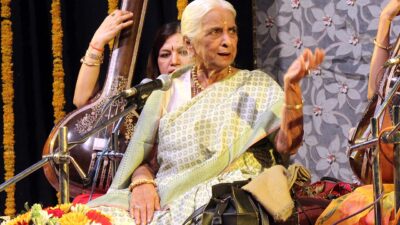
गिरिजा देवी को बागेश्री ठुमरी परंपरा की रक्षक माना जाता है।
अंग्रेज़ी में पढ़ें · Read in English
Girija Devi is considered the keeper of the Bageshri thumri tradition. Her renditions of Bageshri set the gold standard for romantic and melancholic expression in the raag.
बागेश्री रात्रि का राग है लेकिन इसका प्रयोग फिल्मों में भी होता है।
अंग्रेज़ी में पढ़ें · Read in English
Bageshri is traditionally a late-night raag, but its romantic, melancholic character has made it popular in evening performances and film music as well.
प्रस्तुति
Performance- Description
- रात्रि का राग — मध्य रात्रि से प्रातःकाल तक गाया जाता है। Late night raag — traditionally performed from midnight through early morning. The melancholic, introspective character suits the silent, intimate hours of late night.
- Prahar Number
- 8
- Prahar Name
- रात्रि प्रहर Ratri Prahar (Night)
- Time Start
- 21:00
- Time End
- 06:00
- Time Flexibility
- flexible
- Time Notes
- Late night raag, though its romantic character allows evening performance as well
Time
और जानें
More to Know- raag-bhimpalasi — Bhimpalasi — भीमपलासी — Both are romantic raags of the Kafi thaat. Bhimpalasi is afternoon (lighter, playful), while Bageshri is late night (melancholic, tender). — दोनों काफी थाट के रोमांटिक राग हैं लेकिन समय अलग है। — Bhimpalasi has vakra arohana; Bageshri has simple arohana with vakra avarohana — Bhimpalasi = Playful, warm afternoon; Bageshri = Melancholic, tender late night — Bhimpalasi is afternoon; Bageshri is late night
Comparisons
सीखने के लिए
For Learners- Difficulty Level
- intermediate
नमूना-पट्टी
The Specimen Table| नाम | बागेश्री · Bageshri |
|---|---|
| थाट | काफी |
| आरोह | सा ग॒ म ध नि॒ सˊ |
| अवरोह | सˊ नि॒ ध म प ध म ग॒ रे स |
| पकड़ | ग॒ म ध, नि॒ सˊ (नि॒ ध म) |
| जाति | औडव-संपूर्ण · Audav-Sampurna |
| कोमल स्वर | Ga♭, Ni♭ |
| समय | रात्रि प्रहर |
| ऋतु | All seasons — no seasonal restriction |
| गति | vilambit |
| ऊर्जा | धीमी से मध्यम |
| प्रकृति | Vikrita (Mixed) |
| परिवार | काफी परिवार |
| स्तर | intermediate |
| लोकप्रियता | Very popular |
| कर्नाटक समतुल्य | Dheerashankarabharanam-variant · Melakarta 22 |
| पाश्चात्य समतुल्य | Dorian with modifications |
| अन्य नाम | Bageshwari · Bageswari · बागेश्वरी · Bageshri Raga |
जुड़े हुए पन्ने
Connected Plates · The Graph Made Visibleअटलस में कोई पन्ना अकेला नहीं — इस राग से गीत, प्रस्तुतियाँ, कलाकार, ताल, घराने और मिलते-जुलते राग, सब यहाँ से खुलते हैं।
प्रसिद्ध प्रस्तुतियाँ · Legendary Renditions
फ़िल्मी गीत इस राग में · Famous Film Songs
इस राग के कलाकार · Notable Artists
ताल-साथी · Taal Pairings
घराने · Gharanas
मिलते-जुलते राग · Similar Raags
शास्त्र-सूत्र · Shastra Threads
श्रवण-कक्ष · The Listening Room
सुनिए — बागेश्री · Hear the Raag
Pandit Rakesh Chaurasia & Ustad Zakir Hussain | Raag Bageshri
प्रश्नोत्तर
Questions & Answersराग बागेश्री का आरोहन-अवरोहन क्या है?
राग बागेश्री का आरोहन: सा ग॒ म ध नि॒ सˊ (सरल) | अवरोहन: सˊ नि॒ ध म प ध म ग॒ रे स (वक्र)
अंग्रेज़ी में पढ़ें · Read in English
What is the arohana and avarohana of Raag Bageshri? — Raag Bageshri arohana: Sa Ga♭ Ma Dha Ni♭ Sa' (simple) | Avarohana: Sa' Ni♭ Dha Ma Pa Dha Ma Ga♭ Re Sa (curved)
बागेश्री को किस समय गाया जाता है?
बागेश्री रात्रि का राग है। इसे मध्य रात्रि से प्रातःकाल तक गाया जाता है।
अंग्रेज़ी में पढ़ें · Read in English
When is Raag Bageshri performed? — Raag Bageshri is a late-night raag performed from midnight through early morning.
बागेश्री का विशेष लक्षण क्या है?
बागेश्री की विशेषता इसका सरल आरोहण और जटिल, वक्र अवरोहण है।
अंग्रेज़ी में पढ़ें · Read in English
What is the special characteristic of Raag Bageshri? — Bageshri's characteristic is its simple arohana and complex, curved avarohana with oscillations.
साझा कीजिए · Share this Plate