कलाकार विंग · कलाकार-पट्टिका · Artist Plate
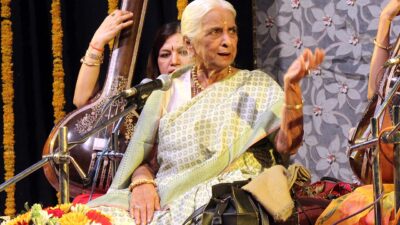
गिरिजा देवी
Girija Devi
ठुमरी की रानी
जन्म8 May 1929 — वाराणसी, उत्तर प्रदेश, भारत
निधन24 October 2017 — Kolkata, West Bengal, India
जीवन-पट्टी
The Life Specimen| नाम | गिरिजा देवी · Girija Devi |
|---|---|
| उपनाम | ठुमरी की रानी · अप्पा जी · ठुमरी साम्राज्ञी |
| जन्म | 8 May 1929 — वाराणसी, उत्तर प्रदेश, भारत · Varanasi, United Provinces, British India (now Uttar Pradesh) |
| निधन | 24 October 2017 — Kolkata, West Bengal, India |
| भूमिकाएँ | गायक |
| सक्रिय वर्ष | 1949–2017 |
| युग | Modern |
| राष्ट्रीयता | Indian |
| विधाएँ | उप-शास्त्रीय · शास्त्रीय · लोक · भक्ति |
| भाषाएँ | Hindi · Bhojpuri · Braj Bhasha · Awadhi · Sanskrit |
| पिता | रामदेव राय |
हस्ताक्षर-पंक्ति · The Signature
हस्ताक्षर-पंक्ति
ठुमरी की रानी · अप्पा जी
In EnglishAppa Ji — the last empress of the Banaras thumri, who carried the kajri, the chaiti and the monsoon of Purab ang into the 21st century.
पट्टिका-लेख
The Monographजीवनी Biography
गिरिजा देवी (8 मई 1929 – 24 अक्टूबर 2017) — संगीत-जगत की 'अप्पा जी' — बनारस घराने की वह साम्राज्ञी थीं जिन्होंने ठुमरी को कोठे की उपेक्षा से उठाकर संगीत-सभाओं के सर्वोच्च मंच तक पहुँचाया। वाराणसी में संगीत-प्रेमी ज़मींदार रामदेव राय के घर जन्मीं गिरिजा को पाँच वर्ष की उम्र से ही सारंगी-वादक और गायक पंडित सरजू प्रसाद मिश्र से तालीम मिलने लगी — पहले ख़याल और टप्पा, फिर पंडित श्रीचंद मिश्र से विद्या का विस्तार। बचपन गंगा के घाटों, अखाड़ों और बनारसी ठाठ के बीच बीता — वही बनारसीपन उम्र भर उनकी गायकी और उनकी ठसक में महकता रहा। 1949 में आकाशवाणी इलाहाबाद से उनका पहला प्रसारण हुआ; 1951 में बिहार में पहली सार्वजनिक संगीत-सभा। उस दौर में सम्भ्रांत घर की स्त्री का मंच पर गाना सहज स्वीकार्य नहीं था — गिरिजा देवी ने इस वर्जना को अपनी विद्वत्ता और गरिमा से पिघला दिया। उनके पास पूरब अंग की समूची थाती थी: ठुमरी, दादरा, कजरी, चैती, होरी, झूला, टप्पा और ख़याल — और हर विधा में वे कथा कहती थीं, मानो बनारस की गलियाँ, सावन की फुहार और विरहिणी की पीड़ा एक ही तान में पिरो दी गई हो। 1980 के दशक से उन्होंने आई.टी.सी. संगीत रिसर्च अकादमी, कलकत्ता और काशी हिंदू विश्वविद्यालय में गुरु रूप में पीढ़ियाँ तराशीं। पद्म श्री (1972), पद्म भूषण (1989), संगीत नाटक अकादमी पुरस्कार (1977), अकादमी की फ़ेलोशिप (2010) और पद्म विभूषण (2016) — सम्मान उनके पीछे चलते रहे। 24 अक्टूबर 2017 को कोलकाता में उनका निधन हुआ। उनके जाने के साथ बनारस की ठुमरी का एक पूरा युग विदा हुआ — पर उनकी सिखाई पीढ़ियाँ और सैकड़ों रिकॉर्डिंग्स में वह 'पुरब' आज भी भोर की गंगा-आरती की तरह जीवित है।
अंग्रेज़ी में पढ़ें · Read in English
Girija Devi (8 May 1929 – 24 October 2017) — 'Appa Ji' to the music world — was the empress of the Banaras gharana who lifted the thumri from the condescension of the salon to the highest concert platforms of the world. Born in Varanasi to Ramdeo Rai, a music-loving zamindar, Girija began training at the age of five under Pandit Sarju Prasad Misra, a sarangi player and vocalist — first khayal and tappa, later widening her learning under Pandit Sri Chand Misra. Her childhood was steeped in the ghats of the Ganga, the akharas and the unhurried elegance of Banaras — and that Banarasipan perfumed her singing and her bearing all her life.
Her first broadcast came on All India Radio, Allahabad, in 1949; her first public concert followed in Bihar in 1951. In that era, a woman of a respectable household singing on stage was not easily accepted — Girija Devi melted the taboo with sheer scholarship and dignity. She carried the complete treasury of the Purab ang: thumri, dadra, kajri, chaiti, hori, jhoola, tappa and khayal — and in every form she told stories, as if the lanes of Banaras, the first monsoon shower and the ache of the forsaken heroine were threaded into a single taan.
From the 1980s she shaped generations as a guru at the ITC Sangeet Research Academy in Calcutta and at Banaras Hindu University. Honours followed her like a retinue: Padma Shri (1972), the Sangeet Natak Akademi Award (1977), Padma Bhushan (1989), the Sangeet Natak Akademi Fellowship (2010) and the Padma Vibhushan (2016). She performed almost to the end, the diamond nose-pin flashing, the paan-stained smile intact. She died in Kolkata on 24 October 2017. With her went an entire age of the Banaras thumri — yet in her students and her hundreds of recordings, that 'Purab' still lives, like the dawn arati on the Ganga.
प्रारंभिक जीवन Early Life
गिरिजा देवी का जन्म 8 मई 1929 को वाराणसी में हुआ। पिता रामदेव राय ज़मींदार थे और संगीत के गहरे प्रेमी — अपने वर्ग और समय के लिए असामान्य बात यह कि वे बेटी को गंभीर संगीत-शिक्षा दिलाने पर अडिग थे। पाँच वर्ष की उम्र में उन्हें गायक और सारंगी-वादक पंडित सरजू प्रसाद मिश्र की शागिर्दी में दिया गया, जिन्होंने ख़याल और टप्पे की नींव रखी; आगे पंडित श्रीचंद मिश्र से बनारस के पूरब अंग की समूची थाती मिली। बचपन में, लगभग नौ वर्ष की उम्र में, उन्होंने 'याद रहे' नामक फ़िल्म में अभिनय भी किया। वे घुड़सवारी करती और गंगा में तैरती बड़ी हुईं — अपने जिस लड़कपन को वे बड़े चाव से याद करती थीं — और साथ-साथ बनारसी संगीत की लंबी, धीमी साधना चलती रही: होली की होरी, सावन की कजरी, बसंत की चैती — हर ऋतु की अपनी विधा। कम उम्र में पारंपरिक परिवार में विवाह हुआ; सार्वजनिक मंच पर गाने की अनुमति के लिए उन्हें लंबा संघर्ष करना पड़ा — और वे जीतीं।
अंग्रेज़ी में पढ़ें · Read in English
Girija Devi was born on 8 May 1929 in Varanasi. Her father, Ramdeo Rai, was a zamindar with a deep love of music — unusual for his class and time, he was determined that his daughter should learn seriously. At five she was placed under Pandit Sarju Prasad Misra, vocalist and sarangi player, who grounded her in khayal and tappa; she later continued under Pandit Sri Chand Misra, absorbing the full Purab ang repertoire of Banaras. As a child she also acted in a film, Yaad Rahe, at around nine. She grew up riding horses and swimming in the Ganga — a tomboy childhood she recalled fondly — while serving the long, slow apprenticeship of Banaras music: the festivals of Holi with its hori songs, the monsoon kajri, the spring chaiti, each season with its own form. Married at a young age into a traditional family, she had to negotiate hard for the permission to sing in public — and won.
करियर Career
गिरिजा देवी का सार्वजनिक सफ़र 1949 में आकाशवाणी इलाहाबाद के प्रसारण और 1951 में बिहार की पहली संगीत-सभा से शुरू हुआ। आने वाले दशकों में वे बनारस (पूरब) अंग की सर्वोच्च जीवित अधिकारी बनीं — केवल ठुमरी ही नहीं, उसका पूरा ऋतु-परिवार उन्होंने प्रतिष्ठित किया: कजरी, चैती, होरी, झूला, दादरा और बेहद कठिन टप्पा, साथ में पूरे वज़न का ख़याल भी। उनकी सभाओं के उत्तरार्ध प्रसिद्ध थे — जब शास्त्रीय औपचारिकता क़िस्सागोई में घुल जाती थी; वे ठुमरी की नायिका समझातीं, बनारसी हिंदी में ठिठोली करतीं, और फिर एक अकेली पुकार से कलेजा चीर देतीं। 1980 के दशक से उन्होंने आई.टी.सी. संगीत रिसर्च अकादमी, कलकत्ता में गुरु रूप में और काशी हिंदू विश्वविद्यालय के संगीत संकाय में पढ़ाया — उपशास्त्रीय गायकों की एक पूरी पीढ़ी को तराशा। उन्होंने प्रचुर रिकॉर्डिंग्स कीं, अस्सी पार की उम्र तक विश्व भर में गाया, और पीढ़ियों के आर-पार जुगलबंदियाँ कीं — अंतिम दशक तक वे सर्वसम्मति से ठुमरी की 'अंतिम साम्राज्ञी' मानी जा चुकी थीं।
अंग्रेज़ी में पढ़ें · Read in English
Girija Devi's public career began with an All India Radio, Allahabad broadcast in 1949 and her first concert in Bihar in 1951. Over the following decades she became the foremost living authority on the Banaras (Purab) ang — championing not only the thumri but its whole seasonal family: kajri, chaiti, hori, jhoola, dadra and the fiendishly difficult tappa, alongside full-weight khayal. Her concerts were famous for their second halves, when the classical formality dissolved into storytelling — she would explain the nayika of a thumri, joke in Banarasi Hindi, then break hearts with a single pukar. From the 1980s she taught as a guru at the ITC Sangeet Research Academy, Calcutta, and served on the faculty of Banaras Hindu University, mentoring a generation of semi-classical singers. She recorded prolifically, performed worldwide into her late eighties, and collaborated across generations — her jugalbandis and tribute concerts making her, by her final decade, the universally acknowledged 'last empress' of the thumri.
विरासत Legacy
गिरिजा देवी की विरासत एक समूची संगीत-संस्कृति का बचाव है। पूरब अंग की ठुमरी — अपनी कजरी, चैती और होरी समेत — दो बार अनाथ हुई थी: पहले राज-दरबारों और महफ़िलों के संरक्षण के अंत से, फिर शास्त्रीय जगत की 'हल्की' विधाओं के प्रति हिक़ारत से। उन्होंने उसे विद्वत्ता दी, प्रतिष्ठा दी और अटूट गुरु-शिष्य परंपरा दी — सबसे बड़े मंचों पर सिद्ध किया कि ठुमरी में ख़याल जितना ही सत्य समा सकता है। आई.टी.सी. संगीत रिसर्च अकादमी और बी.एच.यू. की 'अप्पा जी' के रूप में उन्होंने सुनंदा शर्मा और मालिनी अवस्थी समेत अनेक गायिकाओं को तराशा-प्रभावित किया, जो आज बनारस अंग को आगे ले जा रही हैं। उनकी रिकॉर्डिंग्स इस शैली का संदर्भ-पुस्तकालय हैं — हर गंभीर ठुमरी गायक उनकी परंपरा का अध्ययन करता है, उनकी कजरियाँ भारतीय रेडियो पर सावन का अनुष्ठान हैं, और बैठी हुई वह राजसी, पान-रंगी छवि आज भी बनारसी संगीत की प्रतिमूर्ति है। पद्म विभूषण (2016) उन्हें तब मिला — और यही उचित था — जब वे अब भी सिखा रही थीं।
अंग्रेज़ी में पढ़ें · Read in English
Girija Devi's legacy is the survival of an entire musical ecology. The Purab ang thumri — with its kajri, chaiti and hori — had been orphaned twice: first by the decline of court and salon patronage, then by the classical establishment's suspicion of 'light' forms. She gave it scholarship, prestige and unbroken transmission, proving on the biggest stages that a thumri could carry as much truth as a khayal. As Appa Ji of the ITC Sangeet Research Academy and BHU, she trained and influenced singers including Sunanda Sharma and Malini Awasthi, who carry the Banaras ang forward today. Her recordings remain the reference library of the style — every serious thumri singer studies her 'Babul Mora' lineage repertoire, her kajris are monsoon rituals on Indian radio, and her seated, regal, paan-bright presence remains the very image of Banaras music. The Padma Vibhushan (2016) arrived, fittingly, while she was still teaching.
गायन-शैली Musical Style
गिरिजा देवी की कला विशुद्धतम पूरब अंग थी: बनारस की धीमी, बोल-बनाव की ठुमरी, जहाँ पाठ की एक पंक्ति को घुमा-फिराकर, छाया-प्रकाश देकर तब तक निखारा जाता है जब तक उसके सारे संभव अर्थ उजागर न हो जाएँ। ख़याल की तालीम ने उनके अलंकारों को स्थापत्य दिया; बनारसी परवरिश ने उनमें रस भरा। वे 'पुकार' की सर्वोच्च उस्ताद थीं — शांत आंदोलन को चीरती वह अचानक भरपूर आवाज़, जैसे नदी पार से कोई टेर — और बैठकी शैलियों की कण-स्वर व मींड़ की महीन कारीगरी की भी। उनका टप्पा अपनी कोड़े-सी लचकती तानों के साथ वह कसरती कौशल दिखाता था जिसे वे अन्यथा परदे में रखती थीं। और सबसे ऊपर वे 'भाव' गाती थीं: नायिका की प्रतीक्षा, छेड़ और विरह स्वर में अभिनीत होते थे — कभी भावुकता में बहे नहीं, हमेशा गरिमामय रहे।
अंग्रेज़ी में पढ़ें · Read in English
Girija Devi's art was the Purab ang at its purest: the slow, bol-banav thumri of Banaras, where a single line of text is turned, shaded and re-lit until every meaning it can hold has been shown. Her khayal training gave the ornaments architecture; her Banarasi upbringing gave them juice. She was a supreme master of the pukar — the sudden full-voiced call that cuts through a quiet andolan like a cry across the river — and of the kan-swar and meend filigree of the seated styles. Her tappa, with its whiplash taans, displayed athletic virtuosity she otherwise kept veiled. Above all she sang bhava: the nayika's longing, teasing and waiting were acted in sound, never sentimentalised, always dignified.
स्वर-विशेषताएँ Vocal Characteristics
- बोल-बनाव की बनारसी ठुमरी — एक पंक्ति, सौ अर्थ
- कलेजा चीरती 'पुकार' — नदी पार की टेर जैसी
- टप्पे की कोड़े-सी लचकती तानें
- कजरी-चैती-होरी में ऋतुओं का रस
- गरिमा में लिपटा शृंगार — भाव सदा संयत
अंग्रेज़ी में पढ़ें · Read in English
- The Banaras bol-banav thumri: one line, a hundred meanings
- The heart-piercing pukar, like a call from across the river
- Whiplash tappa taans of athletic virtuosity
- The juice of the seasons in kajri, chaiti and hori
- Shringar wrapped in dignity — emotion always poised
तालीम, विधाएँ और भाषाएँ
Training · Genres · Languagesतालीम · Training
पंडित सरजू प्रसाद मिश्र (from age 5 (c. 1934))
ख़याल और टप्पे की नींव; सारंगी-रंग की गायकी
घराना · Gharanaपंडित श्रीचंद मिश्र (1940s)
पूरब अंग की समूची थाती — ठुमरी, दादरा, कजरी, चैती, होरी
घराना · Gharanaविधाएँ · Genres
भाषाएँ · Languages Sung
जीवन-रेखा
Career Highlights- 1934 पाँच वर्ष की उम्र में वाराणसी में पंडित सरजू प्रसाद मिश्र से तालीम आरंभ Begins training at age five under Pandit Sarju Prasad Misra in Varanasi
- 1949 आकाशवाणी इलाहाबाद से पहला प्रसारण Debut broadcast on All India Radio, Allahabad
-
1951
बिहार में पहली सार्वजनिक संगीत-सभा — सम्भ्रांत घर की स्त्री के मंच-गायन की वर्जना तोड़ी
First public concert, in Bihar — breaking the taboo on women of gentry families performing
- 1972 पद्म श्री से सम्मानित Awarded the Padma Shri
- 1977 संगीत नाटक अकादमी पुरस्कार Receives the Sangeet Natak Akademi Award
- 1989 पद्म भूषण से सम्मानित Awarded the Padma Bhushan
- 2010 संगीत नाटक अकादमी की फ़ेलोशिप — अकादमी का सर्वोच्च सम्मान Elected Fellow of the Sangeet Natak Akademi — its highest honour
- 2016 पद्म विभूषण — 87 की उम्र में भी सिखाती और गाती हुईं Conferred the Padma Vibhushan, still teaching and performing at 87
- 2017 24 अक्टूबर को कोलकाता में निधन — बनारसी ठुमरी की अंतिम साम्राज्ञी की विदाई Dies in Kolkata on 24 October — the last empress of the Banaras thumri
पुरस्कार एवं सम्मान
Awards & Recognition- 2016 पद्म विभूषण Padma Vibhushan
- 1989 पद्म भूषण Padma Bhushan
- 1972 पद्म श्री Padma Shri
- 1977 संगीत नाटक अकादमी पुरस्कार Sangeet Natak Akademi Award
- 2010 संगीत नाटक अकादमी फ़ेलोशिप Sangeet Natak Akademi Fellowship
रोचक तथ्य
Margin Notesलगभग नौ वर्ष की उम्र में उन्होंने 'याद रहे' नामक फ़िल्म में अभिनय किया था।
अंग्रेज़ी में पढ़ें · Read in English
At around nine she acted in a film called Yaad Rahe.
बचपन में वे घुड़सवारी करती थीं और गंगा में तैरती थीं — और इसे गर्व से सुनाती थीं।
अंग्रेज़ी में पढ़ें · Read in English
As a child she rode horses and swam in the Ganga — and recounted it with pride.
संगीत-जगत उन्हें 'अप्पा जी' कहकर पुकारता था; उनकी हीरे की नथ और पान-रंगी मुस्कान मंच की पहचान थी।
अंग्रेज़ी में पढ़ें · Read in English
The music world called her 'Appa Ji'; her diamond nose-pin and paan-bright smile were stage signatures.
वे ठुमरी गाने से पहले श्रोताओं को नायिका की कथा सुनाती थीं — सभा को बैठकी में बदल देती थीं।
अंग्रेज़ी में पढ़ें · Read in English
Before singing a thumri she would tell the audience the nayika's story — turning a concert into a baithak.
अन्य विवरण
More Details- Birth Year
- 1929
- Death Year
- 2017
- Active Years
- 1949–2017
- बोल-बनाव की बनारसी ठुमरी — एक पंक्ति, सौ अर्थ · The Banaras bol-banav thumri: one line, a hundred meanings
- कलेजा चीरती 'पुकार' — नदी पार की टेर जैसी · The heart-piercing pukar, like a call from across the river
- टप्पे की कोड़े-सी लचकती तानें · Whiplash tappa taans of athletic virtuosity
- कजरी-चैती-होरी में ऋतुओं का रस · The juice of the seasons in kajri, chaiti and hori
- गरिमा में लिपटा शृंगार — भाव सदा संयत · Shringar wrapped in dignity — emotion always poised
- ITC Sangeet Research Academy, Kolkata — guru from the 1980s
- Banaras Hindu University — faculty of performing arts
- Jugalbandi and tribute concerts with leading instrumentalists across generations
Early Life
गिरिजा देवी का जन्म 8 मई 1929 को वाराणसी में हुआ। पिता रामदेव राय ज़मींदार थे और संगीत के गहरे प्रेमी — अपने वर्ग और समय के लिए असामान्य बात यह कि वे बेटी को गंभीर संगीत-शिक्षा दिलाने पर अडिग थे। पाँच वर्ष की उम्र में उन्हें गायक और सारंगी-वादक पंडित सरजू प्रसाद मिश्र की शागिर्दी में दिया गया, जिन्होंने ख़याल और टप्पे की नींव रखी; आगे पंडित श्रीचंद मिश्र से बनारस के पूरब अंग की समूची थाती मिली। बचपन में, लगभग नौ वर्ष की उम्र में, उन्होंने 'याद रहे' नामक फ़िल्म में अभिनय भी किया। वे घुड़सवारी करती और गंगा में तैरती बड़ी हुईं — अपने जिस लड़कपन को वे बड़े चाव से याद करती थीं — और साथ-साथ बनारसी संगीत की लंबी, धीमी साधना चलती रही: होली की होरी, सावन की कजरी, बसंत की चैती — हर ऋतु की अपनी विधा। कम उम्र में पारंपरिक परिवार में विवाह हुआ; सार्वजनिक मंच पर गाने की अनुमति के लिए उन्हें लंबा संघर्ष करना पड़ा — और वे जीतीं।
Girija Devi was born on 8 May 1929 in Varanasi. Her father, Ramdeo Rai, was a zamindar with a deep love of music — unusual for his class and time, he was determined that his daughter should learn seriously. At five she was placed under Pandit Sarju Prasad Misra, vocalist and sarangi player, who grounded her in khayal and tappa; she later continued under Pandit Sri Chand Misra, absorbing the full Purab ang repertoire of Banaras. As a child she also acted in a film, Yaad Rahe, at around nine. She grew up riding horses and swimming in the Ganga — a tomboy childhood she recalled fondly — while serving the long, slow apprenticeship of Banaras music: the festivals of Holi with its hori songs, the monsoon kajri, the spring chaiti, each season with its own form. Married at a young age into a traditional family, she had to negotiate hard for the permission to sing in public — and won.
Career
गिरिजा देवी का सार्वजनिक सफ़र 1949 में आकाशवाणी इलाहाबाद के प्रसारण और 1951 में बिहार की पहली संगीत-सभा से शुरू हुआ। आने वाले दशकों में वे बनारस (पूरब) अंग की सर्वोच्च जीवित अधिकारी बनीं — केवल ठुमरी ही नहीं, उसका पूरा ऋतु-परिवार उन्होंने प्रतिष्ठित किया: कजरी, चैती, होरी, झूला, दादरा और बेहद कठिन टप्पा, साथ में पूरे वज़न का ख़याल भी। उनकी सभाओं के उत्तरार्ध प्रसिद्ध थे — जब शास्त्रीय औपचारिकता क़िस्सागोई में घुल जाती थी; वे ठुमरी की नायिका समझातीं, बनारसी हिंदी में ठिठोली करतीं, और फिर एक अकेली पुकार से कलेजा चीर देतीं। 1980 के दशक से उन्होंने आई.टी.सी. संगीत रिसर्च अकादमी, कलकत्ता में गुरु रूप में और काशी हिंदू विश्वविद्यालय के संगीत संकाय में पढ़ाया — उपशास्त्रीय गायकों की एक पूरी पीढ़ी को तराशा। उन्होंने प्रचुर रिकॉर्डिंग्स कीं, अस्सी पार की उम्र तक विश्व भर में गाया, और पीढ़ियों के आर-पार जुगलबंदियाँ कीं — अंतिम दशक तक वे सर्वसम्मति से ठुमरी की 'अंतिम साम्राज्ञी' मानी जा चुकी थीं।
Girija Devi's public career began with an All India Radio, Allahabad broadcast in 1949 and her first concert in Bihar in 1951. Over the following decades she became the foremost living authority on the Banaras (Purab) ang — championing not only the thumri but its whole seasonal family: kajri, chaiti, hori, jhoola, dadra and the fiendishly difficult tappa, alongside full-weight khayal. Her concerts were famous for their second halves, when the classical formality dissolved into storytelling — she would explain the nayika of a thumri, joke in Banarasi Hindi, then break hearts with a single pukar. From the 1980s she taught as a guru at the ITC Sangeet Research Academy, Calcutta, and served on the faculty of Banaras Hindu University, mentoring a generation of semi-classical singers. She recorded prolifically, performed worldwide into her late eighties, and collaborated across generations — her jugalbandis and tribute concerts making her, by her final decade, the universally acknowledged 'last empress' of the thumri.
Legacy
गिरिजा देवी की विरासत एक समूची संगीत-संस्कृति का बचाव है। पूरब अंग की ठुमरी — अपनी कजरी, चैती और होरी समेत — दो बार अनाथ हुई थी: पहले राज-दरबारों और महफ़िलों के संरक्षण के अंत से, फिर शास्त्रीय जगत की 'हल्की' विधाओं के प्रति हिक़ारत से। उन्होंने उसे विद्वत्ता दी, प्रतिष्ठा दी और अटूट गुरु-शिष्य परंपरा दी — सबसे बड़े मंचों पर सिद्ध किया कि ठुमरी में ख़याल जितना ही सत्य समा सकता है। आई.टी.सी. संगीत रिसर्च अकादमी और बी.एच.यू. की 'अप्पा जी' के रूप में उन्होंने सुनंदा शर्मा और मालिनी अवस्थी समेत अनेक गायिकाओं को तराशा-प्रभावित किया, जो आज बनारस अंग को आगे ले जा रही हैं। उनकी रिकॉर्डिंग्स इस शैली का संदर्भ-पुस्तकालय हैं — हर गंभीर ठुमरी गायक उनकी परंपरा का अध्ययन करता है, उनकी कजरियाँ भारतीय रेडियो पर सावन का अनुष्ठान हैं, और बैठी हुई वह राजसी, पान-रंगी छवि आज भी बनारसी संगीत की प्रतिमूर्ति है। पद्म विभूषण (2016) उन्हें तब मिला — और यही उचित था — जब वे अब भी सिखा रही थीं।
Girija Devi's legacy is the survival of an entire musical ecology. The Purab ang thumri — with its kajri, chaiti and hori — had been orphaned twice: first by the decline of court and salon patronage, then by the classical establishment's suspicion of 'light' forms. She gave it scholarship, prestige and unbroken transmission, proving on the biggest stages that a thumri could carry as much truth as a khayal. As Appa Ji of the ITC Sangeet Research Academy and BHU, she trained and influenced singers including Sunanda Sharma and Malini Awasthi, who carry the Banaras ang forward today. Her recordings remain the reference library of the style — every serious thumri singer studies her 'Babul Mora' lineage repertoire, her kajris are monsoon rituals on Indian radio, and her seated, regal, paan-bright presence remains the very image of Banaras music. The Padma Vibhushan (2016) arrived, fittingly, while she was still teaching.
Musical Style
गिरिजा देवी की कला विशुद्धतम पूरब अंग थी: बनारस की धीमी, बोल-बनाव की ठुमरी, जहाँ पाठ की एक पंक्ति को घुमा-फिराकर, छाया-प्रकाश देकर तब तक निखारा जाता है जब तक उसके सारे संभव अर्थ उजागर न हो जाएँ। ख़याल की तालीम ने उनके अलंकारों को स्थापत्य दिया; बनारसी परवरिश ने उनमें रस भरा। वे 'पुकार' की सर्वोच्च उस्ताद थीं — शांत आंदोलन को चीरती वह अचानक भरपूर आवाज़, जैसे नदी पार से कोई टेर — और बैठकी शैलियों की कण-स्वर व मींड़ की महीन कारीगरी की भी। उनका टप्पा अपनी कोड़े-सी लचकती तानों के साथ वह कसरती कौशल दिखाता था जिसे वे अन्यथा परदे में रखती थीं। और सबसे ऊपर वे 'भाव' गाती थीं: नायिका की प्रतीक्षा, छेड़ और विरह स्वर में अभिनीत होते थे — कभी भावुकता में बहे नहीं, हमेशा गरिमामय रहे।
Girija Devi's art was the Purab ang at its purest: the slow, bol-banav thumri of Banaras, where a single line of text is turned, shaded and re-lit until every meaning it can hold has been shown. Her khayal training gave the ornaments architecture; her Banarasi upbringing gave them juice. She was a supreme master of the pukar — the sudden full-voiced call that cuts through a quiet andolan like a cry across the river — and of the kan-swar and meend filigree of the seated styles. Her tappa, with its whiplash taans, displayed athletic virtuosity she otherwise kept veiled. Above all she sang bhava: the nayika's longing, teasing and waiting were acted in sound, never sentimentalised, always dignified.
Vocal Characteristics
Collaborations
अभिलेख व संदर्भ
Archives & References| विकिपीडिया | Wikipedia |
|---|---|
| संदर्भ | Girija Devi — Wikipedia · Girija: A Journey Through Thumri — Yatindra Mishra (2004) |
| प्रसिद्ध सहयोग |
अंग्रेज़ी में पढ़ें · Read in English
|
जुड़े हुए पन्ने
Connected Plates · The Graph Made Visibleअटलस में कोई पन्ना अकेला नहीं — गिरिजा देवी से उनके गीत, फ़िल्में, घराना, समकालीन और युग, सब यहाँ से खुलते हैं।
सहयोगी और समकालीन · Collaborators & Contemporaries
शास्त्र-सूत्र · Shastra Threads
साझा कीजिए · Share this Plate
यह पन्ना आगे बढ़ाइए
सवाल-जवाब
Questions & Answersगिरिजा देवी को 'ठुमरी की रानी' क्यों कहा जाता है?
उन्होंने बनारस की ठुमरी और पूरब अंग की समूची परंपरा — कजरी, चैती, होरी, दादरा, टप्पा — को शास्त्रीय मंच की सर्वोच्च प्रतिष्ठा दिलाई। उनके स्तर की अधिकारी गायिका इस विधा में फिर नहीं हुई।
Which gharana did Girija Devi belong to?
The Banaras gharana (Seniya-Banaras tradition). She trained under Pandit Sarju Prasad Misra and Pandit Sri Chand Misra in Varanasi.
गिरिजा देवी का निधन कब हुआ?
24 अक्टूबर 2017 को कोलकाता में, 88 वर्ष की आयु में। अंतिम वर्षों तक वे गाती और सिखाती रहीं।
What awards did Girija Devi receive?
Padma Shri (1972), Sangeet Natak Akademi Award (1977), Padma Bhushan (1989), Sangeet Natak Akademi Fellowship (2010) and Padma Vibhushan (2016).