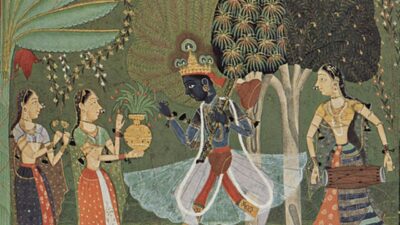
शास्त्र विंग · राग-पट्टिका · Raag Plate
बसंत
Basant
बसंत का उत्सव राग · The Spring Raag of Celebration and Joy
भावउत्सवी · आनंदमय · पर्वीय · उज्ज्वल · उदार
गतिmadhya_to_drut ऊर्जातीव्र
अन्य नामVasant · Basanti · वसंत
स्वर-चित्र · The Swara Panel
आरोह — अवरोह · The Ascent and the Descent
कोमल स्वर — Ga♭, Re♭, Dha♭ — तीव्रित हरे रंग में · तीव्र स्वर — Ma♯ — बिंदुदार नारंगी में।
आरोह · Aroha चढ़ती हुई सीढ़ी
अवरोह · Avaroha उतरती हुई सीढ़ी
कोमल स्वर — नीचे की ओर झुका चिह्न (◌॒)तीव्र स्वर — ऊपर की ओर चिह्न (◌॑)सˊ = तार सप्तक का षड्ज
बसंत तीन कोमल स्वर (गˇ, रेˇ, धˇ) और एक तीव्र स्वर (म॑) का उपयोग करता है। यह असाधारण उत्सवी राग है।
अंग्रेज़ी में पढ़ें · Read in English
Basant combines three komal notes (Ga♭, Re♭, Dha♭) and one tivra note (Ma♯). This creates a uniquely colorful, celebratory raag. The Poorvi thaat characteristics (both komal and tivra notes) are fully expressed in Basant.
पकड़ · पहचान वाक्यांश
सा गˇ म॑ धˇ नि सˊ
Sa Ga♭ Ma♯ Dha♭ Ni Sa'
बसंत को परिभाषित करने वाला उत्सवी, आनंदमय वाक्यांश।
अंग्रेज़ी में पढ़ें · Read in English
The identifying phrase of Basant — celebratory and joyful, with an ascending character unique to the Poorvi thaat. The Ga♭-Ma♯-Dha♭ combination creates the raag's festive color.
वादी–संवादी टिप्पणी · Vadi–Samvadi note
Vadi — The most important note in Basant. Flat Dha gives the raag its distinctive celebratory character.
Samvadi — The second most important note — supporting vadi with harmonic balance.
चलन · स्वर-यात्रा
सा गˇ म॑ धˇ नि सˊ। नि धˇ म॑ प, प धˇ म॑ गˇ रेˇ स, गˇ म॑ धˇ नि सˊ
Sa Ga♭ Ma♯ Dha♭ Ni Sa'. Ni Dha♭ Ma♯ Pa, Pa Dha♭ Ma♯ Ga♭ Re♭ Sa, Ga♭ Ma♯ Dha♭ Ni Sa'
बसंत को प्रदर्शन में कैसे गाया जाता है।
अंग्रेज़ी में पढ़ें · Read in English
The melodic progression showing how Basant is traversed — emphasizing ascent to upper octave with celebratory energy, followed by elaborate descent.
न्यास स्वर — Sa, Dha♭, Ma♯ अनुवादी — Ma♯, Ni
विशेष स्वर-वाक्य
Characteristic Phrasesसमय और भाव
Time Theory & Moodसमय-सिद्धांत · Time Theory
अपराह्न प्रहर
दोपहर का राग — बसंत ऋतु से जुड़ा, विशेषकर बसंत पंचमी पर।
Afternoon raag — traditionally performed during late afternoon hours. Historically associated with spring season (Basant Panchami festival), though can be performed year-round.
Spring
भाव और गति · Mood & Tempo
हास्य · Joy / Laughter / Celebration
बसंत का प्राथमिक रस — उत्सवी आनंद, भव्य उल्लास।
madhya_to_drut
ऊर्जा · Energyतीव्र
स्तर · Levelintermediate — बसंत सीखना मध्यम स्तर की कला है। आनंद को व्यक्त करना महत्वपूर्ण है।
लक्षण गीत · The Mnemonic Verse
लक्षण गीत
बसंत पूर्वी कुल में अद्भुत
धˇ वादी गˇ संवादी महान्
सा गˇ म॑ धˇ नि सा करे आरोहण
नि धˇ म॑ प धˇ म॑ गˇ रेˇ स अवरोहण
अंग्रेज़ी में पढ़ें · Read in English
Basant Poorvi kul mein adbhut
Dha♭ vadi Ga♭ samvadi mahan
Sa ga♭ M' dha♭ ni sa karey arohana
Ni dha♭ M' p dha♭ M' ga♭ re♭ sa avarohana
Basant is the wonderful raag of Poorvi thaat. Dha♭ as vadi, Ga♭ as samvadi. Ascent: Sa Ga♭ Ma♯ Dha♭ Ni Sa. Descent with characteristic complexity.
पट्टिका-लेख
The Monographपरिचय Introduction
बसंत पूर्वी परिवार का एक उत्सवी राग है जो आनंद और वसंत ऋतु की खुशी के लिए जाना जाता है।
अंग्रेज़ी में पढ़ें · Read in English
Basant is a celebratory raag of the Poorvi thaat known for its joyful, festive character. The raag is uniquely associated with spring (Basant season) and is traditionally performed during Basant Panchami, a festival celebrating the arrival of spring. The raag's distinctive features include its unique arohana (Sa Ga♭ Ma♯ Dha♭ Ni Sa') with three komal notes and one tivra note, creating a colorful, celebratory quality. The vadi is Dha♭, which gives the raag its distinctive character. Basant expresses joy, celebration, auspiciousness, and romantic exuberance. The raag has been celebrated in both classical concerts and devotional contexts, particularly during spring festivals. Kali Banerjee's composition 'Basant Bahar' became the definitive example of Basant in modern classical music, bringing the raag into widespread recognition.
सांस्कृतिक महत्व Cultural Significance
बसंत बसंत पंचमी और वसंत ऋतु से जुड़ा महत्वपूर्ण राग है।
अंग्रेज़ी में पढ़ें · Read in English
Basant holds deep cultural significance in Indian classical music, particularly in connection with Basant Panchami (spring festival) and spring celebrations. The raag is chosen for performances marking the arrival of spring, symbolizing renewal, joy, and auspiciousness. In both classical and devotional traditions, Basant is performed with celebratory energy. The raag is also significant in regional music traditions, particularly in North India where spring festivals are widely celebrated.
ऐतिहासिक महत्व Historical Significance
बसंत को कली बनर्जी की 'बसंत बहार' रचना ने प्रसिद्ध किया।
अंग्रेज़ी में पढ़ें · Read in English
Basant is documented in classical music texts as a raag of celebratory and festive character. The raag gained widespread popularity through Kali Banerjee's iconic composition 'Basant Bahar', which became the definitive modern example of the raag. This composition brought Basant into prominence in the 20th century concert tradition. The raag has maintained its importance in classical and devotional music, remaining a favorite for spring season performances and Basant Panchami celebrations.
शिक्षा
Teaching & Learning| बंदिश | ताल · लय | बोल |
|---|---|---|
| Basant Bahar Traditional / Kali Banerjee |
Teentaal | |
| Basant Panchami Bhajan Traditional |
Teentaal |
आरोहण (सा गˇ म॑ धˇ नि सˊ) में महारत हासिल करें।
अंग्रेज़ी में पढ़ें · Read in English
Master the unique arohana (Sa Ga♭ Ma♯ Dha♭ Ni Sa'). This ascending form with three komal notes and one tivra note is distinctive to Basant.
बसंत के आनंद और उत्सव को समझें।
अंग्रेज़ी में पढ़ें · Read in English
Understand Basant's joy and celebration. This raag is about expressing festive happiness, spring renewal, auspiciousness. Let this character shine through your performance.
वादी (धˇ) के चारों ओर सजावट का अन्वेषण करें।
अंग्रेज़ी में पढ़ें · Read in English
Explore ornamentation around vadi (Dha♭) and the characteristic Ga♭-Ma♯-Dha♭ interval sequence. This is where Basant's festive character is expressed.
बसंत की सांस्कृतिक और मौसमी विरासत को समझें।
अंग्रेज़ी में पढ़ें · Read in English
Basant is traditionally associated with Basant Panchami (spring festival). Understand the cultural and seasonal significance of the raag — this enriches your performance.
कोमल धैवत को पर्याप्त जोर न देना
अंग्रेज़ी में पढ़ें · Read in English
Failing to emphasize the Dha♭ (vadi), losing the raag's distinctive character
सुधार: Dha♭ is the heart of Basant. Give it proper attention and ornamentation. It defines the raag's celebratory character.
बसंत की आनंद को न व्यक्त करना, इसे विषादपूर्ण बनाना
अंग्रेज़ी में पढ़ें · Read in English
Not expressing the celebratory, joyful quality, making Basant sound melancholic or introspective
सुधार: Basant is about JOY and CELEBRATION. Every phrase should reflect this festive spirit. This is not an introspective raag.
शुद्ध ग या शुद्ध ध का प्रयोग करना
अंग्रेज़ी में पढ़ें · Read in English
Using natural Ga or natural Dha instead of their komal (flat) versions
सुधार: Basant uses ONLY Ga♭ (komal Ga) and Dha♭ (komal Dha). These flats are essential to the raag's character.
तुलना
A Specimen Comparisonपूर्वी परिवार का पैतृक थाट है। बसंत अधिक उत्सवी है।
| तुलनाSpecimen | बसंत | पूर्वी |
|---|---|---|
| स्वर-अंतर | Similar notes but different vadi-samvadi relationships and emotional character | |
| भाव-अंतर | Poorvi = Serious, introspective; Basant = Celebratory, joyful | |
| समय-अंतर | Both afternoon raags with similar timing | |
दोनों पूर्वी परिवार के राग हैं, लेकिन अलग-अलग समय और चरित्र में।
| तुलनाSpecimen | बसंत | मारवा |
|---|---|---|
| स्वर-अंतर | Similar komal and tivra note usage but different emphasis | |
| भाव-अंतर | Marwa = Serious, meditative; Basant = Joyful, celebratory | |
| समय-अंतर | Marwa: morning (prahar 2); Basant: afternoon (prahar 4) | |
रोचक तथ्य
Margin Notesबसंत को बसंत पंचमी (वसंत पंचमी) पर परंपरागत रूप से प्रदर्शित किया जाता है।
अंग्रेज़ी में पढ़ें · Read in English
Basant is traditionally performed on Basant Panchami (spring festival, celebrated on February 5th or the month of Magh), marking the astronomical beginning of spring in the Hindu calendar.
बसंत का शाब्दिक अर्थ है 'वसंत ऋतु', जो फूलों, नवीकरण और उत्सव की ऋतु है।
अंग्रेज़ी में पढ़ें · Read in English
The name 'Basant' literally means 'spring' in Sanskrit/Hindi, directly connecting the raag to the season of flowers, renewal, and celebration.
बसंत का गˇ-म॑-धˇ क्रम अद्वितीय है और इसे आसानी से पहचाना जा सकता है।
अंग्रेज़ी में पढ़ें · Read in English
Basant's characteristic Ga♭-Ma♯-Dha♭ sequence is unique among major raags, creating a colorful, celebratory sound unlike any other raag.
'बसंत बहार' संभवतः भारतीय शास्त्रीय संगीत में सबसे प्रसिद्ध रचना है।
अंग्रेज़ी में पढ़ें · Read in English
Kali Banerjee's composition 'Basant Bahar' is perhaps the most famous composition in any raag in Indian classical music — performed and recognized across generations.
प्रस्तुति
Performance- Description
- दोपहर का राग — बसंत ऋतु से जुड़ा, विशेषकर बसंत पंचमी पर। Afternoon raag — traditionally performed during late afternoon hours. Historically associated with spring season (Basant Panchami festival), though can be performed year-round.
- Prahar Number
- 4
- Prahar Name
- अपराह्न प्रहर Aparahna Prahar
- Time Start
- 12:00
- Time End
- 15:00
- Time Flexibility
- flexible
- Time Notes
- Primarily an afternoon raag, historically associated with spring and Basant Panchami, but can be performed at other times in concert contexts.
Time
और जानें
More to Know- raag-poorvi — Poorvi — पूर्वी — Poorvi is the parent thaat containing all notes used in Basant. Both are afternoon raags. Poorvi is more serious/introspective, while Basant is celebratory and joyful. — पूर्वी परिवार का पैतृक थाट है। बसंत अधिक उत्सवी है। — Similar notes but different vadi-samvadi relationships and emotional character — Poorvi = Serious, introspective; Basant = Celebratory, joyful — Both afternoon raags with similar timing
- raag-marwa — Marwa — मारवा — Both are raags of Poorvi thaat. Marwa is a serious morning raag. Basant is afternoon celebratory raag. Both use similar notes but with completely different characters. — दोनों पूर्वी परिवार के राग हैं, लेकिन अलग-अलग समय और चरित्र में। — Similar komal and tivra note usage but different emphasis — Marwa = Serious, meditative; Basant = Joyful, celebratory — Marwa: morning (prahar 2); Basant: afternoon (prahar 4)
Comparisons
सीखने के लिए
For Learners- Difficulty Level
- intermediate
नमूना-पट्टी
The Specimen Table| नाम | बसंत · Basant |
|---|---|
| थाट | पूर्वी |
| आरोह | सा गˇ म॑ धˇ नि सˊ |
| अवरोह | सˊ नि धˇ म॑ प धˇ म॑ गˇ रेˇ स |
| पकड़ | सा गˇ म॑ धˇ नि सˊ |
| जाति | औडव-संपूर्ण · Audav-Sampurna |
| कोमल स्वर | Ga♭, Re♭, Dha♭ |
| तीव्र स्वर | Ma♯ |
| समय | अपराह्न प्रहर |
| ऋतु | Spring |
| गति | madhya_to_drut |
| ऊर्जा | तीव्र |
| प्रकृति | Komal-Tivra mixed |
| परिवार | पूर्वी परिवार |
| स्तर | intermediate |
| लोकप्रियता | Very popular |
| कर्नाटक समतुल्य | Kharaharapriya · Melakarta 22 |
| पाश्चात्य समतुल्य | Diminished/Minor with alterations |
| अन्य नाम | Vasant · Basanti · वसंत |
जुड़े हुए पन्ने
Connected Plates · The Graph Made Visibleअटलस में कोई पन्ना अकेला नहीं — इस राग से गीत, प्रस्तुतियाँ, कलाकार, ताल, घराने और मिलते-जुलते राग, सब यहाँ से खुलते हैं।
प्रसिद्ध प्रस्तुतियाँ · Legendary Renditions
फ़िल्मी गीत इस राग में · Famous Film Songs
इस राग के कलाकार · Notable Artists
ताल-साथी · Taal Pairings
घराने · Gharanas
मिलते-जुलते राग · Similar Raags
शास्त्र-सूत्र · Shastra Threads
श्रवण-कक्ष · The Listening Room
सुनिए — बसंत · Hear the Raag
Raga Basant - Pt Shiv Kumar Sharma
प्रश्नोत्तर
Questions & Answersराग बसंत का आरोहन-अवरोहन क्या है?
राग बसंत का आरोहन: सा गˇ म॑ धˇ नि सˊ | अवरोहन: सˊ नि धˇ म॑ प धˇ म॑ गˇ रेˇ स
अंग्रेज़ी में पढ़ें · Read in English
What is the arohana and avarohana of Raag Basant? — Raag Basant arohana: Sa Ga♭ Ma♯ Dha♭ Ni Sa' | Avarohana: Sa' Ni Dha♭ Ma♯ Pa Dha♭ Ma♯ Ga♭ Re♭ Sa
बसंत को क्यों बसंत पंचमी के साथ जोड़ा जाता है?
बसंत का अर्थ है 'वसंत ऋतु'। राग को परंपरागत रूप से बसंत पंचमी (वसंत पंचमी, फरवरी 5 या माघ माह) पर प्रदर्शित किया जाता है, जो बसंत ऋतु की शुरुआत मनाता है।
अंग्रेज़ी में पढ़ें · Read in English
Why is Basant associated with Basant Panchami? — Basant means 'spring'. The raag is traditionally performed on Basant Panchami (spring festival, celebrated February 5 or during Magh month) marking the astronomical beginning of spring.
बसंत की सबसे प्रसिद्ध रचना क्या है?
'बसंत बहार' कली बनर्जी द्वारा रचित और शास्त्रीय संगीत में सबसे प्रसिद्ध रचनाओं में से एक है।
अंग्रेज़ी में पढ़ें · Read in English
What is the most famous Basant composition? — 'Basant Bahar' composed by Kali Banerjee is perhaps the most famous raag composition in Indian classical music.
बसंत की वादी-संवादी कौन हैं?
बसंत की वादी (प्रमुख स्वर) धˇ (कोमल धैवत) है और संवादी (दूसरा महत्वपूर्ण स्वर) गˇ (कोमल गंधार) है।
अंग्रेज़ी में पढ़ें · Read in English
What are the vadi and samvadi of Basant? — Vadi of Basant is Dha♭ (Komal Dhaivat), and Samvadi is Ga♭ (Komal Gandhara).
साझा कीजिए · Share this Plate