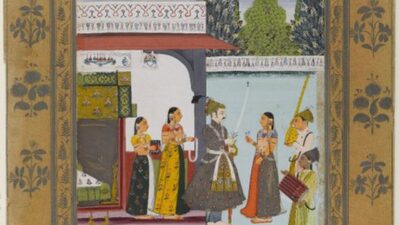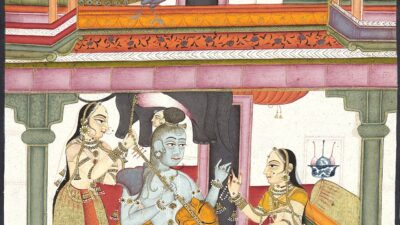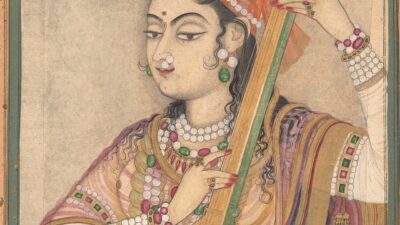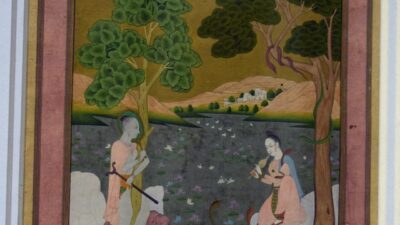
शास्त्र विंग · राग-पट्टिका · Raag Plate
आसावरी
Āsāvari
ध्यानमय संध्या · The Meditative Evening
भावध्यानमय · शांतिपूर्ण · पीछे हटा हुआ · आत्मचिंतक · आध्यात्मिक
ऊर्जाधीमी
अन्य नामAsavari · आसावरी
स्वर-चित्र · The Swara Panel
आरोह — अवरोह · The Ascent and the Descent
कोमल स्वर — Re (रे), Ga (ग), Dha (ध), Ni (नि) — तीव्रित हरे रंग में।
आरोह · Aroha चढ़ती हुई सीढ़ी
अवरोह · Avaroha उतरती हुई सीढ़ी
कोमल स्वर — नीचे की ओर झुका चिह्न (◌॒)सˊ = तार सप्तक का षड्ज
पकड़ · पहचान वाक्यांश
रे॒ ग॒ म प ध॒
Re♭ Ga♭ Ma Pa Dha♭
समय और भाव
Time Theory & Moodसमय-सिद्धांत · Time Theory
प्रातः काल
परंपरागत रूप से सुबह के समय (6:00 AM - 10:00 AM) गाया जाता है, जब दिन ताज़ा होता है।
Traditionally performed during the morning hours (6:00 AM - 10:00 AM), when the day is fresh and the atmosphere is calm.
All seasons, particularly autumn and winter
भाव और गति · Mood & Tempo
करुण · Compassion/Pathos
करुणा, दुख और गहरी भावना का रस। सहानुभूति, उदासी और चिंतनशील ध्यान जगाता है।
ऊर्जा · Energyधीमी
स्तर · LevelIntermediate to Advanced — बुनियादी राग सिद्धांत और प्रदर्शन में ठोस आधार की आवश्यकता है।
विधाएँ और वाद्य · Forms & Instruments
विधाएँपट्टिका-लेख
The Monographपरिचय Introduction
राग Asawari Hindustani शास्त्रीय संगीत का राग है।
अंग्रेज़ी में पढ़ें · Read in English
Asawari shares its scale with Bhairavi but emphasizes Shadaj (the tonic), creating a withdrawn, meditative quality. It evolved from the ancient Bhairavi thaat and became particularly important in devotional and Khayal traditions. The raag's emphasis on introspection rather than emotional expression distinguishes it from its scale-mate Bhairavi.
ऐतिहासिक महत्व Historical Significance
आसावरी भैरवी के साथ अपना पैमाना साझा करती है लेकिन षडज (टनिक) पर जोर देती है, जिससे एक पीछे हटी हुई, ध्यानमय गुणवत्ता बनती है। यह प्राचीन भैरवी थाट से विकसित हुई।
अंग्रेज़ी में पढ़ें · Read in English
Asawari shares its scale with Bhairavi but emphasizes Shadaj (the tonic), creating a withdrawn, meditative quality. It evolved from the ancient Bhairavi thaat and became particularly important in devotional and Khayal traditions. The raag's emphasis on introspection rather than emotional expression distinguishes it from its scale-mate Bhairavi.
शिक्षा
Teaching & Learning| बंदिश | ताल · लय | बोल |
|---|---|---|
| Saajan Bin Neend Na Aave Traditional |
Teentaal | |
| Piya Bina Chain Na Aave Traditional |
Dadra |
षडज (स) पर ध्यान दें — यह आसावरी का आंकर नोट है। भैरवी के विपरीत जो स से दूर जाती है, आसावरी हमेशा इसे लौटाती है।
अंग्रेज़ी में पढ़ें · Read in English
Focus on Shadaj (Sa) — this is the anchor note for Asawari. Unlike Bhairavi which moves away from Sa, Asawari keeps returning to it. Practice long taan patterns on Sa to establish its centrality.
एक पीछे हटी हुई, आत्मचिंतक टोन विकसित करें। आसावरी भावनात्मक अभिव्यक्ति के बारे में नहीं है बल्कि ध्यानमय शांति है।
अंग्रेज़ी में पढ़ें · Read in English
Cultivate a withdrawn, introspective tone. Asawari is not about passionate expression but meditative stillness. Avoid bright, energetic phrasing. Instead, let notes bloom slowly, with long stretches of silence between phrases.
आसावरी और भैरवी के बीच के अंतर में महारत हासिल करें। भैरवी म और नि की ओर बढ़ता है। आसावरी स और प की ओर बढ़ता है।
अंग्रेज़ी में पढ़ें · Read in English
Master the distinction between Asawari and Bhairavi by understanding the emotional arc. Bhairavi moves toward Ma and Ni, creating emotional intensity. Asawari moves toward Sa and Pa, creating grounding and peace. Practice the same phrase in both raags to feel the difference.
आसावरी को भैरवी जैसे मानना — म पर जोर देना और तेजी से दोलन करने वाले वाक्यांश
अंग्रेज़ी में पढ़ें · Read in English
Treating Asawari like Bhairavi — emphasizing Ma and using quick, oscillating phrases
सुधार: Remember: Asawari = Sa-centric and withdrawn. Bhairavi = Ma-centric and emotional. Slow down, stay on Sa longer, and develop a more meditative phrasing.
बहुत अधिक अलंकरण (मीन्ड, गमक) का उपयोग करना — आसावरी अलंकार के बारे में नहीं है।
अंग्रेज़ी में पढ़ें · Read in English
Using too much ornamentation (meend, gamak) — Asawari is not about embellishment
सुधार: Keep phrases simple and spacious. The beauty of Asawari lies in its purity and quietude, not in decorative flourishes.
प्रस्तुति
Performance- Description
- परंपरागत रूप से सुबह के समय (6:00 AM - 10:00 AM) गाया जाता है, जब दिन ताज़ा होता है। Traditionally performed during the morning hours (6:00 AM - 10:00 AM), when the day is fresh and the atmosphere is calm.
- Prahar Number
- 1
- Prahar Name
- प्रातः काल Pratah Kaal
- Time Start
- 06:00
- Time End
- 10:00
- Time Flexibility
- flexible
Time
सीखने के लिए
For Learners- Difficulty Level
- Intermediate to Advanced
नमूना-पट्टी
The Specimen Table| नाम | आसावरी · Asawari |
|---|---|
| थाट | आसावरी |
| आरोह | सा रे॒ ग॒ म प ध॒ नि॒ सˊ |
| अवरोह | सˊ नि॒ ध॒ प म ग॒ रे॒ स |
| पकड़ | रे॒ ग॒ म प ध॒ |
| जाति | संपूर्ण-संपूर्ण (7-7) · Sampurna-Sampurna (7-7) |
| कोमल स्वर | Re (रे), Ga (ग), Dha (ध), Ni (नि) |
| समय | प्रातः काल |
| ऋतु | All seasons, particularly autumn and winter |
| ऊर्जा | धीमी |
| स्तर | Intermediate to Advanced |
| अन्य नाम | Asavari · आसावरी |
जुड़े हुए पन्ने
Connected Plates · The Graph Made Visibleअटलस में कोई पन्ना अकेला नहीं — इस राग से गीत, प्रस्तुतियाँ, कलाकार, ताल, घराने और मिलते-जुलते राग, सब यहाँ से खुलते हैं।
इस राग के गीत · Songs in this Raag
इस राग के कलाकार · Notable Artists
ताल-साथी · Taal Pairings
मिलते-जुलते राग · Similar Raags
शास्त्र-सूत्र · Shastra Threads
श्रवण-कक्ष · The Listening Room
सुनिए — आसावरी · Hear the Raag
Raga Asavari — Pandit Bhimsen Joshi
साझा कीजिए · Share this Plate