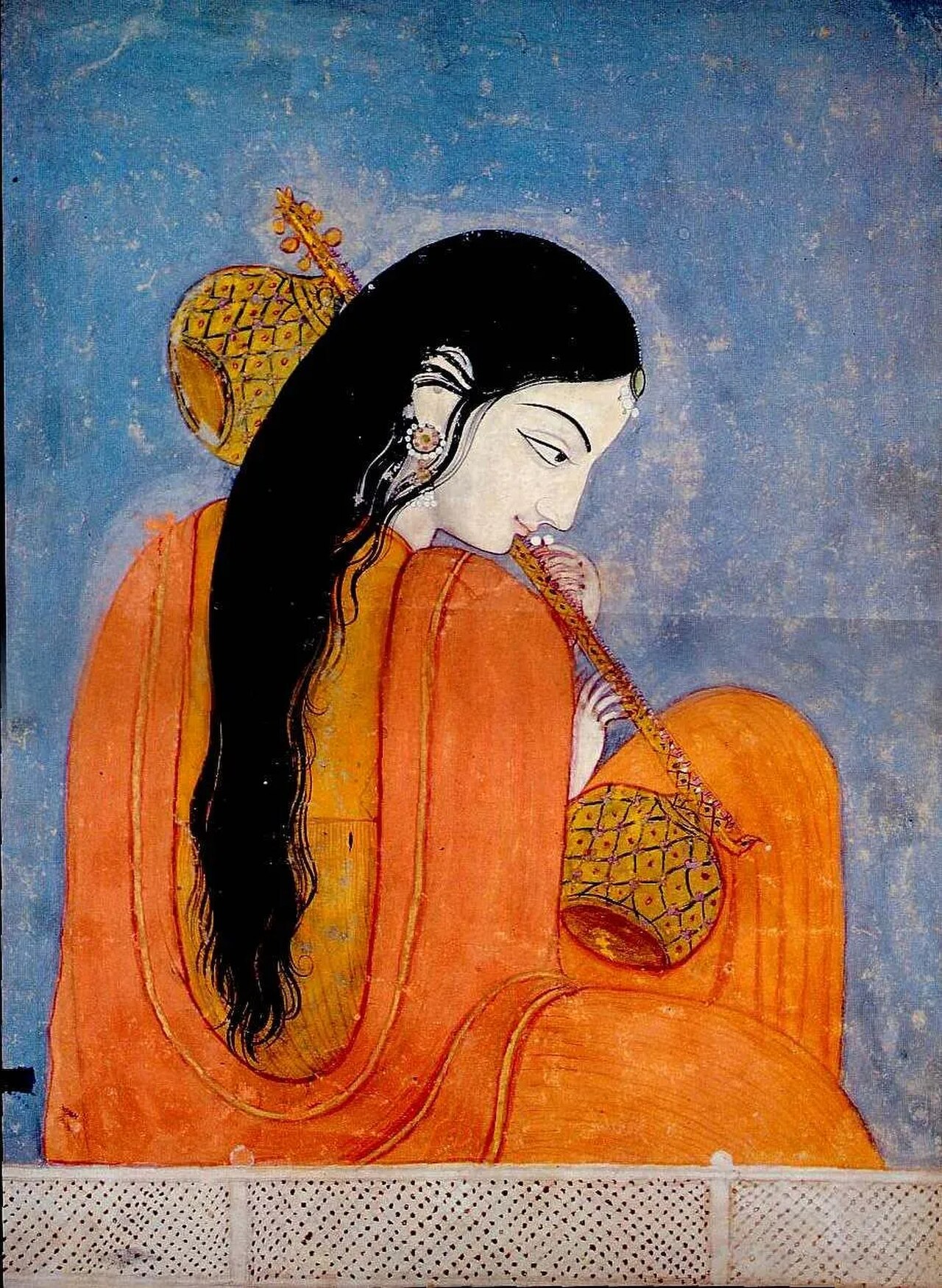
शास्त्र विंग · रस-पट्टिका · Rasa Plate
भक्ति
Bhakti
दसवाँ रस — ईश्वर के प्रति अपरिमित प्रेम, समर्पण और आत्मसमर्पण का रस जो जीवन को दिव्यता से भर देता है।
अन्य नामभक्ति रस · भक्ति-रस · प्रेम-भक्ति · Bhakti Rasa · Devotional Love · Spiritual Sentiment
सारभक्ति वह रस है जिसमें नायक (आत्मा) का नायिका (ईश्वर) के प्रति अगाध प्रेम, समर्पण और पूर्ण आत्मसमर्पण का चित्रण होता है। · Bhakti is the rasa that depicts the boundless love, devotion, and complete surrender of the devotee (soul) to the Divine (God).
नाट्यशास्त्र · अतिरिक्त — दसवाँ रस (Post-Natyashastra Addition) · Additional — The Tenth Rasa (Later Addition)
नाट्यशास्त्र संदर्भ
भक्तिरेव भक्ति-रसस्य स्थायिभावः। तस्यैव भवनमुत्तमोपभोग्यं देवताविषयकं रति। भक्तोः आत्मा नायकः, ईश्वरः नायिका॥
अनुवादभक्ति (भगवान के प्रति प्रेम) भक्ति रस का स्थायी भाव है। रूप गोस्वामी और अन्य वैष्णव विद्वानों ने 16वीं सदी में भक्ति को एक नया रस (दसवाँ रस) के रूप में जोड़ा। यह रस भरतमुनि के आठ रसों के बाहर है, लेकिन भारतीय संगीत और साहित्य में इसका महत्व सर्वाधिक है। भक्ति में आत्मा (भक्त) नायक है और ईश्वर (देवता) नायिका है। यह प्रेम मानवीय नहीं, बल्कि दिव्य और अनंत है।
अंग्रेज़ी में पढ़ें · Read in English
Bhakti (love towards God) is the sthayi bhava (dominant emotion) of Bhakti rasa. Rupa Goswami and other Vaishnava scholars added Bhakti as a tenth rasa in the 16th century. This rasa is beyond Bharata Muni's eight rasas, yet its importance in Indian music and literature is paramount. In Bhakti, the soul (devotee) is the hero and God (deity) is the beloved. This love is not human, but divine and eternal.
दर्शन
The Philosophyस्थायी भाव — भक्ति Sthayi Bhava · Bhakti (Devotion/Loving Surrender)
भक्ति (प्रेम) भक्ति रस का हृदय है। यह केवल भावनात्मक विश्वास नहीं है, बल्कि एक गहन आध्यात्मिक अवस्था है जिसमें आत्मा पूरी तरह ईश्वर को समर्पित हो जाती है। भक्ति में प्रेम का शुद्धतम रूप है — कोई अपेक्षा नहीं, कोई शर्त नहीं, केवल अपरिमित आत्मसमर्पण। भक्त ईश्वर के हर नाम में, हर रूप में, हर कर्म में उसे देखता है। प्रातःकाल की आरती से लेकर रात्रि की प्रार्थना तक, हर क्षण भक्ति के साथ है। भक्ति में दो तत्व हैं — ज्ञान (विश्वास कि ईश्वर है) और भाव (हृदय से प्रेम)। ये दोनों मिलकर भक्ति को पूर्ण बनाते हैं। मीरा की मधुर पुकार, सूरदास की पीड़ा, तुलसीदास की विनती — ये सब भक्ति की विभिन्न अभिव्यक्तियाँ हैं।
अंग्रेज़ी में पढ़ें · Read in English
Bhakti (devotion) is the heart of Bhakti rasa. It is not merely emotional faith, but a profound spiritual state in which the soul completely surrenders to God. Bhakti contains the purest form of love — no expectations, no conditions, only boundless devotion. The devotee sees God in every name, every form, every deed. From morning aarti to evening prayer, every moment is filled with Bhakti. Bhakti has two elements — knowledge (faith that God exists) and emotion (love from the heart). Together, they make Bhakti complete. Meera's sweet call, Surdas's sorrow, Tulsidas's supplication — all are different expressions of Bhakti.
विभाव — कारण Vibhava · Determinants
विभाव (कारण) वे सभी बाहरी परिस्थितियाँ हैं जो भक्ति रस को जन्म देती हैं। इनमें मंदिर, तीर्थस्थल, प्रतिमा, धार्मिक ग्रंथ, आरती, प्रार्थना, संतों की सेवा, और भगवान की लीला शामिल होती हैं।
अंग्रेज़ी में पढ़ें · Read in English
Vibhav (determinants) are the external circumstances that give rise to Bhakti rasa. These include temples, pilgrimage sites, idols, holy scriptures, aarti, prayer, service to saints, and divine play.
- मंदिर का घंटा, आरती की आरती की घंटी, शंख की ध्वनि
- भगवान की प्रतिमा, उसकी दिव्य मूर्ति, सोने का चेहरा
- पवित्र ग्रंथ — रामायण, महाभारत, भागवत, गीता
- तीर्थों की यात्रा, गंगा के तट पर दर्शन, काशी की पवित्रता
- संतों के चरणों में बैठना, उनकी आध्यात्मिक शिक्षा सुनना
- भगवान की लीला — कृष्ण की बांसुरी, राम का धनुष, शिव की तपस्या
- प्रकृति में ईश्वर का दर्शन — सूर्योदय, चाँदनी, फूलों की सुगंध
अंग्रेज़ी में पढ़ें · Read in English
- Temple bells, the sound of aarti bells, the call of the conch
- The idol of God, its divine form, the golden face
- Holy scriptures — Ramayana, Mahabharata, Bhagavata, Gita
- Pilgrimage to sacred sites, seeing the Ganges, the sanctity of Kashi
- Sitting at the feet of saints, listening to their spiritual teachings
- The divine play — Krishna's flute, Rama's bow, Shiva's asceticism
- Seeing God in nature — sunrise, moonlight, fragrance of flowers
अनुभाव — अभिव्यक्तियाँ Anubhava · Manifestations
अनुभाव (अभिव्यक्तियाँ) वे शारीरिक और मानसिक क्रियाएँ हैं जो भक्ति की भावना को प्रकट करती हैं। इनमें हाथ जोड़ना, आँसू बहना, शरीर में कंपकंपी, गीत गाना, नृत्य करना, और ईश्वर के नाम का जाप शामिल है।
अंग्रेज़ी में पढ़ें · Read in English
Anubhava (manifestations) are physical and mental expressions that reveal the feeling of Bhakti. These include folding hands, shedding tears, trembling of the body, singing songs, dancing, and chanting God's name.
- दोनों हाथ जोड़कर प्रणाम करना, नतमस्तक होना
- भगवान को पुकारते समय आँसू बहना, हृदय खुल जाना
- आरती करते समय शरीर में रोमांच होना, आँखें नम होना
- भगवान के नाम का जाप करना — हरे कृष्ण, राम, राम
- भजन गाना, कीर्तन गाना, मंदिर में नाचना
- प्रणाम, घंटे को छूना, प्रतिमा के चरणों पर बैठना
- रातभर जागना प्रार्थना में, उपवास रखना, तपस्या करना
अंग्रेज़ी में पढ़ें · Read in English
- Folding hands in prayer, bowing down
- Shedding tears while calling God, opening the heart
- Trembling with emotion during aarti, eyes growing moist
- Chanting God's name — Hare Krishna, Ram Ram
- Singing bhajans, performing kirtan, dancing in temples
- Prostration, touching the bell, sitting at the idol's feet
- Staying awake all night in prayer, fasting, performing austerities
संचारी भाव — अस्थायी भाव Vyabhichari Bhava · Transitory Emotions
संचारी भाव (अस्थायी भाव) वे क्षणिक भावनाएँ हैं जो भक्ति के साथ आती हैं और उसे समृद्ध करती हैं। भक्ति में प्रमुख संचारी भाव हैं — विश्वास, आशा, आनंद, विरह, विषाद, भय, साहस, क्रोध (अन्याय के विरुद्ध), और समर्पण।
अंग्रेज़ी में पढ़ें · Read in English
Vyabhichari bhava (transitory emotions) are fleeting feelings that accompany and enrich Bhakti. The prominent transitory emotions in Bhakti are: faith, hope, joy, separation, sorrow, fear, courage, anger (against injustice), and surrender.
- विश्वास — ईश्वर मेरे सभी दुःख दूर करेंगे, मुझ पर दया करेंगे
- आशा — कभी न कभी भगवान के दर्शन होंगे, उनका आशीर्वाद मिलेगा
- आनंद — मंदिर में प्रवेश करते समय खुशी, आरती देखकर मन खिल जाना
- विरह — भगवान से दूर होने की पीड़ा, उनके दर्शन की अभिलाषा
- विषाद — संसार की नश्वरता को देखकर दुःख, ईश्वर के बिना जीवन सूना लगना
- भय — पाप करने का डर, ईश्वर का क्रोध सहना
- साहस — अन्याय के विरुद्ध खड़े होना, राम की तरह धर्म की रक्षा करना
अंग्रेज़ी में पढ़ें · Read in English
- Faith — God will remove all my sorrows and show me mercy
- Hope — One day I will see God, I will receive their blessing
- Joy — Happiness entering the temple, heart blossoming seeing the aarti
- Longing — Pain of separation from God, desire for divine vision
- Sorrow — Sadness seeing the transience of the world, life feels empty without God
- Fear — Fear of committing sin, fear of God's wrath
- Courage — Standing against injustice, protecting dharma like Rama
अधिदेवता और रंग Deity & Colour
अधिदेवता — सर्वदेव (सभी देवता) · Sarva Dev (All Deities) रंग — पीला (गहरा सोना) · Yellow (Golden)
भक्ति रस सर्वदेव को समर्पित है — विष्णु, शिव, शक्ति, सूर्य, गणेश, या कोई भी देवता जिसके प्रति भक्त की श्रद्धा है। भक्ति का सार यह है कि रूप कोई भी हो, लेकिन प्रेम और समर्पण शुद्ध होना चाहिए। कृष्ण के लिए मीरा की भक्ति, राम के लिए तुलसीदास की भक्ति, शिव के लिए कबीर की भक्ति — सब भक्ति रस के ही रूप हैं। पीला रंग ज्ञान, पवित्रता, और दिव्यता का प्रतीक है। सोना भगवान की दिव्यता और मूल्य को दर्शाता है। भक्ति में कोई भेदभाव नहीं है — हर जीव, हर देवता, हर नाम भगवान का ही है।
अंग्रेज़ी में पढ़ें · Read in English
Bhakti rasa is dedicated to all deities — Vishnu, Shiva, Shakti, Surya, Ganesha, or any deity to whom the devotee has devotion. The essence of Bhakti is that the form may be any, but the love and surrender must be pure. Meera's devotion to Krishna, Tulsidas's devotion to Rama, Kabir's devotion to Shiva — all are forms of Bhakti rasa. Yellow symbolizes knowledge, purity, and divinity. Gold represents God's divine nature and worth. Bhakti has no discrimination — every being, every deity, every name is God.
संगीत में भक्ति
In Musicभक्ति संगीत को सृजित करने के लिए संगीतकार को अपने आप को संपूर्ण रूप से भगवान को समर्पित करना पड़ता है। सबसे महत्वपूर्ण है सुरों में आस्था और प्रेम भरना। प्रत्येक सुर ईश्वर का नाम है, प्रत्येक अलाप एक प्रार्थना है। संगीतकार जब राग गाता है, तो वह अपने आप को भूल जाता है और केवल भगवान को याद रखता है। तबले की लय दिल की धड़कन बन जाती है — जीवन की धड़कन। वाणी में आर्द्रता, आँखों में भक्ति, और हृदय में समर्पण — ये तीनों मिलकर सच्चा भक्ति संगीत बनाते हैं। एक सच्चा भजन गायक अपनी आवाज़ को मंदिर की घंटी बना देता है, जो श्रोताओं के हृदय में ईश्वर का नाम बजाता है।
अंग्रेज़ी में पढ़ें · Read in English
To create Bhakti music, the musician must completely surrender to God. Most important is to fill the notes with faith and love. Every note is God's name, every alap is a prayer. When the musician sings a raga, they forget themselves and remember only God. The tabla's rhythm becomes the heartbeat — the heartbeat of life. Moisture in the voice, devotion in the eyes, and surrender in the heart — these three together create true Bhakti music. A true bhajan singer transforms their voice into a temple bell, which rings God's name in the hearts of listeners.
भक्ति के राग · The Raags of Bhakti
नृत्य में भक्ति
In Danceभारतीय शास्त्रीय नृत्य में भक्ति रस नर्तकी के शरीर, मन और आत्मा से प्रकट होता है। नृत्यांगना की प्रत्येक मुद्रा (हस्त-संचालन), प्रत्येक पग-संचालन (चलन), और प्रत्येक अभिनय (चेहरे की भाव-भंगिमा) भगवान की खोज को दिखाता है। भक्ति नृत्य में नर्तकी स्वयं भक्त बन जाती है — राधा, गोपी, या कोई भी साधारण भक्त जो भगवान को खोज रहा है। नृत्य में उठना-बैठना, घूमना-फिरना, सब कुछ प्रार्थना बन जाता है। भक्ति नृत्य की खूबसूरती यह है कि इसमें सरलता है, सच्चाई है, और गहरा आत्मसंयोग है।
अंग्रेज़ी में पढ़ें · Read in English
In Indian classical dance, Bhakti rasa is expressed through the dancer's body, mind, and spirit. Every hand gesture, every foot movement, and every facial expression shows the quest for God. In Bhakti dance, the dancer becomes a devotee — Radha, a gopi, or any common believer seeking God. Rising and falling, turning and moving — everything becomes prayer. The beauty of Bhakti dance is its simplicity, its authenticity, and its deep connection to the soul.
| अभिनय | भक्ति की कथा को चेहरे और शरीर से कहना |
|---|---|
| ताण्डव | भगवान के साहस और शक्ति को दिखाने वाला नृत्य |
| लास्य | भक्त की कोमलता, समर्पण, और भावुकता को दिखाना |
| उद्दीपन | भक्ति की भावना को जगाने वाली गतियाँ |
| नृत्य-नाटक | भक्ति की पूरी कहानी नृत्य के माध्यम से बताना |
| अंजलि मुद्रा (दोनों हाथ जोड़ना) | प्रणाम, समर्पण, भगवान को स्वीकार करना |
|---|---|
| हृदय मुद्रा | हाथ को छाती पर रखना, भक्त का सच्चा प्रेम दिखाना |
| नमस्कार मुद्रा | भगवान को नमस्कार, विनती करना |
| पताका मुद्रा | शक्ति, साहस, और विश्वास दिखाना |
| कटकमुखी मुद्रा | भक्ति की पुकार, भगवान का आह्वान करना |
चेहरे की भाव-भंगिमा Facial Expression
भक्ति नृत्य में चेहरे की भाव-भंगिमा सबसे महत्वपूर्ण है। भक्त की आँखें खोज में रहती हैं — भगवान को खोजना, उन्हें पाना, उनसे मिलना। होंठों पर प्रार्थना है, गालों पर भक्ति के आँसू हैं। भ्रू (भौंहें) विनती को दिखाती हैं, नाक के पंख भावना से फड़कते हैं। पूरा चेहरा एक खुली किताब है जिस पर भक्त की सच्ची भावना लिखी होती है।
अंग्रेज़ी में पढ़ें · Read in English
In Bhakti dance, facial expression is paramount. The devotee's eyes search — searching for God, finding them, meeting them. Prayer is on the lips, tears of devotion are on the cheeks. The eyebrows show supplication, the nostrils quiver with emotion. The entire face is an open book on which the devotee's true feeling is written.
काव्य में भक्ति
In Poetryभारतीय काव्य में भक्ति रस सर्वोच्च स्थान रखता है। वेद से लेकर आधुनिक काव्य तक, भक्ति का वर्णन सभी महान कवियों ने किया है। मीरा, सूरदास, तुलसीदास, कबीर, रविंद्रनाथ टैगोर — सभी ने भक्ति को कविता का विषय बनाया। 'मेरा तो मुरली धर गुवाल है' से लेकर 'रघुपति राघव राजा राम' तक, हर पंक्ति भक्ति की गहराई को दिखाती है।
अंग्रेज़ी में पढ़ें · Read in English
In Indian poetry, Bhakti rasa holds the highest place. From the Vedas to modern poetry, all great poets have depicted devotion. Meera, Surdas, Tulsidas, Kabir, Rabindranath Tagore — all made Bhakti the subject of their poetry. From 'My beloved Krishna has stolen my heart' to 'Raghupath Raghuv Raja Ram,' every line shows the depth of Bhakti.
सिनेमा में भक्ति
In Cinemaभारतीय फिल्मों में भक्ति गीत लोगों के दिलों का हिस्सा बन गए हैं। प्रसिद्ध संगीतकार, गायकों ने भक्ति के गीत दिए जो पीढ़ियों को प्रेरित करते हैं। 'जय संतोषी माता', 'रामायण', 'महाभारत' जैसी धार्मिक फिल्मों में भक्ति का पूर्ण चित्रण है। लता मंगेशकर, आशा भोसले, मुहम्मद रफी ने सदियों के भक्ति गीत फिल्मों के माध्यम से जीवंत कर दिए।
अंग्रेज़ी में पढ़ें · Read in English
In Indian cinema, Bhakti songs have become part of people's hearts. Famous music directors and singers have created devotional songs that inspire generations. Films like 'Jai Santoshi Maa,' 'Ramayana,' and 'Mahabharata' have complete depictions of Bhakti. Singers like Lata Mangeshkar, Asha Bhosle, and Mohammed Rafi have brought centuries of devotional songs to life through cinema.
अमर दृश्य और गीत · Iconic Scenes & Songs
दैनंदिन जीवन में
In Daily Lifeभक्ति हमारे दैनंदिन जीवन का अभिन्न अंग है। प्रातःकाल की आरती से लेकर रात्रि की प्रार्थना तक, हर पल भक्ति से जुड़ा हुआ है। माता का अपने बच्चे के लिए प्रार्थना, पिता की पूजा करना, पत्नी का पति के लिए उपवास रखना, पति की दीर्घायु के लिए प्रार्थना करना — ये सब भक्ति के रूप हैं। गाँवों में, शहरों में, मंदिरों में, घरों में — सब जगह भक्ति के दर्शन होते हैं।
अंग्रेज़ी में पढ़ें · Read in English
Bhakti is an integral part of our daily life. From morning aarti to evening prayer, every moment is connected to devotion. A mother's prayer for her child, worshipping one's parents, a wife fasting for her husband's long life, praying for his health — these are all forms of Bhakti. In villages, cities, temples, homes — everywhere, the signs of Bhakti are visible.
- प्रातःकाल मंदिर जाना, घंटे को छूना, प्रतिमा को फूल चढ़ाना
- परिवार के साथ प्रार्थना करना, सब मिलकर 'राम नाम' जपना
- करवा चौथ पर पत्नी का पति के लिए उपवास रखना
- बीमार परिवार के सदस्य के लिए भगवान से प्रार्थना करना
- तीर्थ यात्रा पर जाना, पवित्र नदियों में स्नान करना
- संतों के चरणों में बैठना, उनकी शिक्षा सुनना
- अंतिम क्षणों में भगवान का नाम लेना — 'राम, राम, राम'
अंग्रेज़ी में पढ़ें · Read in English
- Going to temple in the morning, touching the bell, offering flowers to the idol
- Praying with the family, chanting 'Ram Nam' together
- A wife fasting on Karva Chauth for her husband's long life
- Praying to God for a sick family member's recovery
- Going on pilgrimage, bathing in sacred rivers
- Sitting at saints' feet, listening to their teachings
- Chanting God's name in final moments — 'Ram, Ram, Ram'
पट्टिका-लेख
The Monographभक्ति का विवेचन The Essay
भक्ति रस भारतीय संस्कृति का आत्मा है। यह केवल धार्मिक भावना नहीं है, बल्कि एक जीवन दर्शन है। भक्ति ने भारतीय समाज को जोड़ा, विभाजन को दूर किया, और लोगों को एकता के सूत्र में बाँधा। मीरा ने जाति और परिवार के बंधन तोड़कर कृष्ण की भक्ति की। कबीर ने हिंदू-मुस्लिम एकता का संदेश दिया। सूरदास ने अपनी दृष्टि खो दी, पर भक्ति में अंधत्व को दृष्टि में बदल दिया। तुलसीदास ने 'रामचरितमानस' लिखकर संपूर्ण भारत को राम की भक्ति से जोड़ दिया। भक्ति की शक्ति यह है कि यह सभी को समान बनाती है। राजा-रंक, अमीर-गरीब, ब्राह्मण-शूद्र — सब भगवान के सामने समान हैं। भक्ति में कोई भेदभाव नहीं है, केवल प्रेम है, केवल समर्पण है। भक्ति अंधविश्वास नहीं है। यह तर्कशील है, यह वैज्ञानिक है। भक्ति का अर्थ है अपने दिल को खोलना, अपने आप को किसी बड़ी चीज़ के लिए समर्पित करना। यह आत्मज्ञान का मार्ग है। आधुनिक समय में जब मनुष्य अकेला, निराश, और असंतुष्ट है, तब भक्ति ही एकमात्र रास्ता है जो जीवन को सार्थक बना सकता है। भक्ति से ही मन को शांति मिलती है, आत्मा को मुक्ति मिलती है।
अंग्रेज़ी में पढ़ें · Read in English
Bhakti rasa is the soul of Indian culture. It is not merely religious sentiment, but a philosophy of life. Bhakti united Indian society, removed divisions, and bound people in the thread of unity.
Meera broke the bonds of caste and family to worship Krishna. Kabir preached Hindu-Muslim unity. Surdas lost his sight, but in devotion, he transformed blindness into vision. Tulsidas wrote the 'Ramcharitmanas,' binding all of India to Rama's devotion.
The power of Bhakti is that it makes everyone equal. King and pauper, rich and poor, Brahmin and Shudra — all are equal before God. In Bhakti, there is no discrimination, only love, only surrender.
Bhakti is not blind faith. It is rational, it is scientific. Bhakti means opening one's heart, dedicating oneself to something greater. It is the path to self-knowledge.
In modern times, when humanity is lonely, despondent, and dissatisfied, Bhakti is the only path that can make life meaningful. It is through Bhakti that the mind finds peace and the soul finds liberation.
सांस्कृतिक महत्व Cultural Significance
भक्ति आंदोलन (15वीं-17वीं सदी) भारतीय इतिहास का सबसे महत्वपूर्ण काल था। इस आंदोलन ने धार्मिक सुधार लाए, सामाजिक समानता की बात की, और लोकभाषा में ज्ञान देने का काम किया। मीरा, सूरदास, कबीर, तुलसीदास — ये सब भक्ति आंदोलन के ही प्रतीक हैं। यह आंदोलन केवल भारत में नहीं, बल्कि पूरे विश्व में मानव जीवन को प्रभावित किया है। भक्ति की परंपरा आज भी जीवंत है, आज भी लाखों लोग भक्ति के मार्ग पर चलते हैं।
अंग्रेज़ी में पढ़ें · Read in English
The Bhakti Movement (15th-17th centuries) was the most important period in Indian history. This movement brought religious reform, spoke of social equality, and made knowledge available in vernacular languages. Meera, Surdas, Kabir, Tulsidas — all are symbols of the Bhakti Movement. This movement not only affected India but influenced human life worldwide. The tradition of Bhakti is alive today; millions still walk the path of devotion.
श्रवण-मार्गदर्शिका Listening Guide
भक्ति संगीत को सुनते समय आप एक गहरी आध्यात्मिक अनुभूति प्राप्त करेंगे। आपका शरीर शांत होगा, आपका मन एकाग्र होगा, और आपकी आत्मा उड़ान भरेगी। भजन सुनते समय आप अपने सभी दुःख भूल जाएँगे। आपकी आँखें बंद हो जाएँगी, आपका दिल खुल जाएगा, और आप केवल भगवान को अनुभव करेंगे। संगीतकार के अलाप में प्रार्थना सुनिए, गायक की आवाज़ में भक्ति को महसूस कीजिए। प्रत्येक सुर एक आरती है, प्रत्येक गीत एक मंदिर है। भक्ति संगीत सुनने से न केवल आपके कान भरते हैं, बल्कि आपका आत्मा परिवर्तित होता है।
अंग्रेज़ी में पढ़ें · Read in English
When listening to Bhakti music, you will experience a profound spiritual feeling. Your body will be calm, your mind focused, and your soul will soar. While listening to bhajans, you will forget all sorrows. Your eyes will close, your heart will open, and you will experience only God. Listen to the prayer in the musician's alap, feel the devotion in the singer's voice. Every note is an aarti, every song is a temple. Listening to Bhakti music not only fills your ears but transforms your soul.
शेर · The Couplet
भक्ति पर शेर
मेरा तो मुरली धर गुवाल है, जन की रक्षक, सकल की पाल है॥
स्रोत— मीरा बाई
My beloved Krishna has stolen my heart, He is the protector of all beings, the sustainer of the universe.
रोचक तथ्य
Margin Notesभक्ति रस को 10वें रस के रूप में रूप गोस्वामी ने 16वीं सदी में जोड़ा। वह वैष्णव दर्शन के महान विद्वान थे और राधा-कृष्ण की भक्ति को सर्वोच्च माना जाता था।
Rupa Goswami added Bhakti as the tenth rasa in the 16th century. He was a great scholar of Vaishnava philosophy and considered devotion to Radha-Krishna as the highest.
मीरा ने अपने पति की मृत्यु के बाद कृष्ण को अपना पति माना। उन्होंने जाति-व्यवस्था को तोड़ा और भक्ति को सबके लिए समान माना।
After her husband's death, Meera considered Krishna her beloved. She challenged the caste system and believed devotion was open to all.
सूरदास के 4,000 से अधिक पद संरक्षित हैं। वे अंधे थे, लेकिन कृष्ण की छवि उनके मन में स्पष्ट थी। उनकी रचनाएँ भक्ति साहित्य का सबसे बड़ा खज़ाना हैं।
Surdas has over 4,000 verses preserved. Though blind, he saw Krishna clearly in his mind. His works are the greatest treasure of devotional literature.
कबीर ने कहा था कि भगवान मंदिर में नहीं, बल्कि हृदय में रहते हैं। उन्होंने धर्म की औपचारिकताओं का विरोध किया और आंतरिक प्रेम पर ज़ोर दिया।
Kabir said God dwells not in temples, but in the heart. He opposed religious formality and emphasized inner love.
तुलसीदास की 'रामचरितमानस' को हिंदी का सबसे महत्वपूर्ण ग्रंथ माना जाता है। यह भक्ति और राम-कथा का एक अद्भुत मिश्रण है।
Tulsidas's 'Ramcharitmanas' is considered the most important Hindi text. It is a unique blend of devotion and the Rama narrative.
क्या आप जानते हैं?
Did You Knowभक्ति आंदोलन भारत में धार्मिक सुधार का सबसे बड़ा आंदोलन था। इसने जाति-प्रथा को चुनौती दी, महिलाओं को सम्मान दिया, और सभी को भगवान के समान अधिकार दिए।
The Bhakti Movement was the greatest religious reform movement in India. It challenged the caste system, honored women, and gave all equal rights to God.
भारतीय संगीत में भक्ति को 'भक्ति योग' कहा जाता है — यानी भक्ति के माध्यम से आत्मा और ईश्वर का मिलन।
In Indian music, devotion is called 'Bhakti Yoga' — the union of soul and God through devotion.
मंदिरों में पहली घंटी बजाने वाले भक्त को 'घंटाल' कहा जाता है। यह परंपरा हज़ारों साल पुरानी है।
The devotee who rings the first bell in temples is considered blessed. This tradition is thousands of years old.
सूक्तियाँ
Quotesभक्ति ही एकमात्र रास्ता है जो मनुष्य को मुक्ति की ओर ले जाता है। — भारतीय परंपरा
Devotion is the only path that leads humanity to liberation.
जहाँ भक्ति है, वहाँ भगवान है। जहाँ प्रेम है, वहाँ प्रभु है। — रामकृष्ण परमहंस
Where there is devotion, there is God. Where there is love, there is the Divine.
भक्ति का अर्थ है अपने हृदय को पूरी तरह खोल देना, ईश्वर के लिए खाली कर देना। — स्वामी विवेकानंद
Devotion means completely opening your heart and emptying it for God.
अग्रिम पठन
Further Reading- रूप गोस्वामी की 'भक्तिरसामृतसिंधु' — भक्ति रस का संस्कृत ग्रंथ
- मीरा की रचनाएँ — 'मीरा सूदान' और 'मीरा पद'
- सूरदास की 'सूरसागर' — कृष्ण भक्ति का महाकाव्य
- तुलसीदास की 'रामचरितमानस' — हिंदी भक्ति साहित्य का सर्वश्रेष्ठ ग्रंथ
- कबीर की रचनाएँ — 'बीजक' और 'कबीर बानी'
- डॉ. हजारीप्रसाद द्विवेदी की 'भक्ति आंदोलन और सूरदास'
इतिहास
Historyउद्गम — नाट्यशास्त्र के बाद — 16वीं सदी CE Origin
भक्ति रस को औपचारिक रूप से दसवें रस के रूप में रूप गोस्वामी ने 16वीं सदी में स्वीकार किया। हालाँकि, भक्ति की परंपरा वेदों के समय से ही है। भगवान के प्रति प्रेम और समर्पण की भावना भारतीय संस्कृति के मूल में है। भक्ति आंदोलन (15वीं-17वीं सदी) ने भक्ति को समाज के सभी स्तरों तक पहुँचाया। यह एक महान सांस्कृतिक और आध्यात्मिक जागरण था।
विकास-क्रम Evolution
- वैदिक काल (1500 BCE - 600 BCE) ऋग्वेद में ही भक्ति के संकेत मिलते हैं। 'उषा सूक्त' और अन्य रचनाओं में देवताओं के प्रति प्रेम और समर्पण व्यक्त किया गया है।
- उपनिषद काल (800 BCE - 200 BCE) उपनिषदों में 'तद्विषयो ज्ञानं' — यानी ईश्वर के सामीप्य में ही सच्चा ज्ञान है। यह भक्ति का दार्शनिक आधार है।
- महाभारत काल (200 BCE - 200 CE) गीता में कृष्ण ने भक्ति को सबसे सरल और सबसे प्रभावी योग माना। 'भक्तो मे प्रिय: सर्वथा' — मेरा भक्त मुझे प्रिय है।
- भक्ति आंदोलन (15वीं-17वीं सदी) मीरा, सूरदास, कबीर, तुलसीदास — ये महान संत भक्ति आंदोलन के प्रतीक थे। इन्होंने लोकभाषा में भक्ति का प्रचार किया और धर्म को सभी के लिए सुलभ बनाया।
- आधुनिक काल (1800 CE - वर्तमान) राम मोहन राय, दयानंद सरस्वती, रामकृष्ण परमहंस, स्वामी विवेकानंद — ये सब आधुनिक भक्ति विचार के नेतृत्वकर्ता थे। आज भी भक्ति का महत्व अक्षुण्ण है।
मुख्य पड़ाव Key Milestones
- 1200 BCE (अनुमानित) नाट्यशास्त्र में आठ रसों की व्याख्या — भक्ति अभी शामिल नहीं
- 200 BCE गीता में भक्ति योग का वर्णन — कृष्ण द्वारा अर्जुन को भक्ति का उपदेश
- 12वीं सदी जयदेव द्वारा 'गीत गोविंद' की रचना — भक्ति और प्रेम का मिश्रण
- 14वीं-16वीं सदी भक्ति आंदोलन की चरम अवस्था — मीरा (1498-1547), सूरदास (1478-1563)
- 16वीं सदी रूप गोस्वामी द्वारा 'भक्तिरसामृतसिंधु' — भक्ति को दसवें रस के रूप में स्वीकार किया
- 19वीं-20वीं सदी आधुनिक भक्ति विचार — रामकृष्ण परमहंस, स्वामी विवेकानंद, रवींद्रनाथ टैगोर
नमूना-पट्टी
The Specimen Table| नाम | भक्ति · Bhakti |
|---|---|
| लिप्यंतरण | Bhakti |
| अन्य नाम | भक्ति रस · भक्ति-रस · प्रेम-भक्ति |
| स्थायी भाव | भक्ति · Bhakti (Devotion/Loving Surrender) |
| अधिदेवता | सर्वदेव (सभी देवता) |
| रंग | पीला (गहरा सोना) |
| प्रमुख राग | भैरवी · यमन · देश · पहाड़ी · काफी |
| नृत्य-रूप | अभिनय · ताण्डव · लास्य · उद्दीपन · नृत्य-नाटक |
जुड़े हुए पन्ने
Connected Plates · The Graph Made Visibleअटलस में कोई पन्ना अकेला नहीं — भक्ति से राग, गीत और बाक़ी रस, सब जुड़े हैं।
शास्त्र-सूत्र · Shastra Threads
अनुशंसित श्रवण · Recommended Listening
नवरस-मंडल · Fellow Rasas
श्रवण-कक्ष · The Listening Room
सुनिए — भक्ति रस · Hear the Rasa
TOP 30 MORNING BHAJANS — NON STOP BHAJAN, AARTI, & MANTRA — भजनों का यह संग्रह भक्ति संगीत का सर्वोत्तम उदाहरण है। सूर्योदय के समय ये भजन गाए जाते हैं जो मन को शांत और आत्मा को पवित्र करते हैं। · bhajans_collection Top 30 Morning Bhajans — Complete Devotional Collection
Spiritual Mornings With Bhakti INSTRUMENTALS — यह वाद्य संगीत भक्ति के शांत और गहन रूप को प्रकट करता है। सुबह के समय इसे सुनने से दिन भर की शांति मिलती है। · instrumental_devotional Spiritual Mornings With Bhakti — Instrumental Devotional Music
प्रश्नोत्तर
Questions & Answersभक्ति रस क्या है?
भक्ति वह रस है जिसमें भक्त (आत्मा) का ईश्वर (प्रभु) के प्रति अपरिमित प्रेम, समर्पण और आत्मसमर्पण का वर्णन होता है। भक्ति को दसवें रस के रूप में रूप गोस्वामी ने 16वीं सदी में स्वीकार किया। यह शुद्ध आध्यात्मिक भावना है।
अंग्रेज़ी में पढ़ें · Read in English
Bhakti is the rasa that depicts the boundless love, devotion, and surrender of the devotee (soul) to God (the Divine). Bhakti was recognized as the tenth rasa by Rupa Goswami in the 16th century. It is a pure spiritual emotion.
भक्ति के कितने प्रकार हैं?
भक्ति के पाँच मुख्य प्रकार हैं: (1) शांत भक्ति — ईश्वर को शांत और ध्यान में देखना, (2) दास्य भक्ति — ईश्वर को स्वामी मानकर उनकी सेवा करना, (3) सख्य भक्ति — ईश्वर को मित्र मानना, (4) वात्सल्य भक्ति — ईश्वर को बालक मानकर उनका पालन करना, (5) माधुर्य भक्ति — ईश्वर को प्रिय मानकर उनसे प्रेम करना।
अंग्रेज़ी में पढ़ें · Read in English
Bhakti has five main types: (1) Santa Bhakti — seeing God in meditation, (2) Dasya Bhakti — serving God as master, (3) Sakhya Bhakti — treating God as a friend, (4) Vatsalya Bhakti — nurturing God as a child, (5) Madhura Bhakti — loving God as a beloved.
भक्ति किन राागों में व्यक्त होती है?
भैरवी, यमन, देश, पहाड़ी, और काफी — ये राग भक्ति को सर्वोत्तम रूप से व्यक्त करते हैं। भैरवी विप्रलंभ भक्ति (विरह में भक्ति) के लिए आदर्श है, जबकि यमन शांत और आनंदपूर्ण भक्ति के लिए।
अंग्रेज़ी में पढ़ें · Read in English
Bhairavi, Yaman, Desh, Pahadi, and Kafi are ragas that best express Bhakti. Bhairavi is ideal for devotion in separation, while Yaman is for peaceful and joyful devotion.
भक्ति आंदोलन क्या था?
भक्ति आंदोलन (15वीं-17वीं सदी) भारतीय इतिहास का सबसे महत्वपूर्ण धार्मिक सुधार आंदोलन था। इसने जाति-प्रथा को चुनौती दी, सभी को भगवान के समान अधिकार दिए, और महिलाओं को सम्मान दिया। मीरा, सूरदास, कबीर, तुलसीदास — ये इस आंदोलन के महान नेतृत्वकर्ता थे।
अंग्रेज़ी में पढ़ें · Read in English
The Bhakti Movement (15th-17th centuries) was the most important religious reform movement in Indian history. It challenged the caste system, gave all equal rights to God, and honored women. Meera, Surdas, Kabir, Tulsidas were its great leaders.
मीरा, सूरदास, कबीर और तुलसीदास कौन हैं?
ये चारों महान भक्ति संत हैं। मीरा कृष्ण की मधुर भक्ति के लिए प्रसिद्ध हैं। सूरदास ने कृष्ण की लीला का वर्णन अपनी रचनाओं में किया। कबीर ने भक्ति को साधारण भाषा में समझाया। तुलसीदास ने 'रामचरितमानस' लिखकर पूरे भारत को राम की भक्ति से जोड़ा।
अंग्रेज़ी में पढ़ें · Read in English
These four are great Bhakti saints. Meera is famous for her sweet devotion to Krishna. Surdas described Krishna's divine play. Kabir explained devotion in simple language. Tulsidas connected all of India to Rama's devotion through 'Ramcharitmanas.'
साझा कीजिए · Share this Plate