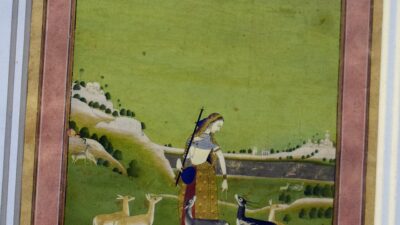
शास्त्र विंग · राग-पट्टिका · Raag Plate
सिंहेंद्रमध्यमम्
Simhendramadhyamam
एक करुण Carnatic राग · A Compassion Carnatic Raag
भावउदास · चिंतनशील · भावपूर्ण · विचारशील
ऊर्जाधीमी
स्वर-चित्र · The Swara Panel
आरोह — अवरोह · The Ascent and the Descent
आरोह · Aroha
स ऋ२ ग२ म२ प ध१ न३ स्
Sa R2 G2 M2 P D1 N3 Ṡ
अवरोह · Avaroha
स् न३ ध१ प म२ ग२ ऋ२ स
Ṡ N3 D1 P M2 G2 R2 Sa
वादी–संवादी टिप्पणी · Vadi–Samvadi note
Vadi — In the Carnatic tradition, Raag Simhendramadhyamam emphasizes Pancham (Pa) as a key resting note.
Samvadi — Sa (Shadj) serves as the complementary note.
समय और भाव
Time Theory & Moodसमय-सिद्धांत · Time Theory
संध्या काल
परंपरागत रूप से संध्या काल (4:00 PM - 7:00 PM) में गाया जाता है।
Traditionally performed during evening/twilight hours (4:00 PM - 7:00 PM), when day transitions to night.
भाव और गति · Mood & Tempo
करुण · Compassion/Pathos
करुणा, दुख और गहरी भावना का रस। सहानुभूति, उदासी और चिंतनशील ध्यान जगाता है।
ऊर्जा · Energyधीमी
स्तर · Levelintermediate — राग Simhendramadhyamam के लिए कर्नाटक संगीत सिद्धांत की मजबूत नींव आवश्यक है।
पट्टिका-लेख
The Monographपरिचय Introduction
राग Simhendramadhyamam कर्नाटक शास्त्रीय संगीत परंपरा का एक राग है। इसका प्रमुख रस करुण (Compassion/Pathos) है। यह परंपरागत रूप से संध्या काल (4:00 PM - 7:00 PM) में गाया जाता है। गाया जाता है।
अंग्रेज़ी में पढ़ें · Read in English
Raag Simhendramadhyamam is a complete scale with all 7 notes in both ascent and descent raga in the Carnatic classical music tradition. It is derived from the Simhendramadhyamam melakarta (#57). With its Sampurna-Sampurna jati structure, this raag creates a distinctive tonal landscape. The predominant rasa is Compassion/Pathos (करुण), making it suitable for compositions that evoke melancholic, contemplative emotions. It is traditionally performed during evening hours, and its melodic contour offers rich possibilities for alapana, kalpanaswaram, and creative improvisation.
सांस्कृतिक महत्व Cultural Significance
भारतीय शास्त्रीय संगीत की समृद्ध परंपरा के अंग के रूप में, राग Simhendramadhyamam Carnatic परंपरा को परिभाषित करने वाले स्वर संरचना और भावनात्मक अभिव्यक्ति के बीच गहरे संबंध का प्रतिनिधित्व करता है।
अंग्रेज़ी में पढ़ें · Read in English
As part of the rich tapestry of Indian classical music, Raag Simhendramadhyamam represents the deep connection between melodic structure and emotional expression that defines the Carnatic tradition.
ऐतिहासिक महत्व Historical Significance
सिंहेंद्रमध्यमम् (खरहरप्रिय चक्र में मेलकर्ता 57) एक सात स्वरों वाला व्यापक राग है जिसका नाम इसके विशिष्ट अंतराल संयोजन को दर्शाता है। यह राग कर्नाटक संगीत साहित्य में महत्वपूर्ण है और शास्त्रीय संगीतकारों की रचनाओं में प्रचुरता से दिखाई देता है।
अंग्रेज़ी में पढ़ें · Read in English
Simhendramadhyamam (Melakarta 57 in the Kharaharapriya chakra) is a comprehensive seven-note raag with an expansive melodic structure. Its name references the combination of its characteristic intervals. The raag is significant in Carnatic music literature, appearing in numerous compositions by classical masters, and is particularly suited for elaborate alapanas showcasing a musician's improvisational skill.
शिक्षा
Teaching & LearningBegin with slow aalapana to internalize the raag's swaroopa (melodic form)
Practice the arohana and avarohana patterns with a tanpura drone
Listen to recordings by master performers to understand the raag's gamakas (ornamentations)
Work on kalpanaswaram (improvisation) within the raag's framework
Using incorrect gamakas that belong to a different raag
Not maintaining proper swar sthana (note placement)
Rushing through phrases without allowing the raag bhava to develop
तुलना
A Specimen Comparisonमेचकल्याणी (मेलकर्ता 65 — हिन्दुस्तानी यमन का कर्नाटक समतुल्य) से तुलना सबसे महत्वपूर्ण है: दोनों में तीव्र मध्यम (M2) है, किंतु धैवत और निषाद में अंतर है। मेचकल्याणी में चतुःश्रुति धैवत (D2) है जो उसे उज्ज्वल और रोमांटिक बनाता है; सिंहेंद्रमध्यमम् में शुद्ध धैवत (D1) है जो भाव को उदासी और चिंतन की ओर मोड़ देता है। ध का यह एकमात्र अंतर निर्णायक है: कल्याणी जहाँ उत्साहित और रोमांटिक लगती है, वहीं सिंहेंद्रमध्यमम् अंतर्मुखी और करुणभाव वाली।
| तुलनाSpecimen | सिंहेंद्रमध्यमम् | मेचकल्याणी |
|---|---|---|
| स्वर-अंतर | Both use tivra Ma (M2); Mechakalyani: Chatushruti Dhaivata (D2), Kakali Nishada (N3); Simhendramadhyamam: Shuddha Dhaivata (D1). | |
| भाव-अंतर | Mechakalyani: bright, expansive, romantic (uplifted); Simhendramadhyamam: melancholic, contemplative, inward. | |
हेमावती (मेलकर्ता 58) में भी तीव्र म है, पर उसमें D2 और N2 हैं जो इसे भिन्न भावात्मक रंग देते हैं।
| तुलनाSpecimen | सिंहेंद्रमध्यमम् | हेमावती |
|---|---|---|
| स्वर-अंतर | Both have tivra Ma (M2); Simhendramadhyamam: Shuddha Dhaivata (D1), Kakali Nishada (N3); Hemavati: Chatushruti Dhaivata (D2), Kaisiki Nishada (N2). | |
प्रस्तुति
Performance- Description
- परंपरागत रूप से संध्या काल (4:00 PM - 7:00 PM) में गाया जाता है। Traditionally performed during evening/twilight hours (4:00 PM - 7:00 PM), when day transitions to night.
- Prahar Number
- 5
- Prahar Name
- संध्या काल Sandhya Kaal
- Time Start
- 16:00
- Time End
- 19:00
- Time Flexibility
- flexible
Time
और जानें
More to Know- raag-mechakalyani — Mechakalyani — मेचकल्याणी — Mechakalyani (Melakarta 65 — the Carnatic equivalent of Hindustani Yaman) and Simhendramadhyamam both use tivra Madhyama (M2), but differ significantly in Dha and Ni. Mechakalyani has Chatushruti Dhaivata (D2) and Kakali Nishada (N3), creating a bright, expansive, romantic quality. Simhendramadhyamam has Shuddha Dhaivata (D1) — a lower, more restrained Dha — which shifts the emotional color toward melancholy and contemplation. This single change in Dha is decisive: where Kalyani feels uplifted and romantic, Simhendramadhyamam feels inward and sorrowful. — मेचकल्याणी (मेलकर्ता 65 — हिन्दुस्तानी यमन का कर्नाटक समतुल्य) से तुलना सबसे महत्वपूर्ण है: दोनों में तीव्र मध्यम (M2) है, किंतु धैवत और निषाद में अंतर है। मेचकल्याणी में चतुःश्रुति धैवत (D2) है जो उसे उज्ज्वल और रोमांटिक बनाता है; सिंहेंद्रमध्यमम् में शुद्ध धैवत (D1) है जो भाव को उदासी और चिंतन की ओर मोड़ देता है। ध का यह एकमात्र अंतर निर्णायक है: कल्याणी जहाँ उत्साहित और रोमांटिक लगती है, वहीं सिंहेंद्रमध्यमम् अंतर्मुखी और करुणभाव वाली। — Both use tivra Ma (M2); Mechakalyani: Chatushruti Dhaivata (D2), Kakali Nishada (N3); Simhendramadhyamam: Shuddha Dhaivata (D1). — Mechakalyani: bright, expansive, romantic (uplifted); Simhendramadhyamam: melancholic, contemplative, inward.
- raag-hemavati — Hemavati — हेमावती — Hemavati (Melakarta 58) shares tivra Ma but has Chatushruti Dhaivata (D2) and Kaisiki Nishada (N2) — a different Ni from Simhendramadhyamam's Kakali Nishada (N3). Hemavati therefore has a somewhat different emotional cast from Simhendramadhyamam. — हेमावती (मेलकर्ता 58) में भी तीव्र म है, पर उसमें D2 और N2 हैं जो इसे भिन्न भावात्मक रंग देते हैं। — Both have tivra Ma (M2); Simhendramadhyamam: Shuddha Dhaivata (D1), Kakali Nishada (N3); Hemavati: Chatushruti Dhaivata (D2), Kaisiki Nishada (N2).
In Film Music
Simhendramadhyamam is a full-scale Carnatic melakarta (the 57th parent scale in the 72-melakarta system) and as such has no direct presence in Hindi film music. Being a purely Carnatic raag, it lives in the concert halls of South Indian classical music — in elaborate alapanas, kriti recitals, and kalpanaswaram by artists like M.S. Subbulakshmi, D.K. Pattammal, and Semmangudi Srinivasa Iyer. Its defining characteristic is the combination of tivra Madhyama (sharp fourth) with Shuddha Dhaivata (natural sixth), which creates a distinctive contemplative, sometimes melancholic color. Tamil and Telugu film composers have occasionally drawn on Carnatic melas for atmosphere — composers like Ilaiyaraaja have a documented interest in exploring Carnatic scales in film music — but Simhendramadhyamam's specific combination is demanding and has not entered mainstream popular song in any Indian film tradition. Listeners seeking an emotional equivalent in Hindustani film music might explore songs based on Poorvi or Puriya Dhanashri, which share a similar austere, evening-time character, though the note combinations differ significantly.
Comparisons
सीखने के लिए
For Learners- Difficulty Level
- intermediate
अन्य विवरण
More Details- Indian_Music_Raga_Encyclopedia_v2.xlsx
- Wikipedia — Simhendramadhyamam
- karnatik.com — Carnatic raga database
References
नमूना-पट्टी
The Specimen Table| नाम | सिंहेंद्रमध्यमम् · Simhendramadhyamam |
|---|---|
| आरोह | स ऋ२ ग२ म२ प ध१ न३ स् |
| अवरोह | स् न३ ध१ प म२ ग२ ऋ२ स |
| जाति | संपूर्ण-संपूर्ण · Sampurna-Sampurna |
| समय | संध्या काल |
| ऊर्जा | धीमी |
| परिवार | Simhendramadhyamam |
| स्तर | intermediate |
| लोकप्रियता | Very popular |
| कर्नाटक समतुल्य | Simhendramadhyamam · Melakarta 57 |
जुड़े हुए पन्ने
Connected Plates · The Graph Made Visibleअटलस में कोई पन्ना अकेला नहीं — इस राग से गीत, प्रस्तुतियाँ, कलाकार, ताल, घराने और मिलते-जुलते राग, सब यहाँ से खुलते हैं।
इस राग के कलाकार · Notable Artists
ताल-साथी · Taal Pairings
श्रवण-कक्ष · The Listening Room
सुनिए — सिंहेंद्रमध्यमम् · Hear the Raag
Raag Simhendramadhyamam — Classical Performance
प्रश्नोत्तर
Questions & Answersराग Simhendramadhyamam किस संगीत पद्धति का राग है?
राग Simhendramadhyamam कर्नाटक (दक्षिण भारतीय) शास्त्रीय संगीत पद्धति का राग है।
अंग्रेज़ी में पढ़ें · Read in English
Which music system does Raga Simhendramadhyamam belong to? — Raga Simhendramadhyamam belongs to the Carnatic (South Indian) classical music system.
साझा कीजिए · Share this Plate