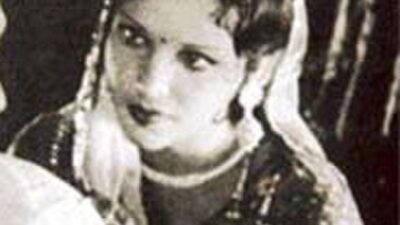
गीत विंग · गीत-पट्टिका · Song Plate
वहशत में अपने हाथों मुश्किल को ढूँढ़ते हैं
Vehshat Mein Apne Haathon Mushkil Ko Dhoondhte Hain
दीवानगी में हम अपने ही हाथों मुसीबत ढूँढ़ते हैं — 'छमिया' के संगीत की इकलौती पूरी उर्दू ग़ज़ल, और उसमें सबसे गहरी चीज़।
भावतीव्र · उदास · दार्शनिक
भाषाhindi गतिधीमी स्वरूपएकल महिला
श्रेय
The Creditsसूत्र-वाक्य · The Hook
सूत्र-वाक्य
दीवानगी में हम अपने ही हाथों मुसीबत ढूँढ़ते हैं — 'छमिया' के संगीत की इकलौती पूरी उर्दू ग़ज़ल, और उसमें सबसे गहरी चीज़।
In EnglishIn our madness we go looking for trouble with our own hands — the one full Urdu ghazal in the Chhamia score, and the darkest thing in it.
पट्टिका-लेख
The Monographपरिचय Overview
ज्ञान दत्त के 'छमिया' के संगीत की इकलौती निर्विवाद ग़ज़ल, और स्वर की दृष्टि से उस कॉमेडी से सबसे दूर की चीज़ जिसके लिए यह फ़िल्म याद की जाती है। शीर्षक ही पूरा तर्क कह देता है: 'वहशत' में — दीवानगी, रेगिस्तान की वह बेतरतीबी, वह अवस्था जिसमें उर्दू का शास्त्रीय आशिक़ विवेक के जाने के बाद पहुँचता है — कहने वाली जान-बूझकर, अपने ही हाथों, मुश्किल ढूँढ़ने निकलती है। बॉलीस्वर संकलन इस गीत का श्रेय पारुल घोष को देता है — संगीतकार अनिल विश्वास की बहन और उस दौर की सबसे शास्त्रीय रूप से सधी स्त्री-आवाज़ों में से एक; हिंदीगीतमाला शीर्षक तो दर्ज करती है पर गायक का नाम नहीं देती।
अंग्रेज़ी में पढ़ें · Read in English
The one unambiguous ghazal in Gyan Dutt's Chhamia score, and tonally the furthest thing in it from the comedy the film is remembered as. The title states the whole argument: in vehshat — madness, the wildness of the desert, the state of the classical Urdu lover after reason has gone — the speaker goes out and looks for difficulty deliberately, with her own hands. The BollySwar compendium credits the song to Parul Ghosh, sister of the composer Anil Biswas and one of the most classically secure female voices of the period; hindigeetmala lists the title without a singer.
संगीत The Music
1945 की किसी हिंदी फ़िल्म में ग़ज़ल का अर्थ चुनावों का एक निश्चित समुच्चय था, और यह गीत वही चुनाव करता जान पड़ता है: धीमी लय, न्यूनतम ताल, धुन का भार शेर की दूसरी पंक्ति पर ताकि क़ाफ़िया साफ़ उतरे, और वाक्यांशों के बीच इतनी जगह कि शब्द शब्द की तरह सुनाई दें। ज्ञान दत्त मूलतः उर्दू-ग़ज़ल के संगीतकार नहीं थे — उनकी ख्याति भजनों, लोकगीतों और रणजीत मूवीटोन की घरेलू शैली पर टिकी थी — इसलिए यह संगीत का अपनी ही आदतों से बाहर हाथ बढ़ाना है, और रिकॉर्ड पर शास्त्रीय रूप से प्रशिक्षित आवाज़ की उपस्थिति बताती है कि वे चाहते थे कि यह बढ़ा हुआ हाथ सुनाई भी दे।
अंग्रेज़ी में पढ़ें · Read in English
A ghazal in a 1945 Hindi film meant a particular set of choices, and the song appears to make them: slow tempo, minimal rhythm, the melodic weight placed on the couplet's second line so that the rhyme-word lands cleanly, and enough space left between phrases for the words to be heard as words. Gyan Dutt was not primarily an Urdu-ghazal composer — his reputation rested on bhajans, folk numbers and the Ranjit Movietone house style — so this is the score reaching outside its own habits, and the presence of a classically trained voice on the disc suggests he wanted the reach to be audible.
काव्य The Poetry
यहाँ ग़ज़ल की पद्धति वही शास्त्रीय है — अपने ही विनाश में अपनी भूमिका पर ज़ोर देना। कहने वाली मुश्किल की शिकार नहीं है; वह उसे ढूँढ़ती है — 'अपने हाथों' — और यही शोक और 'वहशत' का अंतर है; यह परित्यक्ता का उलाहना नहीं, उर्दू के आशिक़ का गर्व है। लिपिबद्ध पाठ उसी शैली के जाने-पहचाने सामान से गुज़रता है: हर उस जगह से थकान जहाँ-जहाँ हो आए, सिर पर तनी तलवार, बचाने वाले की नहीं क़ातिल की तलाश, और यह तंज़ भरा प्रश्न कि घुल-घुलकर मरने से आज तक किसी को कुछ मिला भी है क्या। 'छमिया' में इसकी उपस्थिति को दिलचस्प बनाती है इसकी जगह — उर्दू का यह स्तर फ़िल्म की भाषिक परास में 'मेरा चना मसालेदार' की फेरीवाली हाँक से ठीक विपरीत छोर पर बैठता है, और एक स्त्री को बोलने का ढंग बदलना सिखाने वाली फ़िल्म ही वह फ़िल्म है जिसमें यही दूरी विषय है।
अंग्रेज़ी में पढ़ें · Read in English
The ghazal's method here is the classical one of insisting on agency in one's own destruction. The speaker is not a victim of hardship; she seeks it out — apne haathon, with her own hands — which is the difference between grief and vehshat, and it is the boast of the Urdu lover rather than the complaint of the abandoned one. The transcribed text runs through the standard furniture of that mode: exhaustion with every place one has been, the sword held over the head, the search not for a rescuer but for the killer, the sardonic question of whether wasting away has ever actually got anyone what they wanted. What makes its presence in Chhamia interesting is placement — this level of Urdu diction sits at the opposite end of the film's linguistic range from the street-hawker's cry of 'Mera Chana Masaledaar', and a film about a woman being taught to change how she speaks is precisely the film in which that distance is the subject.
कहानी The Story
'छमिया' (1945) का निर्माण और निर्देशन प्रतिमा दासगुप्ता ने अपनी ही संस्था 'पी.डी.जी. पिक्चर्स' के लिए किया, जो जॉर्ज बर्नार्ड शॉ के 'पिग्मेलियन' के रूपांतरण पर आधारित थी; मुख्य भूमिका में बेगम पारा थीं और सहायक भूमिकाओं में हास्य-अभिनेता डेविड, नर्तकी अज़ूरी और दीक्षित। ज्ञान दत्त ने पंडित इंद्र और काबिल अमृतसरी के बोलों पर ग्यारह गीत रचे। फ़िल्म व्यावसायिक रूप से सफल रही और दासगुप्ता के संक्षिप्त निर्देशकीय करियर का शिखर बनी रही; आज यह प्रचलन में नहीं है, इसलिए इसके गीत मुख्यतः सूची-प्रविष्टियों और बचे हुए 78-आरपीएम रिकॉर्डों से ही जाने जाते हैं। ग्यारह शीर्षकों में यही अकेला है जिसे सूचियाँ ग़ज़ल के रूप में वर्गीकृत करती हैं, और अकेला जिसका श्रेय पारुल घोष को दिया गया है।
अंग्रेज़ी में पढ़ें · Read in English
Chhamia (1945) was produced and directed by Protima Dasgupta for her own company, P.D.G. Pictures, from an adaptation of George Bernard Shaw's Pygmalion, with Begum Para in the lead and a supporting company that included the comedian David, the dancer Azurie and Dixit. Gyan Dutt supplied eleven songs to lyrics by Pandit Indra and Kabil Amritsari. The picture was a commercial success and remained the high point of Dasgupta's short career behind the camera; it is not in circulation today, so its songs are known chiefly through catalogue listings and surviving 78-rpm discs. Of the eleven titles, this is the only one the catalogues classify as a ghazal, and the only one attributed to Parul Ghosh.
विरासत The Legacy
'छमिया' के केवल तीन गीतों के हिंदी बोल संदर्भ-साइटों पर लिपिबद्ध हुए हैं, और यह उनमें से एक है — इसलिए रिकॉर्डिंग के प्रचलन में न होने पर भी यह पढ़ी जा सकने वाली कविता के रूप में बचा है। 1940 के दशक में पारुल घोष की फ़िल्म-सूची मुख्यतः उनके भाई अनिल विश्वास और रामचंद्र पाल से जुड़ी है; ज्ञान दत्त का श्रेय इतना असामान्य है कि उसे रेखांकित किया जाना चाहिए, और इस फ़िल्म में यही अकेला श्रेय है जिसे केवल एक ही सूची दर्ज करती है।
अंग्रेज़ी में पढ़ें · Read in English
The recording does not circulate; the song survives as a catalogue entry, and is one of the minority of the film's eleven titles carried with a named singer and a user rating on the reference sites. Parul Ghosh's filmography of the 1940s is largely associated with her brother Anil Biswas and with Ramchandra Pal; a Gyan Dutt credit is unusual enough that it is worth flagging, and it is the single attribution in this film that only one catalogue makes.
वर्गीकरण
Classification- Tempo
- Slow
Genre
अन्य विवरण
More Details- https://www.hindigeetmala.net/movie/chhamiya.htm
- https://myswar.co/album/chhamiya-1945
- https://en.wikipedia.org/wiki/List_of_Hindi_films_of_1945
- https://en.wikipedia.org/wiki/Begum_Para
- https://indiancine.ma/EDQ/info
References
रोचक तथ्य
Margin Notesइस गीत का श्रेय जिन पारुल घोष को बॉलीस्वर/माईस्वर संकलन देता है, वे संगीतकार अनिल विश्वास की बहन और बाँसुरी-वादक पन्नालाल घोष की पत्नी थीं; हिंदीगीतमाला शीर्षक तो दर्ज करती है पर गायक का नाम नहीं देती, इसलिए यह श्रेय एक ही स्रोत पर टिका है।
अंग्रेज़ी में पढ़ें · Read in English
Parul Ghosh, credited with this song by the BollySwar/MySwar compendium, was the sister of composer Anil Biswas and the wife of flautist Pannalal Ghosh; hindigeetmala lists the title without a singer, so the attribution rests on a single source.
यह फ़िल्म जॉर्ज बर्नार्ड शॉ के नाटक 'पिग्मेलियन' से रूपांतरित थी — इस नाटक का एक आरंभिक भारतीय रूपांतरण। 'छमिया' हिंदुस्तानी बोलचाल में मुखर, भड़कीले कपड़ों वाली युवती के लिए प्रयुक्त शब्द है, और यही फ़िल्म की 'एलाइज़ा डूलिटल' का नाम है।
अंग्रेज़ी में पढ़ें · Read in English
The film was adapted from George Bernard Shaw's Pygmalion — an early Indian transposition of the play. 'Chhamiya' is colloquial Hindustani for a loud, showily dressed young woman, and names the film's Eliza Doolittle figure.
ग्रामोफ़ोन सूचियों में 'छमिया' के ग्यारह गीत दर्ज हैं, सभी ज्ञान दत्त के संगीत में और पंडित इंद्र तथा काबिल अमृतसरी के बोलों पर; इनमें से केवल कुछ के ही गायक सूचियों में दर्ज हैं, और फ़िल्म स्वयं अब प्रचलन में नहीं है।
अंग्रेज़ी में पढ़ें · Read in English
Eleven songs from Chhamia are listed in the gramophone catalogues, all composed by Gyan Dutt to lyrics by Pandit Indra and Kabil Amritsari; the catalogues attribute singers to only a few of them, and the film itself is no longer in circulation.
नमूना-पट्टी
The Specimen Table| शीर्षक | वहशत में अपने हाथों मुश्किल को ढूँढ़ते हैं · Vehshat Mein Apne Haathon Mushkil Ko Dhoondhte Hain |
|---|---|
| फ़िल्म | छमिया · 1945 |
| वर्ष · युग | 1945 |
| गायक | Parul Ghosh |
| गीतकार | Pandit Indra, Kabil Amritsari |
| संगीतकार | Gyan Dutt |
| स्वरूप | एकल महिला |
| गति | धीमी |
| भाषा | hindi |
| भाव | तीव्र · उदास · दार्शनिक |
| लोकप्रियता | Obscure |
| बोल-स्थिति | केवल झलक |
जुड़े हुए पन्ने
Connected Plates · The Graph Made Visibleअटलस में कोई पन्ना अकेला नहीं — इस गीत से जुड़े गीत, कलाकार, फ़िल्म, राग-ताल-विधा, सब यहाँ से खुलते हैं।
मिलते-जुलते गीत · Related Songs
कलाकार · The Artists
फ़िल्म · The Film
साझा कीजिए · Share this Plate