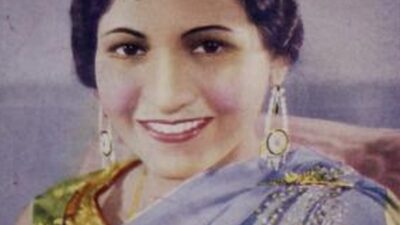
गीत विंग · गीत-पट्टिका · Song Plate
सुनो मोरे राजा
Suno More Raja
सुरैया की एक ही माँग — कि उन्हें सुन लिया जाए; फ़िल्म के उनके तीन एकलों में सबसे सादा, और संग्राहकों ने सबसे पहले जिस पर लिखा।
भावचुलबुला · रोमांटिक
भाषाhindi गतिमध्यम स्वरूपएकल महिला
श्रेय
The Creditsसूत्र-वाक्य · The Hook
सूत्र-वाक्य
सुरैया की एक ही माँग — कि उन्हें सुन लिया जाए; फ़िल्म के उनके तीन एकलों में सबसे सादा, और संग्राहकों ने सबसे पहले जिस पर लिखा।
In EnglishSuraiya asking to be heard out — the plainest of the film's three solos for her, and the earliest one collectors wrote about.
पट्टिका-लेख
The Monographपरिचय Overview
सुरैया का एकल, बोल डी. एन. माधोक के, धुन नीनू मजूमदार की। शीर्षक सीधा संबोधन है — सुनो मोरे राजा — और यह वही स्नेहसूचक 'राजा' है जिसे हिंदी फ़िल्मी गीत ने पति या प्रियतम के लिए गाँव की बोली से लिया। संग्राहक इसे 'दिल के भाव' वाले अभिनेत्री-गायिका गीत की श्रेणी में रखते हैं: गाने वाली पर्दे पर है और किसी और पर टिप्पणी नहीं, अपनी बात कह रही है। फ़िल्म का कोई प्रिंट बचा होना ज्ञात नहीं है, इसलिए यह गीत केवल ध्वनि-रिकॉर्डिंग के रूप में मौजूद है और इसका चित्रांकन कहीं दर्ज नहीं है।
अंग्रेज़ी में पढ़ें · Read in English
A Suraiya solo, D. N. Madhok's lyric, Ninu Majumdar's tune. The title is a direct address — listen to me, my raja — using the affectionate raja that Hindi film lyric borrowed from village speech for a husband or a lover. Collectors class it as an actor-singer number of the 'feelings of the heart' kind: the singer is on screen and is stating her own case rather than commenting on somebody else's. No print of the film is known to survive, so the song exists only as audio and its picturisation is nowhere documented.
संगीत The Music
रिकॉर्डिंग के अलावा संयोजन के बारे में कुछ भी दर्ज नहीं है, इसलिए ईमानदारी से जो कहा जा सकता है वह इस रूप के लिए सामान्य है: 1945 की मध्यम लय वाली नायिका का एकल हारमोनियम, हल्के तार-वाद्य और नरम ताल पर मध्य सप्तक में टिकी एक ही स्वर-रेखा के रूप में बनता था, अंतरों के बीच छोटे वाद्य-अंश और कोई उल्लेखनीय आर्केस्ट्रा-प्रस्तावना नहीं — क्योंकि तीन मिनट के 78-आरपीएम पार्श्व में उसकी जगह ही नहीं बचती थी। नीनू मजूमदार शास्त्रीय प्रशिक्षण पाए संगीतकार थे — मूक-फ़िल्म निर्माता नागेंद्र मजूमदार के पुत्र और उस्ताद फ़ैयाज़ ख़ाँ के शिष्य — जिन्होंने फ़िल्म संगीत में अपना उद्देश्य यही बताया कि पुराने उस्तादों से लेकर उसमें शास्त्रीयता का स्पर्श लाया जाए। सोलह वर्ष की सुरैया इस मितव्ययिता के लिए आदर्श वाद्य थीं: हल्का, आगे सधा, बिना ज़ोर का स्वर, जिसे छोटे वृंद के सामने सुनाई देने के लिए ऊँचाई की ज़रूरत नहीं पड़ती।
अंग्रेज़ी में पढ़ें · Read in English
Nothing about the arrangement is documented beyond the recording itself, so what can honestly be said is generic to the form: a mid-tempo heroine's solo of 1945 was built as a single melodic line in the middle of the voice over harmonium, light strings and a soft rhythm, with brief instrumental fills between the antaras and no orchestral introduction to speak of, because a three-minute 78-rpm side left no room for one. Ninu Majumdar was a classically schooled composer — a son of the silent-film producer Nagendra Mazumdar and a pupil of Ustad Faiyaz Khan — who described his aim in film music as bringing a classical touch to it by borrowing from the old masters. Suraiya at sixteen was the ideal instrument for that economy: a light, forward, unforced tone that needs no volume to be heard against a small ensemble.
काव्य The Poetry
पूरा गीत सुने जाने की माँग है, और उस दौर के हिंदी फ़िल्मी गीत में यह एक अलग और कुछ असामान्य मुद्रा है। 1945 के अधिकांश नायिका-एकल या तो कोई भाव घोषित करते हैं या प्रियतम को उलाहना देते हैं; यह पहले बोलने का अधिकार माँगता है। माधोक का 'बलमा' या 'साजन' की जगह 'राजा' चुनना संबोधन को गृहस्थ स्वर में रख देता है — 'राजा' वह शब्द है जो पत्नी पति के लिए कहती है — और जिस फ़िल्म का विषय ही एक भूला हुआ विवाह है, उसके गीत-शीर्षक में यह शब्द सायास लगता है। शब्दावली पूरे गीत में देहाती हिंदी की है: 'मेरे' नहीं, 'मोरे' — वह रूप जो लिखित पद्य से अधिक बोले हुए स्नेह की ध्वनि रखता है।
अंग्रेज़ी में पढ़ें · Read in English
The whole song is a request for a hearing, which in the Hindi film lyric of the period is a distinct and slightly unusual posture. Most heroine's solos of 1945 either declare a feeling or reproach a lover; this one asks first for the right to speak. Madhok's choice of raja rather than balma or sajan places the address in the domestic register — raja is what a wife calls a husband — which for a film about a marriage nobody remembers is a pointed word to put in the title. The vocabulary is village Hindi throughout: more rather than mere, the form that carries the sound of spoken affection rather than of written verse.
कहानी The Story
'मैं क्या करूँ' बंबई के फ़्लोरा फ़िल्म्स में सुधीर सेन के निर्देशन में बनी और उसका कथानक एक बचपन के विवाह पर टिका है, जिसे दो झगड़ते पिताओं ने व्यवहार में तो तोड़ दिया पर वस्तुतः नहीं: बड़े होकर वे दोनों अजनबियों की तरह मिलते हैं, और नायिका (सुरैया) इसलिए झिझकती है क्योंकि उसे बालविधवा होने का विश्वास दिलाकर पाला गया है। रिकॉर्डिंग को सूचीबद्ध करने वाले संग्राहक ने लिखा कि कलाकारों की सूची देखते हुए यह गीत निश्चित रूप से सुरैया पर ही फ़िल्माया गया — फ़िल्म में वही अकेली स्त्री हैं जो साउंडट्रैक पर गाती भी हैं। इससे आगे कथा में इसकी जगह दर्ज नहीं है। संग्राहकों ने फ़िल्म के जिस दूसरे गीत पर लिखा, वह यही था — अप्रैल 2014 में।
अंग्रेज़ी में पढ़ें · Read in English
Mai Kya Karun was made at Flora Films, Bombay, directed by Sudhir Sen, and turns on a childhood marriage that two quarrelling fathers annulled in practice but never in fact: the grown children meet years later as strangers, the heroine (Suraiya) holding back because she has been raised to believe she is a child widow. The collector who catalogued the recording observed that, on the strength of the cast list, the number was certainly picturised on Suraiya herself — she is the only woman in the film who sings on the soundtrack. Beyond that, its position in the story is unrecorded. It was the second song of the film to be written about by collectors, in April 2014.
विरासत The Legacy
इस गीत का कोई स्वतंत्र उत्तरजीवन नहीं है और यह 1945 की किसी पुनरावलोकन-सूची में नहीं आता। इसका मूल्य इस साउंडट्रैक के तीन सुरैया-एकलों में से एक होने में है, जो मिलकर इस बात का असामान्य रूप से पूरा नमूना बनाते हैं कि सोलह वर्ष की उम्र में उनकी आवाज़ कैसी थी — 'दर्द' (1947) और 'प्यार की जीत' (1948) से पहले, जिन्होंने उन्हें उद्योग की सबसे महँगी अभिनेत्री-गायिका बना दिया, और उनकी आवाज़ में बाद की रिकॉर्डिंग वाला जमा हुआ संयम आने से पहले।
अंग्रेज़ी में पढ़ें · Read in English
The song has no independent afterlife and does not appear in any retrospective list of 1945. Its value is as one of the three Suraiya solos on this soundtrack, which together form an unusually complete sample of how she sounded at sixteen — before Dard (1947) and Pyar Ki Jeet (1948) turned her into the most expensive actress-singer in the industry and before her voice acquired the settled poise of the later records.
वर्गीकरण
Classification- Tempo
- Medium
Genre
अन्य विवरण
More Details- https://www.hindigeetmala.net/movie/main_kya_karun.htm
- https://en.wikipedia.org/wiki/List_of_Hindi_films_of_1945
- https://en.wikipedia.org/wiki/Suraiya
- https://atulsongaday.me/2014/04/07/suno-morey-raaja/
- https://www.hindigeetmala.net/song/suno_more_raja.htm
References
रोचक तथ्य
Margin Notes'मैं क्या करूँ' का कोई प्रिंट प्रचलन में होना ज्ञात नहीं है, और जिन स्रोतों को देखा गया उनमें से कोई फ़िल्म की अभिलेखीय स्थिति के बारे में कुछ नहीं कहता। जो दर्ज है वह यह कि साउंडट्रैक की सूची बनाने वाले संग्राहकों के पास हर गीत का, यह भी, केवल ऑडियो उपलब्ध था; किसी भी गीत का चित्रांकन दर्ज नहीं है।
अंग्रेज़ी में पढ़ें · Read in English
No print of Mai Kya Karun is known to be in circulation, and no source consulted states the film's archival status either way. What is documented is that the collectors who catalogued the soundtrack had only the audio of each side, including this one, and that none of the picturisations is recorded.
इस रिकॉर्डिंग के बोल संग्राहक-ब्लॉग 'अतुल्स सॉन्ग अ डे' के लिए एक पाठक नितिन शाह ने सुनकर उतारे — वही पाठक जिन्होंने 'आज हँस हँस के दो दो बातें' का पाठ भी दिया। फ़िल्म की कोई मुद्रित गीत-पुस्तिका बची होना ज्ञात नहीं है।
अंग्रेज़ी में पढ़ें · Read in English
The words of the recording were transcribed for the collector blog Atul's Song A Day by a reader, Nitin Shah — the same reader who supplied the text of 'Aaj Hans Hans Ke Do Do Baatein'. No printed lyric booklet for the film is known to survive.
नीनू मजूमदार ने 1942 से 1967 के बीच लगभग बीस हिंदी फ़िल्मों के लिए संगीत दिया और फिर उद्योग छोड़कर आकाशवाणी, मुंबई चले गए, जहाँ दो दशकों से अधिक सुगम संगीत के निर्माता रहे और लोकप्रिय फ़रमाइशी कार्यक्रम 'जयमाला' की शुरुआत में भूमिका निभाई। आज उन्हें फ़िल्म संगीतकार से अधिक गुजराती सुगम संगीत के संस्थापकों में से एक के रूप में याद किया जाता है।
अंग्रेज़ी में पढ़ें · Read in English
Ninu Majumdar scored roughly twenty Hindi films between 1942 and 1967 and then left the industry for All India Radio, Mumbai, where he spent over two decades as a light-music producer and helped launch the long-running request programme Jaymala. He is remembered today mainly as a founder of Gujarati sugam sangeet rather than as a film composer.
नमूना-पट्टी
The Specimen Table| शीर्षक | सुनो मोरे राजा · Suno More Raja |
|---|---|
| फ़िल्म | मैं क्या करूँ · 1945 |
| वर्ष · युग | 1945 |
| गायक | Suraiya |
| गीतकार | D. N. Madhok |
| संगीतकार | Ninu Majumdar |
| स्वरूप | एकल महिला |
| गति | मध्यम |
| भाषा | hindi |
| भाव | चुलबुला · रोमांटिक |
| लोकप्रियता | Obscure |
| बोल-स्थिति | केवल झलक |
जुड़े हुए पन्ने
Connected Plates · The Graph Made Visibleअटलस में कोई पन्ना अकेला नहीं — इस गीत से जुड़े गीत, कलाकार, फ़िल्म, राग-ताल-विधा, सब यहाँ से खुलते हैं।
मिलते-जुलते गीत · Related Songs
कलाकार · The Artists
फ़िल्म · The Film
साझा कीजिए · Share this Plate