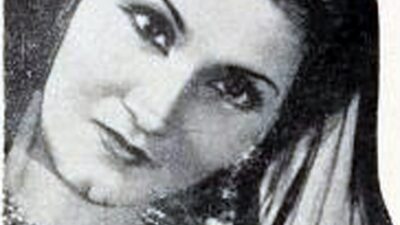
गीत विंग · गीत-पट्टिका · Song Plate
किस तरह भूलेगा दिल उनका ख़याल आया हुआ
Kis Tarah Bhoolega Dil Unka Khayal Aaya Hua
जो ख़याल आ ही चुका, उसे दिल भूले तो कैसे भूले? — एक देहाती फ़िल्म का सबसे उर्दू गीत।
भावउदास · पुरानी यादें · दार्शनिक
भाषाhindi गतिधीमी स्वरूपएकल महिला
श्रेय
The Creditsसूत्र-वाक्य · The Hook
सूत्र-वाक्य
जो ख़याल आ ही चुका, उसे दिल भूले तो कैसे भूले? — एक देहाती फ़िल्म का सबसे उर्दू गीत।
In EnglishHow is the heart supposed to forget a thought that has already arrived? — the most Urdu song in a village picture.
पट्टिका-लेख
The Monographपरिचय Overview
'गाँव की गोरी' (1945) के उन दो नूर जहाँ एकलों में से एक जिन्हें विकिपीडिया अपनी संक्षिप्त गीत-तालिका में दर्ज करता है, और फ़िल्म के उन पाँच गीतों में से एक जिन्हें सॉन्ग्स ऑफ़ योर का 1945 का सर्वेक्षण स्मरणीय मानकर अलग करता है। श्याम सुंदर के संगीत का अधिकांश फ़सल-गीतों और लोक-विलापों से बना है — उसके बरअक्स यही वह गीत है जहाँ संकलन उर्दू ज़बान और ग़ज़ल-सी बनावट की ओर मुड़ता है: दिल से पूछा गया एक सवाल कि जो ख़याल आ चुका उसे अन-सोचा कैसे किया जाए।
अंग्रेज़ी में पढ़ें · Read in English
One of the two Noor Jehan solos from Gaon Ki Gori (1945) that Wikipedia lists in its short soundtrack table, and one of the five songs from the film that Songs of Yore's survey of 1945 singles out as memorable. Against the harvest songs and folk laments that make up most of Shyam Sundar's score, this is the number where the album turns to Urdu diction and near-ghazal construction: a question posed to the heart about the impossibility of unthinking a thought.
संगीत The Music
धुन फ़िल्मी गीत से अधिक गाई हुई ग़ज़ल की नपी-तुली, थोड़ी उद्घोषक चाल में चलती है — लंबी पंक्तियाँ, हर शेर-नुमा वाक्यांश के अंत में उसी काफ़िये पर लौटना, और उनके बीच जान-बूझकर छोड़ी गई ख़ाली जगह। श्याम सुंदर की वाद्य-सज्जा वही हल्का ढाँचा है जो वे इस पूरे संकलन में बरतते हैं: नीचे हारमोनियम, ख़ाली जगहें भरती सारंगी या वायलिन की एक लकीर, दबी हुई ताल। यह संरचना असल में गायिका को उघाड़ने के लिए है, और नूर जहाँ उसे उस तालीमशुदा नियंत्रण से सँभालती हैं जिसने उन्हें 1945 की बंबई की एकमात्र ऐसी आवाज़ बनाया जो इतनी नंगी सामग्री उठा सके।
अंग्रेज़ी में पढ़ें · Read in English
The melody moves in the measured, slightly declamatory manner of a sung ghazal rather than a film geet — long lines, a return to the same cadence at the end of each couplet-shaped phrase, and space left deliberately empty between them. Shyam Sundar's orchestration is the light frame he uses throughout this album: harmonium underneath, a sarangi or violin figure filling the gaps, percussion low. What the setting is really for is to expose the singer, and Noor Jehan meets it with the trained control that made her the only voice in 1945 Bombay who could carry material this bare.
काव्य The Poetry
पंक्ति किसी प्रेमी की शिकायत नहीं, स्मृति की यांत्रिकी पर एक सवाल है — और यही उसे बाक़ी संकलन से अलग करता है। इसका तर्क यह है कि ख़याल एक बार आ जाने के बाद अपना काम कर चुका होता है: भूलना उसके बाद उपलब्ध कोई निर्णय नहीं है। वली साहब इसे उर्दू ढंग के आलंकारिक प्रश्न के रूप में रखते हैं — 'किस तरह' — और रूप स्वयं बात को अंजाम देता है, क्योंकि सवाल जवाब की उम्मीद करता है और इस सवाल का कोई जवाब नहीं। एक ग्रामीण प्रेमकथा में, जिसके बाक़ी गीत ब्रज-रंगी लोक-हिंदी में बोलते हैं, इस ज़बान की ओर मुड़ना यह जान-बूझकर दिया गया संकेत है कि नायिका का भीतरी जीवन उसके परिवेश तक सीमित नहीं है।
अंग्रेज़ी में पढ़ें · Read in English
The line is a question about the mechanics of memory rather than a complaint about a lover, which is what separates it from the rest of the album. Its logic is that a thought, once it has arrived, has already done its work: forgetting is not a decision available after the fact. Wali Saheb states this as a rhetorical question in the Urdu manner — kis tarah, in what way — and the form itself performs the point, because a question expects an answer and this one has none. Placed in a village romance whose other songs speak in Braj-inflected folk Hindi, the switch to this register is a deliberate signal that the heroine's interior life is not confined to her setting.
कहानी The Story
'गाँव की गोरी' का निर्देशन के. अमरनाथ ने अपनी ही कहानी पर किया, संवाद सफ़दर फ़ैज़पुरी के थे, छायांकन एल.एन. वर्मा का और संपादन बी.के. मिस्त्री का — और फ़िल्म ने 1945 का अंत वर्ष की दूसरी सर्वाधिक कमाई करने वाली भारतीय फ़िल्म के रूप में किया। बारह में से छह गीत नूर जहाँ गाती हैं; तीन अमीरबाई कर्नाटकी के हैं; दो पुरुष गीतों की अगुवाई जी.एम. दुर्रानी करते हैं, जिनमें से एक वही युगल है जिसने उन्नीस वर्ष के मोहम्मद रफ़ी को उनका सबसे शुरुआती हिंदी फ़िल्मी रिकॉर्डिंग्स में से एक दिया।
अंग्रेज़ी में पढ़ें · Read in English
Gaon Ki Gori was directed by K. Amarnath from his own story, with dialogue by Safdar Faizpuri, camera by L. N. Verma and cutting by B. K. Mistry, and it ended 1945 as the second highest-grossing Indian film of the year. Noor Jehan sings six of the twelve songs; Amirbai Karnataki takes three; G. M. Durrani leads the two male numbers, one of them the duet that gave the teenaged Mohammed Rafi one of his earliest Hindi film recordings.
विरासत The Legacy
यह गीत फ़िल्म के उन तीन में से एक है जिन्हें विकिपीडिया की गीत-तालिका दर्ज करती है, और उन पाँच में से एक जिन्हें सॉन्ग्स ऑफ़ योर का 1945 का सर्वेक्षण वर्ष के स्मरणीय गीतों में गिनता है। उस अभिलेख के योगदानकर्ता एक 'वर्ज़न सॉन्ग' के होने का भी उल्लेख करते हैं — उसी रचना की किसी दूसरी गायिका द्वारा अलग रिकॉर्डिंग, जो 78-आरपीएम के कारोबार में तब आम थी जब कोई प्रतिद्वंद्वी लेबल वही धुन चाहता था — जिसका श्रेय ज़ोहराबाई अम्बालेवाली को दिया जाता है; प्रचलन में नूर जहाँ की रिकॉर्डिंग ही बची।
अंग्रेज़ी में पढ़ें · Read in English
The song is one of only three from the film that Wikipedia's soundtrack table carries, and one of the five that Songs of Yore's 1945 survey lists among the year's memorable numbers. Contributors to that archive also note the existence of a 'version song' — a separate recording of the same composition by another singer, a common practice in the 78-rpm trade when a rival label wanted the tune — attributed to Zohrabai Ambalewali; the Noor Jehan recording is the one that survived in circulation.
वर्गीकरण
Classification- Tempo
- Slow
Genre
अन्य विवरण
More Details- https://www.hindigeetmala.net/movie/village_girl.htm
- https://en.wikipedia.org/wiki/Gaon_Ki_Gori
- https://www.songsofyore.com/best-songs-of-shyam-sundar/
- https://www.songsofyore.com/best-songs-of-1945-and-the-winners-are/
- https://vintagebollyfun.wordpress.com/2010/11/24/village-girl-aka-gaon-ki-gori-1945-songs/
- https://www.songsofyore.com/best-female-singer-1945/
References
रोचक तथ्य
Margin Notesयह 'गाँव की गोरी' के उन केवल तीन गीतों में से एक है जिन्हें विकिपीडिया की गीत-तालिका दर्ज करती है — बाक़ी दो हैं 'साजन परदेसी बलम परदेसी' और 'बैठी हूँ तेरी याद का'।
अंग्रेज़ी में पढ़ें · Read in English
This is one of only three Gaon Ki Gori songs that Wikipedia's soundtrack table lists — the other two being 'Sajan Pardesi Balam Pardesi' and 'Baithi Hoon Teri Yaad Ka'.
फ़िल्म-संगीत अभिलेख सॉन्ग्स ऑफ़ योर पर टिप्पणीकार इस रचना के एक प्रतिद्वंद्वी 'वर्ज़न सॉन्ग' का उल्लेख करते हैं जिसे ज़ोहराबाई अम्बालेवाली ने गाया — किसी दूसरे लेबल के पास मौजूद हिट धुन का 78-आरपीएम कारोबार का मानक जवाब।
अंग्रेज़ी में पढ़ें · Read in English
Commenters on the film-music archive Songs of Yore record a rival 'version song' of this composition sung by Zohrabai Ambalewali — the 78-rpm trade's standard answer to a hit tune held by another label.
नमूना-पट्टी
The Specimen Table| शीर्षक | किस तरह भूलेगा दिल उनका ख़याल आया हुआ · Kis Tarah Bhoolega Dil Unka Khayal Aaya Hua |
|---|---|
| फ़िल्म | गाँव की गोरी · 1945 |
| वर्ष · युग | 1945 |
| गायक | Noor Jehan |
| गीतकार | Wali Saheb |
| संगीतकार | Shyam Sundar |
| स्वरूप | एकल महिला |
| गति | धीमी |
| भाषा | hindi |
| भाव | उदास · पुरानी यादें · दार्शनिक |
| लोकप्रियता | Popular |
| बोल-स्थिति | केवल झलक |
जुड़े हुए पन्ने
Connected Plates · The Graph Made Visibleअटलस में कोई पन्ना अकेला नहीं — इस गीत से जुड़े गीत, कलाकार, फ़िल्म, राग-ताल-विधा, सब यहाँ से खुलते हैं।
मिलते-जुलते गीत · Related Songs
कलाकार · The Artists
फ़िल्म · The Film
साझा कीजिए · Share this Plate