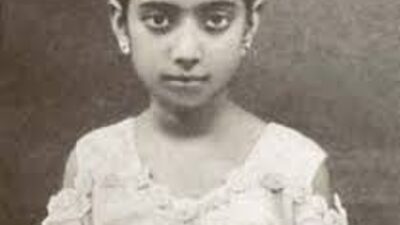
गीत विंग · गीत-पट्टिका · Song Plate
चकोरी चंदा के अँगना
Chakori Chanda Ke Angana
चंदा के अँगना में चकोरी — भारतीय काव्य में निष्फल भक्ति की सबसे पुरानी छवि, पंद्रह वर्ष की सुरैया के स्वर में।
भावपुरानी यादें · रोमांटिक
भाषाhindi गतिधीमी स्वरूपएकल महिला
श्रेय
The Creditsसूत्र-वाक्य · The Hook
सूत्र-वाक्य
चंदा के अँगना में चकोरी — भारतीय काव्य में निष्फल भक्ति की सबसे पुरानी छवि, पंद्रह वर्ष की सुरैया के स्वर में।
In EnglishThe chakor bird at the moon's courtyard — the oldest image of hopeless devotion in Indian poetry, given to Suraiya at fifteen.
पट्टिका-लेख
The Monographपरिचय Overview
'सम्राट चंद्रगुप्त' में सुरैया के तीन एकलों में तीसरा और अंतिम। शीर्षक चकोर को बुलाता है — संस्कृत और ब्रज काव्य का वह पक्षी जो रातभर चंद्रमा को निहारता और उसी की चाँदनी पर जीता कहा जाता है — और उसके स्त्रीलिंग रूप, चकोरी, को चंदा के 'अँगना' में रख देता है, जो आकाशीय नहीं, घरेलू शब्द है।
अंग्रेज़ी में पढ़ें · Read in English
The third and last of Suraiya's solos in Samrat Chandragupta. The title invokes the chakor — the partridge of Sanskrit and Braj poetry that is said to gaze at the moon all night and to feed on its light — and places its female form, the chakori, in the moon's angan, its courtyard, which is a domestic word rather than a celestial one.
संगीत The Music
चकोर-चंदा की छवि पर बने गीत परंपरा से किसी संगीत-संकलन के धीमे, रात्रि-परिवेश वाले हिस्से में आते हैं, और 1945 की रीत ऐसे गीत को खुली गति, टिकी हुई धुन और न्यूनतम ताल-वाद्य देती। इसे अमीरबाई कर्नाटकी के बजाय सुरैया को देने का निर्णय — जबकि फ़िल्म का दूसरा धीमा एकल अमीरबाई के पास है — बताता है कि दोनों गायिकाओं का उपयोग अलग-अलग स्वरों के लिए हो रहा था: तड़प के लिए युवा आवाज़, और शोक के लिए भारी और परिपक्व आवाज़।
अंग्रेज़ी में पढ़ें · Read in English
Songs built on the chakor-chanda image belong by convention to the slow, night-set part of a score, and 1945 practice would give such a number a spacious tempo, a sustained melodic line and minimal percussion. The choice to give it to Suraiya rather than to Amirbai Karnataki — who took the film's other slow solo — suggests the two singers were being used for different registers: the younger voice for longing, the older and heavier one for grief.
काव्य The Poetry
चकोर की चंद्रमा-भक्ति उस प्रेम की मानक भारतीय छवि है जो पूर्ण, स्थायी और संरचनागत रूप से असंभव है: पक्षी देख सकता है, पहुँच नहीं सकता। मधुर का जोड़ है 'अँगना' — जो इस छवि को आकाश से खींचकर घर में ले आता है, जहाँ एक स्त्री किसी ठोस, भौतिक जगह में प्रतीक्षा कर रही है। ब्रज से आए फ़िल्मी गीत की यही विशेषता है — ब्रह्मांडीय छवि और घरेलू छवि की यह टक्कर — और यही ऐसे गीतों को केवल अलंकार बनने से बचाती है: चंद्रमा अगम्य है, पर अँगना वह जगह है जहाँ आप सचमुच खड़े होते हैं।
अंग्रेज़ी में पढ़ें · Read in English
The chakor's devotion to the moon is the standard Indian figure for love that is total, permanent and structurally impossible: the bird can look but never reach. Madhur's addition is 'angana' — courtyard — which drags the figure down out of the sky and into a house, where a woman waits in a specific physical space. That collision of the cosmic image with the domestic one is characteristic of the Braj-derived film lyric, and it is what keeps such songs from becoming purely ornamental: the moon is unreachable, but the courtyard is somewhere you actually stand.
कहानी The Story
'सम्राट चंद्रगुप्त' (1945) का निर्माण और निर्देशन जयंत देसाई ने अपने बैनर 'जयंत देसाई प्रोडक्शंस' के लिए किया — वह बंबई बैनर जो उन्होंने रणजीत स्टूडियोज़ में चौदह वर्ष बिताने के बाद 1943 में खड़ा किया। यह मौर्य साम्राज्य के संस्थापक चंद्रगुप्त मौर्य पर बनी बड़े पैमाने की ऐतिहासिक फ़िल्म है, जो सिकंदर की मकदूनियाई सेना से उनके विच्छेद और यूनानी सेनापति सेल्यूकस निकेटर की पुत्री से विवाह की किंवदंती के इर्द-गिर्द बुनी गई है। ईश्वरलाल, रेणुका देवी, सुरैया, नयमपल्ली, सुलोचना चटर्जी और मुबारक प्रमुख भूमिकाओं में थे; पटकथा मोहनलाल जी. दवे, शाहिद लतीफ़ और सागर हुसैन की थी और छायांकन द्रोणाचार्य का। सी. रामचंद्र ने — इस दौर में स्वयं को 'चितलकर रामचंद्र' लिखते हुए — बुद्धि चंद्र अग्रवाल 'मधुर' के बोलों पर सभी दस दर्ज गीत रचे, 'शहनाई' (1947) से पूरे दो वर्ष पहले।
अंग्रेज़ी में पढ़ें · Read in English
Samrat Chandragupta (1945) was produced and directed by Jayant Desai for Jayant Desai Productions, the Bombay banner he founded in 1943 after fourteen years at Ranjit Studios. It is a large-scale historical about Chandragupta Maurya, founder of the Mauryan empire, built around the legend of his break with Alexander's Macedonians and his marriage to the daughter of the Greek general Seleucus Nicator. Ishwarlal, Renuka Devi, Suraiya, Nayampalli, Sulochana Chatterjee and Mubarak headed the cast; the screenplay was by Mohanlal G. Dave, Shaheed Latif and Sagar Hussain, and Dronacharya photographed it. C. Ramchandra — signing himself Chitalkar Ramchandra at this stage of his career — composed all ten documented songs to lyrics by Buddhi Chandra Agrawal 'Madhur', two years before Shehnai (1947) made him a household name.
विरासत The Legacy
चकोर-चंदा गीत हिंदी फ़िल्म संगीत के टिकाऊ उप-रूपों में है, जो 1930 के दशक से लेकर पार्श्व-गायन के पूर्ण युग तक चलता है, और यह उसका 1945 का एक उदाहरण है जिसके साथ गायिका का पक्का श्रेय जुड़ा है — इसीलिए रिकॉर्डिंग के सार्वजनिक रूप से न बचे होने के बावजूद यह तिथि-अंकित नमूने के रूप में उपयोगी है। यह सुरैया को फ़िल्म की प्रमुख आवाज़ सिद्ध करने वाला तीसरा दर्ज प्रमाण भी है।
अंग्रेज़ी में पढ़ें · Read in English
The chakor-chanda song is one of the durable sub-forms of Hindi film music, running from the 1930s through to the playback era proper, and this is a 1945 instance of it with a firm singer attribution — which makes it useful as a dated specimen even though the recording itself does not appear to survive in public access. It is also the third documented data point establishing Suraiya as the film's principal voice.
वर्गीकरण
Classification- Tempo
- Slow
Genre
अन्य विवरण
More Details- https://indiancine.ma/EFY/info
- https://www.hindigeetmala.net/movie/samrat_chandragupta.htm
- https://www.hindilyrics4u.com/movie/samrat_chandragupta.htm
- https://myswar.co/album/samrat-chandragupta-1945
- https://en.wikipedia.org/wiki/List_of_Hindi_films_of_1945
- https://en.wikipedia.org/wiki/Jayant_Desai
- https://en.wikipedia.org/wiki/C._Ramchandra
References
रोचक तथ्य
Margin Notes'सम्राट चंद्रगुप्त' जयंत देसाई के अपने बैनर से 1945 की दो रिलीज़ों में पहली थी: बंबई सेंसर ने इसे 20 फ़रवरी 1945 को प्रमाणित किया, जबकि के. एल. सैगल की संगीत-प्रधान 'तदबीर' 22 अक्तूबर को आई। सी. रामचंद्र, जिन्हें यहाँ 'चितलकर रामचंद्र' श्रेय मिला है, देसाई के ही निर्देशन में बनी 'मनोरमा' (1944) और 'ललकार' (1944) का संगीत पहले ही दे चुके थे।
अंग्रेज़ी में पढ़ें · Read in English
Samrat Chandragupta was the first of Jayant Desai's two 1945 releases from his own banner: the Bombay censor certified it on 20 February 1945, while the K. L. Saigal musical Tadbir followed on 22 October. C. Ramchandra, credited here as 'Chitalkar Ramchandra', had already scored Manorama (1944) and Lalkar (1944), both directed by Desai.
माईस्वर इस संगीत को कोलंबिया रिकॉर्ड्स से जारी बताता है; 'हिंदी फ़िल्म गीत कोश' की प्रविष्टि में इस फ़िल्म के लिए कोई रिकॉर्ड कंपनी दर्ज नहीं है। सूची में दस गीत हैं, और गीत कोश उनमें नौ के लिए गायक का श्रेय देता है — केवल सहगान गीत 'माता की जय हो' बिना नामित स्वरों के रह जाता है।
अंग्रेज़ी में पढ़ें · Read in English
MySwar lists the soundtrack as issued on Columbia Records; the Hindi Film Geet Kosh entry for the film names no record company. Ten songs are catalogued, and the Geet Kosh supplies a singer credit for nine of them, leaving only the chorus number 'Mata Ki Jai Ho' without named voices.
नमूना-पट्टी
The Specimen Table| शीर्षक | चकोरी चंदा के अँगना · Chakori Chanda Ke Angana |
|---|---|
| फ़िल्म | सम्राट चंद्रगुप्त · 1945 |
| वर्ष · युग | 1945 |
| गायक | Suraiya |
| गीतकार | Pandit Madhur |
| संगीतकार | C. Ramchandra |
| स्वरूप | एकल महिला |
| गति | धीमी |
| भाषा | hindi |
| भाव | पुरानी यादें · रोमांटिक |
| लोकप्रियता | Known |
| बोल-स्थिति | केवल झलक |
जुड़े हुए पन्ने
Connected Plates · The Graph Made Visibleअटलस में कोई पन्ना अकेला नहीं — इस गीत से जुड़े गीत, कलाकार, फ़िल्म, राग-ताल-विधा, सब यहाँ से खुलते हैं।
मिलते-जुलते गीत · Related Songs
कलाकार · The Artists
फ़िल्म · The Film
साझा कीजिए · Share this Plate