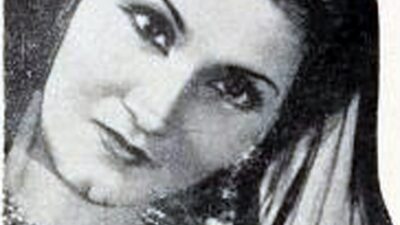
गीत विंग · गीत-पट्टिका · Song Plate
बैठी हूँ तेरी याद का लेकर के सहारा
Baithi Hoon Teri Yaad Ka Lekar Ke Sahara
वही गीत जिसे नूर जहाँ ने पैंतीस बरस बाद भारत लौटकर गाने के लिए चुना — एक स्त्री, अकेली बैठी, जिसके पास टेक के नाम पर सिर्फ़ एक याद है।
भावमीठा-कड़वा · उदास · पुरानी यादें
भाषाhindi गतिधीमी स्वरूपएकल महिला
श्रेय
The Creditsसूत्र-वाक्य · The Hook
सूत्र-वाक्य
वही गीत जिसे नूर जहाँ ने पैंतीस बरस बाद भारत लौटकर गाने के लिए चुना — एक स्त्री, अकेली बैठी, जिसके पास टेक के नाम पर सिर्फ़ एक याद है।
In EnglishThe song Noor Jehan chose to sing when she came back to India after thirty-five years — a woman sitting alone with nothing to lean on but a memory.
पट्टिका-लेख
The Monographपरिचय Overview
'गाँव की गोरी' (1945) का सबसे याद रखा गया गीत, और उन तीन-चार गीतों में से एक जिन पर नूर जहाँ की भारतीय प्रतिष्ठा आज भी टिकी है। श्याम सुंदर एक प्रतीक्षारत स्त्री के स्वगत को — वह बैठी है, और उसके पास सहारे के नाम पर सिर्फ़ उस आदमी की याद है जो जा चुका — एक धीमी, बिना जल्दबाज़ी की धुन में बाँधते हैं, जिसमें आवाज़ के पीछे लगभग कुछ नहीं है। सॉन्ग्स ऑफ़ योर का 1945 का सर्वेक्षण इसे 'सबका बेहद प्रिय' कहता है, और जब नूर जहाँ 1982 में भारतीय बोलती फ़िल्म की स्वर्ण जयंती पर भारत लौटीं, तो अपने भारतीय वर्षों में से यही गीत उन्होंने गाने के लिए चुना।
अंग्रेज़ी में पढ़ें · Read in English
The best-remembered song of Gaon Ki Gori (1945) and one of the three or four numbers on which Noor Jehan's Indian reputation still rests. Shyam Sundar sets a waiting woman's monologue — she is sitting, and the only support she has is the memory of the man who is gone — as a slow, unhurried melody with almost nothing behind the voice. When Noor Jehan returned to India in 1982 for the golden jubilee of the Indian talkie, this was the song from her Indian years that she chose to perform.
संगीत The Music
श्याम सुंदर की संरचना संयम का अभ्यास है: लय इतनी धीमी है कि हर वाक्यांश को घुमाने के बजाय ठहराना पड़ता है, संगत हारमोनियम का एक नंगा ढाँचा है जिसमें पंक्तियों के बीच सारंगी उत्तर देती है, और ताल — जहाँ है भी — आवाज़ से बहुत पीछे बैठी है। इससे पूरे गीत का भार नूर जहाँ की साँस और उनकी लंबी अवरोही स्वर-रेखा पर आ जाता है — ठीक वही जिसके लिए उनकी लाहौरी शास्त्रीय तालीम ने उन्हें तैयार किया था। संगीतकार, जो उसी पंजाबी संगीत-संसार से आए थे और उस्ताद झंडे ख़ाँ के वाद्यवृंद में वायलिन बजा चुके थे, गायिका की क्षमता के इर्द-गिर्द नहीं, उसके लिए लिखते थे; नतीजा 1945 के आम पार्श्वगायन से अधिक उस दौर के किसी ग़ैर-फ़िल्मी ग़ज़ल रिकॉर्ड के क़रीब है।
अंग्रेज़ी में पढ़ें · Read in English
Shyam Sundar's setting is an exercise in restraint: the tempo is slow enough that each phrase has to be sustained rather than phrased around, the accompaniment is a bare frame of harmonium with a sarangi answering between lines, and the percussion — where it appears at all — sits far behind the voice. That leaves the entire weight of the song on Noor Jehan's breath and her control of the long descending line, which is exactly what her Lahore classical training had equipped her for. The composer, who had come out of the same Punjabi music world and had worked as a violinist in Ustad Jhande Khan's orchestra, wrote for the singer's capacity rather than around it; the result is closer to a non-film ghazal record of the period than to typical 1945 playback.
काव्य The Poetry
वली साहब पूरे गीत को एक शारीरिक मुद्रा और एक व्याकरणिक तथ्य पर खड़ा करते हैं। मुद्रा है बैठना — चलना नहीं, ढूँढ़ना नहीं, गिड़गिड़ाना नहीं, बस बैठे रहना; उर्दू-हिंदी की विरह-कविता में यह वह अवस्था है जहाँ आशा ने गति छोड़ दी है। व्याकरण है 'सहारा' शब्द: वह चीज़ जिस पर आप टिकते हैं ताकि गिर न जाएँ। किसी याद को अपना सहारा कहना यह मान लेना है कि वह व्यक्ति लौट नहीं रहा, और उसका जो अवशेष बचा है उसे वह भार उठाने को दे दिया गया है जिसके लिए वह कभी बना ही नहीं था। यह एक छोटा, सटीक बिम्ब है, और वली साहब — जो पन्ने के लिए नहीं, गाने वाली आवाज़ के लिए लिखते थे और कभी-कभी स्वयं धुन भी बनाते थे — उसके खुले स्वरों को ठीक वहाँ रखते हैं जहाँ गायिका उन्हें ठहरा सके।
अंग्रेज़ी में पढ़ें · Read in English
Wali Saheb builds the whole lyric on one physical posture and one grammatical fact. The posture is sitting — not walking, not searching, not pleading, simply seated, which in Urdu-Hindi separation poetry marks the stage at which hope has given up motion. The grammar is the word sahara, support: the thing you lean on so as not to fall. To say that a memory is one's sahara is to admit that the person is not coming, and that what remains of him has been given a load-bearing job it was never meant to carry. It is a small, exact image, and Wali Saheb — who wrote for the singing voice rather than for the page, and who occasionally composed as well — places its open vowels where a singer can hold them.
कहानी The Story
1945 में नूर जहाँ उन्नीस की थीं और एक साथ उस वर्ष की तीन सबसे बड़ी फ़िल्मों — 'ज़ीनत', 'बड़ी माँ' और 'गाँव की गोरी' — की नायिका भी थीं और प्रधान स्वर भी। के. अमरनाथ की इस फ़िल्म ने उन्हें शीर्षक की गाँव की लड़की बनाया, नज़ीर के सामने, दुर्गा खोटे प्रमुख सहायक भूमिका में — और फ़िल्म ने वर्ष का अंत भारत की दूसरी सबसे अधिक कमाई करने वाली रिलीज़ के रूप में किया। दो बरस बाद विभाजन उन्हें पाकिस्तान ले गया, और इसीलिए 'गाँव की गोरी' के गीत भारतीय फ़िल्म-संगीत की स्मृति में एक विचित्र जगह रखते हैं: वे उस काम का हिस्सा हैं जिसका भारतीय पक्ष पर कोई अगला अध्याय नहीं था।
अंग्रेज़ी में पढ़ें · Read in English
Noor Jehan was nineteen in 1945 and simultaneously the leading lady and the leading voice of three of the year's biggest pictures — Zeenat, Badi Maa and Gaon Ki Gori. K. Amarnath's film cast her as the village girl of the title, opposite Nazir, with Durga Khote in the principal supporting role, and it finished the year as the second highest-grossing Indian release. Two years later Partition took her to Pakistan, which is why the Gaon Ki Gori songs occupy a peculiar place in Indian film-music memory: they belong to a body of work that had no sequel on the Indian side.
विरासत The Legacy
यही वह गीत है जो 'गाँव की गोरी' को सरहद के पार और चार दशकों के पार ले गया। सॉन्ग्स ऑफ़ योर दर्ज करता है कि जब नूर जहाँ 1982 में भारतीय बोलती फ़िल्म की स्वर्ण जयंती पर बंबई आईं — दिलीप कुमार और लता मंगेशकर ने उनका स्वागत किया, दिल्ली में इंदिरा गांधी ने — तो 'बैठी हूँ तेरी याद का लेकर के सहारा' उन गीतों में था जिन्हें उन्होंने गाने के लिए चुना, और तालियों का तूफ़ान उठा। यह उस अभिलेख के उन पाठकों के लिए भी सबसे मज़बूत प्रमाण है जिन्होंने श्याम सुंदर को 1945 का सर्वश्रेष्ठ संगीतकार चुना — उस मैदान में जिसमें नौशाद और ग़ुलाम हैदर भी थे।
अंग्रेज़ी में पढ़ें · Read in English
This is the song that carried Gaon Ki Gori across the border and across four decades. Songs of Yore records that when Noor Jehan came to Bombay in 1982 for the Golden Jubilee celebrations of the Indian talkie 'Baithi hun teri yaad ka lekar ke sahara' was among the numbers she chose to sing. A commenter on that survey named Shyam Sundar's Village Girl score the year's best; the page itself publishes no poll result.
वर्गीकरण
Classification- Tempo
- Slow
Genre
अन्य विवरण
More Details- https://www.hindigeetmala.net/movie/village_girl.htm
- https://en.wikipedia.org/wiki/Gaon_Ki_Gori
- https://www.songsofyore.com/best-songs-of-shyam-sundar/
- https://www.songsofyore.com/best-songs-of-1945-and-the-winners-are/
- https://vintagebollyfun.wordpress.com/2010/11/24/village-girl-aka-gaon-ki-gori-1945-songs/
- https://www.songsofyore.com/best-female-singer-1945/
- https://www.hindigeetmala.net/song/baithi_hun_teri_yaad_kaa.htm
References
रोचक तथ्य
Margin Notesजब नूर जहाँ 1982 में भारतीय बोलती फ़िल्म की स्वर्ण जयंती के लिए भारत लौटीं, तो यही उन गीतों में से एक था जिन्हें उन्होंने गाने के लिए चुना — विभाजन के पैंतीस बरस बाद, जो उन्हें पाकिस्तान ले गया था।
अंग्रेज़ी में पढ़ें · Read in English
When Noor Jehan returned to India in 1982 for the Golden Jubilee celebrations of the Indian talkie, this was one of the songs she chose to perform — thirty-five years after Partition had taken her to Pakistan.
सॉन्ग्स ऑफ़ योर के 1945 सर्वेक्षण में एक पाठक ने श्याम सुंदर के 'विलेज गर्ल' ('गाँव की गोरी') के संगीत को वर्ष का सर्वश्रेष्ठ बताया; वह पृष्ठ ऐसी राय आमंत्रित करता है पर कोई अंतिम परिणाम प्रकाशित नहीं करता।
अंग्रेज़ी में पढ़ें · Read in English
On Songs of Yore's 1945 survey a reader nominated Shyam Sundar's Village Girl (Gaon Ki Gori) as the year's best score; the page invites such nominations but publishes no final result.
श्याम सुंदर ने लगभग चौदह वर्ष के करियर में — 1939 से 1953 तक — 24 फ़िल्मों में क़रीब 187 गीत रचे: 20 हिंदी और 4 पंजाबी। 'गाँव की गोरी' वही संकलन है जिससे वे याद किए जाते हैं।
अंग्रेज़ी में पढ़ें · Read in English
Shyam Sundar composed roughly 187 songs across 24 films — 20 Hindi and 4 Punjabi — in a career of about fourteen years, from 1939 to 1953. Gaon Ki Gori is the album he is remembered by.
नमूना-पट्टी
The Specimen Table| शीर्षक | बैठी हूँ तेरी याद का लेकर के सहारा · Baithi Hoon Teri Yaad Ka Lekar Ke Sahara |
|---|---|
| फ़िल्म | गाँव की गोरी · 1945 |
| वर्ष · युग | 1945 |
| गायक | Noor Jehan |
| गीतकार | Wali Saheb |
| संगीतकार | Shyam Sundar |
| स्वरूप | एकल महिला |
| गति | धीमी |
| भाषा | hindi |
| भाव | मीठा-कड़वा · उदास · पुरानी यादें |
| लोकप्रियता | Very_popular |
| बोल-स्थिति | केवल झलक |
जुड़े हुए पन्ने
Connected Plates · The Graph Made Visibleअटलस में कोई पन्ना अकेला नहीं — इस गीत से जुड़े गीत, कलाकार, फ़िल्म, राग-ताल-विधा, सब यहाँ से खुलते हैं।
मिलते-जुलते गीत · Related Songs
कलाकार · The Artists
फ़िल्म · The Film
साझा कीजिए · Share this Plate