गीत विंग · गीत-पट्टिका · Song Plate
अपने न हो सके जो दिल का क़रार हो कर
Apne Na Ho Sake Jo Dil Ka Karar Ho Kar
प्रेम के सबसे निर्मम हिसाब पर एक ग़ज़ल — वह शख़्स जो आपके दिल का क़रार बन गया, और फिर भी आपका न हो सका।
भावमीठा-कड़वा · उदास · Reflective
भाषाurdu गतिधीमी स्वरूपएकल महिला
श्रेय
The Creditsसूत्र-वाक्य · The Hook
सूत्र-वाक्य
प्रेम के सबसे निर्मम हिसाब पर एक ग़ज़ल — वह शख़्स जो आपके दिल का क़रार बन गया, और फिर भी आपका न हो सका।
In EnglishA ghazal about the cruellest arithmetic in love: the person who became your peace of mind, and still never became yours.
पट्टिका-लेख
The Monographपरिचय Overview
'अपने न हो सके जो दिल का क़रार हो कर' उन नौ गीतों में से एक है जो श्याम सुंदर ने 'भाई जान' (1945) के लिए परतौ लखनवी के बोलों पर रचे। माईस्वर इसका श्रेय ज़ीनत बेगम को देता है; हिंदीगीतमाला इसे नूर जहाँ और ज़ीनत बेगम की प्रविष्टि बताता है। अंग्रेज़ी विकिपीडिया की गीत-सूची में यह शीर्षक है ही नहीं — नौवें स्थान पर वहाँ 'जिनके क़दम से घर था घर' दर्ज है। फ़िल्म की दो बची हुई सूचियों के बीच यह विसंगति अब तक अनसुलझी है।
अंग्रेज़ी में पढ़ें · Read in English
'Apne Na Ho Sake Jo Dil Ka Karar Ho Kar' is one of the nine songs Shyam Sundar composed for Bhai Jaan (1945) to lyrics by Partau Lakhnavi. MySwar credits it to Zeenat Begum; HindiGeetMala lists it as a Noor Jehan and Zeenat Begum item. English Wikipedia's song list does not carry the title at all, giving 'Jinke Kadam Se Ghar Tha Ghar' in that ninth slot instead — a discrepancy between the two surviving song lists for the film that has not been resolved.
संगीत The Music
इस तरह की लंबी, आश्रित उपवाक्य से शुरू होने वाली ग़ज़ल संगीत पर एक ख़ास आकार थोप देती है: धुन को पंक्ति के पहले आधे हिस्से तक अधर में टिकना पड़ता है और तभी ठहरना पड़ता है जब क्रिया आख़िर में आकर गिरे। यह जितनी शायर की समस्या है उतनी ही संगीतकार की, और यही कारण है कि 1940 के दशक की ग़ज़ल-बंदिशें धीमी चलती हैं और अपना वाद्य-भराव ठीक वहीं रखती हैं जहाँ अर्थ टूटता है। श्याम सुंदर यहाँ उसी छरहरे लाहौरी ढंग में हैं जो उन्होंने ग़ुलाम हैदर के दायरे में सीखा — हारमोनियम और तार-वाद्य, संयत लय, और उस पंक्ति को सजाने की कोई कोशिश नहीं जो पहले ही पेचीदा काम कर रही है।
अंग्रेज़ी में पढ़ें · Read in English
A ghazal built on a long, subordinate opening clause of this kind forces a particular musical shape: the melody has to hold suspension across the first half of the line and only resolve when the verb finally lands. That is a composer's problem as much as a poet's, and it is the reason ghazal settings of the 1940s tend to move slowly and to place their instrumental fill exactly where the sense breaks. Shyam Sundar works here in the sparse Lahore manner he had learned in Ghulam Haider's orbit — harmonium and strings, a restrained rhythmic bed, and no attempt to decorate a line that is already doing complicated work.
काव्य The Poetry
'क़रार' वह शब्द है जिसे ग़ज़ल दिल की ठहरी हुई अवस्था के लिए बचाकर रखती है — बेक़रारी का उलट, जो इस परंपरा की डिफ़ॉल्ट हालत है। यह कहना कि कोई आपका क़रार बन गया और फिर भी आपका न हुआ, एक ऐसे पूरे किए गए उपहार का बयान है जो कभी स्वीकार ही नहीं हुआ: प्रिय ने चैन दिया और अपनापन रोक लिया। यह बनावट ग़ज़ल की उस आदत की पहचान है जिसमें विरोधाभास को सपाट तथ्य की तरह रखा जाता है, और यह वैसा शेर है जो पढ़े जाने से बेहतर गाए जाने पर खुलता है — क्योंकि गायिका निषेध से पहले का ठहराव थाम सकती है। 'भाई जान' में इस भाव का एक स्पष्ट प्रयोग है: फ़िल्म एक ऐसी तवायफ़ की है जिससे दो भाई प्रेम करते हैं और जो घर को तोड़े बिना किसी की नहीं हो सकती।
अंग्रेज़ी में पढ़ें · Read in English
'Qaraar' is the word the ghazal reserves for the settled state of a heart at rest — the opposite of beqaraari, the restlessness that is the tradition's default condition. To say that someone became your qaraar and still did not become yours is to describe a completed gift that was never accepted: the beloved supplied the peace and withheld the belonging. The construction is characteristic of the ghazal's fondness for a paradox stated as a plain fact, and it is the kind of couplet that works better sung than read, because the singer can hold the pause before the negation. In Bhai Jaan the sentiment has an obvious application: the film is about a courtesan whom two brothers love and who can belong to neither without destroying the family.
कहानी The Story
फ़िल्म का पूरा इंजन वही असंभवता है जो यह शीर्षक कहता है। नवाब अफ़सर ने बेनज़ीर का करियर बनाया है और घर वाले उसे उसका आशिक़ मानते हैं; वह उसे आदर के योग्य संरक्षक मानती है। छोटा भाई अनवर, जो इस रिश्ते से बिगड़े विवाह को सुधारने भेजा जाता है, स्वयं उससे जुड़ जाता है। नवंबर 1945 में फ़िल्म का सार लिखते हुए 'फ़िल्मइंडिया' का समीक्षक इस बारे में साफ़ था कि उस दौर के भारतीय सिनेमा में ऐसी कहानी कहाँ तक जा सकती थी: उसने लिखा कि 'भारत में नर्तकियों के गृहिणी बनने की कोई गुंजाइश अगले तीन सौ साल तक नहीं है' — और पटकथा ने बेनज़ीर को ज़हर के हवाले कर दिया, ताकि घराने का नाम बचा रहे।
अंग्रेज़ी में पढ़ें · Read in English
The picture's whole engine is the impossibility this title states. Nawab Afsar has made Benazeer's career and is read by his household as her lover; she treats him as a benefactor owed reverence. His younger brother Anwar, sent to repair the marriage that this arrangement has damaged, ends up attached to her himself. Filmindia's reviewer, summarising the film in November 1945, was blunt about where such a plot could go in the Indian cinema of the day: 'dancing girls have no chance of becoming house-wives in India for another three hundred years', he wrote, and the script duly disposes of Benazeer by poison so that the family may keep its name.
विरासत The Legacy
इस गीत का उत्तरजीवन पूरी तरह सूची-आधारित है। यह दो ऐसी सूचियों की एक पंक्ति के रूप में बचा है जो आपस में पूरी तरह सहमत नहीं हैं, और जुड़ा है एक ऐसी फ़िल्म से जिसका प्रिंट जा चुका है तथा एक ऐसी गायिका से जिसके भारतीय रिकॉर्ड कभी व्यवस्थित रूप से पुनःप्रकाशित नहीं हुए। ऐसी ही प्रविष्टियाँ बताती हैं कि 'हिंदी फ़िल्म गीत कोश' और उस पर खड़े संकलन क्यों ज़रूरी हैं: उनके बिना एक नामज़द गीतकार और नामज़द संगीतकार की 1945 की ग़ज़ल का रिकॉर्ड में कोई निशान ही न होता।
अंग्रेज़ी में पढ़ें · Read in English
This song's afterlife is entirely bibliographic. It survives as a line in two catalogues that do not fully agree with each other, attached to a film whose print is gone and to a singer whose Indian recordings were never systematically reissued. Entries like this one are the reason the Hindi Film Geet Kosh and the compendia built on it matter: without them a 1945 ghazal by a named lyricist and a named composer would have no trace at all in the record.
वर्गीकरण
Classification- Tempo
- Slow
Genre
अन्य विवरण
More Details- https://en.wikipedia.org/wiki/Bhai_Jaan
- https://www.hindigeetmala.net/movie/bhaijan.htm
- https://myswar.co/album/bhaijaan-1945
- https://archive.org/stream/filmindia194511unse#page/68/mode/2up
- https://en.wikipedia.org/wiki/List_of_Hindi_films_of_1945
References
रोचक तथ्य
Margin Notes'भाई जान' (1945) का कोई प्रिंट आज ज्ञात नहीं है। यह फ़िल्म 1940 के दशक की खोई हुई हिंदी फ़िल्मों में गिनी जाती है — इसलिए इसके गीतों के शीर्षक और 'फ़िल्मइंडिया' का नवंबर 1945 का कथासार तथा समीक्षा ही इसके बचे हुए अवशेष हैं।
अंग्रेज़ी में पढ़ें · Read in English
No print of Bhai Jaan (1945) is known to survive. The film is counted among the lost Hindi productions of the 1940s, so its song titles and Filmindia's November 1945 synopsis and review are effectively all that remain of it.
'फ़िल्मइंडिया' (नवंबर 1945) में समीक्षा करते हुए बाबूराव पटेल ने लिखा कि फ़िल्म का संगीत 'ज़्यादातर ग़ज़लों का' है और दो-एक धुनें 'काफ़ी दिलकश' हैं — पर शिकायत की कि फ़िल्म में ग़ज़लों की बहुतायत ऊब पैदा कर देती है।
अंग्रेज़ी में पढ़ें · Read in English
Reviewing the film in Filmindia (November 1945), Baburao Patel noted that the score was 'mostly of gazals' and that a couple of the tunes were 'quite attractive' — but complained that the sheer frequency of ghazals in the picture became monotonous.
'भाई जान' की दो बची हुई गीत-सूचियाँ इस शीर्षक पर असहमत हैं: हिंदीगीतमाला और माईस्वर दोनों 'अपने न हो सके जो दिल का क़रार हो कर' दर्ज करते हैं, जबकि अंग्रेज़ी विकिपीडिया की नौ-गीत सूची उसी स्थान पर 'जिनके क़दम से घर था घर' (ज़ीनत बेगम) देती है।
अंग्रेज़ी में पढ़ें · Read in English
The two surviving song lists for Bhai Jaan disagree on this title: HindiGeetMala and MySwar both carry 'Apne Na Ho Sake Jo Dil Ka Karar Ho Kar', while English Wikipedia's nine-song list gives 'Jinke Kadam Se Ghar Tha Ghar' (Zeenat Begum) in the same position.
नमूना-पट्टी
The Specimen Table| शीर्षक | अपने न हो सके जो दिल का क़रार हो कर · Apne Na Ho Sake Jo Dil Ka Karar Ho Kar |
|---|---|
| फ़िल्म | भाई जान · 1945 |
| वर्ष · युग | 1945 — pre independence |
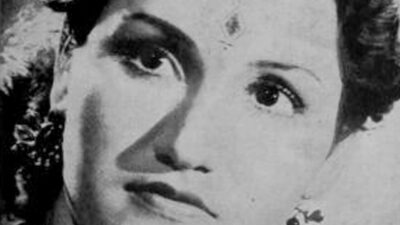
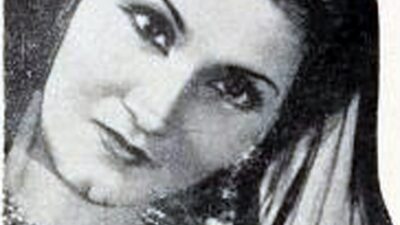
| गायक | Noor Jehan, Zeenat Begum |
| गीतकार | परतौ लखनवी |
| संगीतकार | Shyam Sundar |
| स्वरूप | एकल महिला |
| गति | धीमी |
| भाषा | urdu |
| भाव | मीठा-कड़वा · उदास · Reflective |
| लोकप्रियता | Obscure |
| बोल-स्थिति | केवल झलक |
जुड़े हुए पन्ने
Connected Plates · The Graph Made Visibleअटलस में कोई पन्ना अकेला नहीं — इस गीत से जुड़े गीत, कलाकार, फ़िल्म, राग-ताल-विधा, सब यहाँ से खुलते हैं।
मिलते-जुलते गीत · Related Songs
कलाकार · The Artists
फ़िल्म · The Film
साझा कीजिए · Share this Plate