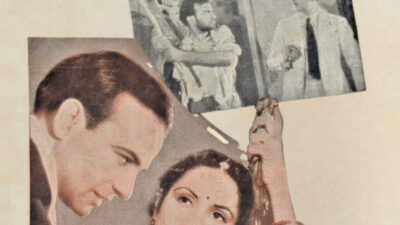
गीत विंग · गीत-पट्टिका · Song Plate
मेरे भैया को
Mere Bhaiya Ko
परदेसी में स्नेहप्रभा प्रधान का एक एकल गीत, जो भाई ('भैया') के इर्द-गिर्द संबोधित है — एक पारिवारिक भ्रातृ-भाव।
भावपुरानी यादें · चुलबुला
भाषाhindi गतिमध्यम स्वरूपएकल महिला
श्रेय
The Creditsसूत्र-वाक्य · The Hook
सूत्र-वाक्य
परदेसी में स्नेहप्रभा प्रधान का एक एकल गीत, जो भाई ('भैया') के इर्द-गिर्द संबोधित है — एक पारिवारिक भ्रातृ-भाव।
In EnglishA Snehprabha Pradhan solo from Pardesi addressed around a brother ('bhaiya') — a familial sibling motif.
पट्टिका-लेख
The Monographपरिचय Overview
परदेसी (1941) में स्नेहप्रभा प्रधान का एक एकल गीत, संगीत खेमचंद प्रकाश का। 'मेरे भैया' का संबोधन उस पारिवारिक/भ्रातृ-भाव की ओर इशारा करता है जो रणजीत की घरेलू फ़िल्मों में बार-बार आता है, साथ ही फ़िल्म के प्रेम और विरह के गीतों के साथ।
अंग्रेज़ी में पढ़ें · Read in English
A solo by Snehprabha Pradhan from Pardesi (1941), composed by Khemchand Prakash. The 'mere bhaiya' (my brother) address points to the familial/sibling register that recurs in Ranjit's domestic dramas, alongside the film's romantic and viraha numbers.
काव्य The Poetry
शीर्षक का वाक्यांश 'मेरे भैया को' इस गीत को भाई-बहन के संबोधन के उस घनिष्ठ स्वर में स्थापित करता है जो रणजीत मूवीटोन की सामाजिक फ़िल्मों के घरेलू नैतिक संसार का हिस्सा है। 'भैया' शब्द में अंग्रेज़ी के 'brother' से कहीं अधिक गहराई है — श्रद्धा, कोमलता और एक छोटी बहन की वह विशिष्ट पुकार जो जाति-बंधन वाले घर की दहलीज़ पर खड़ी हो। परदेसी के मुख्य गीतकार डी.एन. माधोक को उस दौर में ऐसे गीतों के लिए सराहा जाता था जो 'सरल किंतु सार्वभौमिक' थे — एक ऐसी सीधी बात जो बिना अलंकार के भाव का बोझ उठा ले जाए। पूरे बोल उपलब्ध न होने से भीतरी बिम्बों की परत नहीं खोली जा सकती; पर गीत का शीर्षक, एकल स्त्री-स्वर, और पारिवारिक संदर्भ इसे 1940 के दशक के आरंभ के उस विरह-घरेलू समूह में रखते हैं जो भाई की विदाई या अनुपस्थिति पर टिका है — अवधी लोक-परंपरा की भ्रातृ-विरह की जड़ें यहाँ दिखती हैं।
अंग्रेज़ी में पढ़ें · Read in English
The title phrase 'Mere Bhaiya Ko' anchors the song in the intimate register of sibling address — a mode that belongs distinctly to the domestic moral world of Ranjit Movietone's social dramas. The word 'bhaiya' carries layers unavailable in the English 'brother': deference, tenderness, the specific weight of a younger sister speaking across a caste-bound household. D. N. Madhok, the principal lyricist for Pardesi, was celebrated in this period for what critic Bhaichand Patel called songs that were 'simple yet had universal appeal' — a directness that let popular idiom carry emotional freight without ornament. Without the full text, we cannot trace internal imagery; but the song's title, its solo female format, and its familial context align it with the viraha-domestic cluster — songs about a brother's departure or absence — that runs through Hindi film songs of the early 1940s, rooted in the Avadhi folk tradition of sibling laments.
कहानी The Story
परदेसी (1941) रणजीत मूवीटोन की एक फ़िल्म थी, जिसका निर्देशन चतुर्भुज दोशी ने किया — एक स्टूडियो जो 1930 और 1940 के आरंभिक दशकों में परिष्कृत हिंदी सामाजिक मनोरंजन के लिए जाना जाता था। मुख्य भूमिकाओं में उस दौर के सबसे स्वाभाविक अभिनेताओं में एक मोतीलाल, खुर्शीद और स्नेहप्रभा प्रधान थे। समकालीन समीक्षाओं से पता चलता है कि स्नेहप्रभा, जो मोतीलाल की बहन की भूमिका में थीं, ने पूरी फ़िल्म में सबसे प्रभावशाली अभिनय किया, और उनका गीत 'हाथ में होंगी खाली झोली' स्टूडियो की उम्मीदों पर खरा उतरा। 'मेरे भैया को' फ़िल्म के उस पारिवारिक-नाटकीय धागे में शामिल है जिसे खेमचंद प्रकाश ने रचा। उन्होंने रणजीत मूवीटोन के लिए पाँच वर्षों में उन्नीस फ़िल्मों का संगीत बनाया — डी.एन. माधोक और पी.एल. संतोषी जैसे गीतकारों के साथ मिलकर ऐसी संगीत-पट्टियाँ तैयार कीं जो रोमांटिक गीतों के साथ-साथ पारिवारिक भावनात्मक गीतों का संतुलन रखती थीं।
अंग्रेज़ी में पढ़ें · Read in English
Pardesi (1941) was a Ranjit Movietone production directed by Chaturbhuj Doshi, a studio known through the 1930s and early 1940s for polished Hindi social entertainments. The cast included Motilal — one of the screen's most natural actors of the period — Khurshid, and Snehprabha Pradhan. Contemporary accounts note that Snehprabha, cast as Motilal's sister, gave the standout performance of the film, and her song 'Hatme Hongi Khali Jholi' became the hit the studio had hoped for. 'Mere Bhaiya Ko' belongs to this family-drama strand of the film's score: Khemchand Prakash composed nineteen films' worth of music for Ranjit Movietone in five years, working with lyricists D. N. Madhok and P. L. Santoshi to build soundtracks that balanced romantic numbers with domestic emotional songs. The sibling-song was a proven emotional anchor for Ranjit's audiences in Bombay and the Hindi-speaking touring circuit.
विरासत The Legacy
स्नेहप्रभा प्रधान की आवाज़ ने 1930 के उत्तरार्ध और 1940 के आरंभ में रणजीत मूवीटोन में भाई-बहन और भक्ति के स्वर को परिभाषित किया। 'मेरे भैया को' उनके परदेसी के गीतों में कम स्मरण किया जाने वाला नाम है, किंतु फ़िल्म में उनके समग्र अभिनय को हिंदी सिनेमा के आरंभिक इतिहास-लेखन में उस स्वाभाविकता के लिए याद किया जाता है जो तब भी उपलब्ध थी जब मंच-शैली की अतिनाटकीयता अभी पूरी तरह पर्दे से विदा नहीं हुई थी। रणजीत मूवीटोन में खेमचंद प्रकाश के संक्षिप्त किंतु विपुल काल को हिंदी फ़िल्म-संगीत के इतिहासकारों ने स्टूडियो की सोनिक पहचान को मज़बूत करने में सहायक माना है — माहल (1949) की बड़ी ख्याति से पहले। यह गीत सक्रिय प्रचलन के बजाय 78-आरपीएम सूचीकरण अभिलेख में जीवित है।
अंग्रेज़ी में पढ़ें · Read in English
Snehprabha Pradhan's voice defined the sibling and devotional registers at Ranjit Movietone across the late 1930s and early 1940s, and while 'Mere Bhaiya Ko' is among the lesser-recalled titles in her Pardesi recordings, her work in the film as a whole is noted in early Hindi cinema scholarship for its naturalness at a time when screen performance was still moving away from stage-declamatory styles. Khemchand Prakash's brief but prolific tenure at Ranjit Movietone is acknowledged by historians of Hindi film music as having helped consolidate the studio's sonic identity before his greater later fame with Mahal (1949). The song itself survives in the 78-rpm cataloguing record rather than active circulation.
वर्गीकरण
Classification- Tempo
- Medium
Genre
अन्य विवरण
More Details- https://www.cinemaazi.com/people/snehprabha-pradhan
- https://en.wikipedia.org/wiki/Khemchand_Prakash
- https://www.hindigeetmala.net/movie/pardesi.htm
- https://en.wikipedia.org/wiki/D._N._Madhok
- https://bombaymann2.blogspot.com/2020/05/film-pardesi1941.html
References
रोचक तथ्य
Margin Notesपरदेसी (1941) का निर्माण रणजीत मूवीटोन ने किया, जो 1930-40 के दशक में बंबई का हिंदी सामाजिक-नाटक फ़िल्मों का अग्रणी स्टूडियो था; इसका निर्देशन चतुर्भुज दोशी ने किया और मुख्य भूमिकाओं में मोतीलाल तथा खुर्शीद थे।
अंग्रेज़ी में पढ़ें · Read in English
Pardesi (1941) was produced by Ranjit Movietone, Bombay's leading Hindi social-drama studio of the 1930s–40s, directed by Chaturbhuj Doshi with Motilal and Khurshid in the lead roles.
स्नेहप्रभा प्रधान ने फ़िल्म में मोतीलाल की बहन की भूमिका निभाई और उस समय की समीक्षाओं में मुख्य कलाकारों में उन्हीं के अभिनय को विशेष रूप से सराहा गया।
अंग्रेज़ी में पढ़ें · Read in English
Snehprabha Pradhan played Motilal's sister in the film and was singled out by contemporary notices as giving the outstanding performance of the principal cast.
खेमचंद प्रकाश ने लगभग पाँच वर्षों (सन् 1939-1944) में रणजीत मूवीटोन के लिए उन्नीस फ़िल्मों का संगीत रचा, जिनमें परदेसी भी शामिल थी, और वे नियमित रूप से गीतकार डी.एन. मधोक तथा पी.एल. संतोषी के साथ काम करते थे।
अंग्रेज़ी में पढ़ें · Read in English
Khemchand Prakash composed music for nineteen films for Ranjit Movietone over five years (c.1939–1944), including Pardesi, working regularly with lyricists D. N. Madhok and P. L. Santoshi.
परदेसी के गीतकार के रूप में श्रेय पाने वाले डी.एन. मधोक 'महाकवि मधोक' के नाम से जाने जाते थे और उन्हें कीदार शर्मा तथा कवि प्रदीप के साथ 1930-1950 के दशकों के प्रथम पीढ़ी के बॉलीवुड गीतकारों में गिना जाता है।
अंग्रेज़ी में पढ़ें · Read in English
D. N. Madhok, credited as a lyricist on Pardesi, was known as 'Mahakavi Madhok' and is listed as one of the first-generation Bollywood lyricists of the 1930s–1950s alongside Kidar Sharma and Kavi Pradeep.
नमूना-पट्टी
The Specimen Table| शीर्षक | मेरे भैया को · Mere Bhaiya Ko |
|---|---|
| फ़िल्म | परदेसी · 1941 |
| वर्ष · युग | 1941 |
| गायक | Snehprabha Pradhan |
| संगीतकार | Khemchand Prakash |
| स्वरूप | एकल महिला |
| गति | मध्यम |
| भाषा | hindi |
| भाव | पुरानी यादें · चुलबुला |
| लोकप्रियता | Known |
| बोल-स्थिति | केवल झलक |
जुड़े हुए पन्ने
Connected Plates · The Graph Made Visibleअटलस में कोई पन्ना अकेला नहीं — इस गीत से जुड़े गीत, कलाकार, फ़िल्म, राग-ताल-विधा, सब यहाँ से खुलते हैं।
मिलते-जुलते गीत · Related Songs
कलाकार · The Artists
फ़िल्म · The Film
साझा कीजिए · Share this Plate