गीत विंग · गीत-पट्टिका · Song Plate
इचक दाना बिचक दाना
Ichak Dana Bichak Dana
उस साल जब शैलेंद्र ने भारत को कुछ सबसे गहरे फ़िल्मी गीत दिए, उन्होंने बच्चों को — और हर बड़े के भीतर के बच्चे को — यह सुरीली पहेली भी दी।
भावउत्सव · आनंदित · चुलबुला
भाषाHindi · Folk dialect गतितेज़ स्वरूपयुगल
श्रेय
The Creditsबोल · The Lyrics
बोल — झलक · Lyrics Preview
दाने ऊपर दाना
इचक दाना बिचक दाना
दाने ऊपर दाना
Daane upar daana
Ichak dana bichak dana
कॉपीराइट के कारण केवल झलक — पूरे बोल आधिकारिक मंचों पर।
शब्दकोश
Word Meaningsसूत्र-वाक्य · The Hook
सूत्र-वाक्य
उस साल जब शैलेंद्र ने भारत को कुछ सबसे गहरे फ़िल्मी गीत दिए, उन्होंने बच्चों को — और हर बड़े के भीतर के बच्चे को — यह सुरीली पहेली भी दी।
In EnglishIn a year that gave India some of its most profound film songs, Shailendra also gave children — and the child in every adult — this perfect riddle of joy.
पट्टिका-लेख
The Monographपरिचय Overview
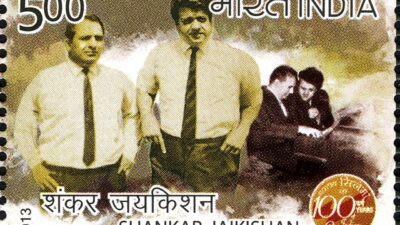
श्री ४२० (१९५५) का 'इचक दाना बिचक दाना' हिंदी फ़िल्म संगीत के सबसे प्रिय लोक-पहेली गीतों में से एक है — एक लोक-परंपरा पर आधारित पहेली-गान जिसे शंकर-जयकिशन ने लता मंगेशकर और मुकेश के लिए एक अप्रतिरोध्य युगलगान में बदला। शैलेंद्र ने पारंपरिक लोक-पहेली के प्रारूप का उपयोग किया — 'इचक दाना बिचक दाना दाने ऊपर दाना' — जो अंगूर के गुच्छे की ओर संकेत करता है। राज कपूर और नरगिस पर फ़िल्माया गया, यह उनकी प्रसिद्ध परदे-केमिस्ट्री के सबसे हल्के-फुल्के पहलू को पकड़ता है।
अंग्रेज़ी में पढ़ें · Read in English
"Ichak Dana Bichak Dana" from Shree 420 (1955) is one of the most beloved folk-nonsense songs in Hindi film music — a riddle-song based on folk tradition that Shankar-Jaikishan transformed into an irresistible duet for Lata Mangeshkar and Mukesh. Written by Shailendra, the song uses a traditional folk-puzzle format ('ichak dana bichak dana daane upar daana' — seeds on top of seeds — referring to a cluster of grapes) to create an atmosphere of childhood playfulness and romantic sparring. Picturized on Raj Kapoor and Nargis, it captures the most light-hearted side of their legendary screen chemistry. The fast Keherwa tempo, folk instruments, and the interplay of Lata's brightness with Mukesh's warmth make this an enduring crowd-pleaser.
संगीत The Music
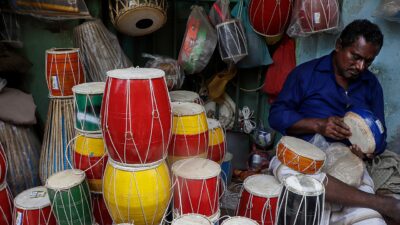
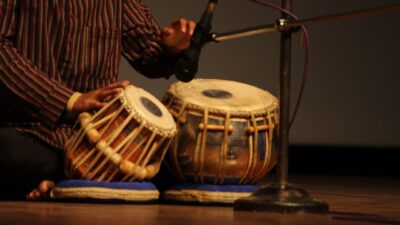
शंकर-जयकिशन ने तेज़ उछलते केहरवा में ढोलक और बैंजो को प्रमुखता दी — ऐसा संगीत जो किसी बच्चे के उछलते क़दमों जैसा लगे। धुन पंचस्वरी लोक-स्केल पर बनी है — सरल, यादगार, किसी भी उम्र के श्रोता के लिए तुरंत गाने योग्य। लता और मुकेश का स्वर-संवाद प्रेम-भरा नहीं बल्कि शरारती है — दो लोग पहेली की प्रतियोगिता में। धुन का जादू इसकी सरलता में है।
अंग्रेज़ी में पढ़ें · Read in English
Shankar-Jaikishan used a fast, bouncing Keherwa with prominent dholak and banjo to create music that feels like a child skipping. The melody is built on a pentatonic folk scale — simple, memorable, immediately singable by anyone of any age. The vocal interplay between Lata and Mukesh is playful and teasing rather than romantic — two people competing in a riddle game. Lata's voice is at its most crystalline and light; Mukesh brings a warm, direct quality. The song has no elaborate orchestration — it doesn't need any. Its power is in the simplicity of the folk hook: 'ichak dana bichak dana daane upar daana' lodges in the memory immediately and never leaves.
काव्य The Poetry
शैलेंद्र का बोल जानबूझकर लोक-अर्थहीन है — 'इचक दाना बिचक दाना' मानक हिंदी में अर्थपूर्ण नहीं है; यह शायद राजस्थानी या अवधी परंपरा का एक लोक-पहेली वाक्यांश है जिसका अर्थ है 'यहाँ-वहाँ बिखरे दाने।' पहेली का जवाब है अंगूर — जिसका गुच्छा दानों के ऊपर दाने जैसा दिखता है। शैलेंद्र इस लोक-पहेली को प्रेम-खेल के वाहन के रूप में उपयोग करते हैं।
अंग्रेज़ी में पढ़ें · Read in English
Shailendra's lyric is deliberately folk-nonsense — 'ichak dana bichak dana' is not meaningful in standard Hindi; it is a folk-dialect riddle phrase, possibly from Rajasthani or Avadhi tradition, meaning something like 'seeds scattered here and there.' The answer to the riddle is 'daakh' (grapes) — whose cluster looks like seeds upon seeds. What Shailendra does brilliantly is take this folk puzzle and use it as a vehicle for romantic play — the riddle as a form of courtship. The song's genius is that it works on two levels simultaneously: as a children's game and as a romantic sparring match.
कहानी The Story
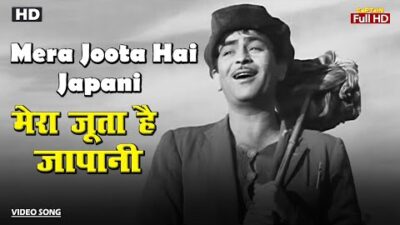
राज कपूर की 'श्री ४२०' में हर भावनात्मक स्तर पर गाने चाहिए थे — देशभक्त ('मेरा जूता है जापानी') से रोमांटिक ('प्यार हुआ इक़रार हुआ') से शुद्ध चंचल तक। 'इचक दाना बिचक दाना' फ़िल्म की लोक-कॉमेडी ज़रूरत को पूरा करता है। शंकर-जयकिशन ने यह लोक-वाक्यांश संभवतः राजस्थानी या अवधी लोक-परंपरा से लिया। राज कपूर की प्रतिभा यह पहचानने में थी कि पूरा भारत इस लोक-स्वर को पहचानेगा।
अंग्रेज़ी में पढ़ें · Read in English
Raj Kapoor's Shree 420 needed songs at every emotional register — from the patriotic ('Mera Joota Hai Japani') to the romantic ('Pyar Hua Ikraar Hua') to the pure playful. 'Ichak Dana Bichak Dana' fills the film's need for a folk-comedy moment: Raju and his beloved in a game of riddles. Shankar-Jaikishan reportedly sourced the folk phrase from a folk song tradition — quite possibly from the Rajasthani or Avadhi oral tradition. Raj Kapoor's genius was to recognize that all of India would recognize this folk register, making the song a pan-national hit beyond its local source.
विरासत The Legacy
'इचक दाना बिचक दाना' भारत में सबसे पहचाने जाने वाले बाल-गीतों में से एक बन गया है। जो लोग 'श्री ४२०' के बारे में कुछ नहीं जानते वे भी इस गाने को बचपन से जानते हैं। लगभग हर हिंदी फ़िल्म-बाल-संगीत संकलन में यह है। पहेली के प्रारूप ने इसे एक स्थायी गतिविधि-गीत बनाया है।
अंग्रेज़ी में पढ़ें · Read in English
"Ichak Dana Bichak Dana" has become one of the most recognized children's songs in India — even people who know nothing of Shree 420 know this song from childhood. It appears on virtually every compilation of Hindi film songs for children and is played at school events. The riddle format has made it a perennial activity song — teachers use it to teach children about folk tradition. In this way it has achieved a completely different kind of immortality from the other Shree 420 songs — not as cultural statement or romantic memory, but as a childhood companion.
वर्गीकरण
Classification- Tempo
- Fast
Genre
अन्य विवरण
More Details- Wikipedia: Shree 420. https://en.wikipedia.org/wiki/Shree_420
- Hindi Film Geet Kosh Vol. 3, Harmandir Singh Hamraaz
- Sangeet Natak Akademi folk music archives
- Binaca Geetmala archives 1955
References
रोचक तथ्य
Margin Notesपहेली 'इचक दाना बिचक दाना दाने ऊपर दाना' अंगूर के गुच्छे (दाख) का संकेत देती है — दानों के ऊपर दाने।
अंग्रेज़ी में पढ़ें · Read in English
The riddle 'ichak dana bichak dana daane upar daana' refers to a cluster of grapes (daakh) — seeds piled on seeds.
कहा जाता है कि राज कपूर को बच्चों के लोकगीत बेहद पसंद थे और वे हमेशा इस बात पर ज़ोर देते थे कि उनकी फ़िल्मों में कम से कम एक असली लोक-प्रेरित गीत ज़रूर हो जो बच्चों के लिए सुगम हो।
अंग्रेज़ी में पढ़ें · Read in English
Raj Kapoor reputedly loved children's folk songs and always insisted that his films include at least one genuinely folk-informed number accessible to children.
लोक वाक्यांश 'इचक दाना बिचक दाना' के कई उत्तर भारतीय लोक परंपराओं में भिन्न रूप मिलते हैं — इसका सटीक मूल लोक-विशेषज्ञों के बीच विवादित है।
अंग्रेज़ी में पढ़ें · Read in English
The folk phrase 'ichak dana bichak dana' has variants in multiple North Indian folk traditions — its exact origin is disputed among folklorists.
यह गीत 1950 के दशक के उन चंद गीतों में से एक है जो आज भी भारतीय स्कूलों में लोक-संगीत शिक्षा के हिस्से के रूप में नियमित रूप से गाया जाता है।
अंग्रेज़ी में पढ़ें · Read in English
This song is one of the few from the 1950s that is still regularly sung in Indian schools as part of folk-music education.
नमूना-पट्टी
The Specimen Table| शीर्षक | इचक दाना बिचक दाना · Ichak Dana Bichak Dana |
|---|---|
| वर्ष · युग | 1955 — Golden Era |
| गायक | Lata Mangeshkar, Mukesh |
| गीतकार | Shailendra |
| संगीतकार | Shankar-Jaikishan |
| स्वरूप | युगल |
| गति | तेज़ |
| अवधि | circa 2:55 |
| भाषा | Hindi · Folk dialect |
| वाद्य | dholak · harmonium · instrument-banjo · tabla |
| भाव | उत्सव · आनंदित · चुलबुला |
| लोकप्रियता | Very_popular |
| बोल-स्थिति | केवल झलक |
जुड़े हुए पन्ने
Connected Plates · The Graph Made Visibleअटलस में कोई पन्ना अकेला नहीं — इस गीत से जुड़े गीत, कलाकार, फ़िल्म, राग-ताल-विधा, सब यहाँ से खुलते हैं।
मिलते-जुलते गीत · Related Songs
कलाकार · The Artists
युग · The Era
साझा कीजिए · Share this Plate
यह पन्ना आगे बढ़ाइए
इचक दाना बिचक दाना — हिंदी सिनेमा का सबसे महान बाल-गीत, एक बड़ों की फ़िल्म के भीतर छिपा हुआ।
Ichak dana bichak dana — the greatest children's song in Hindi cinema, hidden inside a film for adults.
— Attributed to folk music researcher (Sangeet Natak Akademi, circa 1970)
सवाल-जवाब
Questions & Answersइचक दाना बिचक दाना का क्या मतलब है? · What does Ichak Dana Bichak Dana mean?
यह एक लोक-पहेली का वाक्यांश है — 'दाने यहाँ-वहाँ बिखरे, दाने के ऊपर दाना' — जिसका जवाब है अंगूर (दाख), जिसका गुच्छा दानों के ऊपर दाने जैसा दिखता है।
It is a folk riddle phrase — 'seeds scattered here and there, seed upon seed' — whose answer is 'daakh' (grapes), whose cluster looks like seeds piled on seeds. The phrase has roots in North Indian folk riddle traditions.
इचक दाना बिचक दाना किस फ़िल्म का गाना है? · Which film is Ichak Dana Bichak Dana from?
राज कपूर की 'श्री ४२०' (१९५५) से — लता मंगेशकर और मुकेश की आवाज़ में। शंकर-जयकिशन का संगीत, शैलेंद्र के बोल।
From Raj Kapoor's Shree 420 (1955), sung by Lata Mangeshkar and Mukesh. Music by Shankar-Jaikishan, lyrics by Shailendra.
क्या इचक दाना बिचक दाना बच्चों का गाना है? · Is Ichak Dana Bichak Dana a children's song?
यह 'श्री ४२०' में था लेकिन भारत के सबसे पहचाने जाने वाले बाल-गीतों में से एक बन गया — स्कूल समारोहों और लोक-संगीत शिक्षा में उपयोग होता है।
It originated in Shree 420 but has become one of the most recognized children's songs in India, played at school events and used in folk-music education.