गीत विंग · गीत-पट्टिका · Song Plate
हरि के गुण गाऊँ मैं
Hari Ke Gun Gau Main
हरि की स्तुति में एक भक्ति-भजन, ख़ुर्शीद की आवाज़ में।
भावभक्ति · आध्यात्मिक
भाषाhindi स्वरूपएकल महिला
श्रेय
The Creditsसूत्र-वाक्य · The Hook
सूत्र-वाक्य
हरि की स्तुति में एक भक्ति-भजन, ख़ुर्शीद की आवाज़ में।
In EnglishA devotional bhajan praising Hari, sung by Khursheed.
पट्टिका-लेख
The Monographपरिचय Overview
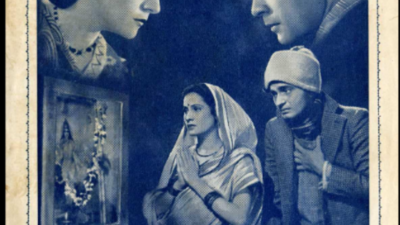
'हरि के गुण गाऊँ मैं' 1941 की रणजीत मूवीटोन फ़िल्म शादी में ख़ुर्शीद द्वारा गाया एक भक्ति-गीत (भजन) है, संगीत खेमचंद प्रकाश का। फ़िल्म के संगीत में कई भजन-शैली के गीत हैं जो एक समर्पित पत्नी के समाज-सुधार विषय के अनुकूल हैं, और ख़ुर्शीद के स्पष्ट उच्चारण ने उन्हें ऐसी भक्ति-सामग्री के लिए एक स्वाभाविक चयन बनाया।
अंग्रेज़ी में पढ़ें · Read in English
'Hari Ke Gun Gau Main' is a devotional song (bhajan) sung by Khursheed in the 1941 Ranjit Movietone film Shaadi, composed by Khemchand Prakash. The film's score includes several bhajan-style numbers that suit the social-reform theme of a devoted wife, and Khursheed's clarity of diction made her a natural choice for such devotional material.
काव्य The Poetry
'हरि के गुण गाऊँ मैं' वैष्णव भक्ति परंपरा में प्रयुक्त हरि — विष्णु या कृष्ण के नाम — की स्तुति में भजन गायन की परंपरा से जुड़ा है। प्रथम-पुरुष घोषणा 'मैं हरि के गुण गाऊँगी' भक्ति-काव्य की एक शास्त्रीय मुद्रा है: भक्त स्तुति का संकल्प आत्म-समर्पण और प्रेम के कार्य के रूप में लेती है — गाना ही भक्ति बन जाती है। यह संरचना समग्र भक्ति-काव्य में मिलती है — मीराबाई की रचनाओं, तुकाराम के अभंगों, नरसी मेहता के पदों में — जहाँ गाने का कार्य भक्ति की अभिव्यक्ति मात्र नहीं, बल्कि उसकी पूर्णता है। शादी की पत्नी-भक्ति की कथा के संदर्भ में, यह गीत दोहरी भूमिका निभाता था: नायिका की वास्तविक प्रार्थना और उसके नैतिक अभिविन्यास का नाटकीय वक्तव्य। 'गुण' शब्द स्तुति को अविभाजित उत्साह की बजाय सजग और विशिष्ट बनाता है।
अंग्रेज़ी में पढ़ें · Read in English
'Hari Ke Gun Gau Main' belongs to the bhajan tradition of devotional singing in praise of Hari — a name for Vishnu or Krishna used across the Vaishnava bhakti tradition. The first-person declaration, 'I shall sing the praises of Hari', is a classic bhakti-poetry stance: the devotee resolves upon praise as an act of self-surrender and love, the singing itself becoming the devotion. This structure appears across the entire bhakti canon — Mirabai's compositions, Tukaram's abhangas, Narsi Mehta's padas — where the act of singing is not merely the expression of devotion but its fulfilment. In the context of Shaadi's narrative of a devoted wife, the number served double duty: as the character's genuine prayer and as a dramatic statement of her moral position. The word 'gun' (qualities, virtues) frames the praise as attentive and particular rather than undifferentiated ecstasy.
कहानी The Story
शादी (1941) रणजीत मूवीटोन — उस समय बंबई का सबसे व्यावसायिक रूप से प्रमुख स्टूडियो — द्वारा निर्मित और जयंत देसाई द्वारा निर्देशित थी। फ़िल्म की कहानी एक समर्पित पारंपरिक पत्नी के इर्द-गिर्द थी जो अपने बीमार पति को स्वस्थ करती है, लेकिन वह उसे एक नाचने वाली के लिए छोड़ देता है; एक आधुनिक, शिक्षित महिला के हस्तक्षेप से अंततः नैतिक व्यवस्था बहाल होती है। चौदह गीतों के साथ, खेमचंद प्रकाश के स्कोर ने पत्नी-भक्ति की कथा के अनुकूल भजन-शैली के भक्ति-गीतों को पर्याप्त स्थान दिया। 'हरि के गुण गाऊँ मैं' गाने वाली ख़ुर्शीद रणजीत मूवीटोन में पहले से ही एक प्रख्यात गायिका-अभिनेत्री थीं और खेमचंद प्रकाश के इस दौर के सृजनात्मक परिवेश की एक प्रमुख हस्ती थीं। 1939 में सुप्रीम पिक्चर्स में अपनी शुरुआत के बाद वे रणजीत आए थे, और 1940 के दशक के आरंभ में उन्होंने और ख़ुर्शीद ने उस स्टूडियो से निकले कुछ सबसे लोकप्रिय भक्ति और रोमांटिक गीत दिए। उनका स्पष्ट उच्चारण और भावनात्मक ऊष्मा उन्हें ऐसे गीत के लिए स्वाभाविक चयन बनाती थी जिसमें प्रदर्शनकारी विश्वास और आध्यात्मिक निष्ठा दोनों की आवश्यकता थी।
अंग्रेज़ी में पढ़ें · Read in English
Shaadi (1941) was produced by Ranjit Movietone — the most commercially prominent studio in Bombay at the time — and directed by Jayant Desai. The film's plot centred on a devoted traditional wife who nurses her ailing husband back to health, only for him to leave her for a dancing girl; a modern, educated woman's intervention eventually restores moral order. With fourteen songs, Khemchand Prakash's score gave prominent space to bhajan-style devotional numbers appropriate to the narrative of wifely devotion. Khursheed, who sang 'Hari Ke Gun Gau Main', was already a celebrated singer-actress at Ranjit Movietone, a key figure in Khemchand Prakash's creative circle during this period. He had settled at Ranjit after his debut at Supreme Pictures in 1939, and through the early 1940s he and Khursheed produced some of the most popular devotional and romantic numbers to emerge from that studio. Her clear diction and emotional warmth made her the natural choice for a song requiring both performative conviction and spiritual sincerity.
वर्गीकरण
ClassificationGenre
अन्य विवरण
More Details- https://en.wikipedia.org/wiki/Khursheed_Bano
- https://www.cinemaazi.com/people/khursheed-1
- https://en.wikipedia.org/wiki/Khemchand_Prakash
- https://www.hindigeetmala.net/movie/shaadi_1941.htm
- https://bombaymann2.blogspot.com/2013/09/film-shaadi1941.html
References
रोचक तथ्य
Margin Notesशादी (1941) का निर्देशन जयंत देसाई ने बॉम्बे के अग्रणी व्यावसायिक स्टूडियो रणजीत मूवीटोन के लिए किया था; खेमचंद प्रकाश के चौदह-गीतों वाले इस संगीत की गिनती उनके शुरुआती करियर की बड़ी गीत-संख्याओं में होती है।
अंग्रेज़ी में पढ़ें · Read in English
Shaadi (1941) was directed by Jayant Desai for Ranjit Movietone, Bombay's leading commercial studio; the fourteen-song score by Khemchand Prakash was one of the larger song counts in his early career.
खेमचंद प्रकाश (1907-1950) ने 1940 के दशक की शुरुआत तक रणजीत मूवीटोन के लिए संगीत रचा, और संगीत-इतिहास में उन्हें लता मंगेशकर तथा किशोर कुमार दोनों को हिंदी फ़िल्म रिकॉर्डिंग से परिचित कराने का श्रेय दिया जाता है।
अंग्रेज़ी में पढ़ें · Read in English
Khemchand Prakash (1907–1950) composed for Ranjit Movietone through the early 1940s and is credited in music history with introducing both Lata Mangeshkar and Kishore Kumar to Hindi film recording.
इस भक्ति गीत को गाने वालीं ख़ुर्शीद बानो (1914-2001) का जन्म लाहौर में इरशाद बेगम के नाम से हुआ था, और वे शुरुआती टॉकी हिंदी सिनेमा की अग्रणी अभिनेत्री-गायिकाओं में से एक बनीं, इससे पहले कि विभाजन के बाद 1948 में वे पाकिस्तान चली गईं।
अंग्रेज़ी में पढ़ें · Read in English
Khursheed Bano (1914–2001), who sings this devotional number, was born in Lahore as Irshad Begum and became one of the foremost singer-actresses of early talkie Hindi cinema before migrating to Pakistan in 1948 after Partition.
नमूना-पट्टी
The Specimen Table| शीर्षक | हरि के गुण गाऊँ मैं · Hari Ke Gun Gau Main |
|---|---|
| फ़िल्म | शादी · 1941 |
| वर्ष · युग | 1941 |
| गायक | Khursheed |
| संगीतकार | Khemchand Prakash |
| स्वरूप | एकल महिला |
| भाषा | hindi |
| भाव | भक्ति · आध्यात्मिक |
| लोकप्रियता | Known |
| बोल-स्थिति | केवल झलक |
जुड़े हुए पन्ने
Connected Plates · The Graph Made Visibleअटलस में कोई पन्ना अकेला नहीं — इस गीत से जुड़े गीत, कलाकार, फ़िल्म, राग-ताल-विधा, सब यहाँ से खुलते हैं।
मिलते-जुलते गीत · Related Songs
कलाकार · The Artists
फ़िल्म · The Film
साझा कीजिए · Share this Plate