गीत विंग · गीत-पट्टिका · Song Plate
भूलने वाले दिल कहाँ ले जाऊँ
Bhulne Wale Dil Kaha Le Jau
शादी के संगीत से एक चिंतनशील ख़ुर्शीद एकल गीत।
भावउदास · पुरानी यादें
भाषाhindi स्वरूपएकल महिला
श्रेय
The Creditsसूत्र-वाक्य · The Hook
सूत्र-वाक्य
शादी के संगीत से एक चिंतनशील ख़ुर्शीद एकल गीत।
In EnglishA reflective Khursheed solo from the Shaadi soundtrack.
पट्टिका-लेख
The Monographपरिचय Overview
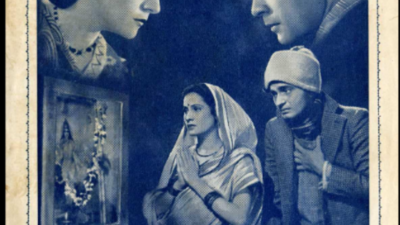
'भूलने वाले दिल कहाँ ले जाऊँ' 1941 की रणजीत मूवीटोन फ़िल्म शादी के लिए ख़ुर्शीद द्वारा गाया गीत है, संगीत खेमचंद प्रकाश का। यह गीत फ़िल्म के चिंतनशील, भावना-प्रधान टुकड़ों में आता है — दिल को संबोधित विषाद का वह रूप जो उस दौर की सामाजिक-फ़िल्म शैली का एक प्रमुख अंग था।
अंग्रेज़ी में पढ़ें · Read in English
'Bhulne Wale Dil Kaha Le Jau' is a song rendered by Khursheed for the 1941 Ranjit Movietone film Shaadi, composed by Khemchand Prakash. The number sits among the film's reflective, sentiment-driven pieces — the kind of melancholic address to the heart that was a staple of the social-film idiom of the period.
काव्य The Poetry
'भूलने वाले दिल कहाँ ले जाऊँ' में एक उस्ताद अस्पष्टता है: 'भूलना' का कभी लक्ष्य स्पष्ट नहीं किया जाता। क्या दिल वह भूल गया जो उसे याद रखना चाहिए था — कर्तव्य, आत्म-सम्मान, संकल्प? या वह सब कुछ भूल देता है सिवाय उस प्रेम के जिसे उसे पार करना चाहिए? पूरा गीत इसी उत्पादक अस्पष्टता पर टिका है — जो डी.एन. माधोक और मुंशी दिल की रणजीत मूवीटोन में सर्वश्रेष्ठ रचनाओं की पहचान है। व्याकरणिक रूप 'भूलने वाले' — 'हे भूलने वाले' — संवाद की अंतरंगता बनाता है: गायिका अपने दिल को एक भटकते साथी की तरह संबोधित करती है, एक अमूर्त अवधारणा की तरह नहीं। प्रश्न 'कहाँ ले जाऊँ?' यह निहित करता है कि दिल को पीछे नहीं छोड़ा जा सकता — जहाँ भी स्वयं जाए, दिल को साथ ले जाना होगा, जिससे भौगोलिक या मानसिक पलायन असंभव हो जाता है क्योंकि विरह बाहर नहीं, भीतर है।
अंग्रेज़ी में पढ़ें · Read in English
'Bhulne Wale Dil Kaha Le Jau' — 'O forgetful heart, where should I take you?' — is structured around a masterful ambiguity: 'bhulna' (forgetting) is never specified in its object. Has the heart forgotten what it should remember (duty, self-respect, resolution)? Or does it forget everything except the love it should move beyond? The entire lyric hangs on this productive ambiguity, characteristic of the best work in the D.N. Madhok and Munshi Dil tradition at Ranjit Movietone. The grammatical form 'bhulne wale' — 'O one who forgets' — creates conversational intimacy: the singer addresses her heart as a wayward companion, not an abstract concept. The question 'kaha le jau' (where should I take you?) implies that the heart cannot be left behind — wherever the self goes, the heart must be carried along, making geographical or psychological escape impossible because the longing is internal. This is the philosophical premise of numerous virah-songs in the classical and popular tradition: the sorrow is not in the circumstances but in the heart, which therefore cannot be escaped by changing circumstances. Khemchand Prakash's musical setting — probably in a slow-medium classical raga — would have given the heart-address a quality of sustained questioning rather than explosive lament, matching the song's tone of wondering resignation rather than dramatic grief.
कहानी The Story
'भूलने वाले दिल कहाँ ले जाऊँ' — 'हे भुलक्कड़ दिल, तुझे कहाँ ले जाऊँ?' — उसी रणजीत मूवीटोन की शादी (1941) का एक मार्मिक ख़ुर्शीद एकल है जिसने 'कित जाऊँ रे मना' और 'पति चरनन गुण गाऊँ' भी दिए। इन गीतों के विपरीत, इस गीत का भावनात्मक स्वर विनम्र विरह का है: गायिका अपने दिल को आसक्ति से दूर ले जाने की कोशिश करती है परंतु असमर्थ रहती है। यह फ़िल्म के संभावित कथा-क्रम के नाटकीय मध्य-भाग में रखा गया होगा — वह क्षण जब नायिका पति के विश्वासघात को समझ चुकी है और, बिना सफलता के, स्वयं को संभालने की कोशिश कर रही है। 'भूलने वाला दिल' — वह दिल जो (अपने संकल्प) भूल जाता है लेकिन (अपने प्रेम को) नहीं भूल सकता — अनैच्छिक आसक्ति की उस विशेष पीड़ा को पकड़ता है जिसमें भूल जाना संभव नहीं। ऐसे चिंतनशील एकल 1940 के दशक की सामाजिक फ़िल्म में भावनात्मक गति के लिए आवश्यक थे: वे दर्शकों को कथानक के आगे बढ़ने से पहले नायिका की पीड़ा में रहने का समय देते थे।
अंग्रेज़ी में पढ़ें · Read in English
'Bhulne Wale Dil Kaha Le Jau' — 'O forgetful heart, where should I take you?' — is a melancholic Khursheed solo from the same Ranjit Movietone film Shaadi (1941) that also produced the philosophical-devotional 'Kit Jau Re Mana' and the pativrata anthem 'Pati Charanan Gun Gau.' Unlike those numbers, this song's emotional register is one of resigned yearning: the singer tries to lead her own heart away from attachment but finds it impossible. This places it in the melodramatic middle section of the film's likely narrative arc — the moment when the heroine has registered her husband's betrayal and is trying, without success, to compose herself and move on. 'Bhulne wala dil' — the heart that forgets (its resolutions) but cannot forget (its loves) — captures the particular anguish of involuntary attachment. In the social film of the early 1940s, such melancholic solo numbers were essential to the emotional pacing of the story: they gave the audience time to inhabit the heroine's suffering before the plot moved toward resolution. Khursheed's capacity for precisely this kind of sustained lyrical sorrow — praised in the Filmindia review of the film — made her the right voice for this number. The 14-song score of Shaadi was generous enough to include this more reflective register alongside the film's more celebratory or devotional songs.
विरासत The Legacy
इस अभिलेखागार में शादी (1941) के तीन गीतों में 'भूलने वाले दिल कहाँ ले जाऊँ' सबसे स्पष्ट रूप से मार्मिक है — वह गीत जो नायिका की भक्ति या दार्शनिक जिज्ञासा की बजाय उसके शोक को सबसे सीधे व्यक्त करता है। इस प्रकार के गीतों में ख़ुर्शीद की स्थायी गेय विषादता वही थी जिसकी प्रशंसा 'फ़िल्मइंडिया' ने फ़िल्म की समीक्षा में की थी। रणजीत मूवीटोन में खेमचंद प्रकाश–ख़ुर्शीद की साझेदारी — होली (1940), परदेसी (1941) और शादी (1941) से होकर — अपने सबसे चिरस्थायी संयुक्त उपलब्धि, तानसेन (1943), पर समाप्त हुई। शादी का साउंडट्रैक, इस गीत सहित, इस प्रलेखित कलात्मक सहयोग के मध्य-बिंदु का प्रतिनिधित्व करता है।
अंग्रेज़ी में पढ़ें · Read in English
Among the three Shaadi (1941) songs in this archive, 'Bhulne Wale Dil Kaha Le Jau' is the most overtly melancholic — the number that most directly expresses the heroine's grief rather than her devotion or philosophical questioning. Khursheed's sustained lyrical sorrow in numbers of this type was precisely what Filmindia praised in its review of the film, calling her role sympathetic and her singing one of the film's 'best features.' The Khemchand Prakash–Khursheed partnership at Ranjit Movietone — consolidated through Holi (1940), Pardesi (1941), and Shaadi (1941) — culminated in their most enduring joint achievement, Tansen (1943) with K.L. Saigal. The Shaadi soundtrack, including this number, thus represents the mid-point of a documented artistic collaboration that later produced some of the most celebrated film songs of the pre-independence era.
वर्गीकरण
ClassificationGenre
अन्य विवरण
More Details- https://grokipedia.com/page/shaadi_1941_film
- https://en.wikipedia.org/wiki/Khursheed_Bano
- https://en.wikipedia.org/wiki/Khemchand_Prakash
- https://bombaymann2.blogspot.com/2013/09/film-shaadi1941.html
References
रोचक तथ्य
Margin Notesखेमचंद प्रकाश ने लगभग 5 वर्षों में रणजीत मूवीटोन की 19 फिल्मों का संगीत रचा, जिससे वे 1940 के दशक की शुरुआत में स्टूडियो के सबसे विपुल गृह-संगीतकार और उसकी सामाजिक-नाटक तथा हास्य फिल्मों के संगीत के प्रमुख शिल्पकार बने।
अंग्रेज़ी में पढ़ें · Read in English
Khemchand Prakash composed music for 19 Ranjit Movietone films in approximately five years, making him the studio's most prolific in-house composer of the early 1940s and the musical architect of its social-drama and comedy output.
खुर्शीद बानो 1940 के दशक की उन गिनी-चुनी कलाकारों में से थीं, जो बिना किसी अलग पार्श्वगायक के परदे पर स्वयं अभिनय और गायन दोनों करती थीं — पूर्ण पार्श्वगायन-पृथक्करण, जो बाद में सार्वभौमिक बन गया, 1941 में अभी भी असंगत रूप से लागू होता था।
अंग्रेज़ी में पढ़ें · Read in English
Khursheed Bano was one of very few performers of the 1940s who acted and sang her own songs on screen without a separate playback artist — the complete playback separation that later became universal was still inconsistently applied in 1941.
शीर्षक का प्रश्न-संबोधन रूप — अपने ही हृदय से पूछा गया 'तुझे कहाँ ले जाऊँ?' — विरह-काव्य की एक विशिष्ट युक्ति है, जो यह संकेत देती है कि दुख से बच पाना असंभव है, क्योंकि यह विरह परिस्थितिजन्य नहीं बल्कि आंतरिक है।
अंग्रेज़ी में पढ़ें · Read in English
The question-address form of the title — 'where should I take you?' addressed to one's own heart — is a characteristic trope of virah (separation-longing) poetry, implying that escape from grief is impossible because the longing is internal rather than circumstantial.
'शादी' (1941) की समीक्षा उस दौर की सबसे प्रामाणिक फिल्म-पत्रिका 'फिल्मइंडिया' में उत्साहपूर्वक की गई थी, जिसमें विशेष रूप से खुर्शीद के गायन की प्रशंसा हुई; यह फिल्म उस वर्ष रणजीत मूवीटोन की व्यावसायिक सफलताओं में से एक रही।
अंग्रेज़ी में पढ़ें · Read in English
Shaadi (1941) was reviewed enthusiastically in Filmindia, the era's most authoritative film journal, with Khursheed's singing specifically praised; the film was one of Ranjit Movietone's commercial successes of the year.
नमूना-पट्टी
The Specimen Table| शीर्षक | भूलने वाले दिल कहाँ ले जाऊँ · Bhulne Wale Dil Kaha Le Jau |
|---|---|
| फ़िल्म | शादी · 1941 |
| वर्ष · युग | 1941 |
| गायक | Khursheed |
| संगीतकार | Khemchand Prakash |
| स्वरूप | एकल महिला |
| भाषा | hindi |
| भाव | उदास · पुरानी यादें |
| लोकप्रियता | Known |
| बोल-स्थिति | केवल झलक |
जुड़े हुए पन्ने
Connected Plates · The Graph Made Visibleअटलस में कोई पन्ना अकेला नहीं — इस गीत से जुड़े गीत, कलाकार, फ़िल्म, राग-ताल-विधा, सब यहाँ से खुलते हैं।
मिलते-जुलते गीत · Related Songs
कलाकार · The Artists
फ़िल्म · The Film
साझा कीजिए · Share this Plate