कहानियाँ विंग · कहानी · Music History · 1932
पारसी रंगमंच से परदे तक
From the Parsi Stage to the Screen
प्रकाशित20 June 2026
आमुख
पारसी थिएटर की गीत-संतृप्त दुनिया से 1931-32 की पहली हिंदी बोलती फ़िल्मों तक — कैसे मंच के नाटककार, अभिनेता-गायक और ग़ज़ल-क़व्वाली की परंपरा सीधे परदे पर उतर आई और हिंदी सिनेमा के गीत को उसका स्वभाव दिया।
अंग्रेज़ी में पढ़ें · Read in English
From the song-drenched world of Parsi theatre to the first Hindi talkies of 1931–32 — how the stage's playwrights, singing actors, and ghazal-qawwali tradition passed directly onto the screen and gave the Hindi film song its essential character.
गाता हुआ मंच
A stage that sangउन्नीसवीं सदी के उत्तरार्ध में बम्बई, कलकत्ता और लखनऊ में पारसी थिएटर कंपनियाँ एक ऐसा रंगमंच रच रही थीं जो कथा से अधिक गीत पर टिका था। नाटक के हर मोड़ पर ग़ज़ल, ठुमरी या क़व्वाली थी — दर्शक इन्हीं के लिए आते थे, किसी और वजह से नहीं। अगा हसर कश्मीरी (1879–1935) जैसे नाटककार, जिन्हें 'उर्दू के शेक्सपियर' की उपाधि मिली, न्यू अल्फ्रेड थिएटर के लिए लिखते थे और उनकी हर रचना में गीत कथा की रीढ़ थे, आभूषण नहीं।
अंग्रेज़ी में पढ़ें · Read in English
In the late nineteenth century, Parsi theatre companies in Bombay, Calcutta and Lucknow were building a stage that rested on song more than on story. Every turn of the drama brought a ghazal, thumri or qawwali — audiences came for these above all else. Playwrights such as Agha Hashar Kashmiri (1879–1935), hailed as the 'Shakespeare of Urdu' and a writer for the New Alfred Theatrical Company, wove song into the spine of every work, not as ornament but as the narrative itself.
अमानत का नाटक, परदे पर
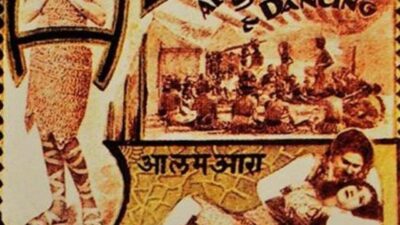
Amanat's play reaches the screen1853 में लखनऊ के नवाबी दरबार में सैयद आग़ा हसन अमानत ने 'इंदर सभा' लिखी — एक पद्य-नाटक जो लगभग पूरा गाया जाता था। यही नाटक अस्सी बरस मंच पर रहा और 1932 में मदन थिएटर्स ने इसे परदे पर उतारा, जिसमें लगभग 69 गीत थे। यह संख्या कोई संयोग न थी — यह उस मंच-परंपरा की सीधी विरासत थी जहाँ नाटक और गीत एक ही साँस में जीते थे। आलम आरा (1931) भी इसी परंपरा की उपज थी: उसका आधार पारसी नाटककार जोसेफ़ डेविड का मंच-नाटक था।
अंग्रेज़ी में पढ़ें · Read in English
In 1853, at the Nawabi court of Lucknow, Syed Agha Hasan Amanat composed Indar Sabha — a verse-play performed almost entirely in song. That play held the stage for eighty years before Madan Theatres brought it to the screen in 1932 with some 69 songs. The number was no accident: it was the direct inheritance of a theatrical tradition where drama and song breathed as one. Alam Ara (1931) was born of the same lineage — its source was a stage play by Parsi playwright Joseph David.
गाता हुआ अभिनेता और परदे पर ग़ज़ल
The singing actor and the ghazal on film1935 से पहले प्लेबैक गायन नहीं था — अभिनेता को स्वयं गाना होता था। मास्टर निसार (1902–1965) मदन थिएटर्स के मंच से सीधे परदे पर आए थे — और यह संयोग नहीं, बल्कि अगा हसर कश्मीरी की सिफ़ारिश पर। जहाँआरा कज्जन (1915–1945) लखनऊ की उस्ताद-परंपरा से आईं और मदन थिएटर्स ने उन्हें एक मंच-प्रस्तुति में देखकर अनुबंधित किया। 'इंद्र सभा' (1932) में इन दोनों की आवाज़ ने वही महफ़िल रची जो पारसी रंगमंच सदियों से रचता आया था — ग़ज़ल और क़व्वाली का वह लहजा जो आगे चलकर हिंदी फ़िल्म गीत की बोली बना।
अंग्रेज़ी में पढ़ें · Read in English
Before playback singing arrived around 1935, performers had to sing themselves. Master Nissar (1902–1965) came to the screen directly from Madan Theatres' stage — not by chance, but on the recommendation of Agha Hashar Kashmiri himself. Jahanara Kajjan (1915–1945) trained in Lucknow's classical tradition and was signed by Madan Theatres after being spotted in a stage performance. Together in Indra Sabha (1932), their voices recreated the very mehfil the Parsi stage had curated for generations — a ghazal-and-qawwali idiom that would become the mother tongue of the Hindi film song.
परिचय
IdentityEpithet
Ghazal, qawwali, and the singing actor — theatre's journey to the screen
अन्य विवरण
More DetailsKey Figures
कहानी-नमूना
The Story Specimen| शीर्षक | पारसी रंगमंच से परदे तक · From the Parsi Stage to the Screen |
|---|---|
| श्रेणी | Music History |
| प्रकार | विशेष लेख |
| प्रकाशित | 20 June 2026 — admin |
| वर्ष | 1932 |
और कहानियाँ
More Stories from the Atlas
साझा कीजिए · Share this Plate
यह पन्ना आगे बढ़ाइए
सवाल-जवाब
Questions & Answersपारसी थिएटर और हिंदी फ़िल्मी गीत का क्या संबंध है? · What is the connection between Parsi theatre and the Hindi film song?
पारसी थिएटर (उन्नीसवीं सदी उत्तरार्ध से 1930 के दशक तक) अपनी कथाओं में ग़ज़ल, ठुमरी और क़व्वाली को केंद्रीय स्थान देता था। जब 1931 में बोलती फ़िल्म आई, तो उसने इसी मंच की परंपरा, उसके नाटककारों, अभिनेता-गायकों और गीत-संरचना को सीधे अपना लिया — इसीलिए शुरुआती तालकियों में इतने गीत होते थे।
Parsi theatre (from the late nineteenth century to the 1930s) placed the ghazal, thumri and qawwali at the centre of its storytelling. When the talkie arrived in 1931, it directly inherited the stage's tradition, its playwrights, its singing actors and its song structure — which is why early talkies were so densely packed with songs.
अगा हसर कश्मीरी कौन थे और फ़िल्म से उनका क्या रिश्ता था? · Who was Agha Hashar Kashmiri and what was his connection to early cinema?
अगा हसर कश्मीरी (1879–1935) पारसी थिएटर के सबसे बड़े उर्दू नाटककार थे, जिन्हें 'उर्दू के शेक्सपियर' कहा जाता है। वे न्यू अल्फ्रेड थिएटर कंपनी से जुड़े थे। उनकी सिफ़ारिश पर मास्टर निसार मदन थिएटर्स में आए और आगे चलकर 'इंद्र सभा' (1932) के पहले टॉकी सुपरस्टार बने।
Agha Hashar Kashmiri (1879–1935) was the foremost Urdu playwright of Parsi theatre, known as the 'Shakespeare of Urdu,' and was associated with the New Alfred Theatrical Company. He personally recommended Master Nissar to Madan Theatres; Nissar went on to become the first superstar of the talkie era in films such as Indra Sabha (1932).