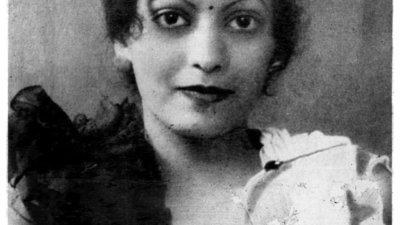
गीत विंग · गीत-पट्टिका · Song Plate
ये रंज जुदाई के उठाये नहीं जाते
Yeh Ranj Judai Ke Uthaye Nahin Jaate
फ़िल्म के शीर्षक की सबसे सच्ची अभिव्यक्ति — नसीम अख़्तर की आवाज़ में ग़ज़ल की सबसे पुरानी शिकायत, कि जुदाई के रंज उठाये ही नहीं जाते।
भावमीठा-कड़वा · अविस्मरणीय · उदास
भाषाhindi गतिधीमी स्वरूपएकल महिला
श्रेय
The Creditsसूत्र-वाक्य · The Hook
सूत्र-वाक्य
फ़िल्म के शीर्षक की सबसे सच्ची अभिव्यक्ति — नसीम अख़्तर की आवाज़ में ग़ज़ल की सबसे पुरानी शिकायत, कि जुदाई के रंज उठाये ही नहीं जाते।
In EnglishThe title song's truest expression — Naseem Akhtar carrying the ghazal's oldest complaint, that the griefs of separation are simply too heavy to lift.
पट्टिका-लेख
The Monographपरिचय Overview
ज्ञान दत्त ने 'ग़ज़ल' (1945) के लिए जो आठ गीत रचे, उनमें यही वह गीत है जो फ़िल्म के शीर्षक को सबसे सीधे सार्थक करता है। पंक्ति उसी बोझ का नाम लेती है जिसे वह उठा नहीं सकती: जुदाई के रंज, वह कहती है, उठाये ही नहीं जाते। चालीस के दशक के मध्य की सबसे व्यस्त महिला आवाज़ों में से एक, नसीम अख़्तर, इसे फ़िल्मी विलाप की तरह नहीं बल्कि विधिवत ग़ज़ल की तरह गाती हैं — और यह उन तीन गीतों में से एक है जिनके गायक-श्रेय इस अन्यथा अनदर्ज साउंडट्रैक से कभी बरामद हो सके।
अंग्रेज़ी में पढ़ें · Read in English
Of the eight songs Gyan Dutt wrote for Ghazal (1945), this is the one that most literally justifies the film's title. The line names the burden it cannot carry: the sorrows of separation, it says, simply cannot be borne. Naseem Akhtar, one of the busiest female voices of the mid-forties, sings it as a formal ghazal rather than as a filmi lament, and it is one of only three songs from this otherwise undocumented soundtrack for which a singer credit has ever been recovered.
संगीत The Music
यह सही अर्थों में ग़ज़ल है, महज़ एक उदास फ़िल्मी गीत नहीं: संगीत-रचना शेर की बनावट को सुनाई देने देती है और आवाज़ को इतनी जगह देती है कि वह एक ख़याल पूरा करके अगले से पहले ठहर सके। यह संयम ज्ञान दत्त की पहचान है, जिनका प्रशिक्षण रणजीत मूवीटोन की उस परंपरा में हुआ था जो गीत को तमाशा नहीं, कविता मानती थी — और यह नसीम अख़्तर जैसी गायिका पर ख़ूब जँचता है, जो लाहौर रेडियो से बंबई आई थीं और जिनकी साख ताक़त पर नहीं, तलफ़्फ़ुज़ और ठहराव पर टिकी थी। ज्ञान दत्त रणजीत मूवीटोन के स्टाफ़-संगीतकार रह चुके थे — 'संत तुलसीदास' (1939) और के. एल. सैगल वाली पंद्रह-गीतों की 'भक्त सूरदास' (1942) के रचयिता — और 1937 से 1965 के बीच उन्होंने लगभग 58 फ़िल्मों के लिए क़रीब 600 गीत लिखे। 1945 तक वे राजा मूवीटोन जैसे छोटे स्वतंत्र निर्माताओं के लिए स्वतंत्र रूप से काम कर रहे थे, और कुछ ही वर्षों में नौशाद, सी. रामचंद्र और एस. डी. बर्मन के आगमन ने उन्हें उसी उद्योग के हाशिये पर धकेल दिया जिसे बनाने में उनका हाथ था।
अंग्रेज़ी में पढ़ें · Read in English
A ghazal in the strict sense, not merely a sad film song: the setting keeps the couplet structure audible, giving the voice room to complete a thought and then rest before the next one. That restraint is characteristic of Gyan Dutt, whose training lay in the Ranjit Movietone tradition of song-as-verse rather than song-as-spectacle, and it suits a singer like Naseem Akhtar, who came to Bombay from Lahore Radio and whose reputation rested on diction and poise rather than on power. Gyan Dutt had been Ranjit Movietone's house composer, the man behind Sant Tulsidas (1939) and the fifteen-song Bhakt Surdas (1942) with K. L. Saigal, and across 1937-1965 he wrote some 600 songs for around 58 films. By 1945 he was working freelance for small independents like Raja Movietone, and within a few years the arrival of Naushad, C. Ramchandra and S. D. Burman had pushed him to the margins of an industry he had helped build.
काव्य The Poetry
'रंज' सामान्य उदासी नहीं है। उर्दू में यह वह दुख है जिसके भीतर एक उलाहना लिपटा हुआ है — ऐसा शोक जो जानता है कि क़ुसूर किसका है। इसे 'जुदाई' से जोड़ना और फिर कर्मवाच्य 'उठाये नहीं जाते' से — कि ये किसी से भी नहीं उठते — ग़ज़ल की उत्कृष्ट मुद्रा गढ़ता है: कहने वाला बचाव नहीं माँग रहा, बस यह दर्ज कर रहा है कि उस पर एक ऐसा बोझ रख दिया गया है जिसे उठाने के लिए मनुष्य की ताक़त बनी ही नहीं थी। कर्मवाच्य यहाँ महत्वपूर्ण है। यह कहने वाले का कर्तृत्व पूरी तरह हटा देता है और शिकायत को एक व्यक्ति की कमज़ोरी के बजाय संसार के स्वभाव के बारे में कथन बना देता है।
अंग्रेज़ी में पढ़ें · Read in English
'Ranj' is not ordinary sadness. In Urdu it is grief with a grievance folded inside it — sorrow that knows whose fault it is. Pairing it with 'judai', separation, and then with the passive construction 'uthaye nahin jaate' — they cannot be lifted, by anyone — produces the classic ghazal posture: the speaker is not asking for rescue, only registering that a weight has been set down on them which no human strength was designed to carry. The passive voice matters. It removes the speaker's agency entirely and turns the complaint into a statement about the nature of the world rather than about one person's weakness.
कहानी The Story
'ग़ज़ल' का निर्माण और निर्देशन ज़हूर राजा ने अपनी ही राजा मूवीटोन के लिए किया — वह बंबई का बैनर जो उन्होंने 1943 में, ईस्टर्न पिक्चर्स में संपादक और सहायक के रूप में हुनर सीखने के बाद, खड़ा किया था। समकालीन विवरण इस फ़िल्म को हल्के हास्य-पुट वाली मुस्लिम सामाजिक फ़िल्म बताते हैं: 1945 के सबसे लोकप्रिय हास्य-अभिनेता नूर मोहम्मद चार्ली लीला चिटणीस के सामने नायक थे, जबकि राजा स्वयं राधारानी के साथ जोड़ी में थे। आठों गीत ज्ञान दत्त ने रचे, और चारों गीतकारों को सामूहिक श्रेय मिला है — किसी सूचीपत्र में गीतों का उनके बीच विभाजन दर्ज नहीं है। इस ढाँचे में यह गीत गंभीर पलड़े पर बैठता है, चार्ली के हास्य-गीत के ठीक विपरीत, और यही वह गीत है जो फ़िल्म को वह रंग देता है जिसका वादा उसका शीर्षक करता है। 'ग़ज़ल' का कोई प्रिंट सार्वजनिक रूप से उपलब्ध नहीं है और न ही इसकी कोई कथा प्रकाशित हुई है, इसलिए यह गीत नाटक में कहाँ आता है — कौन किसे और किस मोड़ पर गाता है — यह ज्ञात नहीं।
अंग्रेज़ी में पढ़ें · Read in English
Ghazal was produced and directed by Zahoor Raja for Raja Movietone, the Bombay banner he founded in 1943 after learning the craft as an editor and assistant at Eastern Pictures. Contemporary accounts describe the picture as a Muslim social with a light comedy touch: Noor Mohammad Charlie — the reigning screen comedian of 1945 — played hero opposite Leela Chitnis, while Raja himself was paired with Radharani. Gyan Dutt composed all eight songs, and the four lyricists are credited collectively, with no catalogue splitting the titles between them. Within that frame this song sits on the serious side of the ledger, opposite Charlie's comic number, and it is the song that supplies the film with the register its title promises. No print of Ghazal survives in public access and no plot summary of it has been published, so the song's dramatic placement — who sings it, to whom, and at what point — is not known.
विरासत The Legacy
यह उन ठीक तीन गीतों में से एक है जिनका गायक कहीं भी दर्ज हुआ, और यह श्रेय किसी रिकॉर्ड कंपनी या फ़िल्म-संग्रहालय से नहीं, बल्कि एक संग्राहक-ब्लॉग से आया है जो 1945 की उपज को गीत-दर-गीत खंगाल रहा था। यही इस गीत की पूरी विरासत है, और यह मामूली नहीं: यह याद दिलाती है कि इस आकार की फ़िल्मों के लिए हिंदी फ़िल्म संगीत की दूसरी क़तार को बचाना अब संस्थाओं पर नहीं, निजी रसिकों पर निर्भर है। नसीम अख़्तर ने स्वयं 1942 से 1949 के बीच लगभग 40 फ़िल्मों में क़रीब 72 गीत ही रिकॉर्ड किए, इससे पहले कि बँटवारा उन्हें पाकिस्तान ले जाता जहाँ उनका कैरियर फिर शुरू नहीं हो सका; हर बरामद श्रेय एक बहुत छोटी बची हुई थाती को नापने लायक़ बड़ा करता है।
अंग्रेज़ी में पढ़ें · Read in English
This is one of exactly three songs from Ghazal for which a singer has ever been named anywhere, and the attribution comes not from a record label or a film archive but from a collector's blog working song by song through the 1945 output. That is the whole legacy of the number, and it is not a trivial one: it is a reminder that for films of this size the recovery of Hindi film music's second tier now depends on private enthusiasts rather than on institutions. Naseem Akhtar herself recorded only about 72 songs across some 40 films between 1942 and 1949 before Partition took her to Pakistan, where her career did not resume; every recovered credit measurably enlarges a very small surviving body of work.
वर्गीकरण
Classification- Tempo
- Slow
Genre
अन्य विवरण
More Details- https://www.hindigeetmala.net/movie/ghazal_1945.htm
- https://www.hindilyrics4u.com/movie/ghazal_1945.htm
- https://en.wikipedia.org/wiki/List_of_Hindi_films_of_1945
- https://en.wikipedia.org/wiki/Zahur_Raja
- https://en.wikipedia.org/wiki/Gyan_Dutt
- https://hamraaz.org/cineplot/zahoor-raja/index.html
- https://atulsongaday.me/2016/06/08/ye-ranj-judaai-ke-uthaaye-nahin-jaate/
- https://www.cinemaazi.com/people/naseem-akhtar
References
रोचक तथ्य
Margin Notesइसी गीत के साथ संगीतकार ज्ञान दत्त 'अतुल्स सॉन्ग अ डे' पर अपनी 100वीं प्रविष्टि तक पहुँचे — वही संग्राहक-ब्लॉग जिसकी 1945 की छानबीन के कारण इस गीत का गायक-श्रेय आज मौजूद है।
अंग्रेज़ी में पढ़ें · Read in English
This is the song with which the composer Gyan Dutt reached his 100th entry on Atul's Song A Day, the collector-blog whose 1945 sweep is the reason a singer credit for it exists at all.
नसीम अख़्तर को लाहौर रेडियो पर संगीतकार पंडित अमरनाथ ने खोजा और 'निशानी' (1942) में लिया; वे पार्श्वगायन के लिए बंबई आईं और बँटवारे से पहले नौशाद, खेमचंद प्रकाश, ग़ुलाम हैदर, अनिल बिस्वास तथा ग़ुलाम मोहम्मद के लिए गाया।
अंग्रेज़ी में पढ़ें · Read in English
Naseem Akhtar was discovered on Lahore Radio by the composer Pandit Amarnath, who put her into Nishani (1942); she moved to Bombay for playback work and sang under Naushad, Khemchand Prakash, Ghulam Haider, Anil Biswas and Ghulam Mohammed before Partition.
फ़िल्म के चारों गीतकारों के नाम आठों गीतों में से हर एक के सामने छपे हैं; किसी भी सूचीपत्र में, 'हिंदी फ़िल्म गीत कोश' से निकली तालिकाओं समेत, यह दर्ज नहीं कि इनमें से यह ग़ज़ल किसने लिखी।
अंग्रेज़ी में पढ़ें · Read in English
All four of the film's lyricists are printed against every one of its eight songs; no catalogue, including the Hindi Film Geet Kosh-derived tables, records which of them wrote this ghazal.
नमूना-पट्टी
The Specimen Table| शीर्षक | ये रंज जुदाई के उठाये नहीं जाते · Yeh Ranj Judai Ke Uthaye Nahin Jaate |
|---|---|
| फ़िल्म | ग़ज़ल · 1945 |
| वर्ष · युग | 1945 |
| गायक | Naseem Akhtar |
| गीतकार | D. N. Madhok, Abid Gulrez, शांत अरोड़ा, ख़ावर ज़मान |
| संगीतकार | Gyan Dutt |
| स्वरूप | एकल महिला |
| गति | धीमी |
| भाषा | hindi |
| भाव | मीठा-कड़वा · अविस्मरणीय · उदास |
| लोकप्रियता | Obscure |
| बोल-स्थिति | केवल झलक |
जुड़े हुए पन्ने
Connected Plates · The Graph Made Visibleअटलस में कोई पन्ना अकेला नहीं — इस गीत से जुड़े गीत, कलाकार, फ़िल्म, राग-ताल-विधा, सब यहाँ से खुलते हैं।
मिलते-जुलते गीत · Related Songs
कलाकार · The Artists
फ़िल्म · The Film
साझा कीजिए · Share this Plate