गीत विंग · गीत-पट्टिका · Song Plate
सर पे कदंब की छैंया मुरलिया बाजे रे
Sar Pe Kadamb Ki Chhainya Muraliya Baje Re
कदंब की छाँव तले मुरली बज रही है — सहगल और राजकुमारी कृष्ण के ब्रज को साकार करते हैं।
भावभक्ति · Joyful · Pastoral
भाषाhindi गतिमध्यम स्वरूपयुगल
श्रेय
The Creditsसूत्र-वाक्य · The Hook
सूत्र-वाक्य
कदंब की छाँव तले मुरली बज रही है — सहगल और राजकुमारी कृष्ण के ब्रज को साकार करते हैं।
In EnglishUnder the kadamb tree's shade the flute is playing — Saigal and Rajkumari conjure Krishna's Braj.
पट्टिका-लेख
The Monographपरिचय Overview
भक्त सूरदास का एक कृष्ण-भक्ति युगल जो कदंब के वृक्ष तले बजती मुरली की प्रतिष्ठित ब्रज-छवि को जगाता है। के. एल. सहगल द्वारा राजकुमारी के साथ गाया गया, यह फ़िल्म के भक्ति-संग्रह में एक ग्रामीण, उत्सवमय रंग लाता है।
अंग्रेज़ी में पढ़ें · Read in English
A Krishna-devotional duet from Bhakta Surdas evoking the iconic Braj image of the flute (murali) sounding beneath the kadamb tree. Sung by K. L. Saigal with Rajkumari, it brings a pastoral, celebratory colour to the film's devotional repertoire.
संगीत The Music
ज्ञान दत्त युगल को एक लहराती, मध्यम-लय की भजन-धुन में रचते हैं जिसकी ग्रामीण हलक़ी ब्रज-छवियों के अनुकूल है। सहगल की ठोस बैरिटोन और राजकुमारी की पतली, भावपूर्ण आवाज़ एक कोमल लय पर एक-दूसरे को उत्तर देती हैं, और मुरली-सी जगाती पंक्ति संगीत-संयोजन में बुनी हुई है।
अंग्रेज़ी में पढ़ें · Read in English
Gyan Dutt sets the duet to a lilting, mid-tempo bhajan melody with a pastoral lightness befitting its Braj imagery. Saigal's grounded baritone and Rajkumari's reedy, expressive voice answer each other over a gentle rhythm, the flute-evoking line woven into the arrangement.
काव्य The Poetry
कदंब का वृक्ष (Neolamarckia cadamba) और मुरली वैष्णव काव्य की सर्वाधिक आवेशित छवियों में से हैं: यमुना के तट पर कदंब की छाँव तले ही कृष्ण अपनी मुरली बजाते हैं, गोपियों को उनके घरों से खींचकर वन की रूपांतरकारी, भक्तिमय जगह में ले जाते हैं। सूरदास के सूरसागर में ऐसे दृश्यों से भरा है जिनमें कदंब तले यह बाँसुरी-स्वर दिव्य मुलाक़ात के किसी क्षण की शुरुआत करता है। वृक्ष का विस्तृत आच्छादन ('छैंया', छाँव) एक साथ सुरक्षात्मक आश्रय और संधि-क्षेत्र है — साधारण संसार और दिव्य-स्थान की दहलीज़। माधोक का इस युगल के लिए रूपांतरण ब्रज के दो सबसे तुरंत पहचाने जाने वाले प्रतीकों को जोड़ता है: कदंब की छाँव और बजती मुरली। युगल की संरचना — सहगल और राजकुमारी एक-दूसरे को उत्तर देते हुए — कृष्ण की मुरली पर गोपियों के प्रतिसाद को प्रतिबिंबित करती है, जो संगीत-रूप को गीत के विषय-वस्तु का दर्पण बना देती है।
अंग्रेज़ी में पढ़ें · Read in English
The kadamb tree (Neolamarckia cadamba) and the murali (flute) are among the most charged images in all of Vaishnava poetry: it is under the kadamb's shade on the banks of the Yamuna that Krishna plays his flute, drawing the gopīs away from their households and into the forest's transformative, devotional space. Surdas's Sursagar is full of scenes in which this flute-sound beneath the kadamb initiates a moment of divine encounter. The tree's wide canopy ('chhainya', shade) is simultaneously protective shelter and liminal zone — a boundary between the ordinary world and the space of the divine. D.N. Madhok's adaptation for this duet combines two of the most immediately recognisable Braj symbols: the kadamb shade and the playing flute. The duet structure — Saigal and Rajkumari answering each other — mirrors the call-and-response of the gopīs to Krishna's flute, making the musical form reflect the lyric's content.
कहानी The Story
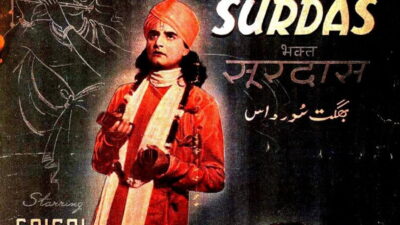
भक्त सूरदास (1942, रणजीत स्टूडियोज़, बंबई, निर्देशक चतुर्भुज दोशी) को भक्ति-भावों के संतुलन की आवश्यकता थी, और कृष्ण के ब्रज-परिदृश्य का यह ग्रामीण उत्सव संगीत-पट्टी के सबसे उज्ज्वल क्षणों में से एक है। के. एल. सहगल के साथ राजकुमारी की जोड़ी — इस काल में अपनी बहुमुखी, भावपूर्ण आवाज़ के लिए जानी जाने वाली गायिका — युगल को एक तम्बर-विरोधाभास (उनकी गहरी बैरिटोन, उनका हल्का रंग) देती है जो ग्रामीण प्रश्न-उत्तर संरचना को जीवंत करती है। राजकुमारी 1930 के दशक के उत्तरार्ध से हिंदी फ़िल्मों में काम कर रही थीं और लोक-रंगी और उप-शास्त्रीय सामग्री को प्राकृतिक सहजता के साथ वहन करने की उनकी क्षमता के लिए उन्हें सराहा जाता था।
अंग्रेज़ी में पढ़ें · Read in English
Bhakta Surdas (1942, Ranjit Studios, Bombay, dir. Chaturbhuj Doshi) required a balance of devotional moods, and this pastoral celebration of Krishna's Braj landscape provides one of the score's brightest moments. The pairing of K.L. Saigal with Rajkumari — a singer known for her versatile, expressive voice in this period — gives the duet a timbral contrast (his dark baritone, her lighter colour) that animates the pastoral call-and-response structure. Rajkumari had been working in Hindi films since the late 1930s and was valued for her ability to carry folk-tinged and semi-classical material with natural ease. Her inclusion in the Bhakta Surdas cast, even in a supporting vocal capacity, speaks to Ranjit Studios' practice of assembling strong vocal combinations for their devotional subjects.
वर्गीकरण
Classification- Tempo
- Medium
Genre
अन्य विवरण
More Details- https://en.wikipedia.org/wiki/Bhakta_Surdas
- https://en.wikipedia.org/wiki/Surdas
- https://en.wikipedia.org/wiki/Rajkumari_(singer)
References
रोचक तथ्य
Margin Notesकदंब वृक्ष (Neolamarckia cadamba) वैष्णव परंपरा के सबसे पवित्र वृक्षों में से एक है; यह ब्रज में यमुना के तटों पर उगता है और सूरदास की कविता में उस स्थान से जुड़ा है, जहाँ कृष्ण गोपियों को बुलाने के लिए बाँसुरी बजाते हैं।
अंग्रेज़ी में पढ़ें · Read in English
The kadamb tree (Neolamarckia cadamba) is one of the most sacred trees in Vaishnava tradition; it grows on the banks of the Yamuna in Braj and is associated in Surdas's poetry with the spot where Krishna plays the flute to call the gopīs.
राजकुमारी (पूरा नाम राजकुमारी दुबे, बाद में राजकुमारी शुक्ला) 1940-1950 के दशकों की प्रमुख महिला पार्श्व-गायिकाओं में से एक थीं; सहगल और ख़ुर्शीद के साथ भक्त सूरदास की कास्ट में उनका शामिल होना रणजीत स्टूडियो की अनुभवी स्वर-संयोजन जुटाने की नीति को दर्शाता है।
अंग्रेज़ी में पढ़ें · Read in English
Rajkumari (full name Rajkumari Dubey, later Rajkumari Shukla) was one of the leading female playback singers of the 1940s–1950s; her inclusion in the Bhakta Surdas cast alongside Saigal and Khursheed reflects Ranjit Studios' policy of assembling experienced vocal combinations.
युगल-गीत रूप — दो आवाज़ों का प्रश्नोत्तर शैली में एक-दूसरे को उत्तर देना — सीधे उस ब्रज भक्ति-परंपरा को प्रतिबिंबित करता है, जिसमें गोपियाँ कृष्ण की बाँसुरी का प्रत्युत्तर देती हैं; इस प्रकार यह संरचना संगीतात्मक होने के साथ-साथ धर्मशास्त्रीय भी है।
अंग्रेज़ी में पढ़ें · Read in English
The duet form — two voices answering each other in call-and-response — directly mirrors the Braj devotional tradition of the gopīs responding to Krishna's flute; the structure is thus theological as well as musical.
सूरदास के सूरसागर में ब्रज-परिदृश्य में रचित सैकड़ों पद हैं, जिनमें 'कदंब-तेरे-मुरली' के दृश्य राजस्थानी और पहाड़ी लघुचित्रकला में सबसे अधिक बार चित्रित किए गए दृश्यों में से हैं।
अंग्रेज़ी में पढ़ें · Read in English
Surdas's Sursagar contains hundreds of padas set in the Braj landscape, of which the 'kadamb-tere-murali' scenes are among the most frequently illustrated in Rajasthani and Pahari miniature painting.
नमूना-पट्टी
The Specimen Table| शीर्षक | सर पे कदंब की छैंया मुरलिया बाजे रे · Sar Pe Kadamb Ki Chhainya Muraliya Baje Re |
|---|---|
| फ़िल्म | भक्त सूरदास · 1942 |
| वर्ष · युग | 1942 |
| गायक | K.L. Saigal, Rajkumari |
| गीतकार | D. N. Madhok |
| संगीतकार | Gyan Dutt |
| स्वरूप | युगल |
| गति | मध्यम |
| भाषा | hindi |
| भाव | भक्ति · Joyful · Pastoral |
| लोकप्रियता | Popular |
| बोल-स्थिति | केवल झलक |
जुड़े हुए पन्ने
Connected Plates · The Graph Made Visibleअटलस में कोई पन्ना अकेला नहीं — इस गीत से जुड़े गीत, कलाकार, फ़िल्म, राग-ताल-विधा, सब यहाँ से खुलते हैं।
मिलते-जुलते गीत · Related Songs
कलाकार · The Artists
फ़िल्म · The Film
साझा कीजिए · Share this Plate