गीत विंग · गीत-पट्टिका · Song Plate
पति चरनन गुण गाऊँ
Pati Charanan Gun Gau
पतिव्रता भक्ति का एक भक्ति-गीत, ख़ुर्शीद की आवाज़ में।
भावभक्ति · रोमांटिक
भाषाhindi स्वरूपएकल महिला
श्रेय
The Creditsसूत्र-वाक्य · The Hook
सूत्र-वाक्य
पतिव्रता भक्ति का एक भक्ति-गीत, ख़ुर्शीद की आवाज़ में।
In EnglishA devotional song of wifely devotion, sung by Khursheed.
पट्टिका-लेख
The Monographपरिचय Overview
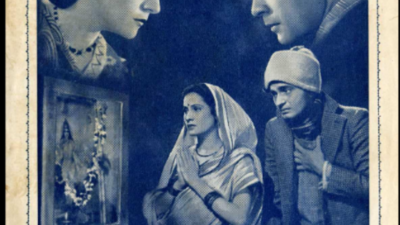
'पति चरनन गुण गाऊँ' 1941 की रणजीत मूवीटोन फ़िल्म शादी में ख़ुर्शीद द्वारा गाया जाता है, संगीत खेमचंद प्रकाश का। शीर्षक — पति के चरणों में गुणगान — सीधे फ़िल्म की केंद्रीय आकृति, समर्पित परंपरागत पत्नी (पतिव्रता) को स्वर देता है, जो इसे विषय-दृष्टि से संगीत का सबसे प्रत्यक्ष गीत बनाता है।
अंग्रेज़ी में पढ़ें · Read in English
'Pati Charanan Gun Gau' is sung by Khursheed in the 1941 Ranjit Movietone film Shaadi, composed by Khemchand Prakash. The title — singing the praises at the husband's feet — directly voices the film's central figure of the devoted traditional wife (pativrata), making it thematically the most on-the-nose number of the soundtrack.
काव्य The Poetry
'पति चरनन गुण गाऊँ' — 'मैं पति के चरणों में गुण गाऊँ' — सुहागन-गीत (विवाहित स्त्री के गीत) की उत्तर भारतीय वाचिक परंपरा में जड़ें रखने वाला एक पतिव्रता-गीत है। यहाँ की भाषा जान-बूझकर भक्ति-काव्य की प्रतिध्वनि करती है: 'चरनन' (चरण) वह शब्द है जो गुरु या देवता के समक्ष प्रणाम-चरण-वंदना में प्रयुक्त होता है; 'गुण गाऊँ' राम, कृष्ण और शिव के भजनों का मानक सूत्र है। इस भक्ति-शब्दावली को वैवाहिक निष्ठा पर लागू करके — जो मुंशी दिल और डी.एन. माधोक के संयुक्त श्रेय से आता है — गीत पत्नी की भक्ति को आध्यात्मिक साधना बनाता है, न कि घरेलू अधीनता। ब्रज-रंजित भाषा ('चरनन', 'गुण गाऊँ') बिना किसी स्पष्ट धार्मिक संदर्भ के भजन-रजिस्टर का संकेत देती है — गायिका को मीरा बाई की परंपरा से जोड़ते हुए, जिन्होंने पतिव्रत और भक्ति-प्रेम को एक ही शब्दों में अभिव्यक्त किया था।
अंग्रेज़ी में पढ़ें · Read in English
'Pati Charanan Gun Gau' — 'I sing the praises at my husband's feet' — is a pativrata-geet (devoted-wife song) with ancient roots in the suhagan-geet (married-woman's song) traditions of North Indian women's oral poetry. The language deliberately echoes bhakti poetry: 'charanan' (feet) invokes the charana-vandana (feet-veneration) ritual used in religious practice when prostrating before a guru or deity; 'gun gau' (sing the praises/virtues) is the standard devotional formula used for Ram, Krishna, and Shiva. By applying this bhakti vocabulary to marital devotion, the lyric — attributed collectively to Munshi Dil and D.N. Madhok for the Shaadi songs — makes the wife's husband-worship a form of spiritual practice rather than domestic subordination. This rhetorical move was common in 1930s–1940s film songs that needed to present traditional roles as spiritually meaningful. The Braj-tinged language ('charanan' rather than 'charanoN,' 'gun gau' rather than 'gun gaaoN') signals the bhajan register even without explicit religious content, aligning the singer with the tradition of Meera Bai — herself a devoted woman who expressed conjugal and devotional love in overlapping terms.
कहानी The Story
रणजीत मूवीटोन की शादी (1941) के चौदह गीतों में 'पति चरनन गुण गाऊँ' सबसे अधिक विषय-केंद्रित है: इसका शीर्षक ही फ़िल्म के केंद्रीय नैतिक तर्क को व्यक्त करता है। निर्देशक जयंत देसाई ने पतिव्रता — समर्पित पत्नी — को फ़िल्म के नैतिक आधार के रूप में प्रस्तुत किया; उसकी भक्ति वास्तविक और अर्जित है, जिससे पति का विश्वासघात और भी मार्मिक हो जाता है। यह गीत फ़िल्म में शुरुआत में आया होगा — कथानक की जटिलताओं से पहले नायिका के चरित्र को स्थापित करने के लिए। भजन की भाषा में वैवाहिक कर्तव्य का वर्णन उस दौर की सामाजिक-फ़िल्म गीत की एक परंपरा थी: धार्मिक भक्ति का मुहावरा उधार लेकर, गीत पत्नी की निष्ठा को आध्यात्मिक अर्जन के रूप में प्रस्तुत करता है, न कि केवल सामाजिक अनुपालन के रूप में। खेमचंद प्रकाश का संगीत भक्ति-गंभीरता और घरेलू कोमलता के बीच संतुलन बनाता होगा — वही भावनात्मक भूमि जिस पर उनकी रणजीत फ़िल्मों की रचनाएँ सबसे अच्छी तरह टिकती थीं।
अंग्रेज़ी में पढ़ें · Read in English
Among the fourteen songs in Ranjit Movietone's Shaadi (1941), 'Pati Charanan Gun Gau' is the most thematically direct: it names the film's central moral argument in its very title. Director Jayant Desai structured the narrative around the figure of the pativrata (devoted wife) as the film's moral touchstone — her devotion is genuine and earned, making her husband's betrayal all the more dramatic. This song would have appeared early in the film to establish the heroine's character before the complications of the plot arrive. The lyrical framing — using the vocabulary of bhakti devotion to describe conjugal duty — was a convention of the social-film genre of the period: by borrowing the register of religious devotion, the song frames the wife's dedication as spiritually earned rather than merely social compliance. Ranjit Movietone's social dramas consistently engaged with the 'new woman vs. traditional woman' tension of the nationalist period; Shaadi is among the more sympathetically rendered versions of the devoted-wife figure, in that the heroine is vindicated rather than reformed. Khemchand Prakash's musical setting would have balanced devotional gravity with domestic tenderness — the emotional territory he navigated most confidently in his Ranjit scores.
वर्गीकरण
ClassificationGenre
अन्य विवरण
More Details- https://grokipedia.com/page/shaadi_1941_film
- https://en.wikipedia.org/wiki/Khursheed_Bano
- https://en.wikipedia.org/wiki/Khemchand_Prakash
- https://en.wikipedia.org/wiki/D._N._Madhok
References
रोचक तथ्य
Margin Notesशादी (1941) में 14 गीत थे — 1940 के दशक की शुरुआत के मानकों से भी एक उदार साउंडट्रैक, जब किसी फ़िल्म के हिट गीत बॉक्स-ऑफ़िस प्रदर्शन के लिए महत्वपूर्ण होते थे और अक्सर फ़िल्म के प्रदर्शन से पहले ही ग्रामोफ़ोन रिकॉर्ड पर जारी कर दिए जाते थे।
अंग्रेज़ी में पढ़ें · Read in English
Shaadi (1941) had 14 songs — a generous score even by the standards of the early 1940s, when hit songs from a film were crucial to box-office performance and were often released on gramophone records before the film's release.
'पति चरणन' देवताओं और गुरुओं के प्रति धार्मिक भक्ति में इस्तेमाल होने वाली संस्कृत चरण-वंदना शब्दावली का उपयोग करता है, और जानबूझकर पत्नी की दांपत्य भक्ति को भक्ति के समतुल्य एक आध्यात्मिक साधना के रूप में प्रस्तुत करता है।
अंग्रेज़ी में पढ़ें · Read in English
'Pati charanan' deploys the Sanskrit charana-vandana (feet-veneration) vocabulary used in religious devotion for gods and gurus, deliberately framing the wife's conjugal devotion as a spiritual practice equivalent to bhakti.
शादी का निर्माण करने वाली रणजीत मूवीटोन की स्थापना 1929 में चंदूलाल शाह ने की थी और यह बंबई के प्रमुख स्टूडियो में से एक बन गई; इसके सामाजिक नाटक लगातार राष्ट्रवादी युग के 'नई स्त्री बनाम परंपरागत स्त्री' के तनाव को खंगालते थे।
अंग्रेज़ी में पढ़ें · Read in English
Ranjit Movietone, which produced Shaadi, was founded in 1929 by Chandulal Shah and became one of Bombay's dominant studios; its social dramas consistently explored the 'new woman vs. traditional woman' tension of the nationalist period.
ख़ुर्शीद बानो 1940 के दशक की उन गिनी-चुनी कलाकारों में से एक थीं, जो एक साथ मुख्य अभिनेत्री और अपनी स्वयं की पार्श्वगायिका दोनों थीं — अभिनय और पार्श्वगायन का वह पूर्ण पृथक्करण, जो बाद में सार्वभौमिक बन गया, 1941 में अभी भी असंगत रूप से लागू होता था।
अंग्रेज़ी में पढ़ें · Read in English
Khursheed Bano was one of very few performers of the 1940s who was both lead actress and her own playback singer — the complete separation of acting from playback singing that later became universal was still inconsistently applied in 1941.
नमूना-पट्टी
The Specimen Table| शीर्षक | पति चरनन गुण गाऊँ · Pati Charanan Gun Gau |
|---|---|
| फ़िल्म | शादी · 1941 |
| वर्ष · युग | 1941 |
| गायक | Khursheed |
| संगीतकार | Khemchand Prakash |
| स्वरूप | एकल महिला |
| भाषा | hindi |
| भाव | भक्ति · रोमांटिक |
| लोकप्रियता | Obscure |
| बोल-स्थिति | केवल झलक |
जुड़े हुए पन्ने
Connected Plates · The Graph Made Visibleअटलस में कोई पन्ना अकेला नहीं — इस गीत से जुड़े गीत, कलाकार, फ़िल्म, राग-ताल-विधा, सब यहाँ से खुलते हैं।
मिलते-जुलते गीत · Related Songs
कलाकार · The Artists
फ़िल्म · The Film
साझा कीजिए · Share this Plate