गीत विंग · गीत-पट्टिका · Song Plate
निस दिन बरसत नैन हमारे
Nis Din Barsat Nain Hamare
निस दिन मेरे नैन बरसते रहते हैं — अंधे कवि के आँसू सहगल की आवाज़ में भक्ति की नदी बन जाते हैं।
भावभक्ति · उदास · Yearning
भाषाhindi गतिधीमी स्वरूपएकल पुरुष
श्रेय
The Creditsसूत्र-वाक्य · The Hook
सूत्र-वाक्य
निस दिन मेरे नैन बरसते रहते हैं — अंधे कवि के आँसू सहगल की आवाज़ में भक्ति की नदी बन जाते हैं।
In EnglishNight and day my eyes keep raining — the blind poet's tears become a river of devotion in Saigal's voice.
पट्टिका-लेख
The Monographपरिचय Overview
भक्त सूरदास का एक भक्ति-गीत जिसमें नैन बरसते हैं — सीधे उस अंधे संत-कवि की छवि पर आधारित जिसके दृष्टिहीन नेत्र कृष्ण की चाहत में निरंतर आँसू बहाते हैं। के. एल. सहगल द्वारा फ़िल्म की मननशील भजन-धारा में गाया गया।
अंग्रेज़ी में पढ़ें · Read in English
A devotional song of weeping eyes from Bhakta Surdas, drawing directly on the image of the blind saint-poet whose sightless eyes stream constant tears of longing for Krishna. Sung by K. L. Saigal in the film's contemplative bhajan vein.
संगीत The Music
ज्ञान दत्त गीत को एक धीमी, विलापमय लय में रचते हैं जो निरंतर बहते आँसुओं की इसकी छवि के अनुकूल है। सहगल की गहरी, शोक-भरी पदावली भजन के भार को सँभालती है, और विरल संगत उदास पंक्ति को साँस लेने का अवकाश देती है।
अंग्रेज़ी में पढ़ें · Read in English
Gyan Dutt sets the song in a slow, lamenting measure befitting its imagery of ceaseless tears. Saigal's deep, sorrow-laden phrasing carries the weight of the bhajan, the spare arrangement giving the melancholy line room to breathe.
काव्य The Poetry
नित्य बहती आँखों का बिम्ब ('निस दिन बरसत नैन' — रात-दिन नैन बरसते हैं) भक्ति संतों की पदावली परंपरा से सीधे आता है — विशेषकर मीराबाई और सूरदास से। सूरदास के पदों में कई ऐसी रचनाएँ हैं जिनमें अंधे कवि की दृष्टिहीन आँखें कृष्ण-दर्शन की चाहत में निरंतर आँसू बहाती हैं — एक विरोधाभास (अंधी आँखें जो वह नहीं देख सकतीं उसके लिए रोती हैं) जिसे डी.एन. माधोक ने अपने फ़िल्मी बोल में समाया। 'बरसत' (बरस-बरस, बारिश से) आँखों को बादलों में बदल देता है — आकाश से चेहरे पर वर्षा-रूपक का यह स्थानांतरण उत्तर भारतीय विरह-काव्य में सामान्य है। माधोक सूरदास को सीधे उद्धृत नहीं कर सकते थे, लेकिन वे पदावली के भावनात्मक रजिस्टर को — रोती, दृष्टिहीन आँखें — फ़िल्म-पद्य के मुहावरे में पुनः प्रस्तुत करके उसका स्मरण करा सकते थे।
अंग्रेज़ी में पढ़ें · Read in English
The image of eternally weeping eyes ('nis din barsat nain' — night and day the eyes rain) belongs directly to the padavali tradition of the Bhakti saints — particularly Mirabai and Surdas himself. Surdas's padavalis contain multiple verses in which the blind poet's sightless eyes stream constant tears of longing for Krishna's vision, a paradox (blind eyes that weep for what they cannot see) that D.N. Madhok worked into his film lyric. The word 'barsat' (raining, from barish) converts the eyes into clouds — a transfer of the rain metaphor from sky to face that is common in North Indian virah poetry. Madhok could not quote Surdas directly (the bhajan tradition requires textual fidelity), but he could evoke the padavali's emotional register by reproducing its central conceit — the weeping, sightless eyes — in film-verse idiom, allowing listeners versed in the tradition to hear the allusion.
कहानी The Story
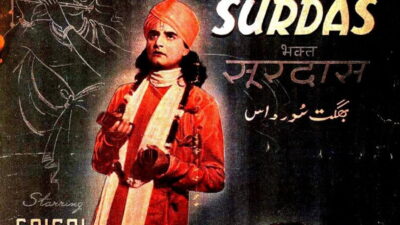
भक्त सूरदास (1942) का निर्देशन चतुर्भुज दोशी ने रणजीत स्टूडियो, बंबई के लिए किया और यह के.एल. सहगल की न्यू थिएटर्स, कलकत्ता छोड़ने के बाद पहली फ़िल्म थी। निर्मिती ने सहगल को अंधे कवि-संत सूरदास के रूप में कास्ट किया — एक भूमिका जो उनकी आवाज़ की अंतर्जात उदासी के अनुकूल थी और उन्हें भक्ति सामग्री — भजन और पदावली-प्रेरित गीत — उस स्वाभाविकता के साथ गाने देती थी जो उनकी आवाज़ हमेशा भक्ति-भाव को देती थी। ज्ञान दत्त ने फ़िल्म के लिए पंद्रह से अधिक गीत रचे — उस समय तक उनकी सबसे बड़ी संगीत-पट्टी — और 'निस दिन बरसत नैन हमारे' भावनात्मक रूप से गंभीर संख्याओं में थी। फ़िल्म 1942 की तीसरी सबसे अधिक कमाई करने वाली थी।
अंग्रेज़ी में पढ़ें · Read in English
Bhakta Surdas (1942) was directed by Chaturbhuj Doshi for Ranjit Studios, Bombay, and was K.L. Saigal's first film after leaving New Theatres, Calcutta. The production cast Saigal as the blind poet-saint Surdas, a role that suited his voice's intrinsic melancholy and allowed him to sing devotional material — bhajans and padavali-inspired songs — with the naturalness his voice always gave devotional feeling. Gyan Dutt composed over fifteen songs for the film, his largest score to that point, and 'Nis Din Barsat Nain Hamare' was among the emotionally serious numbers — a slow, weeping lament that put the blind saint's permanent grief at the centre. The film was the third highest grossing of 1942, testimony to how strongly audiences responded to Saigal singing devotional material.
विरासत The Legacy
भक्त सूरदास (1942) भारत में भक्ति फ़िल्म के इतिहास में एक मील का पत्थर था, और इसके गीत — विशेषकर रोती-आँखें वाले भजन — इसके प्रदर्शन के बाद के वर्षों में उस सहगल-स्मारक धारा के हिस्से के रूप में प्रचलित हुए जो 1947 में उनकी मृत्यु के बाद बनी। 'निस दिन बरसत नैन हमारे' विरह-भक्ति परंपरा से है जिसे आकाशवाणी अपने 'भक्ति संगीत' कार्यक्रम-स्लॉट में चलाती थी। गीत ने ज्ञान दत्त की धीमी-विलाप मुहावरे में रचने की क्षमता का भी प्रमाण दिया: भक्त सूरदास में सहगल के साथ उनकी साझेदारी ने बंबई में उनका नाम बनाया।
अंग्रेज़ी में पढ़ें · Read in English
Bhakta Surdas (1942) was a landmark in the history of the devotional film in India, and its songs — particularly the weeping-eyes bhajans — circulated in the years after its release as part of the Saigal memorial canon that formed after his death in 1947. 'Nis Din Barsat Nain Hamare' belongs to the virah-bhakti tradition that All India Radio carried in its 'bhakti sangeet' programming slots; listeners encountered it alongside older bhajan recordings of the same Surdas padavali tradition. The song also testified to Gyan Dutt's capacity for composing in the slow-lament idiom: his collaboration with Saigal across Bhakta Surdas made his name in Bombay and opened subsequent film commissions.
वर्गीकरण
Classification- Tempo
- Slow
Genre
अन्य विवरण
More Details- Wikipedia: Bhakta Surdas — https://en.wikipedia.org/wiki/Bhakta_Surdas
- Wikipedia: Gyan Dutt — https://en.wikipedia.org/wiki/Gyan_Dutt
- myswar.co: Bhakta Surdas (1942) listing
- apnaarchive.wordpress.com: gyan dutt
References
रोचक तथ्य
Margin Notesभक्त सूरदास (1942) 1942 की तीसरी सबसे अधिक कमाई करने वाली हिंदी फ़िल्म थी और न्यू थिएटर्स, कलकत्ता छोड़ने के बाद के.एल. सहगल की पहली बॉम्बे प्रस्तुति थी — जो कलकत्ता स्टूडियो युग से बॉम्बे के व्यावसायिक मुख्यधारा में उनके संक्रमण को चिह्नित करती है।
अंग्रेज़ी में पढ़ें · Read in English
Bhakta Surdas (1942) was the third highest-grossing Hindi film of 1942 and K.L. Saigal's first Bombay production after leaving New Theatres, Calcutta — marking his transition from the Calcutta studio era to the Bombay commercial mainstream.
ज्ञान दत्त ने भक्त सूरदास के लिए पंद्रह से अधिक गीत रचे — उस समय तक का उनका सबसे बड़ा संगीत-संग्रह — जिसने इसे वह फ़िल्म बना दिया जिसने बॉम्बे उद्योग में उनका नाम स्थापित किया। बाद में उन्होंने 1940 के दशक के अंत में गीता दत्त के साथ भी सहयोग किया।
अंग्रेज़ी में पढ़ें · Read in English
Gyan Dutt composed over fifteen songs for Bhakta Surdas — his largest score at that point — making it the film that established his name in the Bombay industry. He later collaborated with Geeta Dutt in the late 1940s.
यह गीत सूरदास की पदावली परंपरा से प्रेरित है: सूरदास (लगभग 1478–1583) पुष्टिमार्ग संप्रदाय के एक नेत्रहीन संत-कवि थे; कृष्ण-दर्शन के लिए नेत्रहीन विलाप पर उनके पद हिंदी भक्ति-साहित्य के सबसे प्रसिद्ध पदों में से हैं।
अंग्रेज़ी में पढ़ें · Read in English
The song draws on the Surdas padavali tradition: Surdas (c.1478–1583) was a blind saint-poet of the Pushti Marg sect; his verses about sightless weeping for Krishna's vision are among the most celebrated in Hindi devotional literature.
सहगल ने फ़िल्म में स्वयं सूरदास की भूमिका निभाई, न कि केवल पार्श्व-गायन दिया — जिससे 'रोते नयन' भजन की उनकी प्रस्तुति एक ऐसे अभिनेता-गायक का उदाहरण बन गई, जो स्वयं भजन-गायक रहे एक पात्र को आवाज़ दे रहा था।
अंग्रेज़ी में पढ़ें · Read in English
Saigal played the role of Surdas in the film himself, not merely providing playback — making his performance of the weeping-eyes bhajan an instance of an actor-singer voicing a character who was himself a singer of bhajans.
नमूना-पट्टी
The Specimen Table| शीर्षक | निस दिन बरसत नैन हमारे · Nis Din Barsat Nain Hamare |
|---|---|
| फ़िल्म | भक्त सूरदास · 1942 |
| वर्ष · युग | 1942 |
| गायक | K.L. Saigal |
| गीतकार | D. N. Madhok |
| संगीतकार | Gyan Dutt |
| स्वरूप | एकल पुरुष |
| गति | धीमी |
| भाषा | hindi |
| भाव | भक्ति · उदास · Yearning |
| लोकप्रियता | Popular |
| बोल-स्थिति | केवल झलक |
जुड़े हुए पन्ने
Connected Plates · The Graph Made Visibleअटलस में कोई पन्ना अकेला नहीं — इस गीत से जुड़े गीत, कलाकार, फ़िल्म, राग-ताल-विधा, सब यहाँ से खुलते हैं।
मिलते-जुलते गीत · Related Songs
कलाकार · The Artists
फ़िल्म · The Film
साझा कीजिए · Share this Plate