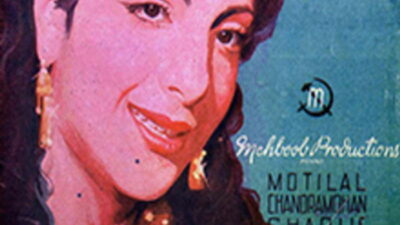
गीत विंग · गीत-पट्टिका · Song Plate
मेरी माता भारत माता
Meri Maata Bharat Maata
1943 का एक 'भारत माता' गान — स्वतंत्रता-पूर्व सिनेमा के सेंसर से बचकर निकली देशभक्ति की उमंग।
भावभक्ति · प्रेरणादायक
भाषाhindi स्वरूपयुगल
श्रेय
The Creditsसूत्र-वाक्य · The Hook
सूत्र-वाक्य
1943 का एक 'भारत माता' गान — स्वतंत्रता-पूर्व सिनेमा के सेंसर से बचकर निकली देशभक्ति की उमंग।
In EnglishA 'Bharat Mata' anthem from 1943 — patriotic fervour slipped past the censors of pre-Independence cinema.
पट्टिका-लेख
The Monographपरिचय Overview
'मेरी माता भारत माता' महबूब ख़ान की तक़दीर (1943) का सबसे स्पष्ट रूप से देशभक्ति वाला गीत है, शमशाद बेगम और मोतीलाल का एक युगल, बोल मेहरुल क़ादरी के और संगीत रफ़ीक़ ग़ज़नवी का। 1943 की फ़िल्म में भारत माता का आह्वान करते गीत स्वतंत्रता-संग्राम के दौरान वास्तविक आवेश रखते थे, और यही एक कारण है कि तक़दीर अपनी स्वतंत्रता-पूर्व युद्धकालीन उमंग के लिए याद की जाती है।
अंग्रेज़ी में पढ़ें · Read in English
'Meri Maata Bharat Maata' is the most overtly patriotic song in Mehboob Khan's Taqdeer (1943), a duet by Shamshad Begum and Motilal with lyrics by Meharul Qadri and music by Rafiq Ghaznavi. Songs invoking Bharat Mata in a 1943 film carried real charge during the freedom struggle, and this number is part of why Taqdeer is remembered for its pre-Independence wartime fervour.
संगीत The Music
रफ़ीक़ ग़ज़नवी इस गान को एक उत्थानकारी, भक्ति-देशभक्ति विस्तार के साथ रचते हैं — धुन व्यापक और उद्घोषक, दोनों आवाज़ें एक साझा आह्वान में जुड़ी हुई, उस प्रेरणादायक अंदाज़ में जिससे हिंदी सिनेमा औपनिवेशिक सेंसरशिप की सीमाओं के भीतर मातृभूमि को नमन करता था।
अंग्रेज़ी में पढ़ें · Read in English
Rafiq Ghaznavi composes the anthem with an uplifting, devotional-patriotic sweep — the melody broad and declamatory, the two voices joined in a shared invocation, in the inspirational manner Hindi cinema used to honour the motherland within the limits of colonial censorship.
काव्य The Poetry
'मेरी माता भारत माता' का उद्घाटन भारत को मातृ-आदर्श से जोड़ता है — वह 'भारत माता' की पुरानी पहचान जिसे बंकिम चंद्र चट्टोपाध्याय ने 'वंदे मातरम्' (1882) में सँजोया था और जो भारतीय राष्ट्रवाद की भावनात्मक व्याकरण बन गई थी। मेहरुल क़ादरी ने मेहबूब ख़ान की जनोन्मुखी रुचि के लिए इस आदर्श को बिना किसी व्यंग्य के अपनाया: यह गीत एक प्रतिज्ञा है, जन्मभूमि के प्रति भक्ति की घोषणा — सबसे अंतरंग सम्बंध (माँ) के माध्यम से। युगल गीत — शमशाद बेगम और मोतीलाल साथ गाते — एक देशभक्त गीत को एक साझा नागरिक कृत्य में बदल देता है: जैसे दोनों पात्र दर्शकों के साथ-साथ शपथ ले रहे हों। राफ़ीक़ ग़ज़नवी ने धुन को उत्साहवर्धक, भक्ति-देशभक्ति के विस्तार में रखा — विस्तृत, घोषणात्मक वाक्यांश जो सामूहिक गायन के लिए उपयुक्त थे। 1943 में — बंगाल के अकाल और बढ़ते उपनिवेश-विरोध के वर्ष में — यह गुण संयोगमात्र नहीं था।
अंग्रेज़ी में पढ़ें · Read in English
The invocation 'Meri Maata Bharat Maata' aligns India with the maternal archetype — the Bharata Mata (Mother India) mythology that Bankim Chandra Chattopadhyay crystallized in 'Vande Mataram' (1882) and that had since become the emotional grammar of Indian nationalism. Meharul Qadri, writing for Mehboob Khan's populist sensibility, deployed this archetype without irony: the song is a pledge, a declaration of devotion to the motherland expressed through the most intimate relational bond (mother). The duet form — Shamshad Begum and Motilal singing together — turns a patriotic lyric into a shared civic act, as if the two screen characters are pledging alongside each other and the audience. Rafiq Ghaznavi set the melody in an uplifting, devotional-patriotic sweep: broad, declamatory phrases suited to communal singing, with the melodic line designed to be reproducible by voices of different ranges. Released in 1943, the year of the Bengal famine and escalating anti-colonial agitation, these qualities were not incidental.
कहानी The Story
1943 — भारत के स्वतंत्रता-संग्राम का सर्वाधिक राजनीतिक रूप से आवेशित वर्ष — 'भारत छोड़ो आंदोलन' की उत्तरकाल, बंगाल का अकाल और आईएनए का गठन — इसी वर्ष 'तक़दीर' में 'मेरी माता भारत माता' को एक प्रत्यक्ष देशभक्त प्रदर्शनी के रूप में शामिल किया गया। मेहबूब ख़ान ने अपने पूरे करियर में व्यावसायिक मनोरंजन में राष्ट्रवादी भाव बुने — यह उनकी फ़िल्मोग्राफी में इसका पहला दर्ज उदाहरण है। शमशाद बेगम (नरगिस की आवाज़ में) और मोतीलाल ने इसे गाया, जिससे एक देशभक्त गीत को एक असामान्य दोहरी-गायक गुणवत्ता मिली। राफ़ीक़ ग़ज़नवी ने इसे विस्तृत, घोषणात्मक शैली में संगीतबद्ध किया जो सामूहिक प्रदर्शन के लिए उपयुक्त था — उस दौर में जब सिनेमाघरों में देशभक्त गीत स्क्रीनिंग रोककर दोबारा चलवाए जाते थे।
अंग्रेज़ी में पढ़ें · Read in English
Released in 1943, the most politically charged year of India's independence struggle — it saw the Quit India Movement's aftermath, the Bengal famine, and the INA's formation — Taqdeer (1943) included 'Meri Maata Bharat Maata' as its overtly patriotic setpiece. Mehboob Khan, throughout his career, embedded nationalist themes in commercial entertainments: this is the first documented instance in his filmography. The song was sung by Shamshad Begum (voicing Nargis) and Motilal in his own voice, which gave it an unusual dual-singer quality for a patriotic number. Rafiq Ghaznavi composed it in a broad, declamatory style well suited to communal performance — at a time when patriotic songs in cinemas were known to halt screenings as audiences demanded repeated plays of the reel. Mehboob Khan's note in the film's press material reportedly connected the song explicitly to the wartime national sentiment.
विरासत The Legacy
मेहबूब ख़ान और नरगिस का वह सहयोग जो 'तक़दीर' (1943) से आरम्भ हुआ, 'मदर इंडिया' (1957) में शीर्ष पर पहुँचा — स्वयं भारत माता के उसी आदर्श का स्मारक जिसे यह गीत आह्वान करता है। पूर्वदृष्टि से, 'मेरी माता भारत माता' उस सिनेमाई दृष्टि के बीज के रूप में पढ़ा जा सकता है — वही निर्देशक, वही विषयगत डीएनए, चौदह वर्ष पहले। यह गीत 'तक़दीर' को 1943 की व्यापक युद्धकालीन देशभक्त सिनेमा प्रवृत्ति से जोड़ता है — 'किस्मत' के 'दूर हटो ऐ दुनियावालो' के साथ — जिसमें हिंदी फ़िल्में ब्रिटिश शासन के अंतर्गत प्रच्छन्न और प्रत्यक्ष राष्ट्रवादी भाव की वाहक बनीं। शमशाद बेगम के प्रारम्भिक करियर के दस्तावेज़ के रूप में, यह उनके 1940 के दशक की विद्वत्तापूर्ण चर्चाओं में उद्धृत होता है।
अंग्रेज़ी में पढ़ें · Read in English
The Mehboob Khan–Nargis collaboration that began with Taqdeer (1943) culminated in Mother India (1957), India's first Oscar-nominated film — itself a monument to the Bharata Mata archetype that this song invokes. Retrospectively, 'Meri Maata Bharat Maata' is readable as the seed of that cinematic vision: the same director, some of the same thematic DNA, fourteen years earlier. The song connects Taqdeer to the broader 1943 wartime patriotic cinema trend — alongside Kismet (1943)'s 'Door Hato O Duniya Walon' — in which popular Hindi films served as vehicles for covert and overt nationalist expression under British rule. As a Shamshad Begum early-career document, it is cited in scholarship on her formative 1940s period, when she provided the patriotic and romantic voice of several major Hindi film heroines.
वर्गीकरण
ClassificationGenre
अन्य विवरण
More Details- https://en.wikipedia.org/wiki/Taqdeer_(1943_film)
- https://en.wikipedia.org/wiki/Nargis
- https://scroll.in/reel/839085/not-very-beautiful-but-vivacious-how-nargis-was-cast-in-her-breakthrough-movie-taqdeer
- https://thelittlecorner.home.blog/2019/06/17/taqdeer-1943-western-facade-indian-story-and-soul/
References
रोचक तथ्य
Margin Notesतक़दीर (1943) मेहबूब ख़ान की अपने स्वयं के प्रोडक्शन बैनर तले पहली फ़िल्म थी — और नरगिस के साथ उनके सहयोग की शुरुआत, जिसने अंततः मदर इंडिया (1957) को जन्म दिया, जो भारत की पहली ऑस्कर-नामांकित फ़िल्म थी।
अंग्रेज़ी में पढ़ें · Read in English
Taqdeer (1943) was Mehboob Khan's first film under his own production banner — and the beginning of his collaboration with Nargis that eventually produced Mother India (1957), India's first Oscar-nominated film.
1943 बंगाल के अकाल का वर्ष था (अनुमानित 20-30 लाख मौतें) और गांधी के भारत छोड़ो आंदोलन के परिणामों का भी; उस वर्ष के देशभक्ति फ़िल्मी गीतों में असाधारण रूप से तीव्र सामाजिक प्रतिध्वनि थी।
अंग्रेज़ी में पढ़ें · Read in English
1943 was the year of the Bengal famine (estimated 2–3 million deaths) and the aftermath of Gandhi's Quit India Movement; patriotic film songs that year carried unusually acute social resonance.
मोतीलाल ने तक़दीर के साउंडट्रैक में अपने गायन भाग स्वयं गाए थे, जो उस युग के पुरुष सितारों में एक असामान्य प्रथा थी, क्योंकि वे आमतौर पर समर्पित पार्श्वगायकों का उपयोग करते थे।
अंग्रेज़ी में पढ़ें · Read in English
Motilal sang his own vocal parts in the Taqdeer soundtrack, a practice uncommon among male stars of that era who typically used dedicated playback singers.
शमशाद बेगम ने तक़दीर (1943) में नरगिस के सभी गीतों को अपनी आवाज़ दी थी; इस फ़िल्म में बेगम-नरगिस की जोड़ी को नरगिस के करियर की सबसे प्रारंभिक पर्दा-स्वर जोड़ियों में से एक के रूप में दर्ज किया गया है।
अंग्रेज़ी में पढ़ें · Read in English
Shamshad Begum voiced all of Nargis's songs in Taqdeer (1943); the Begum–Nargis pairing in this film is documented as one of the earliest screen-voice pairings in Nargis's career.
नमूना-पट्टी
The Specimen Table| शीर्षक | मेरी माता भारत माता · Meri Maata Bharat Maata |
|---|---|
| फ़िल्म | तक़दीर · 1943 |
| वर्ष · युग | 1943 |
| गायक | Shamshad Begum, Motilal |
| गीतकार | मेहरुल क़ादरी |
| संगीतकार | Rafiq Ghaznavi |
| स्वरूप | युगल |
| भाषा | hindi |
| भाव | भक्ति · प्रेरणादायक |
| लोकप्रियता | Popular |
| बोल-स्थिति | केवल झलक |
जुड़े हुए पन्ने
Connected Plates · The Graph Made Visibleअटलस में कोई पन्ना अकेला नहीं — इस गीत से जुड़े गीत, कलाकार, फ़िल्म, राग-ताल-विधा, सब यहाँ से खुलते हैं।
मिलते-जुलते गीत · Related Songs
कलाकार · The Artists
फ़िल्म · The Film
साझा कीजिए · Share this Plate