गीत विंग · गीत-पट्टिका · Song Plate
मनवा कृष्ण नाम रटे जा
Manwa Krishna Naam Rate Ja
मनवा, कृष्ण का नाम रटते जा — सहगल नाम-जप के सरल अनुशासन को गाते हैं।
भावभक्ति · Reflective · आध्यात्मिक
भाषाhindi गतिमध्यम स्वरूपएकल पुरुष
श्रेय
The Creditsसूत्र-वाक्य · The Hook
सूत्र-वाक्य
मनवा, कृष्ण का नाम रटते जा — सहगल नाम-जप के सरल अनुशासन को गाते हैं।
In EnglishKeep chanting Krishna's name, O heart — Saigal sings the simple discipline of naam-japa.
पट्टिका-लेख
The Monographपरिचय Overview
भक्त सूरदास का एक भक्ति-गीत जिसमें गायक अपने ही मन को कृष्ण का नाम बार-बार जपते रहने का परामर्श देता है — नाम-स्मरण की भक्ति-साधना। के. एल. सहगल द्वारा फ़िल्म के ध्यानमय भजन-मुहावरे में गाया गया।
अंग्रेज़ी में पढ़ें · Read in English
A devotional song from Bhakta Surdas in which the singer counsels his own mind to keep repeating the name of Krishna — the bhakti practice of naam-smaran (remembrance through the divine name). Sung by K. L. Saigal in the film's meditative bhajan idiom.
संगीत The Music
ज्ञान दत्त गीत को एक स्थिर, मध्यम-लय के धुन-चक्र पर रचते हैं जिसकी कोमल पुनरावृत्ति दैवी नाम के जप के कार्य को प्रतिबिंबित करती है। सहगल की समतल, मननशील प्रस्तुति और अनालंकृत लय भजन को उसके ध्यानमय प्रयोजन में बनाए रखती है।
अंग्रेज़ी में पढ़ें · Read in English
Gyan Dutt builds the song on a steady, mid-tempo melodic cycle whose gentle repetition mirrors the act of chanting the divine name. Saigal's even, contemplative delivery and the understated rhythm keep the bhajan rooted in its meditative purpose.
काव्य The Poetry
'मनवा' संबोधन — अपने मन या हृदय से लघु-स्नेहमय रूप ('मनवा', जहाँ '-वा' प्रत्यय कोमलता और आत्मीयता दर्शाता है) में बात करना — कबीर और मीराबाई से चली आती भक्ति-काव्य की परंपरा है। कबीर के दोहों में कवि बार-बार अपने मन को ('मन लागो यार फ़कीरी में') एक ऐसे बच्चे की तरह संबोधित करते हैं जिसे मार्गदर्शन चाहिए। डी.एन. माधोक इसी परंपरा से इस भक्त सूरदास गीत के लिए लेते हैं, गायक को अपने ही मन को कृष्ण-नाम बार-बार जपते रहने का उपदेश देते हुए। अनिवार्य क्रिया 'रटे जा' (रटते रहो, रटना से) अनुशासन और निरंतरता का बोध कराती है, क्योंकि साधना एक बार का कार्य नहीं बल्कि मन का स्थायी उन्मुखीकरण है। निर्देश की सरलता ही गीत का धार्मिक और काव्यिक वक्तव्य है।
अंग्रेज़ी में पढ़ें · Read in English
The 'manwa' address — speaking to one's own mind or heart using the diminutive affectionate form ('manwa' rather than 'man', with the '-wa' suffix that implies tenderness and familiarity) — is a convention of Bhakti poetry going back to Kabir and Mirabai. In Kabir's dohas the poet repeatedly addresses his own mind ('Mann lago yar fakiri mein') as if it were a wayward child to be counselled. D.N. Madhok draws on this same convention for this Bhakta Surdas song, making the singer counsel his own mind to keep repeating the name of Krishna — naam-japa, the practice of repetitive divine invocation. The imperative 'rate ja' (keep chanting, from ratna — to repeat, to memorise) carries the sense of discipline and continuity, as the practice is not a one-time act but a permanent orientation of the mind. The simplicity of the instruction is the song's theological and poetic statement.
कहानी The Story
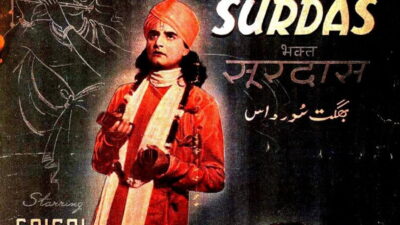
भक्त सूरदास (1942) के लिए विभिन्न मनोदशाओं और गति में भजन-प्रकार के गीतों की एक श्रृंखला आवश्यक थी — विलाप, सक्रिय भक्ति-प्रोत्साहन, शांत चिंतन — और 'मनवा कृष्ण नाम रटे जा' सक्रिय-मननशील श्रेणी का प्रतिनिधित्व करता है: रोता हुआ नहीं बल्कि उपदेश देता, निष्क्रिय शोक नहीं बल्कि अनुशासित पुनरावृत्ति। ज्ञान दत्त ने इस संख्या को एक स्थिर, मध्यम-लय के धुन-चक्र पर रचा जिसकी कोमल नियमितता स्वयं नाम-जप की लय को दर्शाती है — दोहराई जाने वाली प्रार्थना की वृत्ताकार गति। के.एल. सहगल की आवाज़ इस रजिस्टर में उनके दार्शनिक-शिकायत गीतों की तुलना में शांत है — गाता हुआ उपदेशक, न कि पीड़ित।
अंग्रेज़ी में पढ़ें · Read in English
Bhakta Surdas (1942) required a range of bhajan-type songs across different moods and tempos — weeping laments, active devotional exhortations, quiet meditations — and 'Manwa Krishna Naam Rate Ja' represents the active-meditative category: not weeping but counselling, not passive grief but disciplined repetition. Gyan Dutt gave this number a steady, mid-tempo melodic cycle whose gentle regularity mirrors the rhythm of naam-japa itself — the circular motion of repetitive prayer. K.L. Saigal's voice in this register is calmer than in his philosophical complaint songs, more at rest: the singer counselling rather than anguishing, which gives the song a different emotional flavour within the film's overall devotional palette.
वर्गीकरण
Classification- Tempo
- Medium
Genre
अन्य विवरण
More Details- Wikipedia: Bhakta Surdas — https://en.wikipedia.org/wiki/Bhakta_Surdas
- Wikipedia: Gyan Dutt — https://en.wikipedia.org/wiki/Gyan_Dutt
- apnaarchive.wordpress.com: gyan dutt
- Wikipedia: D.N. Madhok
References
रोचक तथ्य
Margin Notes'मनवा' संबोधन — अपने ही मन/हृदय से एक स्नेहसूचक लघुरूप में बात करना — कबीर के दोहों (15वीं शताब्दी), मीराबाई के पदों और सूरदास की पदावली परंपरा में पाई जाने वाली एक युक्ति है, जो इस गीत को सदियों पुरानी भक्ति-साधना से जोड़ती है।
अंग्रेज़ी में पढ़ें · Read in English
The 'manwa' address — speaking to one's own heart/mind in an affectionate diminutive — is a technique found in Kabir's dohas (15th century), Mirabai's padas, and the Surdas padavali tradition, linking this song to centuries of Bhakti devotional practice.
भक्त सूरदास (1942) में ज्ञान दत्त द्वारा संगीतबद्ध पंद्रह से अधिक गीत थे — उस समय तक की उनकी सबसे बड़ी एकल-फ़िल्म रचना और वह संगीत-संग्रह जिसने बॉम्बे उद्योग में उनकी प्रतिष्ठा स्थापित की।
अंग्रेज़ी में पढ़ें · Read in English
Bhakta Surdas (1942) contained over fifteen songs composed by Gyan Dutt — his largest single-film composition to that point and the score that established his reputation in the Bombay industry.
के.एल. सहगल (1904–1947) ने स्वयं पर्दे पर सूरदास की भूमिका निभाई; इससे फ़िल्म में उनके भक्ति-गीत दोहरे रूप से प्रदर्शनकारी बन गए — एक अभिनेता एक संत-गायक की भूमिका निभा रहा था, ऐसे गीत गा रहा था जो उसी संत की अपनी भक्ति-परंपरा को जागृत करते थे।
अंग्रेज़ी में पढ़ें · Read in English
K.L. Saigal (1904–1947) played the role of Surdas on screen himself; making his devotional numbers in the film doubly performative — an actor playing a saint-singer, singing songs that invoked that saint's own devotional tradition.
नाम-जप (दिव्य नाम का बार-बार उच्चारण) भागवत पुराण में वर्णित भक्ति के नौ रूपों में से एक है; इस गीत के लिए डी.एन. मधोक के बोल इस साधना का स्पष्ट संदर्भ देते हैं।
अंग्रेज़ी में पढ़ें · Read in English
Naam-japa (repetitive invocation of a divine name) is one of the nine forms of bhakti (devotion) described in the Bhagavata Purana; D.N. Madhok's lyric for this song makes explicit reference to this practice.
नमूना-पट्टी
The Specimen Table| शीर्षक | मनवा कृष्ण नाम रटे जा · Manwa Krishna Naam Rate Ja |
|---|---|
| फ़िल्म | भक्त सूरदास · 1942 |
| वर्ष · युग | 1942 |
| गायक | K.L. Saigal |
| गीतकार | D. N. Madhok |
| संगीतकार | Gyan Dutt |
| स्वरूप | एकल पुरुष |
| गति | मध्यम |
| भाषा | hindi |
| भाव | भक्ति · Reflective · आध्यात्मिक |
| लोकप्रियता | Popular |
| बोल-स्थिति | केवल झलक |
जुड़े हुए पन्ने
Connected Plates · The Graph Made Visibleअटलस में कोई पन्ना अकेला नहीं — इस गीत से जुड़े गीत, कलाकार, फ़िल्म, राग-ताल-विधा, सब यहाँ से खुलते हैं।
मिलते-जुलते गीत · Related Songs
कलाकार · The Artists
फ़िल्म · The Film
साझा कीजिए · Share this Plate