गीत विंग · गीत-पट्टिका · Song Plate
मैं सोते भाग जगा दूँगा
Main Sote Bhag Jaga Dunga
सोते हुए भाग्य को जगाने का संकल्प — सहगल अपने सबसे शांत-दृढ़ रूप में।
भावHopeful · प्रेरणादायक
भाषाhindi गतिमध्यम स्वरूपएकल पुरुष
श्रेय
The Creditsसूत्र-वाक्य · The Hook
सूत्र-वाक्य
सोते हुए भाग्य को जगाने का संकल्प — सहगल अपने सबसे शांत-दृढ़ रूप में।
In EnglishA vow to wake the sleeping fortune — Saigal at his most quietly defiant.
पट्टिका-लेख
The Monographपरिचय Overview
'मैं सोते भाग जगा दूँगा' लगन (1941) का एक के.एल. सहगल एकल है, जिसे आर.सी. बोराल ने रचा और डी.एन. माधोक ने लिखा। शीर्षक — सोते भाग्य को जगाने का वचन — फ़िल्म की प्रेमकथा के भीतर गीत के दृढ़, उत्साहवर्धक स्वर को निर्धारित करता है।
अंग्रेज़ी में पढ़ें · Read in English
'Main Sote Bhag Jaga Dunga' is a K.L. Saigal solo from Lagan (1941), composed by R.C. Boral with lyrics by D.N. Madhok. The title — a promise to awaken sleeping fortune — sets the song's resolute, uplifting tone within the film's romantic drama.
काव्य The Poetry
डी.एन. माधोक औपचारिक उर्दू और बोलचाल की हिंदी के बीच आसानी से आ-जा सकते थे, और यह शीर्षक वाक्यांश सुस्पष्ट रूप से बोलचाल की हिंदी में है। 'सोते भाग जगा दूँगा' में 'भाग' (भाग्य) का मुहावरेदार प्रयोग है — भाग्य एक ऐसी चीज़ है जो सोती है और जिसे जगाया जा सकता है। क्रिया 'जगा दूँगा' एक वचन का भाव देती है, न कि महज़ भविष्यवाणी का, जो गीत को एक शांत दृढ़ता प्रदान करती है। माधोक ने सहगल की अनेक संख्याओं को एक दृढ़-संकल्पी प्रथम पुरुष स्वर के इर्द-गिर्द बुना — प्रेमी एक शांत नियतिवादी के रूप में। लगन के अन्य गीतों के समान ढाँचे और सहगल की मध्यम-लय, अवरोही-रागात्मक दृढ़ता की संख्याओं की विशेषता से अनुमान लगाया जा सकता है कि स्वर आशापूर्ण है पर उथला नहीं, दृढ़ है पर आक्रामक नहीं।
अंग्रेज़ी में पढ़ें · Read in English
D.N. Madhok could modulate fluently between formal Urdu and colloquial Hindi, and this title phrase sits firmly in the latter register. 'Sote bhag jaga dunga' — I will wake the sleeping fortune — draws on the idiomatic Hindi use of 'bhag' (fate/fortune) as something that sleeps and can be stirred. The verb 'jaga dunga' carries a vow rather than a mere prediction, giving the lyric a quietly defiant energy. Madhok constructed many of Saigal's numbers around a resolute first-person voice: the lover as quiet determinist. In the absence of the full text, the structural logic of the song can be inferred from comparable numbers in the Lagan soundtrack and from Saigal's characteristic handling of mid-tempo, minor-key resolves — the tone is hopeful without being breezy, firm without being aggressive.
कहानी The Story
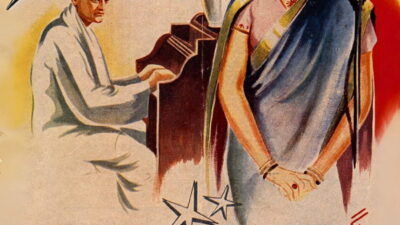
लगन (1941) का निर्देशन नितिन बोस ने न्यू थिएटर्स, कलकत्ता के लिए किया — एक द्विभाषी निर्मिती जो हिंदी में और एक साथ बांग्ला में 'परिचय' के नाम से प्रदर्शित हुई। यह के.एल. सहगल की न्यू थिएटर्स के लिए अंतिम फ़िल्म थी, इससे पहले कि वे बंबई में रणजीत स्टूडियो और बाद में फ़िल्मिस्तान के साथ काम करने के लिए रवाना हों। फ़िल्म की कथा एक कवि से जुड़े प्रेम-त्रिकोण पर केंद्रित थी, और इसके लिए आवश्यक भावनात्मक रजिस्टरों की विविधता — रोमांटिक, दार्शनिक, विरह-पूर्ण, दृढ़ — ने आर.सी. बोराल के संगीत को व्यापक फलक दिया। 'मैं सोते भाग जगा दूँगा' दृढ़ता के रजिस्टर में था, सहगल एक किरदार की शांत आत्म-विश्वास को वाणी दे रहे थे।
अंग्रेज़ी में पढ़ें · Read in English
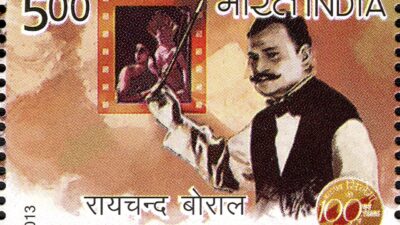
Lagan (1941) was directed by Nitin Bose for New Theatres, Calcutta — a bilingual production released simultaneously in Hindi and in Bengali as Porichoy. It was the last film K.L. Saigal made for New Theatres before relocating to Bombay to work with Ranjit Studio and later Filmistan. The film's story centred on a romantic triangle involving a poet, and the variety of emotional registers required — romantic, philosophical, yearning, resolute — gave R.C. Boral's score a wide range. 'Main Sote Bhag Jaga Dunga' occupied the resolute register, Saigal voicing a character's quiet self-assurance. R.C. Boral (1903–1981), winner of the 1978 Dadasaheb Phalke Award, was considered the father of Indian film music, and Lagan showed his facility for matching song-type to narrative function.
विरासत The Legacy
लगन (1941) अपने वर्ष की सर्वाधिक कमाई करने वाली हिंदी फ़िल्मों में थी, और इसका पूरा संगीत-पट्टी — विशेषतः के.एल. सहगल के एकल गीत — 1940 के दशक के मध्य से आकाशवाणी पर स्वर्ण-युग की श्रृंखलाओं के रूप में प्रसारित होते रहे, जिसने 1947 में सहगल की मृत्यु के बाद भी उनकी आवाज़ को जीवित रखा। 'मैं सोते भाग जगा दूँगा' सहगल के सिद्ध आशावादी-दृढ़ गीतों की पूर्वव्यापी संकलन-सूचियों में अपनी जगह पाता है जो उनके व्यापक परास को प्रदर्शित करती हैं। आर.सी. बोराल को 1978 में दादासाहब फाल्के पुरस्कार मिला, और उन्हें समर्पित श्रद्धांजलियों में इस फ़िल्म के संगीत को उनकी व्यावसायिक परियोजनाओं के भीतर विशिष्ट गीतों को अवकाश देने की क्षमता के उदाहरण के रूप में उद्धृत किया गया।
अंग्रेज़ी में पढ़ें · Read in English
Lagan (1941) was among the highest-grossing Hindi films of its year, and its complete soundtrack — particularly the K.L. Saigal solos — circulated on All India Radio from the mid-1940s onward as part of the golden-era programming that kept Saigal's voice alive after his death in 1947. 'Main Sote Bhag Jaga Dunga', as one of the film's upbeat-resolute numbers, found a niche in retrospective collections dedicated to Saigal's range beyond his better-known romantic and melancholic songs. R.C. Boral received the Dadasaheb Phalke Award in 1978, and this film's score was cited in tributes to him as an example of his ability to give composers and singers room within a commercially driven project to attempt distinctive songs.
वर्गीकरण
Classification- Tempo
- Medium
Genre
अन्य विवरण
More Details- Wikipedia: Lagan (1941 film) — https://en.wikipedia.org/wiki/Lagan_(1941_film)
- Wikipedia: Raichand Boral — https://en.wikipedia.org/wiki/Raichand_Boral
- Wikipedia: D.N. Madhok — https://en.wikipedia.org/wiki/D._N._Madhok
- indiancine.ma: Lagan (Nitin Bose) 1941 — https://indiancine.ma/AKPD
References
रोचक तथ्य
Margin Notesलगन (1941) के.एल. सहगल की न्यू थिएटर्स, कलकत्ता के लिए बनाई गई आख़िरी फ़िल्म थी, इससे पहले कि वे बॉम्बे चले गए — यह उस स्टूडियो के साथ उनके दशक भर के जुड़ाव के अंत का प्रतीक था जिसने उनका करियर गढ़ा।
अंग्रेज़ी में पढ़ें · Read in English
Lagan (1941) was the last film K.L. Saigal made for New Theatres, Calcutta, before his move to Bombay — marking the end of his decade-long association with the studio that built his career.
यह फ़िल्म द्विभाषी प्रस्तुति थी: हिंदी संस्करण का नाम लगन था और साथ ही बना बंगाली संस्करण पोरिचॉय (जिसे परिचय भी लिखा जाता है) था। कानन देवी ने बंगाली संस्करण के लिए 1942 में बंगाल फ़िल्म जर्नलिस्ट्स एसोसिएशन का सर्वश्रेष्ठ अभिनेत्री पुरस्कार जीता।
अंग्रेज़ी में पढ़ें · Read in English
The film was a bilingual production: the Hindi version was titled Lagan and the simultaneous Bengali version was Porichoy (also transliterated Parichaya). Kanan Devi won the Bengal Film Journalists' Association Best Actress award in 1942 for the Bengali version.
संगीत निर्देशक आर.सी. बोराल (1903–1981) को 1978 में दादासाहेब फाल्के पुरस्कार से सम्मानित किया गया; उन्हें व्यापक रूप से भारतीय फ़िल्म संगीत का जनक माना जाता है और हिंदी फ़िल्म (धूप छाँव, 1935) में पार्श्वगायन शुरू करने वाला पहला व्यक्ति भी।
अंग्रेज़ी में पढ़ें · Read in English
Music director R.C. Boral (1903–1981) was honoured with the Dadasaheb Phalke Award in 1978; he is widely credited as the father of Indian film music and the first to introduce playback singing in a Hindi film (Dhoop Chhaon, 1935).
डी.एन. मधोक (1902–1982) ने लगन में के.एल. सहगल के एकल गीतों और कानन देवी के गीतों — दोनों के बोल लिखे, जो एक ही फ़िल्म के दोनों मुख्य कलाकारों के लिए एक दुर्लभ दोहरी सेवा थी।
अंग्रेज़ी में पढ़ें · Read in English
D.N. Madhok (1902–1982) wrote lyrics for both K.L. Saigal solos and Kanan Devi numbers in Lagan, a rare dual service to the two leads of a single film.
नमूना-पट्टी
The Specimen Table| शीर्षक | मैं सोते भाग जगा दूँगा · Main Sote Bhag Jaga Dunga |
|---|---|
| फ़िल्म | लगन · 1941 |
| वर्ष · युग | 1941 |
| गायक | K.L. Saigal |
| गीतकार | D. N. Madhok |
| संगीतकार | Rai Chand Boral |
| स्वरूप | एकल पुरुष |
| गति | मध्यम |
| भाषा | hindi |
| भाव | Hopeful · प्रेरणादायक |
| लोकप्रियता | Popular |
| बोल-स्थिति | केवल झलक |
जुड़े हुए पन्ने
Connected Plates · The Graph Made Visibleअटलस में कोई पन्ना अकेला नहीं — इस गीत से जुड़े गीत, कलाकार, फ़िल्म, राग-ताल-विधा, सब यहाँ से खुलते हैं।
मिलते-जुलते गीत · Related Songs
कलाकार · The Artists
फ़िल्म · The Film
साझा कीजिए · Share this Plate