गीत विंग · गीत-पट्टिका · Song Plate
मधुर मधुर गा रे मनवा
Madhur Madhur Gaa Re Manwa
मधुर मधुर गा रे मनवा — ख़ुर्शीद आत्मा को दिए एक निमंत्रण को एक कोमल भजन में बदल देती हैं।
भावभक्ति · Joyful · शांत
भाषाhindi गतिमध्यम स्वरूपएकल महिला
श्रेय
The Creditsसूत्र-वाक्य · The Hook
सूत्र-वाक्य
मधुर मधुर गा रे मनवा — ख़ुर्शीद आत्मा को दिए एक निमंत्रण को एक कोमल भजन में बदल देती हैं।
In EnglishSing sweetly, O heart — Khursheed turns an invitation to the soul into a gentle bhajan.
पट्टिका-लेख
The Monographपरिचय Overview
भक्त सूरदास का एक भक्ति-गीत जिसमें गायिका अपने ही मन को प्रभु की महिमा में मधुर गाने के लिए प्रेरित करती है। ख़ुर्शीद द्वारा गाया गया, जिनकी इस फ़िल्म में सफलता ने उन्हें दशक की एक प्रमुख आवाज़ बना दिया, यह ज्ञान दत्त के भक्ति-संगीत के अधिक कोमल, गीतात्मक क्षणों में से एक है।
अंग्रेज़ी में पढ़ें · Read in English
A devotional song from Bhakta Surdas in which the singer urges her own heart to sing sweetly in praise of the divine. Sung by Khursheed, whose breakthrough in this film made her a leading voice of the decade, it sits among the gentler, lyrical moments of Gyan Dutt's devotional score.
संगीत The Music
ज्ञान दत्त भजन को एक बहती हुई, मध्यम-लय की धुन में रचते हैं जिसकी मधुरता शीर्षक के आह्वान से मेल खाती है। ख़ुर्शीद की उज्ज्वल आवाज़ धुन को एक सहज भक्ति-गर्माहट के साथ ले चलती है, हारमोनियम और लय की हल्की संगत पंक्ति को घेरे बिना उसे आकार देती है।
अंग्रेज़ी में पढ़ें · Read in English
Gyan Dutt sets the bhajan to a flowing, mid-tempo melody whose sweetness matches the title's exhortation. Khursheed's bright voice carries the tune with an unforced devotional warmth, the light accompaniment of harmonium and rhythm framing rather than crowding the line.
काव्य The Poetry
'मनवा' शब्द — हृदय या मन, आत्मीय ब्रज लघु-रूप में संबोधित — इस गीत को एक विशिष्ट और पुरातन उत्तर भारतीय भक्ति परंपरा में रखता है: कवि अपने अंतर-स्व को गाने का आदेश देता है। कबीर के अनेक 'मन' काव्य, सूरदास के विनय-पद (याचना-प्रार्थना) और समग्र लोक-भजन परंपरा में यह आंतरिक संबोधन है — गायक बाहरी श्रोताओं को नहीं बल्कि अपनी चेतना को ईश्वर की ओर मुड़ने के लिए प्रेरित करता है। 'मधुर मधुर' का प्रारंभिक आह्वान ब्रज भाषा काव्य में एक अलंकारिक युक्ति है: दोहरा विशेषण एक साथ वर्णन और मंत्र है, मन को बताता है कि क्या करना है और उस मिठास की याद दिलाता है जो उस क्रिया को सार्थक बनाती है। ख़ुर्शीद की स्वच्छ सोप्रानो के लिए लिखते हुए माधोक वैष्णव भक्ति के केंद्र में स्थित उजाले को पकड़ते हैं — वह भक्ति जो अंधेरी या उदास नहीं, बल्कि मूलतः आनंदमय है, जहाँ हृदय को उत्सव के रूप में गाने के लिए बुलाया जाता है।
अंग्रेज़ी में पढ़ें · Read in English
The word 'manwa' — the heart or mind, addressed in the intimate Braj diminutive form — places this song in a specific and ancient North Indian devotional tradition: the poet commanding his own inner self to sing. Kabir's many 'man' poems, Surdas's vinaya padas (prayers of petition), and the whole lok-bhajan tradition all contain this interior address, the singer urging not an external audience but his own consciousness to turn toward the divine. The repetition 'madhur madhur' (sweet, sweet) as the opening invocation is a rhetorical device in Braj Bhasha poetry: the doubled adjective is both description and incantation, simultaneously telling the heart what to do and reminding it of the sweetness that makes the act worthwhile. D.N. Madhok, writing for Khursheed's clear soprano, captures the brightness at the centre of Vaishnava bhakti — not a dark or mournful devotion but one that is essentially joyful, the heart called to song as celebration.
कहानी The Story
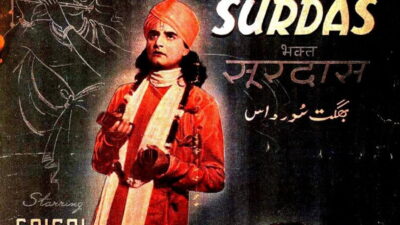
भक्त सूरदास (1942, रणजीत स्टूडियोज़, बंबई) चतुर्भुज दोशी के निर्देशन में बनी और इसकी मुख्य अभिनेत्री ख़ुर्शीद के लिए एक निर्णायक फ़िल्म थी, जो कई निर्माणों में दिख चुकी थीं लेकिन इस फ़िल्म जैसा प्रभाव नहीं बना पाई थीं। फ़िल्म के भक्ति-विषय — अंधे संत सूरदास का जीवन — के लिए विरह की वेदना से लेकर कोमल प्रशंसा तक संगीत-मनोभावों की एक पूरी श्रृंखला की आवश्यकता थी, और ज्ञान दत्त के संगीत ने दोनों प्रदान किए। यह भजन संगीत-पट्टी के सकारात्मक, उत्सवमय स्वर में आता है: वियोग का विलाप करने की जगह, यह आत्मा को गाने का निमंत्रण देता है। ख़ुर्शीद के लिए, जिन्होंने अपनी आवाज़ शास्त्रीय और भक्ति शैलियों में तैयार की थी, ऐसा गीत उनके तम्बर के अनुकूल था। फ़िल्म की रिलीज़ तक यह स्पष्ट हो गया था कि इस रणजीत स्टूडियोज़ निर्माण ने उन्हें वह मंच दिया जिसकी उन्हें ज़रूरत थी।
अंग्रेज़ी में पढ़ें · Read in English
Bhakta Surdas (1942, Ranjit Studios, Bombay) was directed by Chaturbhuj Doshi and was the breakthrough film for its female lead, Khursheed, who had appeared in several productions without making the impact that this film delivered. The film's devotional subject — the life of the blind saint Surdas — required a range of musical moods from anguished viraha to gentle praise, and Gyan Dutt's score provided both. This bhajan falls into the affirmative, celebratory strain of the soundtrack: rather than lamenting separation, it enjoins the soul to sing. For Khursheed, who had trained her voice in classical and devotional modes, such a number suited her timbre well. By the time of the film's release it was clear that this Ranjit Studios production had given her the platform she needed; her name thereafter became a reliable draw for audiences who had loved her in this film.
वर्गीकरण
Classification- Tempo
- Medium
Genre
अन्य विवरण
More Details- https://en.wikipedia.org/wiki/Bhakta_Surdas
- https://en.wikipedia.org/wiki/D._N._Madhok
- https://en.everybodywiki.com/Khursheed_Bano
References
रोचक तथ्य
Margin Notesख़ुर्शीद (जिन्हें ख़ुर्शीद या ख़ुर्शीद बानो के नाम से भी श्रेय दिया जाता है) को भक्त सूरदास (1942) में अपनी बड़ी सफलता मिलने का दस्तावेज़ीकरण है; इस फ़िल्म से पहले उनके करियर में कोई निर्णायक हिट नहीं थी।
अंग्रेज़ी में पढ़ें · Read in English
Khursheed (also credited as Khurshid or Khursheed Bano) is documented as having found her major breakthrough in Bhakta Surdas (1942); prior to this film her career had not produced a defining hit.
ब्रजभाषा का लघुरूप 'मनवा' ('मन' के लिए) उस भक्ति-लोकगीत परंपरा की विशेषता है, जो स्वयं सूरदास तक जाती है, जो अक्सर अपने ही मन को इस आत्मीय रूप में संबोधित करते थे।
अंग्रेज़ी में पढ़ें · Read in English
The Braj Bhasha diminutive 'manwa' (for 'man', mind/heart) is characteristic of the devotional folk-song tradition going back to Surdas himself, who frequently addressed his own heart in this intimate form.
भक्त सूरदास के लिए ज्ञान दत्त की रचना-शैली हारमोनियम-प्रधान सरलता को प्राथमिकता देती थी, जो गायक की आवाज़ को संगीत-अनुभव के केंद्र में रखती थी — यह पद्धति ख़ुर्शीद की सहज, अलंकाररहित भक्ति-ऊष्मा के अनुकूल थी।
अंग्रेज़ी में पढ़ें · Read in English
Gyan Dutt's compositional style for Bhakta Surdas favoured harmonium-led simplicity, placing the singer's voice at the centre of the musical experience — an approach that suited Khursheed's unadorned devotional warmth.
डी.एन. मधोक ने नौशाद के एक स्वतंत्र संगीत निर्देशक के रूप में पदार्पण (प्रेम नगर, 1940) के लिए भी गीत लिखे; इन दोनों ने अलग-अलग राहों पर जाने से पहले कई शुरुआती बॉम्बे प्रस्तुतियों में सहयोग किया।
अंग्रेज़ी में पढ़ें · Read in English
D.N. Madhok also wrote the lyrics for Naushad's debut as an independent music director (Prem Nagar, 1940); the two collaborated on multiple early Bombay productions before following separate paths.
नमूना-पट्टी
The Specimen Table| शीर्षक | मधुर मधुर गा रे मनवा · Madhur Madhur Gaa Re Manwa |
|---|---|
| फ़िल्म | भक्त सूरदास · 1942 |
| वर्ष · युग | 1942 |
| गायक | Khursheed |
| गीतकार | D. N. Madhok |
| संगीतकार | Gyan Dutt |
| स्वरूप | एकल महिला |
| गति | मध्यम |
| भाषा | hindi |
| भाव | भक्ति · Joyful · शांत |
| लोकप्रियता | Popular |
| बोल-स्थिति | केवल झलक |
जुड़े हुए पन्ने
Connected Plates · The Graph Made Visibleअटलस में कोई पन्ना अकेला नहीं — इस गीत से जुड़े गीत, कलाकार, फ़िल्म, राग-ताल-विधा, सब यहाँ से खुलते हैं।
मिलते-जुलते गीत · Related Songs
कलाकार · The Artists
फ़िल्म · The Film
साझा कीजिए · Share this Plate