गीत विंग · गीत-पट्टिका · Song Plate
मधुकर श्याम हमारे चोर
Madhukar Shyam Hamare Chor
हमारे श्याम मधुकर चोर हैं — सहगल मन के प्रिय चोर के कृष्ण-भक्ति भाव को गाते हैं।
भावभक्ति · चुलबुला · Tender
भाषाhindi गतिमध्यम स्वरूपएकल पुरुष
श्रेय
The Creditsसूत्र-वाक्य · The Hook
सूत्र-वाक्य
हमारे श्याम मधुकर चोर हैं — सहगल मन के प्रिय चोर के कृष्ण-भक्ति भाव को गाते हैं।
In EnglishOur dark-hued Shyam is a thief — Saigal sings the Krishna-bhakti motif of the heart's beloved robber.
पट्टिका-लेख
The Monographपरिचय Overview
भक्त सूरदास का एक कृष्ण-भक्ति गीत जो दैवी 'चोर' की शास्त्रीय भक्ति-कल्पना पर आधारित है — कृष्ण वही जो भक्त का मन चुरा ले जाते हैं, जैसे उन्होंने कभी ब्रज में माखन चुराया था। के. एल. सहगल द्वारा उसी मननशील मुहावरे में गाया गया जिसने फ़िल्म के भजनों को परिभाषित किया।
अंग्रेज़ी में पढ़ें · Read in English
A Krishna-devotional song from Bhakta Surdas drawing on the classic Bhakti conceit of the divine 'thief' (chor) — Krishna as the one who steals the devotee's heart, as he once stole butter in Braj. Sung by K. L. Saigal in the contemplative idiom that defined the film's bhajans.
संगीत The Music
ज्ञान दत्त गीत को एक बहती हुई मध्यम-लय की भजन-धुन में रचते हैं जिसकी कोमल झूलती लटक उसके स्नेहमय कृष्ण-भाव के अनुकूल है। सहगल की संतुलित, आत्मीय प्रस्तुति हर पंक्ति को आकार देती है, और संयमित हारमोनियम-व-ताल की संगत भक्ति-भाव को सहज बनाए रखती है।
अंग्रेज़ी में पढ़ें · Read in English
Gyan Dutt sets the song to a flowing mid-tempo bhajan melody with a gently swaying lilt that suits its affectionate Krishna theme. Saigal's measured, intimate delivery shapes each line, with restrained harmonium-and-percussion support keeping the devotional mood unforced.
काव्य The Poetry
शीर्षक दो उपाधियों को एक करता है: 'मधुकर' (भँवरा, जो मकरंद पीता है — कृष्ण का नाम उस प्रेमी के रूप में जो भक्त के हृदय के फूलों पर मँडराता है) और 'श्याम' (काले वाले, नील-काले कृष्ण), और फिर 'हमारे चोर' जोड़ता है। यह सूरदास की चोर-लीला की शास्त्रीय कल्पना है: ब्रज पुराण का माखन-चोर कृष्ण, भक्ति-रजिस्टर में रूपांतरित जहाँ वे माखन नहीं बल्कि भक्त का हृदय चुराते हैं। वास्तविक सूरदास पदावली में इस विषय पर अनेक रचनाएँ हैं — 'मैया मोरी मैं नहीं माखन खायो' सबसे प्रसिद्ध है — और डी.एन. माधोक इसी स्थापित रजिस्टर में काम करते हैं, गीत को एक चंचल धार्मिक आरोप देते: 'हमारे काले-भँवरे-से श्याम चोर हैं' — एक शिकायत जो एक साथ प्रेम की स्वीकृति भी है।
अंग्रेज़ी में पढ़ें · Read in English
The title fuses two epithets: 'Madhukar' (the bee, one who drinks nectar — a name for Krishna as the lover who roams the flowers of the devotee's heart) and 'Shyam' (the dark one, the blue-black Krishna), and then adds 'Hamare Chor' (our thief). This is the classic chor-leela conceit of Surdas: Krishna the butter-thief of Braj mythology, translated into the Bhakti register where what he steals is not butter but the devotee's heart. The actual Surdas padavali contains multiple compositions on this theme — 'Maiya Mori Main Nahi Makhan Khayo' (Mother, I did not eat the butter, says Krishna) is the most famous, but there are others in which the devotee accuses Krishna of stealing his heart. D.N. Madhok works in this established register, giving the song a playful theological accusation: 'Our dark bee-like Krishna is the thief' — a complaint that is simultaneously a declaration of love.
कहानी The Story
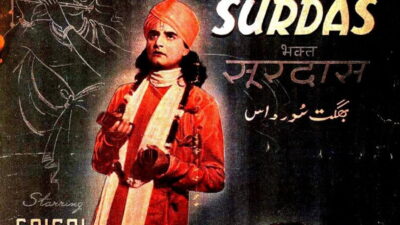
भक्त सूरदास (1942) ने अपनी भक्ति संगीत-पट्टी को विरह-भक्ति संख्याओं के साथ-साथ चोर-लीला परंपरा के आसपास बनाया, जिसने फ़िल्म को चंचल ब्रज-परंपरा से आँसू-भरे मननशील भजनों तक की रेंज दी। 'मधुकर श्याम हमारे चोर' चंचल-भक्ति योगदान था: आरोप-जो-प्रेम-घोषणा-है, जो भक्ति परंपरा के ईश्वर के साथ अंतरंग संबोधन की विशेषता है। के.एल. सहगल की आवाज़ इस रजिस्टर में उनके पीड़ित एकलों की तुलना में हल्की थी, प्रस्तुति बोल की चिढ़ाने वाली तर्क-शृंखला से आकारित। ज्ञान दत्त ने इसे एक कोमल झूमती धुन पर रखा — नृत्य-प्रधान होने के लिए पर्याप्त तेज़ नहीं पर लयात्मक रूप से जीवंत — गीत के स्नेही और शोकमय के बजाय उल्लासमय मूड को अंकित करते।
अंग्रेज़ी में पढ़ें · Read in English
Bhakta Surdas (1942) built its devotional soundtrack around the chor-leela tradition alongside the virah-bhakti numbers, giving the film a range from playful Braj lore to weeping contemplative bhajans. 'Madhukar Shyam Hamare Chor' was the playful-devotional contribution: the accusation-as-love-declaration that is a feature of the Bhakti tradition's intimate address to the divine. K.L. Saigal's voice in this register was lighter than in his anguished solos, the delivery shaped by the teasing logic of the lyric. Gyan Dutt set it to a gentle swaying melody — not fast enough to be dance-driven but rhythmically alive — marking the song's affectionate rather than mournful mood. The film was made at Ranjit Studios, Bombay, the studio's largest production to that point.
विरासत The Legacy
चोर-लीला कृष्ण-भजन परंपरा उत्तर भारत में और फ़िल्म संगीत में निरंतर प्रदर्शन में रही है। 'मधुकर श्याम हमारे चोर' इस विषय पर रचनाओं की एक अटूट श्रृंखला से जुड़ता है: सूरदास के मूल पदावली से 1940-1950 के दशक के फ़िल्म भजनों तक आज के रिकॉर्डिंग तक। भक्त सूरदास के के.एल. सहगल के भजन उस भक्ति-कार्यक्रम के हिस्से के रूप में आकाशवाणी पर मानक प्रसारण में रहे जो फ़िल्म संगीत के साथ-साथ चलता था। ज्ञान दत्त का इस प्रकार के चोर-भजन के लिए झूमती धुन का मुहावरा बाद की रचनाओं में प्रतिध्वनित हुआ।
अंग्रेज़ी में पढ़ें · Read in English
The chor-leela Krishna bhajan tradition has remained continuously in performance across North India and in film music. 'Madhukar Shyam Hamare Chor' connects to an unbroken chain of compositions on this theme: from Surdas's original padavalis to the film bhajans of the 1940s and 1950s through to contemporary recordings. K.L. Saigal's bhajans from Bhakta Surdas remained in standard rotation on All India Radio as part of the devotional programming that ran alongside film music. Gyan Dutt's swaying melodic idiom for this type of chor-bhajan was echoed in later compositions on similar themes. The song is also notable as an example of D.N. Madhok writing in a playful-devotional register rather than the philosophically serious mode more often associated with him.
वर्गीकरण
Classification- Tempo
- Medium
Genre
अन्य विवरण
More Details- Wikipedia: Bhakta Surdas — https://en.wikipedia.org/wiki/Bhakta_Surdas
- Wikipedia: Surdas — https://en.wikipedia.org/wiki/Surdas
- Wikipedia: Gyan Dutt
- myswar.co: Bhakta Surdas (1942)
References
रोचक तथ्य
Margin Notesशीर्षक कृष्ण के तीन नामों को जोड़ता है: 'मधुकर' (भ्रमर-प्रेमी), 'श्याम' (सांवला) और चंचल विशेषण 'चोर' — ये तीनों वृंदावन में कृष्ण के बचपन की ब्रज-लोककथाओं से लिए गए हैं।
अंग्रेज़ी में पढ़ें · Read in English
The title combines three names for Krishna: 'Madhukar' (the bee-lover), 'Shyam' (the dark one), and the playful epithet 'Chor' (thief) — all three drawn from the Braj lore of Krishna's childhood in Vrindavan.
'माखन-चोर' प्रतिमान भागवत पुराण में वर्णित कृष्ण की बाल-लीलाओं से उत्पन्न होता है; सूरदास की पदावलियों ने इसे भक्त की इस शिकायत तक विस्तारित किया कि जैसे कृष्ण ने कभी माखन चुराया था, वैसे ही अब वे उनका हृदय चुरा लेते हैं।
अंग्रेज़ी में पढ़ें · Read in English
The 'butter-thief' (makhan-chor) motif originates in Krishna's childhood leelas as narrated in the Bhagavata Purana; Surdas's padavalis extended this into the devotee's complaint that Krishna steals their heart as he once stole butter.
भक्त सूरदास (1942) में के.एल. सहगल को पर्दे पर सूरदास की भूमिका में लिया गया; इसका अर्थ था कि 'चोर-भजन' के गायक-कलाकार उस ऐतिहासिक संत-कवि का चित्रण कर रहे थे, जिन्होंने भक्ति-आरोप की इस शैली को सबसे पहले व्यवस्थित रूप दिया था।
अंग्रेज़ी में पढ़ें · Read in English
Bhakta Surdas (1942) cast K.L. Saigal as Surdas on screen; this meant the film's performer of the chor-bhajan was depicting the historical saint-poet who first systematised this mode of devotional accusation.
भक्त सूरदास का निर्माण करने वाले रणजीत स्टूडियो की स्थापना चंदूलाल शाह ने 1929 में की थी और यह बॉम्बे के सबसे शुरुआती स्टूडियो में से एक था; 1942 तक यह न्यू थिएटर्स-प्रशिक्षित प्रतिभा (सहगल) का उपयोग कलकत्ता स्टूडियो की प्रतिष्ठा से मुक़ाबला करने के लिए कर रहा था।
अंग्रेज़ी में पढ़ें · Read in English
Ranjit Studios, which produced Bhakta Surdas, was founded by Chandulal Shah in 1929 and was one of the earliest Bombay studios; by 1942 it was using New Theatres-trained talent (Saigal) to compete with the Calcutta studio's reputation.
नमूना-पट्टी
The Specimen Table| शीर्षक | मधुकर श्याम हमारे चोर · Madhukar Shyam Hamare Chor |
|---|---|
| फ़िल्म | भक्त सूरदास · 1942 |
| वर्ष · युग | 1942 |
| गायक | K.L. Saigal |
| गीतकार | D. N. Madhok |
| संगीतकार | Gyan Dutt |
| स्वरूप | एकल पुरुष |
| गति | मध्यम |
| भाषा | hindi |
| भाव | भक्ति · चुलबुला · Tender |
| लोकप्रियता | Popular |
| बोल-स्थिति | केवल झलक |
जुड़े हुए पन्ने
Connected Plates · The Graph Made Visibleअटलस में कोई पन्ना अकेला नहीं — इस गीत से जुड़े गीत, कलाकार, फ़िल्म, राग-ताल-विधा, सब यहाँ से खुलते हैं।
मिलते-जुलते गीत · Related Songs
कलाकार · The Artists
फ़िल्म · The Film
साझा कीजिए · Share this Plate