गीत विंग · गीत-पट्टिका · Song Plate
क्यों नैन भर आये बँवरे
Kyon Nain Bhar Aaye Banware
नौशाद के सबसे शुरुआती फ़िल्म-संगीत पर रचा एक टीसता सवाल, जिसे तत्कालीन स्रोतों में केवल 'मिसेज़ घोष' के नाम से उल्लिखित गायिका ने गाया।
भावउदास
भाषाhindi गतिधीमी स्वरूपएकल महिला
श्रेय
The Creditsसूत्र-वाक्य · The Hook
सूत्र-वाक्य
नौशाद के सबसे शुरुआती फ़िल्म-संगीत पर रचा एक टीसता सवाल, जिसे तत्कालीन स्रोतों में केवल 'मिसेज़ घोष' के नाम से उल्लिखित गायिका ने गाया।
In EnglishAn aching question set to Naushad's earliest film music, voiced by the elusive period singer credited only as 'Mrs Ghosh'.
पट्टिका-लेख
The Monographपरिचय Overview
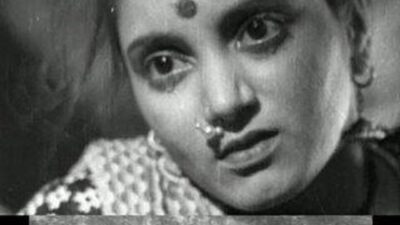
'क्यों नैन भर आये बँवरे' 1941 की प्रकाश पिक्चर्स फ़िल्म माला का एक गीत है, जो नौशाद का एक प्रारंभिक संगीत है। तत्कालीन ध्वनिमुद्रण-सूचियाँ इसका गायन 'मिसेज़ घोष' को देती हैं (कुछ स्रोतों में यह नाम शीतल घोष के रूप में भी दिया गया है), जो उन कई कम-प्रलेखित पार्श्व-स्वरों में से एक थीं जिनके साथ नौशाद ने अपने करियर की शुरुआत में काम किया।
अंग्रेज़ी में पढ़ें · Read in English
'Kyon Nain Bhar Aaye Banware' is a song from the 1941 Prakash Pictures film Mala, an early Naushad score. Period discographies credit the vocal to 'Mrs Ghosh' (a name also rendered as Sheetal Ghosh in some sources), one of several lesser-documented playback voices Naushad worked with at the start of his career.
काव्य The Poetry
'क्यों नैन भर आये बँवरे' — 'हे बँवरे, क्यों नैन भर आये?' — उस प्रश्न-गीत (प्रश्न-गीत) परंपरा से संबंधित है जिसमें गायिका किसी भावनात्मक रूप से उलझे हुए व्यक्ति या अपने स्वयं के भटकते मन को संबोधित करती है। 'नैन भर आना' (आँखों का भर आना) शास्त्रीय मुजरा और ठुमरी से एक मानक भाव-व्यंजना है। 'बँवरे' उत्पादक रूप से अस्पष्ट है: यह एक चंचल प्रिय को, गायिका के अपने भटकते मन को, या किसी तीसरे व्यक्ति को — जो बिना कारण रोता है — संबोधित हो सकता है। शास्त्रीय काव्य में 'बावरे/बँवरे' — 'दीवाना' — प्रायः कृष्ण को संबोधित होता है, जो भक्ति परंपरा में अपने भक्तों के प्रेम में दीवाने माने जाते हैं; फ़िल्मी गीत इस अनुगूँज को धार्मिक सामग्री को स्पष्ट किए बिना बनाए रखता है। 'क्यों नैन भर आये?' एक अभियोगात्मक प्रश्न नहीं बल्कि एक विस्मित जिज्ञासा है — गायिका कोमल, कुछ-कुछ उलाहने-भरी जिज्ञासा से एक अकारण भाव को देख रही है।
अंग्रेज़ी में पढ़ें · Read in English
'Kyon Nain Bhar Aaye Banware' — 'Why do the eyes fill with tears, O fickle/wayward one?' — belongs to the question-song (prashn-geet) tradition in which the singer addresses an emotionally confused other or her own wayward heart. 'Nain bhar aana' (eyes filling with tears) is a standard expression from classical mujra and thumri, where the singer interprets the visible emotion of a fickle or absent beloved. 'Banware' is productively ambiguous: it can address a fickle beloved, the singer's own wayward heart, or a third party who weeps for inexplicable reasons. In classical poetry, 'bawre' or 'banware' — 'the mad one' — frequently addresses Krishna, who in the bhakti tradition is understood as the divine madman, bawra with love for his devotees; the film lyric retains this resonance without making the religious content explicit. Lyricist D.N. Madhok or Baalam Pardesi, writing in the register appropriate to a P.C. Barua social drama, would likely have given the lyric the classical restraint of the slower thumri tradition: the question 'kyon nain bhar aaye?' is not accusatory but wondering — the singer watching inexplicable emotion with gentle, reproachful curiosity. Naushad's early compositional style in these pre-Rattan years drew on the light-classical training he had received; this slow-tempo melancholic number would represent his careful, controlled early idiom.
कहानी The Story
माला (1941) प्रकाश पिक्चर्स द्वारा निर्मित और विशिष्ट बंगाली फ़िल्मकार पी.सी. बरुआ (प्रमथेश चंद्र बरुआ, 1903–1951) द्वारा निर्देशित थी, जो देवदास के कई संस्करण बना चुके थे। नौशाद अली — तब केवल दूसरे वर्ष के स्वतंत्र संगीत-निर्देशक, उनकी पहली फ़िल्म 'प्रेम नगर' (1940) थी — ने माला के साथ-साथ कंचन (1941, भी बरुआ-निर्देशित) जैसे शुरुआती कार्य किए। माला के लिए नौशाद ने अमीरबाई कर्नाटकी जैसी गायिकाओं के साथ काम किया और दो गीत 'श्रीमती घोष' (कुछ स्रोतों में 'मिसेज़ घोष') को श्रेय प्राप्त हैं — उन संक्रमण-युग की गायिकाओं में से एक जिनकी पूर्ण पहचान अभी तक स्थापित नहीं हुई है। 'क्यों नैन भर आये बँवरे' इन्हीं गायिका को श्रेय प्राप्त गीतों में से एक है, जो नौशाद की सबसे आरंभिक स्वतंत्र डिस्कोग्राफ़ी में एक छोटी लेकिन प्रलेखित प्रविष्टि है। पी.सी. बरुआ के साथ काम करना नौशाद को एक राष्ट्रीय ख्याति के फ़िल्मकार का प्रारंभिक अनुभव दिया — एक ऐसे समय में जब यह युवा संगीतकार अभी वह शास्त्रीय आधार और ऑर्केस्ट्रल आत्मविश्वास विकसित कर रहा था जो उनकी परिपक्व रचनाओं की पहचान बनेगी।
अंग्रेज़ी में पढ़ें · Read in English
Mala (1941) was produced by Prakash Pictures and directed by the distinguished Bengali filmmaker P.C. Barua (Pramathesh Chandra Barua, 1903–1951), who had already made landmark films including multiple versions of Devdas. Naushad Ali — then only in his second year as an independent music director, his first film having been Prem Nagar (1940) — scored Mala alongside other early-career assignments including Kanchan (1941, also directed by Barua). For Mala, Naushad drew on singers including Amirbai Karnataki and two songs attributed to 'Shrimati Ghosh' (rendered in some sources as 'Mrs Ghosh') — one of several transitional-era vocalists active in early 1940s Bombay film recordings whose full identity has not been definitively established. 'Kyon Nain Bhar Aaye Banware' — 'Why do the eyes fill with tears, O fickle one?' — is among the songs attributed to this vocalist, making it a minor but documented entry in Naushad's earliest independent discography. Working with P.C. Barua gave Naushad early exposure to a filmmaker of national reputation, at a time when the young composer was still building the classical grounding and orchestral confidence that would characterize his mature work. The lyricists for Mala were D.N. Madhok and Baalam Pardesi, both of whom were also writing for Ranjit Movietone during this period.
विरासत The Legacy
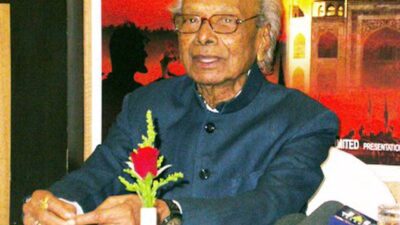
माला (1941) भारतीय संगीत-इतिहास में एक प्रलेखित स्थान रखती है — नौशाद अली की सबसे आरंभिक स्वतंत्र रचनाओं में से एक के रूप में। नौशाद आगे चलकर हिंदी सिनेमा के सबसे प्रतिष्ठित संगीत-निर्देशकों में से एक बने — रत्तन (1944), अनमोल घड़ी (1946), अंदाज़ (1949), बैजू बावरा (1952), मदर इंडिया (1957) और मुग़ल-ए-आज़म (1960) जैसी मील-पत्थर फ़िल्मों के रचयिता। उन्होंने खेमचंद प्रकाश को — जिन्होंने 1930 के दशक के उत्तरार्ध में उन्हें संक्षेप में नियुक्त किया था — अपनी उस पद्धति का प्रमुख प्रभाव स्वीकार किया जिसमें शास्त्रीय राग फ़िल्म-ऑर्केस्ट्रेशन में घुलते थे। डी.एन. माधोक, जिन्होंने माला के बोल लिखे, वही व्यक्ति भी थे जिन्होंने नौशाद को बॉलीवुड से परिचित कराया था। 'क्यों नैन भर आये बँवरे' नौशाद की प्रलेखित रचनात्मक यात्रा के बिल्कुल आरंभ में है।
अंग्रेज़ी में पढ़ें · Read in English
Mala (1941) occupies a documented place in Indian music history as one of Naushad Ali's earliest independent compositions. Naushad went on to become one of Hindi cinema's most celebrated music directors, with landmark films including Rattan (1944), Anmol Ghadi (1946), Andaz (1949), Baiju Bawra (1952), Mother India (1957), and Mughal-e-Azam (1960). He acknowledged Khemchand Prakash — who had briefly employed him in the late 1930s — as the primary influence on his method of integrating classical ragas into film orchestration. D.N. Madhok, who co-wrote Mala's lyrics, had also introduced Naushad to Bollywood by hiring him as an assistant music director for Mirza Sahiban (1939). 'Kyon Nain Bhar Aaye Banware' sits at the very beginning of Naushad's documented creative arc — a minor work by a composer who within four years would become the defining voice of classical-grounded Hindi film music.
वर्गीकरण
Classification- Tempo
- Slow
Genre
अन्य विवरण
More Details- https://en.wikipedia.org/wiki/Mala_(1941_film)
- https://en.wikipedia.org/wiki/Naushad
- https://myswar.co/album/mala-1941
- https://myviewsonbollywood.wordpress.com/2018/03/23/music-maestro-naushad-ali-part-i-a-glimpse-into-naushads-early-days-of-struggle/
References
रोचक तथ्य
Margin Notesमाला (1941) का निर्देशन पी.सी. बरुआ (प्रमथेश चंद्र बरुआ) ने किया था, जो देवदास के कई प्रशंसित संस्करणों के लिए ज़िम्मेदार प्रतिष्ठित बंगाली फ़िल्मकार थे — के.एल. सहगल अभिनीत पहला सवाक् संस्करण (1935) भारतीय सिनेमा का एक ऐतिहासिक पड़ाव माना जाता है।
अंग्रेज़ी में पढ़ें · Read in English
Mala (1941) was directed by P.C. Barua (Pramathesh Chandra Barua), the distinguished Bengali filmmaker responsible for multiple celebrated versions of Devdas — the first sound version (1935) starring K.L. Saigal is considered a landmark of Indian cinema.
नौशाद अली स्वतंत्र संगीत निर्देशक के रूप में अभी अपने दूसरे ही वर्ष में थे जब उन्होंने माला में संगीत दिया; उनकी पहली सचमुच सफल फ़िल्म चार साल बाद, रतन (1944) में आकर मिली।
अंग्रेज़ी में पढ़ें · Read in English
Naushad Ali was only in his second year as an independent music director when he scored Mala; his first truly successful film would not come until Rattan (1944), four years later.
इस गीत की गायिका को समकालीन स्रोतों में 'मिसेज़ घोष' या 'श्रीमती घोष' के रूप में दर्ज किया गया है — यह 1940 के दशक की शुरुआत की उन कई संक्रमण-कालीन गायिकाओं में से एक हैं जिनकी पूरी पहचान फ़िल्म इतिहासकार निश्चित रूप से स्थापित नहीं कर सके हैं।
अंग्रेज़ी में पढ़ें · Read in English
The vocalist for this song is documented as 'Mrs Ghosh' or 'Shrimati Ghosh' in period sources — one of several transitional-era singers active in early 1940s Hindi film recordings whose full identity has not been definitively established by film historians.
माला के गीत सह-लेखक डी.एन. मधोक वही गीतकार थे जिन्होंने नौशाद को पंजाबी फ़िल्म मिर्ज़ा साहिबां (1939) में सहायक संगीत निर्देशक के रूप में नियुक्त कर बॉलीवुड में प्रवेश दिलाया था — इस तरह यह नौशाद के शुरुआती व्यावसायिक गुरु-मंडल का एक पुनर्मिलन बन गया।
अंग्रेज़ी में पढ़ें · Read in English
D.N. Madhok, who co-wrote Mala's lyrics, was the same lyricist who introduced Naushad to Bollywood by hiring him as assistant music director on the Punjabi film Mirza Sahiban (1939), making this a professional reunion of Naushad's earliest professional mentor-circle.
नमूना-पट्टी
The Specimen Table| शीर्षक | क्यों नैन भर आये बँवरे · Kyon Nain Bhar Aaye Banware |
|---|---|
| फ़िल्म | माला · 1941 |
| वर्ष · युग | 1941 |
| गायक | मिसेज़ घोष |
| संगीतकार | Naushad |
| स्वरूप | एकल महिला |
| गति | धीमी |
| भाषा | hindi |
| भाव | उदास |
| बोल-स्थिति | केवल झलक |
जुड़े हुए पन्ने
Connected Plates · The Graph Made Visibleअटलस में कोई पन्ना अकेला नहीं — इस गीत से जुड़े गीत, कलाकार, फ़िल्म, राग-ताल-विधा, सब यहाँ से खुलते हैं।
मिलते-जुलते गीत · Related Songs
कलाकार · The Artists
फ़िल्म · The Film
साझा कीजिए · Share this Plate