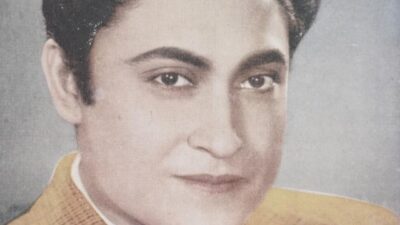
गीत विंग · गीत-पट्टिका · Song Plate
कोई हमदम न रहा
Koi Hamdam Na Raha
अशोक कुमार अपनी तन्हाई को नाटक के बिना, धीरे से गाते हैं — और दर्शक उसे पहचान लेते हैं।
भावमीठा-कड़वा · उदास · पुरानी यादें
भाषाhindi-urdu गतिधीमी स्वरूपएकल पुरुष
श्रेय
The Creditsबोल · The Lyrics
पूरे बोल · Full Lyrics
हम किसी के न रहे, कोई हमारा न रहा।
ham kisi ke na rahe, koi hamara na raha.
सूत्र-वाक्य · The Hook
सूत्र-वाक्य
अशोक कुमार अपनी तन्हाई को नाटक के बिना, धीरे से गाते हैं — और दर्शक उसे पहचान लेते हैं।
In EnglishAshok Kumar sings his own loneliness — quietly, without theatre — and the audience recognises it.
पट्टिका-लेख
The Monographपरिचय Overview
बॉम्बे टॉकीज़ की प्रस्तुतियों में अशोक कुमार के प्रारंभिक गायन प्रदर्शनों में, 'कोई हमदम न रहा' अपनी निरंतर भावनात्मक ईमानदारी के लिए अलग खड़ा है। सरस्वती देवी ने संयोजन को आवाज़ के चारों ओर बनाया — न्यूनतम, चैम्बर-आकार, पाठ को साँस लेने देते हुए। गीत की केंद्रीय छवि — कोई हमदम नहीं, कोई सहारा नहीं, हम किसी के नहीं और कोई हमारा नहीं — उस अस्तित्वगत मुहावरे को पकड़ती है जिसे बॉम्बे टॉकीज़ फ़िल्में अपने सामाजिक-रोमांटिक ढाँचे में तलाशने लगी थीं। इस दौर में अशोक कुमार स्टूडियो के प्रमुख पुरुष गायक तथा अभिनेता थे; यहाँ उनकी इत्मीनान, बातचीत-जैसी प्रस्तुति उस स्वाभाविकता की पूर्वाभास है जो अगले दशक में हिंदी फ़िल्म अभिनय को परिभाषित करेगी।
अंग्रेज़ी में पढ़ें · Read in English
Among Ashok Kumar's early singing performances in Bombay Talkies productions, 'Koi Hamdam Na Raha' stands out for its sustained emotional sincerity. Saraswati Devi built the arrangement around the voice — minimal, chamber-sized, letting the text breathe. The lyric's central image — no companion remains, no support, we belong to no one and no one belongs to us — captured the existential register that Bombay Talkies films were beginning to explore in their social-romantic mode. At this period, Ashok Kumar was the studio's leading male singer as well as actor; his unhurried, conversational delivery here prefigures the naturalism that would define Hindi film acting in the following decade.
संगीत The Music
सरस्वती देवी की संगत संकेत के स्तर पर रहती है — सारंगी और वायलिन सुर-रंग देते हैं लेकिन कभी उठते नहीं। रचना एक धीमी अवरोही सुर-रेखा का उपयोग करती है जो बोल की एकांत की ओर गति का प्रतिबिंब है।
अंग्रेज़ी में पढ़ें · Read in English
Saraswati Devi's accompaniment stays at the level of suggestion — the sarangi and violin provide melodic colour but never swell. The composition uses a slow descending melodic line that mirrors the lyric's movement toward solitude.
काव्य The Poetry
गीत उर्दू हमदम (अंतरंग साथी) और सहारा (आश्रय) का शास्त्रीय मितव्ययिता से उपयोग करता है — दोनों शब्द उस तन्हाई का भार वहन करते हैं जिसे गाना बयान करता है। दोहराई जाने वाली संरचना (कोई … न रहा) अकेलेपन की एक औपचारिक प्रतिध्वनि बनाती है।
अंग्रेज़ी में पढ़ें · Read in English
The lyric uses the Urdu hamdam (intimate companion) and sahara (support/shelter) with classical economy — both words carry the weight of the loneliness the song describes. The repeated structure (koi … na raha) creates a formal echo of abandonment.
कहानी The Story
1939 में पार्श्वगायन अभी आदर्श नहीं बना था; अशोक कुमार ने अपने परदे के गाने लाइव या सीधी रिकॉर्डिंग में गाए, अर्थात् फ़िल्म में प्रदर्शन और रिकॉर्डिंग निरंतर थे — अभिनेता और गायक के बीच कोई अलगाव नहीं, जो इन प्रारंभिक बॉम्बे टॉकीज़ रिकॉर्डिंग को उनकी विचित्र अंतरंगता देता है।
अंग्रेज़ी में पढ़ें · Read in English
Playback singing had not yet become the norm in 1939; Ashok Kumar sang his own screen songs live or in direct recording, meaning the performance in the film and the recording were continuous — no separation between actor and singer, which gives these early Bombay Talkies recordings their peculiar intimacy.
विरासत The Legacy
अशोक कुमार के गायन करियर का एक प्रारंभिक मील-पत्थर जिसने उनके परिपक्व काल के हेमंत कुमार और एस.डी. बर्मन सहयोगों की पूर्वाभास दी। साथ ही सरस्वती देवी के उत्पाद में एक प्रमुख दस्तावेज़, उनकी शास्त्रीय रचनाओं के साथ-साथ संयम की उनकी क्षमता दर्शाता है।
अंग्रेज़ी में पढ़ें · Read in English
An early milestone in Ashok Kumar's singing career that anticipated the Hemant Kumar and S.D. Burman collaborations of his mature period. Also a key document in Saraswati Devi's output, showing her capacity for restraint alongside her classical compositions.
वर्गीकरण
Classification- Tempo
- Slow
Genre
नमूना-पट्टी
The Specimen Table| शीर्षक | कोई हमदम न रहा · Koi Hamdam Na Raha |
|---|---|
| फ़िल्म | कंगन · 1939 |
| वर्ष · युग | 1939 |
| गायक | Ashok Kumar |
| गीतकार | J.S. Casshyap |
| संगीतकार | Saraswati Devi |
| स्वरूप | एकल पुरुष |
| गति | धीमी |
| भाषा | hindi-urdu |
| भाव | मीठा-कड़वा · उदास · पुरानी यादें |
| लोकप्रियता | Obscure |
| बोल-स्थिति | सार्वजनिक |
जुड़े हुए पन्ने
Connected Plates · The Graph Made Visibleअटलस में कोई पन्ना अकेला नहीं — इस गीत से जुड़े गीत, कलाकार, फ़िल्म, राग-ताल-विधा, सब यहाँ से खुलते हैं।
मिलते-जुलते गीत · Related Songs
कलाकार · The Artists
फ़िल्म · The Film
साझा कीजिए · Share this Plate