गीत विंग · गीत-पट्टिका · Song Plate
कित जाऊँ रे मना
Kit Jau Re Mana
बेचैन मन को संबोधित एक चिंतनशील गीत, ख़ुर्शीद की आवाज़ में।
भावभक्ति · दार्शनिक
भाषाhindi स्वरूपएकल महिला
श्रेय
The Creditsसूत्र-वाक्य · The Hook
सूत्र-वाक्य
बेचैन मन को संबोधित एक चिंतनशील गीत, ख़ुर्शीद की आवाज़ में।
In EnglishA contemplative address to the restless mind, sung by Khursheed.
पट्टिका-लेख
The Monographपरिचय Overview
'कित जाऊँ रे मना' 1941 की रणजीत मूवीटोन फ़िल्म शादी में ख़ुर्शीद द्वारा गाया एक चिंतनशील गीत है, संगीत खेमचंद प्रकाश का। शीर्षक — भटकते मन से पूछता है कि वह कहाँ जाए — गीत को उस भक्ति-रंगी दार्शनिक स्वर में रखता है जो फ़िल्म के कई गीतों में चलता है।
अंग्रेज़ी में पढ़ें · Read in English
'Kit Jau Re Mana' is a contemplative song sung by Khursheed in the 1941 Ranjit Movietone film Shaadi, composed by Khemchand Prakash. The title — an address to the wandering mind (mana) asking where it should go — places the number in the bhakti-tinged philosophical register that runs through several of the film's songs.
काव्य The Poetry
'कित जाऊँ रे मना' — 'हे मन, कहाँ जाऊँ?' — उस प्रश्नपरक-दार्शनिक गीत-परंपरा से संबंधित है जो कबीर के निर्गुण भजनों से लेकर हिंदी फ़िल्म संगीत के हर दशक तक चलती है। ब्रज शब्द 'कित' (= कहाँ?) यहाँ भक्ति-रंजित भाषा का संकेत है; साधारण बोलचाल में 'कहाँ' का प्रयोग होता। अपने 'मना' (मन-हृदय) को एक भटकते साथी की तरह संबोधित करना आंतरिक द्वंद्व को बाह्य रूप देता है। यह परंपरा व्यापक है — तानसेन की ध्रुपद रचनाओं से लेकर मीरा के कृष्ण-संबोधित पदों तक, कबीर के 'मन लागो मेरे राम रंगी रे' से लेकर 1940 के दशक की फ़िल्मी रचनाओं तक। डी.एन. माधोक या मुंशी दिल के लिए इस रजिस्टर में रचना करना भजन और सामाजिक-फ़िल्म गीत के बीच मध्यस्थता का काम था: भक्ति मुहावरा नायिका की अंतर्मुखी धार्मिकता का संकेत देता है, साथ ही वे दर्शकों तक भी पहुँचता है जो शुद्ध धार्मिक सामग्री से नहीं जुड़ते। खेमचंद प्रकाश ने अपने शास्त्रीय प्रशिक्षण — उस्ताद मौला बख़्श धावसी और पिता गोवर्धन प्रसाद से — के आधार पर इस गीत को एक अनुशासित शास्त्रीय आधार दिया होगा।
अंग्रेज़ी में पढ़ें · Read in English
The phrase 'Kit Jau Re Mana' — 'Where shall I go, O mind?' — belongs to the interrogative-philosophical song type that runs from Kabir's nirguna bhajans through every decade of Hindi film music. The Braj word 'kit' (= kahan, where?) marks this as devotionally-inflected language; ordinary colloquial dialogue would use 'kahan.' Addressing the 'mana' (mind-heart) as a wayward companion externalizes internal conflict: the singer watches her own mind the way a parent watches an errant child. This tradition of addressing one's own mana is documented across a vast range of classical and popular verse — from Tansen's darbaari compositions to Meera Bai's Krishna-addressed songs to Kabir's famous 'Mann lago mere Ram rangi re.' For D.N. Madhok or Munshi Dil — the two writers credited for Shaadi's songs — composing in this register meant mediating between the classical bhajan and the social-film lyric: the devotional idiom signals the heroine's inner piety while making the number accessible to audiences who might not engage with overtly religious content. Khemchand Prakash's melodic setting would have drawn on his formal training in Hindustani classical music — under Ustad Maula Baksh Dhavsi and his father Govardhan Prasad — to give the number a disciplined classical foundation without making it feel liturgical.
कहानी The Story
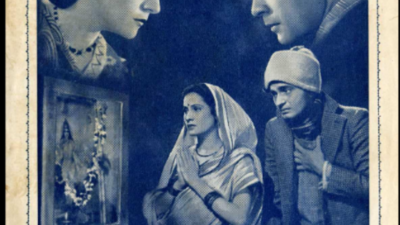
शादी (1941) रणजीत मूवीटोन द्वारा निर्मित और जयंत देसाई द्वारा निर्देशित थी — एक विश्वसनीय स्टूडियो निर्देशक जो खेमचंद प्रकाश के साथ कई रणजीत फ़िल्मों में सहयोग कर चुके थे। फ़िल्म की कथा एक समर्पित पत्नी के इर्द-गिर्द घूमती है जो बीमार पति की सेवा करती है, किंतु पति उसे एक नाचनेवाली के लिए छोड़ देता है, जब तक कि एक आधुनिक, शिक्षित स्त्री हस्तक्षेप नहीं करती। फ़िल्म को उस दौर की सबसे प्रतिष्ठित पत्रिका 'फ़िल्मइंडिया' में उत्साहपूर्वक प्रशंसा मिली, जिसने इसे 'उत्कृष्ट मनोरंजन जो जन-रुचि में बस गया' कहा। चौदह गीतों वाले इस संगीत में ख़ुर्शीद को उनके गायन और संवेदनशील अभिनय दोनों के लिए सराहा गया। 'कित जाऊँ रे मना' — 'हे मन, कहाँ जाऊँ?' — एक दार्शनिक प्रश्न है जो भटकते मन को संबोधित करता है, संभवतः फ़िल्म के उस क्षण में रखा गया जब नायिका अपने टूटते विवाह के सामने भावनात्मक अनिश्चितता में है।
अंग्रेज़ी में पढ़ें · Read in English
Shaadi (1941) was produced by Ranjit Movietone, one of Bombay's most established studios, and directed by Jayant Desai — a reliable studio director who had collaborated with Khemchand Prakash on several Ranjit films. The story follows a devoted traditional wife who nurses her ailing husband back to health, only for him to leave her for a dancing girl, until a modern educated woman intervenes to restore the marriage. The film earned an enthusiastic reception in Filmindia, the era's most authoritative film journal, which called it 'excellent entertainment that captured popular fancy as a mass-appeal social picture.' With 14 songs, the score was unusually generous; Khursheed was praised for her singing and her sympathetic portrayal of the heroine. Her association with Khemchand Prakash at Ranjit Movietone — already established through Holi (1940) and Pardesi (1941) — made her the studio's signature female voice by the end of the year. 'Kit Jau Re Mana' — 'Where shall I go, O mind?' — is a philosophical address to the wandering mind, likely placed at a moment of the heroine's emotional uncertainty as her marriage fractures. The devotional-philosophical register of the title would have given the song an inward, contemplative quality distinct from the more overtly romantic numbers in the same score.
विरासत The Legacy
शादी (1941) उन रणजीत मूवीटोन फ़िल्मों में से थी जिन्होंने उस दौर में सफलता पाई जब चंदुलाल शाह द्वारा 1929 में स्थापित यह स्टूडियो हिंदी सिनेमा में अपने प्रभाव के शिखर पर था। खेमचंद प्रकाश–ख़ुर्शीद की जुगलबंदी, जिसने शादी के संगीत को शक्ति दी, दो वर्ष बाद तानसेन (1943) के साथ अपने कलात्मक शिखर पर पहुँची — के.एल. सैगल अभिनीत वह फ़िल्म जिसका संगीत हिंदी फ़िल्म-गीतों के स्थायी कोश में सम्मिलित हो गया। 'कित जाऊँ रे मना' और शादी के अन्य चिंतनशील गीत तानसेन के गीतों जैसी दीर्घायु नहीं पा सके, परंतु ये एक महत्त्वपूर्ण विकासात्मक क्षण का प्रतिनिधित्व करते हैं: खेमचंद शास्त्रीय व्याकरण गढ़ रहे थे और ख़ुर्शीद वह स्वर-सत्ता जो तानसेन को परिभाषित करेगी।
अंग्रेज़ी में पढ़ें · Read in English
Shaadi (1941) was among Ranjit Movietone's commercial successes in a year when the studio — founded by Chandulal Shah in 1929 — was near the height of its influence in Hindi cinema. The Khemchand Prakash–Khursheed partnership that powered Shaadi's soundtrack reached its artistic peak two years later with Tansen (1943), featuring K.L. Saigal, a film whose music entered the permanent canon of Hindi film songs. 'Kit Jau Re Mana' and the other reflective numbers in Shaadi did not achieve the same longevity as Tansen's songs, but they represent an important developmental moment: Khemchand was building the classical grammar and Khursheed the tonal authority that would define Tansen. Ranjit Movietone's 1940–1942 output — of which Shaadi is a documented part — is now recognized by film historians as one of the most musically consistent periods in the studio's history.
वर्गीकरण
ClassificationGenre
अन्य विवरण
More Details- https://en.wikipedia.org/wiki/Khemchand_Prakash
- https://en.wikipedia.org/wiki/Khursheed_Bano
- https://en.wikipedia.org/wiki/D._N._Madhok
- https://grokipedia.com/page/shaadi_1941_film
- https://bombaymann2.blogspot.com/2013/09/film-shaadi1941.html
- https://www.songsofyore.com/best-songs-of-khemchand-prakash/
References
रोचक तथ्य
Margin Notesशादी (1941) की प्रशंसा उस युग की सबसे प्रामाणिक फ़िल्म-पत्रिका फ़िल्मइंडिया ने की, और इसे 'उत्कृष्ट मनोरंजन जिसने जन-रुचि वाली सामाजिक फ़िल्म के रूप में लोकप्रिय कल्पना को पकड़ लिया' बताया।
अंग्रेज़ी में पढ़ें · Read in English
Shaadi (1941) was praised by Filmindia, the era's most authoritative film journal, as 'excellent entertainment that captured popular fancy as a mass-appeal social picture.'
खेमचंद प्रकाश (1907-1950) ने हिंदुस्तानी शास्त्रीय संगीत और कथक नृत्य में प्रशिक्षण प्राप्त किया था, और वे शास्त्रीय-राग आधारित गीत-रचनाओं में पियानो और क्लैरिनेट का प्रयोग करने वाले शुरुआती बॉम्बे संगीतकारों में से एक थे।
अंग्रेज़ी में पढ़ें · Read in English
Khemchand Prakash (1907–1950) was trained in Hindustani classical music and Kathak dance and was among the first Bombay composers to deploy piano and clarinet within classical-raga-based song settings.
ख़ुर्शीद बानो (जन्म नाम इरशाद बेगम, 1914) प्रारंभिक सवाक युग की सबसे बहुमुखी अभिनेत्री-गायिकाओं में से थीं — उन्होंने ठुमरी और दादरा जैसी उपशास्त्रीय शैलियों को फ़िल्म प्रस्तुति में उस समय शामिल किया, जब यह माध्यम अभी गीतों को कथानक से जोड़ने की अपनी परिपाटियाँ विकसित कर ही रहा था।
अंग्रेज़ी में पढ़ें · Read in English
Khursheed Bano (born Irshad Begum, 1914) was among the early talkie era's most versatile actor-singers, having incorporated light classical forms — thumri, dadra — into film performance at a time when the medium was still developing its conventions for integrating songs with narrative.
शादी के गीतों के सह-लेखक डी.एन. मधोक स्वयं नौशाद को फ़िल्म उद्योग में लाने में सहायक रहे थे — उन्होंने युवा संगीतकार को पंजाबी फ़िल्म मिर्ज़ा साहिबां (1939) में सहायक संगीत निर्देशक के रूप में नियुक्त किया था।
अंग्रेज़ी में पढ़ें · Read in English
D.N. Madhok, who co-wrote Shaadi's songs, was himself instrumental in introducing Naushad to the film industry, having employed the young musician as assistant music director on the Punjabi film Mirza Sahiban (1939).
नमूना-पट्टी
The Specimen Table| शीर्षक | कित जाऊँ रे मना · Kit Jau Re Mana |
|---|---|
| फ़िल्म | शादी · 1941 |
| वर्ष · युग | 1941 |
| गायक | Khursheed |
| संगीतकार | Khemchand Prakash |
| स्वरूप | एकल महिला |
| भाषा | hindi |
| भाव | भक्ति · दार्शनिक |
| लोकप्रियता | Obscure |
| बोल-स्थिति | केवल झलक |
जुड़े हुए पन्ने
Connected Plates · The Graph Made Visibleअटलस में कोई पन्ना अकेला नहीं — इस गीत से जुड़े गीत, कलाकार, फ़िल्म, राग-ताल-विधा, सब यहाँ से खुलते हैं।
मिलते-जुलते गीत · Related Songs
कलाकार · The Artists
फ़िल्म · The Film
साझा कीजिए · Share this Plate