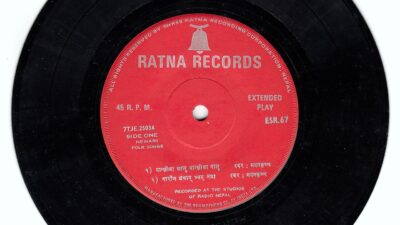
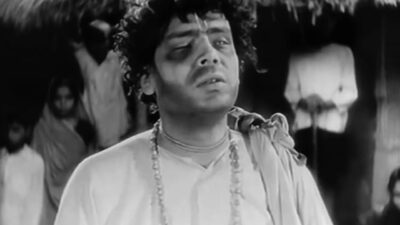
गीत विंग · गीत-पट्टिका · Song Plate
कीर्तन-भजन तवे
Kirtan and Bhajan Sides
टॉकियों से दशक भर पहले, दृष्टिहीन गायक कलकत्ता की भक्ति-आवाज़ बन चुका है।
भावभक्ति
भाषाbengali-hindi
श्रेय
The Creditsसूत्र-वाक्य · The Hook
सूत्र-वाक्य
टॉकियों से दशक भर पहले, दृष्टिहीन गायक कलकत्ता की भक्ति-आवाज़ बन चुका है।
In EnglishA decade before the talkies, the blind singer is already Calcutta's devotional voice.
पट्टिका-लेख
The Monographपरिचय Overview
के.सी. डे के 1920-मध्य के ध्वनिक कीर्तन-भजन तवों ने वह प्रतिष्ठा रची जिसे आगे न्यू थिएटर्स फ़िल्माएगा: बंगाल के भक्ति-मंच की ऊँची, खुली पुकार — किसी टॉकी के जन्म से पहले ही पूरब के घरों का भरोसा।
अंग्रेज़ी में पढ़ें · Read in English
K.C. Dey's acoustic kirtan and bhajan sides of the mid-1920s built the reputation New Theatres would later film: the high, open cry of Bengal's devotional stage, trusted in homes across the east before a single talkie existed.
संगीत The Music
भजन-पाठों के नीचे कीर्तन का झूम — सामूहिक आँच, बैठक के तवे के नाप में।
अंग्रेज़ी में पढ़ें · Read in English
Keertan's swing under bhajan texts — congregational fire scaled to a parlour disc.
काव्य The Poetry
बंगाल की कीर्तन-धारा और हिंदी संत-कवियों के भक्ति-पाठ — सीधा गाया हुआ समर्पण।
अंग्रेज़ी में पढ़ें · Read in English
Bhakti texts of Bengal's kirtan line and the Hindi saint-poets — surrender sung plainly.
कहानी The Story
1924 में, के.सी. डे कलकत्ता के संगीत-सभाओं और रंगमंच हलकों में पहले से एक प्रसिद्ध भक्ति-कलाकार थे — जन्म से अंधे, उनका संगीत-प्रशिक्षण पूर्णतः श्रवण-आधारित था और सुर व अलंकार की उनकी समझ असाधारण। एचएमवी कलकत्ता के साथ इस दौर के उनके रिकॉर्डिंग सत्रों में ध्वनिक हॉर्न प्रक्रिया का इस्तेमाल हुआ: गायक एक बड़े धातु के हॉर्न के सामने बैठते थे जो कंपन को सीधे कटिंग सुई तक पहुँचाता था, बिना किसी विद्युत प्रवर्धन के। इस तकनीक में कलाकारों को ज़ोर से आवाज़ निकालनी पड़ती और वॉल्यूम को प्रवृत्ति से संभालना पड़ता। के.सी. डे की स्वाभाविक रूप से शक्तिशाली आवाज़ और सटीक गतिशील नियंत्रण उन्हें इस माँग-भरी प्रक्रिया के लिए उपयुक्त बनाता था। उन्होंने जो कीर्तन और भजन रचनाएँ रिकॉर्ड कीं, वे बंगाल की कीर्तन-धारा की वैष्णव परंपरा से थीं — चैतन्य महाप्रभु की भक्ति-दुनिया में जड़ी — और कबीर, मीराबाई तथा सूरदास को जिम्मेदार ठहराए गए पाठों सहित व्यापक उत्तर भारतीय भजन भंडार से।
अंग्रेज़ी में पढ़ें · Read in English
In 1924, K.C. Dey was already a celebrated devotional performer in Calcutta's concert and theatre circuits — blind from infancy, his musical training was entirely aural and his sense of pitch and ornamental nuance exceptional. His recording sessions with HMV Calcutta in this period used the acoustic horn process: the singer positioned himself before a large metal horn that funnelled vibrations directly to the cutting stylus, with no electrical amplification. The technique required performers to project loudly and manage volume instinctively, since there was no mixing or correction available. K.C. Dey's naturally powerful voice and precise dynamic control made him well-suited to this demanding process. The kirtan and bhajan compositions he recorded drew from the Vaishnava tradition of Bengal's kirtan circuit — compositions rooted in the devotional world of Chaitanya Mahaprabhu — and from the broader North Indian bhajan repertoire including texts attributed to Kabir, Mirabai, and Surdas. These were not film productions but concert and ritual recordings: discs pressed for home gramophone playback that carried devotional Bengal into parlours across the subcontinent, establishing K.C. Dey's reputation long before New Theatres offered him the cinema stage.
विरासत The Legacy
इन तवों से 'पूरन भगत' (1933) तक की सीधी रेखा आरंभिक फ़िल्म-संगीत की सबसे साफ़ रेखा है।
अंग्रेज़ी में पढ़ें · Read in English
The straight line from these sides to Puran Bhagat (1933) is the clearest in early film music.
वर्गीकरण
ClassificationGenre
अन्य विवरण
More Details- Wikipedia: K.C. Dey
- Wikipedia: His Master's Voice India
- Wikipedia: Chaitanya Mahaprabhu
- Wikipedia: Kirtan (music tradition)
- Wikipedia: New Theatres, Calcutta
References
रोचक तथ्य
Margin Notesके.सी. डे बचपन से ही नेत्रहीन थे — माना जाता है कि उन्होंने चेचक के कारण अपनी दृष्टि खो दी थी — और उनका संपूर्ण संगीत विकास केवल श्रवण पर आधारित था; समकालीन विवरणों के अनुसार, उनकी नेत्रहीनता ने उनमें स्वर की असाधारण पकड़ और तात्कालिक सृजन की असामान्य रूप से समृद्ध स्मरण-शक्ति विकसित की।
अंग्रेज़ी में पढ़ें · Read in English
K.C. Dey was blind from infancy — reportedly having lost his sight to smallpox — and his entire musical development was aural; contemporary accounts credit his blindness with developing an exceptional acuity of pitch and an unusually rich improvisational memory.
ये 1924 की रिकॉर्डिंग्स ध्वनिक हॉर्न पद्धति से बनाई गई थीं, जो भारत में लगभग 1926-27 तक अप्रचलित हो गई, जब एच.एम.वी. ने विद्युत माइक्रोफोन रिकॉर्डिंग की शुरुआत की; इसलिए के.सी. डे की ध्वनिक डिस्कें किसी प्रमुख भारतीय गायक द्वारा बनाई गई अंतिम विशुद्ध ध्वनिक रिकॉर्डिंग्स में से हैं।
अंग्रेज़ी में पढ़ें · Read in English
These 1924 recordings were made using the acoustic horn process, which was rendered obsolete in India by around 1926–27 when HMV introduced electrical microphone recording; K.C. Dey's acoustic sides are therefore among the last purely acoustic discs by a major Indian vocalist.
के.सी. डे कलकत्ता के रंगमंच जगत में "बंगाल के अंधे गायक" के नाम से जाने जाते थे और ग्रामोफोन सत्रों से व्यापक पहचान मिलने से पहले ही उन्होंने वैष्णव रंगमंच प्रस्तुतियों के ज़रिए अपनी भक्ति-संगीत की ख्याति स्थापित कर ली थी।
अंग्रेज़ी में पढ़ें · Read in English
K.C. Dey was known in Calcutta's theatre world as the 'Blind Singer of Bengal' and had established his devotional reputation through performances in Vaishnava theatrical productions before the gramophone sessions brought him a wider audience.
के.सी. डे ने जिस कीर्तन परंपरा को प्रस्तुत किया, वह सीधे चैतन्य महाप्रभु के 16वीं सदी के आंदोलन की भक्ति-विरासत से जुड़ी थी, जिसने बंगाल को वैष्णव भक्ति के केंद्र में बदल दिया था — जिससे ये डिस्कें विरासत-प्रस्तुति नहीं, बल्कि एक जीवंत भक्ति-परंपरा का दस्तावेज़ बन जाती हैं।
अंग्रेज़ी में पढ़ें · Read in English
The kirtan tradition K.C. Dey performed drew directly from the devotional legacy of Chaitanya Mahaprabhu's 16th-century movement, which transformed Bengal into a centre of Vaishnava bhakti — making these discs a document of living devotional practice, not heritage performance.
कलकत्ता के प्रतिष्ठित फिल्म स्टूडियो न्यू थिएटर्स ने प्रारंभिक टॉकी युग की कई भक्ति फिल्मों में के.सी. डे को इसलिए भूमिका दी क्योंकि उनकी ग्रामोफोन ख्याति पहले ही फैल चुकी थी (जिसमें देवदास, 1935 भी शामिल है, जहाँ वे स्वयं के.सी. डे के रूप में प्रस्तुत हुए) — 1924 की ये रिकॉर्डिंग्स ही उस ख्याति की नींव थीं।
अंग्रेज़ी में पढ़ें · Read in English
New Theatres, Calcutta's prestige film studio, cast K.C. Dey in several devotional films of the early talkie era (including Devdas, 1935, where he appeared as K.C. Dey himself) specifically because his gramophone reputation preceded him — these 1924 sides were the foundation on which that reputation was built.
नमूना-पट्टी
The Specimen Table| शीर्षक | कीर्तन-भजन तवे · Kirtan and Bhajan Sides |
|---|---|
| वर्ष · युग | 1924 |
| गायक | K.C. Dey |
| गीतकार | पारंपरिक |
| भाषा | bengali-hindi |
| भाव | भक्ति |
| लोकप्रियता | Popular |
| बोल-स्थिति | सार्वजनिक |
जुड़े हुए पन्ने
Connected Plates · The Graph Made Visibleअटलस में कोई पन्ना अकेला नहीं — इस गीत से जुड़े गीत, कलाकार, फ़िल्म, राग-ताल-विधा, सब यहाँ से खुलते हैं।
मिलते-जुलते गीत · Related Songs
कलाकार · The Artists
साझा कीजिए · Share this Plate