गीत विंग · गीत-पट्टिका · Song Plate
कहाँ चली गोरी नैनों के जादू तन के
Kaha Chali Gori Naino Ke Jadu Tan Ke
स्नेहप्रभा प्रधान का एक एकल, जो गोरी को छेड़ता है ('कहाँ चली गोरी') — उसके नैनों और तन के जादू के साथ।
भावचुलबुला · रोमांटिक
भाषाhindi गतिमध्यम स्वरूपएकल महिला
श्रेय
The Creditsसूत्र-वाक्य · The Hook
सूत्र-वाक्य
स्नेहप्रभा प्रधान का एक एकल, जो गोरी को छेड़ता है ('कहाँ चली गोरी') — उसके नैनों और तन के जादू के साथ।
In EnglishA Snehprabha Pradhan solo teasing the fair maiden ('kaha chali gori') with the magic of her eyes and form.
पट्टिका-लेख
The Monographपरिचय Overview
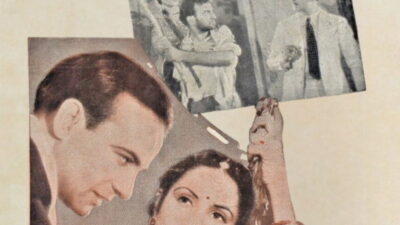
परदेसी (1941) में स्नेहप्रभा प्रधान का एक एकल, संगीत खेमचंद प्रकाश का। 'कहाँ चली गोरी' का संबोधन, उसके मोहक नैनों और तन के खेल के साथ, फ़िल्म की प्रेम-धारा का एक हल्का, छेड़छाड़ भरा गीत है। यह गीत एल्बम के स्ट्रीमिंग सूचियों में दर्ज है।
अंग्रेज़ी में पढ़ें · Read in English
A solo by Snehprabha Pradhan from Pardesi (1941), composed by Khemchand Prakash. The 'kaha chali gori' (where are you off to, fair one) address with its play on the maiden's bewitching eyes and figure is a light, flirtatious number in the film's romantic vein. The song is documented on streaming catalogues for the album.
काव्य The Poetry
गीत का संबोधन 'कहाँ चली गोरी' हिंदी फ़िल्मी काव्य के सबसे उर्वर भावभूमि को सक्रिय करता है: वह स्त्री जो चलते-चलते रोक ली जाती है — किसी मुग्ध दृष्टि या आवाज़ द्वारा। 'नैनों के जादू तन के' का जोड़ प्रिया की शक्ति के दो धरातल खड़े करता है — दृश्य (नैनों का जादू जो वशीभूत कर ले) और शारीरिक (तन का आकर्षण जो खींचे)। यह द्विस्तरीय बिंब रणजीत मूवीटोन की हल्की-फुल्की गीत-शैली की विशेषता है, जहाँ बोल इस तरह रचे जाते थे कि राग को हर पंक्ति को विस्तार देने की पूरी जगह मिले। स्नेहप्रभा प्रधान का एकल इस खिलंदड़े स्वर में रहा होगा: वह आवाज़ जो विलाप करने के बजाय छेड़ती है। यह गीत लोक-व्युत्पन्न छेड़छाड़ की उस परंपरा में है जहाँ 'कहाँ चली' कभी सचमुच प्रश्न नहीं होता — वह मुग्धता की घोषणा है।
अंग्रेज़ी में पढ़ें · Read in English
The song's address 'kaha chali gori' (where are you going, fair one) deploys one of the most productive tropes of Hindi film verse: the intercepted woman, halted in motion by an admiring gaze or voice. The addition 'naino ke jadu tan ke' (enchantment of the eyes and the body) layers two planes of the beloved's power — the ocular (the eyes that bewitch) and the physical (the body that draws). This doubling is characteristic of the Ranjit Movietone light-song style, where the lyric was structured to provide the melody maximum room to elaborate each phrase. Snehprabha Pradhan's solo delivery would have leaned into the playful register: a voice that teases rather than laments. The song sits within the folk-derived flirtatious exchange form — where 'where are you going' is never really a question but a declaration of enchantment.
कहानी The Story
परदेसी (1941) रणजीत मूवीटोन के लिए एक व्यावसायिक सफलता थी — वह बंबई स्टूडियो जो 1930-40 के दशक में हल्के रोमांटिक मनोरंजन में अग्रणी था। संगीतकार खेमचंद प्रकाश, जो राजपूताना के सुजानगढ़ के एक संगीतिक परिवार से आते थे — उनके पिता जयपुर राजदरबार के ध्रुपद-गायक थे — इस दौर में स्टूडियो के प्रमुख संगीत-निर्देशक थे, और ख़ुर्शीद के साथ उनकी जोड़ी हिट रही। परदेसी एक सफल फ़िल्म थी जिसने ख़ुर्शीद को युग की प्रमुख स्टार के रूप में स्थापित किया। 'कहाँ चली गोरी नैनों के जादू तन के' एक एकल गीत है जो स्नेहप्रभा प्रधान ने गाया — रणजीत की एक और सक्रिय गायिका — उस हल्के, छेड़छाड़ भरे मुहावरे में जिसे स्टूडियो अपने गंभीर प्रेम-गीतों और विलापों के प्रतिबिंब के रूप में प्रयोग करता था। इस गीत का गीतकार उपलब्ध अभिलेखों में अलग से दर्ज नहीं है।
अंग्रेज़ी में पढ़ें · Read in English
Pardesi (1941) was a commercial success for Ranjit Movietone, the Bombay studio that dominated light romantic entertainment in the late 1930s and early 1940s. Composer Khemchand Prakash, who came from a musical family in Sujangarh, Rajputana — his father was a Dhrupad singer in the Jaipur royal court — served as the studio's principal music director through this period, working with Khursheed as his leading female voice. Pardesi is documented as a hit that helped cement Khursheed's position as a major star of the era. 'Kaha Chali Gori Naino Ke Jadu Tan Ke' is a solo number recorded by Snehprabha Pradhan, another of Ranjit's active voice-artists, in the lighter, flirtatious idiom that the studio deployed as counterpoint to its heavier love songs and laments. The lyricist for this track is not individually credited in surviving records.
वर्गीकरण
Classification- Tempo
- Medium
Genre
अन्य विवरण
More Details- https://en.wikipedia.org/wiki/Khemchand_Prakash
- https://www.hindigeetmala.net/movie/pardesi.htm
- https://www.songsofyore.com/best-songs-of-khemchand-prakash/
- https://bollywoodirect.medium.com/remembering-khemchand-prakash-the-legendary-music-composer-on-his-68th-death-anniversary-fa5a950a7072
References
रोचक तथ्य
Margin Notesपरदेसी (1941) रणजीत मूवीटोन के लिए एक व्यावसायिक सफलता थी, और इसे उन फ़िल्मों में से एक के रूप में दर्ज किया गया है जिन्होंने ख़ुर्शीद को 1940 के दशक की शुरुआत की एक प्रमुख गायिका-सितारा के रूप में स्थापित किया।
अंग्रेज़ी में पढ़ें · Read in English
Pardesi (1941) was a commercial hit for Ranjit Movietone and is documented as one of the films that established Khursheed as a major singing star of the early 1940s.
संगीतकार खेमचंद प्रकाश (1907-1950) राजपूताना के सुजानगढ़ के एक ध्रुपद-गायक परिवार से थे; उनके पिता जयपुर के राजदरबार में प्रस्तुति देते थे।
अंग्रेज़ी में पढ़ें · Read in English
Composer Khemchand Prakash (1907-1950) came from a Dhrupad-singing family in Sujangarh, Rajputana; his father performed in the Jaipur royal court.
खेमचंद प्रकाश ने बाद में लता मंगेशकर और किशोर कुमार, दोनों को हिंदी फ़िल्म उद्योग से परिचित कराया, और महल (1949) का गीत 'आएगा आनेवाला' रचा, जिस गीत ने लता मंगेशकर को राष्ट्रीय ख्याति दिलाई।
अंग्रेज़ी में पढ़ें · Read in English
Khemchand Prakash later introduced both Lata Mangeshkar and Kishore Kumar to the Hindi film industry, and composed 'Aayega Aanewala' from Mahal (1949), the song that launched Lata Mangeshkar to national prominence.
इस एकल गीत को रिकॉर्ड करने वालीं स्नेहप्रभा प्रधान, 1940 के दशक की शुरुआत में ख़ुर्शीद के साथ रणजीत मूवीटोन की सक्रिय स्वर-कलाकारों में से थीं।
अंग्रेज़ी में पढ़ें · Read in English
Snehprabha Pradhan, who recorded this solo, was among Ranjit Movietone's active voice-artists alongside Khursheed in the early 1940s.
नमूना-पट्टी
The Specimen Table| शीर्षक | कहाँ चली गोरी नैनों के जादू तन के · Kaha Chali Gori Naino Ke Jadu Tan Ke |
|---|---|
| फ़िल्म | परदेसी · 1941 |
| वर्ष · युग | 1941 |
| गायक | Snehprabha Pradhan |
| संगीतकार | Khemchand Prakash |
| स्वरूप | एकल महिला |
| गति | मध्यम |
| भाषा | hindi |
| भाव | चुलबुला · रोमांटिक |
| लोकप्रियता | Known |
| बोल-स्थिति | केवल झलक |
जुड़े हुए पन्ने
Connected Plates · The Graph Made Visibleअटलस में कोई पन्ना अकेला नहीं — इस गीत से जुड़े गीत, कलाकार, फ़िल्म, राग-ताल-विधा, सब यहाँ से खुलते हैं।
मिलते-जुलते गीत · Related Songs
कलाकार · The Artists
फ़िल्म · The Film
साझा कीजिए · Share this Plate