गीत विंग · गीत-पट्टिका · Song Plate
कदम चले आगे मन पाछे भागे
Kadam Chale Aage Man Pachhe Bhage
पैर आगे चलते हैं पर मन पीछे भागता है — सहगल संसार और प्रभु-मार्ग के बीच की शाश्वत खींचातानी को गाते हैं।
भावभक्ति · दार्शनिक · Restless
भाषाhindi गतिमध्यम स्वरूपएकल पुरुष
श्रेय
The Creditsसूत्र-वाक्य · The Hook
सूत्र-वाक्य
पैर आगे चलते हैं पर मन पीछे भागता है — सहगल संसार और प्रभु-मार्ग के बीच की शाश्वत खींचातानी को गाते हैं।
In EnglishThe feet walk forward but the heart runs back — Saigal sings the eternal tug-of-war between the world and the path of God.
पट्टिका-लेख
The Monographपरिचय Overview
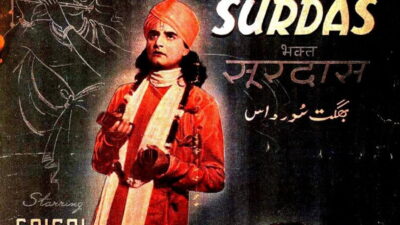
इन दो गीतों में से एक ('नैनहीन को राह दिखा प्रभु' के साथ) जिन्होंने भक्त सूरदास को के. एल. सहगल के करियर का एक मील का पत्थर बनाया, यह भजन साधक के अंतर्द्वंद्व को साकार करता है — शरीर आध्यात्मिक मार्ग पर आगे बढ़ता है जबकि मन सांसारिक मोह में खिंचकर पीछे रह जाता है। यह युग के सर्वाधिक प्रिय भक्ति-गीतों में से एक बना।
अंग्रेज़ी में पढ़ें · Read in English
One of the two songs (with 'Nainheen Ko Raah Dikha Prabhu') that made Bhakta Surdas a landmark in K. L. Saigal's career, this bhajan dramatises the seeker's inner conflict — the body advances on the spiritual road while the mind lags behind, pulled by worldly attachment. It became one of the most loved devotional numbers of the era.
संगीत The Music
ज्ञान दत्त गीत को एक संतुलित, चलती-सी लय में बाँधते हैं जो पगचाप और भटकते मन के इसके विषय को प्रतिबिंबित करती है। सहगल की प्रस्तुति चिंतनशील और भारयुक्त है, हर पंक्ति भजन-मुहावरे की मननशील पदावली में गढ़ी हुई; संगत विरल रहती है ताकि दार्शनिक पाठ और गायक का स्वर गीत को सँभालें।
अंग्रेज़ी में पढ़ें · Read in English
Gyan Dutt frames the song in a measured, walking tempo that mirrors its theme of footsteps and a wandering mind. Saigal's delivery is reflective and weighted, each line shaped with the contemplative phrasing of the bhajan idiom; the accompaniment stays sparse so the philosophical text and the singer's tone carry the song.
काव्य The Poetry
शीर्षक का केंद्रीय विरोधाभास — पैर आध्यात्मिक मार्ग पर आगे चलते हैं जबकि मन संसार की ओर पीछे भागता है — मध्यकालीन भारतीय भक्ति-साहित्य में एक व्यापक सूत्र है। कबीर के दोहों से लेकर तुलसीदास की रामचरितमानस तक, वैराग्य के मार्ग पर तन-मन का द्वंद्व एक बार-बार लौटने वाला विषय है: शरीर को अनुशासित किया जा सकता है; मन उतनी आसानी से आदेश नहीं मानता। माधोक का इस कल्पना का परदे के लिए रूपांतरण इसे सहगल के सूरदास के मुँह में रखता है, लेकिन गीत का गूँज नाटकीय संदर्भ से बहुत आगे जाती है। यह छवि मनोवैज्ञानिक रूप से सटीक है।
अंग्रेज़ी में पढ़ें · Read in English
The central paradox of the title — feet walking forward on the spiritual path while the mind runs backward toward the world — belongs to a formulation found throughout medieval Indian devotional literature. From Kabir's dohas to Tulsidas's Ram Charit Manas, the body-mind conflict on the path of renunciation is a recurring subject: the body can be disciplined; the mind cannot be so easily commanded. D.N. Madhok's adaptation for the screen places this ancient conflict in the mouth of K.L. Saigal's Surdas, but the lyric's resonance extends far beyond its dramatic context. The image is psychologically precise — anyone who has ever attempted to maintain resolve against inclination will recognise the mechanics of the conflict described. Without the full text (withheld, Madhok d.1982), the lyric's genre is clear: it is the devotional complaint (virodha-bhakti, devotion expressed through its own failure), a self-aware acknowledgement that the path of God is harder than it appears from the outside.
कहानी The Story
'नैनहीन को राह दिखा प्रभु' की तरह, 'कदम चले आगे मन पाछे भागे' को ज्ञान दत्त ने भक्त सूरदास (1942) के लिए रचा, जो चतुर्भुज दोशी द्वारा निर्देशित रणजीत स्टूडियो का निर्माण था। सहगल ने सूरदास की भूमिका आंशिक रूप से इसलिए ली थी क्योंकि फ़िल्म की माँग — पूरे पटकथा में निरंतर शास्त्रीय-शैली का भक्ति-गायन — उनके कौशल से उन नाटकों से अधिक मेल खाती थी जो वे न्यू थिएटर्स, कलकत्ता में करते थे। ज्ञान दत्त ने इस गीत के लिए मध्यम लय चुनी, जो इस गीत को 'नैनहीन' की धीमी, शोकपूर्ण भावना से अलग करती है। लय स्वयं पैरों के साथ चलती है जबकि स्वर-धुन पीछे मुड़ती और झिझकती है।
अंग्रेज़ी में पढ़ें · Read in English
Like its companion piece 'Nainheen Ko Raah Dikha Prabhu', 'Kadam Chale Aage Man Pachhe Bhage' was composed by Gyan Dutt for Bhakta Surdas (1942), the Ranjit Studios production directed by Chaturbhuj Doshi. K.L. Saigal had taken the Surdas role partly because the film's requirement — sustained classical-style devotional singing across an entire screenplay — matched his skills more exactly than the melodramas he had been making at New Theatres, Calcutta. The medium tempo Gyan Dutt selected for this song (as opposed to the slower, more plaintive 'Nainheen Ko Raah Dikha') gave the inner conflict a physical quality: the rhythm itself walks with the feet while the vocal melody lingers and turns back. The film became the third highest-grossing Indian film of 1942 — testimony to the broad audience for Saigal-centred bhakti cinema.
विरासत The Legacy
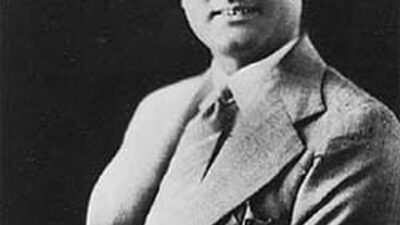
भक्त सूरदास के दोनों भजनों — 'नैनहीन को राह दिखा प्रभु' और 'कदम चले आगे मन पाछे भागे' — की सहगल की रिकॉर्डिंग को भारतीय फ़िल्म संगीत के इतिहासों में उनके भक्ति-भंडार के निर्णायक मध्य-करियर दस्तावेज़ के रूप में लगातार उद्धृत किया जाता है। दोनों गीत 1942 से प्रिंट और प्रसारण पर बने हुए हैं; ये स्वतंत्रता-पूर्व हिंदी फ़िल्म संगीत के पूर्वव्यापी कार्यक्रमों में मानक समावेशन हैं। फ़िल्म की पूरी तरह भक्ति-आधारित स्कोर के साथ व्यावसायिक सफलता ने बंबई स्टूडियो में यह संस्थागत विश्वास भी पैदा किया कि शास्त्रीय भक्ति विषय पूर्ण फ़ीचर फ़िल्मों को सहारा दे सकते हैं।
अंग्रेज़ी में पढ़ें · Read in English
Saigal's recordings of the two bhajans from Bhakta Surdas — 'Nainheen Ko Raah Dikha Prabhu' and 'Kadam Chale Aage Man Pachhe Bhage' — are consistently cited in Indian film music histories as the definitive mid-career documentation of his devotional repertoire. Both songs have remained in print and on air since 1942; they are standard inclusions in retrospective programmes of pre-independence Hindi film music. The film's commercial success with a purely devotional score also created an institutional confidence at Bombay studios that classical bhakti subjects could support full-length feature films — a confidence directly inherited by the 'Sant' film cycle of the 1950s.
वर्गीकरण
Classification- Tempo
- Medium
Genre
अन्य विवरण
More Details- https://en.wikipedia.org/wiki/Bhakta_Surdas
- https://www.hindigeetmala.net/movie/bhakt_surdas.htm
- https://en.wikipedia.org/wiki/K._L._Saigal
References
रोचक तथ्य
Margin Notes'कदम चले आगे मन पाछे भागे' और 'नैनहीन को राह दिखा प्रभु' — दोनों को के.एल. सहगल की विकिपीडिया प्रविष्टि और फ़िल्म-इतिहासों में उनके बॉम्बे-संक्रमण काल के उल्लेखनीय गीतों के रूप में उद्धृत किया गया है — यह जोड़ी उनकी पहली रणजीत स्टूडियो फ़िल्म का भावनात्मक केंद्र बनाती है।
अंग्रेज़ी में पढ़ें · Read in English
Both 'Kadam Chale Aage Man Pachhe Bhage' and 'Nainheen Ko Raah Dikha Prabhu' are cited by K.L. Saigal's Wikipedia entry and film histories as the standout songs of his Bombay transition period — the pair forming the emotional core of his first Ranjit Studios film.
भक्त सूरदास (1942) उस वर्ष की तीसरी सबसे अधिक कमाई करने वाली भारतीय फ़िल्म बनी, जो शास्त्रीय-शैली के भजनों वाले एक विशुद्ध भक्ति-विषय के लिए एक उल्लेखनीय उपलब्धि थी — यह इस बात का व्यावसायिक प्रमाण था कि सहगल की फ़िल्म-भजन प्रस्तुति व्यावसायिक मनोरंजन फ़िल्मों से बेहतर प्रदर्शन कर सकती थी।
अंग्रेज़ी में पढ़ें · Read in English
Bhakta Surdas (1942) became the third highest-grossing Indian film of the year, a remarkable achievement for a purely devotional subject with classical-style bhajans — a commercial proof that Saigal's film-bhajan vehicle could outperform commercial entertainments.
फ़िल्म के संगीत निर्देशक ज्ञान दत्त ने भक्त सूरदास के संगीत को विशेष रूप से सहगल की गहरी बैरिटोन आवाज़ और उनके शास्त्रीय-भक्ति प्रशिक्षण के अनुरूप रचा — जिसने इस बॉम्बे-कालीन संगीत को उनके कलकत्ता न्यू थिएटर्स काल की हल्की मेलोड्रामा-शैली से अलग किया।
अंग्रेज़ी में पढ़ें · Read in English
Gyan Dutt, the film's music director, crafted the Bhakta Surdas score specifically to suit Saigal's low baritone and his classical-devotional training — distinguishing this Bombay score from the lighter melodrama style of his Calcutta New Theatres period.
सूरदास (लगभग 1478–1583), वह ऐतिहासिक संत-कवि जिनकी कथा को फ़िल्म नाटकीय रूप देती है, ने अपने सभी पद ब्रजभाषा में रचे, जो ब्रज क्षेत्र की देशज बोली है — फ़िल्म द्वारा सूरदास के विषयों को हिंदी में रूपांतरित करके प्रस्तुत करने से इन रचनाओं को उनका अब तक का सबसे व्यापक लोकप्रिय दर्शक-वर्ग मिला।
अंग्रेज़ी में पढ़ें · Read in English
Surdas (c.1478–1583), the historical saint-poet whose story the film dramatises, composed all his verses in Braj-bhasha, the vernacular dialect of the Braj region — the film's use of adapted Surdas themes in Hindi gave those compositions their widest popular audience.
नमूना-पट्टी
The Specimen Table| शीर्षक | कदम चले आगे मन पाछे भागे · Kadam Chale Aage Man Pachhe Bhage |
|---|---|
| फ़िल्म | भक्त सूरदास · 1942 |
| वर्ष · युग | 1942 |
| गायक | K.L. Saigal |
| गीतकार | D. N. Madhok |
| संगीतकार | Gyan Dutt |
| स्वरूप | एकल पुरुष |
| गति | मध्यम |
| भाषा | hindi |
| भाव | भक्ति · दार्शनिक · Restless |
| लोकप्रियता | Very_popular |
| बोल-स्थिति | केवल झलक |
जुड़े हुए पन्ने
Connected Plates · The Graph Made Visibleअटलस में कोई पन्ना अकेला नहीं — इस गीत से जुड़े गीत, कलाकार, फ़िल्म, राग-ताल-विधा, सब यहाँ से खुलते हैं।
मिलते-जुलते गीत · Related Songs
कलाकार · The Artists
फ़िल्म · The Film
साझा कीजिए · Share this Plate